Kirjojen hintavertailu. Mukana 12 390 323 kirjaa ja 12 kauppaa.

Kirjahaku

Etsi kirjoja tekijän nimen, kirjan nimen tai ISBN:n perusteella.

1000 tulosta hakusanalla Malcolm Vale

Becoming a Therapist

Becoming a Therapist

Malcolm C. Cross; Linda Papadopoulos

Routledge
2001
nidottu
Personal development is fundamental to professional development and therapeutic practice. Until now, the unstructured personal or reflective journal has by default become the sole vehicle for recording reflection through training. Becoming a Therapist is a unique practical manual, facilitating the movement and growth of the reader, whilst raising awareness of resistance to change. With challenging questions and exercises, it forces the reader to consider his or her own personal value systems, strengths and limitations as they relate to the practice of therapy, tackling vital issues such as: family; culture; gender; and ethics.Indispensable to counsellors, counselling psychologists and psychotherapists in training, Becoming a Therapist is a thought-provoking companion to personal and professional development.
The Sociology of Religion

The Sociology of Religion

Malcolm B. Hamilton

Routledge
2001
sidottu
This clear introduction to the sociology of religion combines a discussion of key theorists with a modern emphasis on the diversity of religious beliefs and practices. Malcolm Hamilton's expanded second edition brings the discussion fully up-to-date, and extends its material on secularization and religious sects, giving a broad comparative view. Drawing on the insights of history, anthropology and sociology, he surveys classic and contemporary theory to give a full picture of the variety and scope of theoretical perspectives.
The Sociology of Religion

The Sociology of Religion

Malcolm B. Hamilton

Routledge
2001
nidottu
This clear introduction to the sociology of religion combines a discussion of key theorists with a modern emphasis on the diversity of religious beliefs and practices. Malcolm Hamilton's expanded second edition brings the discussion fully up-to-date, and extends its material on secularization and religious sects, giving a broad comparative view. Drawing on the insights of history, anthropology and sociology, he surveys classic and contemporary theory to give a full picture of the variety and scope of theoretical perspectives.
Globalization

Globalization

Malcolm Waters

Routledge
2000
sidottu
The constraints of geography are shrinking and the world is becoming a single place. Globalization and the global society are increasingly occupying the centre of sociological debates. Widely discussed by journalists and a key goal for many businesses, globalization has become a buzz-word in recent years. In this extensively revised and restructured new edition of Globalization , Malcolm Waters provides a user-friendly introduction to the main arguments about the process, including a chapter on the critiques of the globalization thesis that have emerged since the first edition was published.
Globalization

Globalization

Malcolm Waters

Routledge
2000
nidottu
The constraints of geography are shrinking and the world is becoming a single place. Globalization and the global society are increasingly occupying the centre of sociological debates. Widely discussed by journalists and a key goal for many businesses, globalization has become a buzz-word in recent years. In this extensively revised and restructured new edition of Globalization , Malcolm Waters provides a user-friendly introduction to the main arguments about the process, including a chapter on the critiques of the globalization thesis that have emerged since the first edition was published.
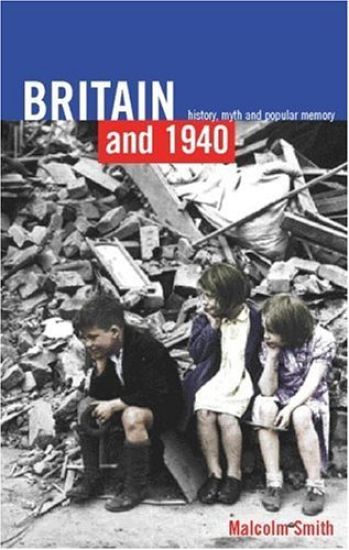
Britain and 1940

Britain and 1940

Malcolm Smith

Routledge
2000
nidottu
1940 was the most significant year in European history this century. For Britain it was 'the finest hour', the beginning of the People's War. Britain and 1940 explores what the year meant for the people of Britain then and now.Covering the pre-history of 1940 in Britain, Malcolm Smith explores the great fear that a second world war would perhaps mean the end of British civilization and charts the development of the myths of Dunkirk, the Battle of Britain and the Blitz, and the great influence they have had on our national consciousness and on attitudes to the outside world.The book presents students of British history with a panorama of the influences that have constructed national consciousness around a crucial moment in British history.
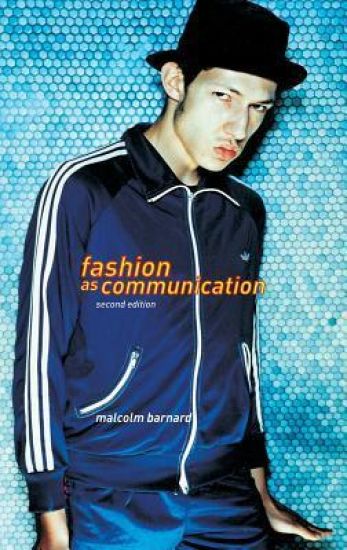
Fashion as Communication

Fashion as Communication

Malcolm Barnard

Routledge
2002
sidottu
What kinds of things do fashion and clothing say about us? What does it mean to wear Gap or Gaultier, Milletts or Moschino? Are there any real differences between Hip-Hop style and Punk anti-styles? In this fully revised and updated edition, Malcolm Barnard introduces fashion and clothing as ways of communicating and challenging class, gender, sexual and social identities. Drawing on a range of theoretical approaches from Barthes and Baudrillard to Marxist, psychoanalytic and feminist theory, Barnard addresses the ambivalent status of fashion in contemporary culture.
Fashion as Communication

Fashion as Communication

Malcolm Barnard

Routledge
2002
nidottu
What kinds of things do fashion and clothing say about us? What does it mean to wear Gap or Gaultier, Milletts or Moschino? Are there any real differences between Hip-Hop style and Punk anti-styles? In this fully revised and updated edition, Malcolm Barnard introduces fashion and clothing as ways of communicating and challenging class, gender, sexual and social identities. Drawing on a range of theoretical approaches from Barthes and Baudrillard to Marxist, psychoanalytic and feminist theory, Barnard addresses the ambivalent status of fashion in contemporary culture.
Urban Avant-Gardes

Urban Avant-Gardes

Malcolm Miles

Routledge
2004
sidottu
Urban Avant-Gardes presents original research on a range of recent contemporary practices in and between art and architecture giving perspectives from a wide range of disciplines in the arts, humanities and social sciences that are seldom juxtaposed, it questions many assumptions and accepted positions.This book looks back to past avant-gardes from the nineteenth and twentieth centuries examining the theoretical and critical terrain around avant-garde cultural interventions, and profiles a range of contemporary cases of radical cultural practices. The author brings together material from a wide range of disciplines to argue for cultural intervention as a means to radical change, while recognizing that most such efforts in the past have not delivered the dreams of their perpetrators.Distinctive in that it places works of the imagination in the political and cultural context of environmentalism, this book asks how cultural work might contribute to radical social change. It is equally concerned with theory and practice - part one providing a theoretical framework and part two illustrating such frameworks with examples.
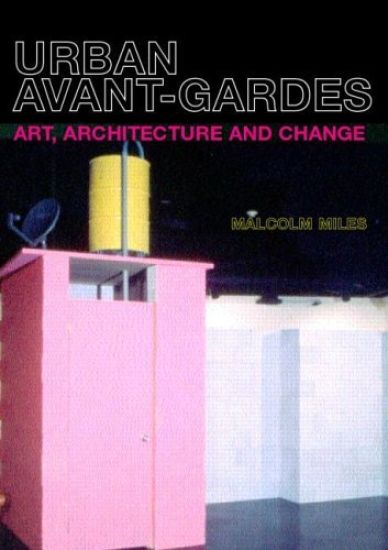
Urban Avant-Gardes

Urban Avant-Gardes

Malcolm Miles

Routledge
2004
nidottu
Urban Avant-Gardes presents original research on a range of recent contemporary practices in and between art and architecture giving perspectives from a wide range of disciplines in the arts, humanities and social sciences that are seldom juxtaposed, it questions many assumptions and accepted positions.This book looks back to past avant-gardes from the nineteenth and twentieth centuries examining the theoretical and critical terrain around avant-garde cultural interventions, and profiles a range of contemporary cases of radical cultural practices. The author brings together material from a wide range of disciplines to argue for cultural intervention as a means to radical change, while recognizing that most such efforts in the past have not delivered the dreams of their perpetrators.Distinctive in that it places works of the imagination in the political and cultural context of environmentalism, this book asks how cultural work might contribute to radical social change. It is equally concerned with theory and practice - part one providing a theoretical framework and part two illustrating such frameworks with examples.
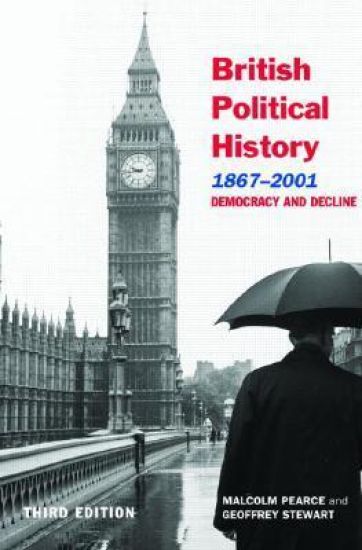
British Political History, 1867–2001

British Political History, 1867–2001

Malcolm Pearce; Geoffrey Stewart

Routledge
2001
sidottu
This third edition of British Political History, 1867–2001 is an accessible summary of major political developments in British history over the last 140 years.Analyzing the changing nature of British society and Britain's role on the world stage, Malcolm Pearce and Geoffrey Stewart also outline the growth of democracy and the growth in the power of the state against a background of party politics.New coverage includes:domestic affairs from 1992 to 2001John Major's Governmentthe creation of 'New' Labour and the 'Third Way'Blair's first ministry developments in Northern Ireland from 1995 through the Easter Peace Deal into 2001the 2001 General Election results and implications.Students of British politics and history will find this the perfect resource for their studies.
British Political History, 1867–2001

British Political History, 1867–2001

Malcolm Pearce; Geoffrey Stewart

Routledge
2001
nidottu
This third edition of British Political History, 1867–2001 is an accessible summary of major political developments in British history over the last 140 years.Analyzing the changing nature of British society and Britain's role on the world stage, Malcolm Pearce and Geoffrey Stewart also outline the growth of democracy and the growth in the power of the state against a background of party politics.New coverage includes:domestic affairs from 1992 to 2001John Major's Governmentthe creation of 'New' Labour and the 'Third Way'Blair's first ministry developments in Northern Ireland from 1995 through the Easter Peace Deal into 2001the 2001 General Election results and implications.Students of British politics and history will find this the perfect resource for their studies.
Key Concepts in Adult Education and Training
As adults, we are all continually involved in learning, with increasing numbers of us engaged in more formalized forms of learning; that is, in education or training. All those involved in the broad field of adult education and training will come into contact with many specialist ideas or concepts. It is often assumed of students that they already have a general understanding of these concepts, their meanings, applicability and inter-relationships. This is not always the case. This book examines in detail over forty of these key concepts, ranging from community education and experiential learning to competence and access. It presents a clear, analytical discussion in jargon-free language. It is, therefore, indispensable to all students and practitioners of adult education and training.
Graphic Design as Communication

Graphic Design as Communication

Malcolm Barnard

Routledge
2005
sidottu
What is the point of graphic design? Is it advertising or is it art? What purpose does it serve in our society and culture? Malcolm Barnard explores how meaning and identity are at the core of every graphic design project and argues that the role and function of graphic design is, and always has been, communication. Drawing on a range of theoretical approaches including those of Derrida, Saussure, Foucault, and Barthes, and taking examples from advertising, magazines, illustration, website design, comics, greetings cards and packaging, Graphic Design as Communication looks at how graphic design contributes to the formation of social and cultural identities. Malcolm Barnard discusses the ways in which racial/ethnic groups, age groups and gender groups are represented in graphic design, as well as how images and texts communicate with different cultural groups. He also explores how graphic design relates to both European and American modernism, and its relevance to postmodernism and globalisation in the twenty-first century and asks why, when graphic design is such an integral part of our society and culture, it is not acknowledged and understood in the same way that art is.
Graphic Design as Communication

Graphic Design as Communication

Malcolm Barnard

Routledge
2005
nidottu
What is the point of graphic design? Is it advertising or is it art? What purpose does it serve in our society and culture? Malcolm Barnard explores how meaning and identity are at the core of every graphic design project and argues that the role and function of graphic design is, and always has been, communication. Drawing on a range of theoretical approaches including those of Derrida, Saussure, Foucault, and Barthes, and taking examples from advertising, magazines, illustration, website design, comics, greetings cards and packaging, Graphic Design as Communication looks at how graphic design contributes to the formation of social and cultural identities. Malcolm Barnard discusses the ways in which racial/ethnic groups, age groups and gender groups are represented in graphic design, as well as how images and texts communicate with different cultural groups. He also explores how graphic design relates to both European and American modernism, and its relevance to postmodernism and globalisation in the twenty-first century and asks why, when graphic design is such an integral part of our society and culture, it is not acknowledged and understood in the same way that art is.
Leopards and Leaders

Leopards and Leaders

Malcolm Ruel

Routledge
2004
sidottu
This study of politics and government among a West African people, the Banyang of the Upper Cross River, covers the end of the period of Colonial administration. The book: · Shows the inter-relationship between the structure of the small forest communities and the highly autonomous processes by which they were governed · Analyses the relationship between residence and common descent as principles of corporate grouping · Includes a case study of the political struggle involved in one community's claims to independence. Originally published in 1969.
Cities and Cultures

Cities and Cultures

Malcolm Miles

Routledge
2007
sidottu
Cities and Cultures is a critical account of the relations between contemporary cities and the cultures they produce and which in turn shape them. The book questions received ideas of what constitutes a city's culture through case studies in which different kinds of culture - the arts, cultural institutions and heritage, distinctive ways of life - are seen to be differently used in or affected by the development of particular cities. The book does not mask the complexity of this, but explains it in ways accessible for undergraduates.The book begins with introductory chapters on the concepts of a city and a culture (the latter in the anthropological sense as well as denoting the arts), citing cases from modern literature. The book then moves from a critical account of cultural production in a metropolitan setting to the idea that a city, too, is produced through the characteristic ways of life of its inhabitants. The cultural industries are scrutinised for their relation to such cultures as well as to city marketing, and attention is given to the European Cities of Culture initiative, and to the hybridity of contemporary urban cultures in a period of globalisation and migration. In its penultimate chapter the book looks at incidental cultural forms and cultural means to identify formation; and in its final chapter, examines the permeability of urban cultures and cultural forms. Sources are introduced, positions clarified and contrasted, and notes given for selective further reading. Playing on the two meanings of culture, Miles takes an unique approach by relating arguments around these meanings to specific cases of urban development today. The book includes both critical comment on a range of literatures - being a truly inter-disciplinary study - and the outcome of the author's field research into urban cultures.
Cities and Cultures

Cities and Cultures

Malcolm Miles

Routledge
2007
nidottu
Cities and Cultures is a critical account of the relations between contemporary cities and the cultures they produce and which in turn shape them. The book questions received ideas of what constitutes a city's culture through case studies in which different kinds of culture - the arts, cultural institutions and heritage, distinctive ways of life - are seen to be differently used in or affected by the development of particular cities. The book does not mask the complexity of this, but explains it in ways accessible for undergraduates.The book begins with introductory chapters on the concepts of a city and a culture (the latter in the anthropological sense as well as denoting the arts), citing cases from modern literature. The book then moves from a critical account of cultural production in a metropolitan setting to the idea that a city, too, is produced through the characteristic ways of life of its inhabitants. The cultural industries are scrutinised for their relation to such cultures as well as to city marketing, and attention is given to the European Cities of Culture initiative, and to the hybridity of contemporary urban cultures in a period of globalisation and migration. In its penultimate chapter the book looks at incidental cultural forms and cultural means to identify formation; and in its final chapter, examines the permeability of urban cultures and cultural forms. Sources are introduced, positions clarified and contrasted, and notes given for selective further reading. Playing on the two meanings of culture, Miles takes an unique approach by relating arguments around these meanings to specific cases of urban development today. The book includes both critical comment on a range of literatures - being a truly inter-disciplinary study - and the outcome of the author's field research into urban cultures.
Urban Utopias

Urban Utopias

Malcolm Miles

Routledge
2007
sidottu
Utopia tends to generate a bad press - regarded as impracticable, perhaps nostalgic, or contradictory when visions of a perfect world cannot accommodate the change that is necessary to a free and self-organizing society. But people from diverse backgrounds are currently building a new society within the old, balancing literal and metaphorical utopianism, and demonstrating plural possibilities for alternative futures and types of settlement. Thousands of such places exist around the world, including intentional communities, eco-villages, permaculture plots, religious and secular retreats, co-housing projects, self-build schemes, projects for low-impact housing, and activist squats in urban and rural sites. This experience suggests, however, that when planning and design are not integral to alternative social formations, the modern dream to engineer a new society cannot be realized.The book is structured in four parts. In part one, literary and theoretical utopias from the early modern period to the nineteenth-century are reconsidered. Part two investigates twentieth-century urban utopianism and contemporary alternative settlements focusing on social and environmental issues, activism and eco-village living. Part three looks to wider horizons in recent practices in the non-affluent world, and Part four reviews a range of cases from the author’s visits to specific sites. This is followed by a short conclusion in which a discussion of key issues is resumed. This book brings together insights from literary, theoretical and practical utopias, drawing out the characteristics of groups and places that are part of a new society. It links today’s utopian experiments to historical and literary utopias, and to theoretical problems in utopian thought.
Urban Utopias

Urban Utopias

Malcolm Miles

Routledge
2007
nidottu
Utopia tends to generate a bad press - regarded as impracticable, perhaps nostalgic, or contradictory when visions of a perfect world cannot accommodate the change that is necessary to a free and self-organizing society. But people from diverse backgrounds are currently building a new society within the old, balancing literal and metaphorical utopianism, and demonstrating plural possibilities for alternative futures and types of settlement. Thousands of such places exist around the world, including intentional communities, eco-villages, permaculture plots, religious and secular retreats, co-housing projects, self-build schemes, projects for low-impact housing, and activist squats in urban and rural sites. This experience suggests, however, that when planning and design are not integral to alternative social formations, the modern dream to engineer a new society cannot be realized.The book is structured in four parts. In part one, literary and theoretical utopias from the early modern period to the nineteenth-century are reconsidered. Part two investigates twentieth-century urban utopianism and contemporary alternative settlements focusing on social and environmental issues, activism and eco-village living. Part three looks to wider horizons in recent practices in the non-affluent world, and Part four reviews a range of cases from the author’s visits to specific sites. This is followed by a short conclusion in which a discussion of key issues is resumed. This book brings together insights from literary, theoretical and practical utopias, drawing out the characteristics of groups and places that are part of a new society. It links today’s utopian experiments to historical and literary utopias, and to theoretical problems in utopian thought.