
Kirjahaku
Etsi kirjoja tekijän nimen, kirjan nimen tai ISBN:n perusteella.
1000 tulosta hakusanalla Maral Atmaca
Moral Sentences Culled From The Works Of Shakespeare
KESSINGER PUBLISHING, LLC
2009
pokkari

Moral Theology Of The Church Of Rome (1856)
Frederick Meyrick
KESSINGER PUBLISHING, LLC
2009
pokkari

The epidemic of scandals unleashed by the Savile Scandal highlights the precarious status of relations of trust. The rapid escalation of this crisis offers insights into the relationship between anxieties about childhood and the wider moral order. This book explains why western society has become so uncomfortable with the exercise of authority.
This volume considers the rise of a new mode of creating, spreading, and encountering moral claims and ideas as they are expressed within spectacles. Brian M. Lowe explains how spectacles emerge when we are saturated with mediated representations—including pictures, texts, and videos—and exposed to television and movies and the myriad stories they tell us. The question of which moral issues gain our attention and which are neglected increasingly relates to how societal concerns are supported—or obscured—by spectacles. This project explores how this new form of moral understanding came to be. Through a series of case studies, including the use of radio and comic books; the crafting of Russian national identity through art; television and film; the evolution of human rights law through film and journalism; and the promotion of animal rights campaigns, this book unveils some of the ways in which our spectacular environment shapes moral understanding, and is in turn shaped by spectacle.
'Moral Power' of the European Union in the South Caucasus
Syuzanna Vasilyan
Palgrave Macmillan
2019
sidottu
This book devises a new conceptual framework of ‘moral power’ and applies it to the policy of the European Union (EU) towards the South Caucasian states of Armenia, Azerbaijan and Georgia. It covers the period starting from the 1990s to the present and analyses policy domains (democracy promotion, conflict resolution, security, energy, trade) juxtaposing the policy of EU/member states with those of the United States (US), Russia, Turkey, Iran, as well as inter-governmental and regional organizations. ‘Morality’ is unpacked as composed of seven parameters: consequentialism; coherence; consistency; normative steadiness; balance between values and interests; inclusiveness; and external legitimacy. ‘Power’ is branched into ‘potential’, ‘actual’ and ‘actualized’ types. ‘Moral power’ is consequently developed as an objective and neutral framework to capture the foreign policy of an international actor in any geographic area and policy sphere. The book will be useful for students and scholars of International Relations and EU Studies, policy-makers and practitioners.
Teachers and students are frequently confused as to the relevance of abstract philosophical theorising to the reality of the classroom and this book is distinctive for the attention it devotes to philosophy and its potential contribution to practical matters, and education in particular. The author is critical of many current views of the philosophy of education and argues the validity of philosophy as an integral part of education in its own right, against the creation of a ‘new’ branch of philosophy, the ‘philosophy of education’. The book stresses that relativist ethical theories are no more ‘known’ to be valid than the absolutist theories they have replaced, and in the second section the author argues for a modified utilitarian position. The final section enables the reader to relate the general argument of the second part to several specific issues.
Moral Panic in Physical Education and Coaching
Routledge
2015
sidottu
This book focuses on sports coaching and sports teaching and how touching young sports participants has been redefined as dubious and dangerous. Coaches are constrained by a framework of regulations and guidelines which create anxiety, and many coaches now question the risks and benefits of their continuing involvement. The book includes some data from a recently completed ESRC project: (‘Hands-off’ sports coaching: the politics of touch) and builds on previous ESRC research (Touchlines – the problematic of touching between children and professionals) which illuminated tensions in touching behaviours between professionals and children in education and care settings. It considers the negative effects of particular understandings of risk and moral panic around touching and related behaviours where adults, children and young people interact, and makes a significant contribution to critical discussions around related practice, pedagogy, politics, and policy. While focussed on sports coaching and teaching, it is germane to the situation of all those acting in loco parentis.This book was originally published as a special issue of Sport Education and Society.
Moral Panic in Physical Education and Coaching
Routledge
2017
nidottu
This book focuses on sports coaching and sports teaching and how touching young sports participants has been redefined as dubious and dangerous. Coaches are constrained by a framework of regulations and guidelines which create anxiety, and many coaches now question the risks and benefits of their continuing involvement. The book includes some data from a recently completed ESRC project: (‘Hands-off’ sports coaching: the politics of touch) and builds on previous ESRC research (Touchlines – the problematic of touching between children and professionals) which illuminated tensions in touching behaviours between professionals and children in education and care settings. It considers the negative effects of particular understandings of risk and moral panic around touching and related behaviours where adults, children and young people interact, and makes a significant contribution to critical discussions around related practice, pedagogy, politics, and policy. While focussed on sports coaching and teaching, it is germane to the situation of all those acting in loco parentis.This book was originally published as a special issue of Sport Education and Society.
In this study, Olberding proposes a new theoretical model for reading the Analects. Her thesis is that the moral sensibility of the text derives from an effort to conceptually capture and articulate the features seen in exemplars, exemplars that are identified and admired pre-theoretically and thus prior to any conceptual criteria for virtue. Put simply, Olberding proposes an "origins myth" in which Confucius, already and prior to his philosophizing knows whom he judges to be virtuous. The work we see him and the Analects' authors pursuing is their effort to explain in an organized, generalized, and abstract way why pre-theoretically identified exemplars are virtuous. Moral reasoning here begins with people and with inchoate experiences of admiration for them. The conceptual work of the text reflects the attempt to analyze such people and parse such experiences in order to distill abstract qualities that account for virtue and can guide emulation.
How do the moral panics that have plagued school education since it’s nineteenth-century beginnings impact current school education policy? Research has shown young people to be particularly vulnerable to moral panics and, with the rise of social media, the impact of moral panics on school education is growing exponentially. Increasingly, they are reaching into the highest levels of national governments and, so powerful are their effects, some politicians choose to orchestrate them for their own political ends. For many educational administrators, the management of the ‘fallout’ of moral panics has become a time-consuming part of their day, as well as being a problematic time for parents, teachers and students.First developed by British and Canadian sociologists such as Stanley Cohen (1972), moral panic theory has evolved substantially since its early focus on adolescent deviant behaviour, and is now a part of common media talk. This book addresses the need for a single monograph on the topic, with reference to historical moral panics such as those associated with sexuality education, but also wider societal moral panics such as those associated with obesity. Teachers, students, indeed all members of school communities, along with educational administrators and politicians can learn from this study of the impact of moral panics on school educational policy.
Moral Rights and Their Grounds offers a novel theory of rights based on two distinct views. The first—the value view of rights—argues that for a person to have a right is to be valuable in a certain way, or to have a value property. This special type of value is in turn identified by the reasons that others have for treating the right holder in certain ways, and that correlate with the value in question. David Alm then argues that the familiar agency view of rights should be replaced with a different version according to which persons’ rights, and thus at least in part their value, are based on their actions rather than their mere agency. This view, which Alm calls exercise-based rights, retains some of the most valuable features of the agency view while also defending it against common objections concerning right loss. This book presents a unique conception of exercise-based rights that will be of keen interest to ethicists, legal philosophers, and political philosophers interested in rights theory.
In Moral Boundaries Joan C. Tronto provides one of the most original responses to the controversial questions surrounding women and caring. Tronto demonstrates that feminist thinkers have failed to realise the political context which has shaped their debates about care. It is her belief that care cannot be a useful moral and political concept until its traditional and ideological associations as a "women's morality" are challenged.Moral Boundaries contests the association of care with women as empirically and historically inaccurate, as well as politically unwise. In our society, members of unprivileged groups such as the working classes and people of color also do disproportionate amounts of caring. Tronto presents care as one of the central activites of human life and illustrates the ways in which society degrades the importance of caring in order to maintain the power of those who are privileged.
Sharge explores the moral pemises of feminist sexual politics, focusing in particular on the emotive issues of abortion, prostitution and adultery, in order to develop an interpretative and pluralist approach to feminist ethics.
Risks, including health and technological, attract a lot of attention in modern societies, from individuals as well as policy-makers. Human beings have always had to deal with dangers, but contemporary societies conceptualise these dangers as risks, indicating that they are to some extent controllable and calculable. Conceiving of dangers in this way implies a need to analyse how we hold people responsible for risks and how we can and should take responsibility for risks. Moral Responsibility and Risk in Society combines philosophical discussion of different concepts and notions of responsibility with context-specific applications in the areas of health, technology and environment. The book consists of two parts addressing two crucial aspects of risks and responsibility: holding agents responsible, i.e. ascribing and distributing responsibility for risks, and taking responsibility for risk. More specifically, the book discusses the values of fairness and efficacy in responsibility distributions and makes distinctions between backward-looking and forward-looking responsibility as well as individual and collective responsibility. Additionally, it analyses what it means to take responsibility for technological risks, conceptualising this kind of responsibility as a virtue, and furthermore, explores the notion of responsible risk communication and the implications for adult-child relationships. This book will be of great interest to students and scholars of environmental ethics, bioethics, public health ethics, engineering ethics, philosophy of risk and moral philosophy.

This book studies the pilgrimage of the Ancient World in its search for moral truth. After a brief examination of the values which dominated Homeric society and the subsequent aristocracies, the central portion of the book is an account and analysis of the moral ideas which illuminated the Greek, Roman and Hebrew worlds during the classical period. The volume discusses the cardinal virtues, the place of friendship, Plato’s love, philanthropia and the moral insights of the Jewish prophets and subsequently examines Christian love.
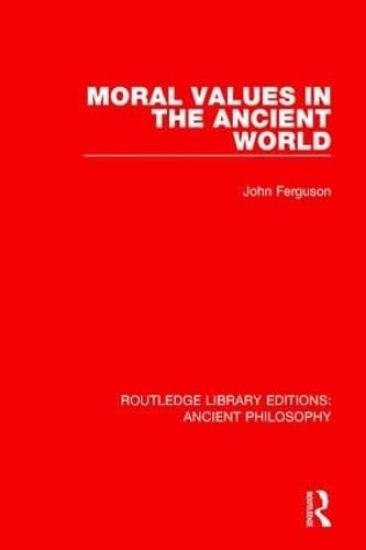
This book studies the pilgrimage of the Ancient World in its search for moral truth. After a brief examination of the values which dominated Homeric society and the subsequent aristocracies, the central portion of the book is an account and analysis of the moral ideas which illuminated the Greek, Roman and Hebrew worlds during the classical period. The volume discusses the cardinal virtues, the place of friendship, Plato’s love, philanthropia and the moral insights of the Jewish prophets and subsequently examines Christian love.