Kirjahaku
Etsi kirjoja tekijän nimen, kirjan nimen tai ISBN:n perusteella.
1000 tulosta hakusanalla Maria Rossi

Maria Chapdelaine, the quintessential novel of the rugged life of early French-Canadian colonists, is based on the author's experiences as a hired hand in the Saguenay-Lac-Saint-Jean area. A young woman living with her family on the frontier in Quebec, Maria endures the hardships of isolation and climate, and chooses between three suitors: a trapper, a farmer, and a Parisian immigrant. Powerful in its simplicity, this novel captures the essence of the virtues of faith and tenacity that are the key ingredients of survivance. Translated into many languages and with some two hundred editions, it is enshrined as a classic of Canadian letters. A new introduction provides insights into Hmon's life.

This innovative book reassess the place of Maria Edgeworth within the Irish literary canon by illuminating the connections between her views on gender and her construction of Ireland, beginning in the revolutionary decade of the 1790s and ending in the aftermath of Catholic emancipation and parliamentary reform. O Gallchoir addresses the full scope of Edgeworth's writing, creating a context within which Edgeworth's Irish novels can be read alongside tales and novels set in England and France: undervalued texts are recovered and better-known ones are shown in a new light. Edgeworth's commitment to the values of the Enlightenment is explored in the context of her indebtedness to the work of French women writers and her sophisticated awareness of the precarious position of the woman writer in society.

This innovative book reassess the place of Maria Edgeworth within the Irish literary canon by illuminating the connections between her views on gender and her construction of Ireland, beginning in the revolutionary decade of the 1790s and ending in the aftermath of Catholic emancipation and parliamentary reform. O Gallchoir addresses the full scope of Edgeworth's writing, creating a context within which Edgeworth's Irish novels can be read alongside tales and novels set in England and France: undervalued texts are recovered and better-known ones are shown in a new light. Edgeworth's commitment to the values of the Enlightenment is explored in the context of her indebtedness to the work of French women writers and her sophisticated awareness of the precarious position of the woman writer in society.

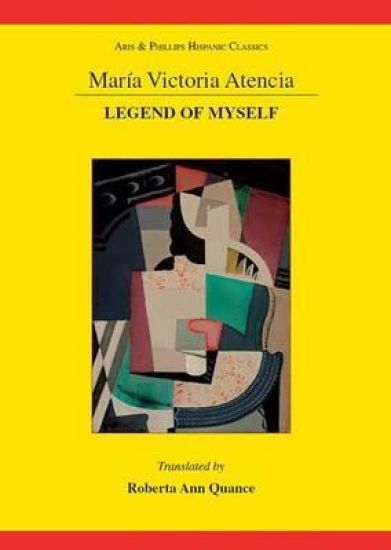
In this collection of 65 short poems, Roberta Quance exemplifies the range, vitality and mysticism of work by one of Spain's foremost, if controversial, contemporary female poets, drawing on the contents of a number of Spanish collections. In Atencia's poetry the poetic subject is often seen as someone who occupies an interior space, either crossing over the threshold from the outside world to an inner one (a garden, a house, a castle), or moving from the inner, home space to one even more interior: the world of dreams and imagination and hope, which can project outward into liminal spaces of the sky or the sea. A very basic paradox of Christian mystical experience- of abasement and magnification - haunts Atencia's work. She has made her own one of its fundamental tenets: the purging of self, the shedding of all trace of worldly attachment in order to ‘make room' for experience of a different reality: the self's sense of ‘nothingness' in the face of beauty is a prized moment in and of itself; it is sublime. Atencia's definitive manner: classically shaped verse in the tradition of the‘pure poetry' of the Generation of 1927, which makes myth of a womanly self, is amply explored in this first major English edition of her work to appear since 1987. Maria Victoria Atencia was born in Malaga (Andalusia) in 1931 and has lived there or in the country thereabouts all of her life Although trained originally as a pianist she chose a vocation for poetry, instead, publishing her first work in 1953 and continuing to publish to the present day. In 2010 she was given the Federico Garcia Lorca prize for poetry, in recognition of a lifetime of achievement. Roberta Quance is Senior Lecturer in Spanish and Portuguese Studies at Queen's University Belfast. She is author of books on mythology and modernity in modern literature and desire in the poetry of Lorca as well as articles on women writers and artists associated with the Generation of 1927 and translations of work by Carlos Piera.
In this collection of 65 short poems, Roberta Quance exemplifies the range, vitality and mysticism of work by one of Spain's foremost, if controversial, contemporary female poets, drawing on the contents of a number of Spanish collections. In Atencia's poetry the poetic subject is often seen as someone who occupies an interior space, either crossing over the threshold from the outside world to an inner one (a garden, a house, a castle), or moving from the inner, home space to one even more interior: the world of dreams and imagination and hope, which can project outward into liminal spaces of the sky or the sea. A very basic paradox of Christian mystical experience- of abasement and magnification - haunts Atencia's work. She has made her own one of its fundamental tenets: the purging of self, the shedding of all trace of worldly attachment in order to ‘make room' for experience of a different reality: the self's sense of ‘nothingness' in the face of beauty is a prized moment in and of itself; it is sublime. Atencia's definitive manner: classically shaped verse in the tradition of the‘pure poetry' of the Generation of 1927, which makes myth of a womanly self, is amply explored in this first major English edition of her work to appear since 1987. Maria Victoria Atencia was born in Malaga (Andalusia) in 1931 and has lived there or in the country thereabouts all of her life Although trained originally as a pianist she chose a vocation for poetry, instead, publishing her first work in 1953 and continuing to publish to the present day. In 2010 she was given the Federico Garcia Lorca prize for poetry, in recognition of a lifetime of achievement. Roberta Quance is Senior Lecturer in Spanish and Portuguese Studies at Queen's University Belfast. She is author of books on mythology and modernity in modern literature and desire in the poetry of Lorca as well as articles on women writers and artists associated with the Generation of 1927 and translations of work by Carlos Piera.
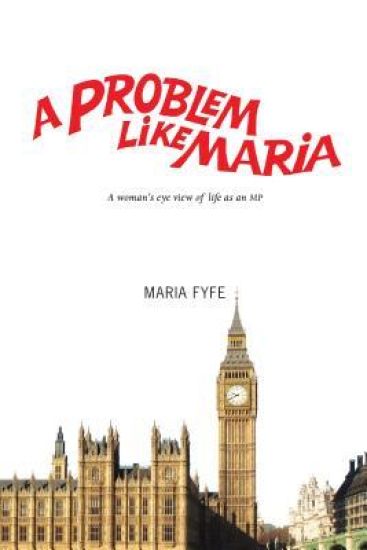
A Labour Whip once revealed that in their office they sang songs about certain backbenchers. In the case of the Member for Maryhill, their choice was ‘How Do You Solve A Problem Like Maria?’A frank account of fourteen years in Westminister from the rebellious Maria Fyfe – the only female Labour MP in Scotland when she was first elected. Fyfe recounts some of the most significant moments of her political career, from the frustrating and infuriating, to the rewarding and worthwhile.A significant aim of writing this book was to set the record straight on that period in our UK Parliament. Another aim was to encourage interest in a political life when widespread cynicism discourages good people from thinking about it. MARIA FYFECovering some of the most turbulent years of British and Scottish political history, A Problem Like Maria takes the female’s perspective of life as an MP in the male-dominated Westminister. This book reaches the parts of politics some people hope you never reach. The intimidating Maria Fyfe sounds like strong Scottish domestic drama. Edward Pearce, LONDON EVENING STANDARDThe terrifying Maria Fyfe stamped in … her of the sharpened claws. Matthew Parris, THE TIMESAn incorrigible Bevanite. THE OBSERVER
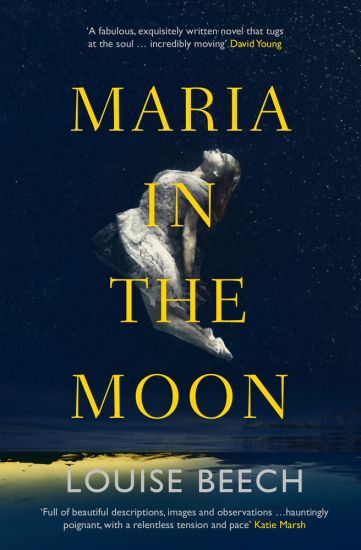
A devastating flood reawakens a young woman’s buried childhood memories … with life-changing results. A dark, warmly funny and deeply moving novel from the bestselling author of How To Be Brave and The Lion Tamer Who Lost. ***LoveReading Book of the Year*** ***Longlisted for the Not the Booker Prize*** 'Part psychological thriller, part love story and fans of Eleanor Oliphant is Completely Fine will love it' Red Magazine ‘Storytelling at its finest, Louise Beech is a beguiling wordsmith. Prepare to be hooked’ Amanda Prowse ‘Beautifully constructed, laugh-out-loud funny in places, achingly sad in others, I completely fell in love’ John Marrs ______________ ‘Like a cold spider, the memory stirred in my head and spun an icy web about my brain. Someone else crawled in. I remembered’ Thirty-on-year-old Catherine Hope has a great memory. But she can’t remember everything. She can’t remember her ninth year. She can’t remember when her insomnia started. And she can’t remember why everyone stopped calling her Catherine-Maria. With a promiscuous past, and licking her wounds after a painful breakup, Catherine wonders why she resists anything approaching real love. But when she loses her home to the devastating deluge of 2007 and volunteers at Flood Crisis, a devastating memory emerges … and changes everything. Dark, poignant and deeply moving, Maria in the Moon is an examination of the nature of memory and truth, and the defences we build to protect ourselves, when we can no longer hide… ______________ ‘Some books seem to fly under the radar and catch you completely by surprise, which is exactly what Louise Beech’s Maria in the Moon did. Brilliantly written and incredibly moving, Beech captures the nature of memory and truth with an honest poignancy’ CultureFly 'Quirky, darkly comic, but always heartfelt, this original and sad story has wonderful characters and will linger long in your memory' Sunday Mirror ‘A powerful and moving story’ Madeleine Black ‘Heartfelt and wry, this will transport you into a keenly observed world; secrets are hidden, people are flawed, but humanity endures’ Ruth Dugdall
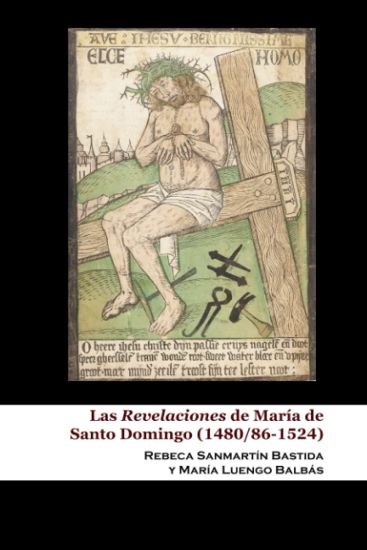
Las Revelaciones de María de Santo Domingo (1480/86-1524)
María Luengo Balbás; Rebeca Sanmartín Bastida
Splash Editions
2021
pokkari

Maria Edgeworth
Edward Everett Root Publishers Co. Ltd.
2021
nidottu
This new book offers a critical introduction to the full scope of Edgeworth's writing, encompassing her whole career and a broad range of her extensive oeuvre. / Maria Edgeworth made a significant contribution to three different but interlinked areas: education, the representation of Ireland, and the representation of women's experiences and characters. Cl ona Gallchoir provides a lucid and accessible introduction to each area of Edgeworth's work - and offers students in particular an overview of her work that encompasses its full range and incorporates the insights of contemporary criticism. / Particular focus is given to her Irish fiction, her examination of women's lives and roles, and her work in education and children's literature. An introductory chapter outlines the key historical and cultural contexts as well as establishing the central intellectual questions with which Edgeworth engaged, and which offer threads of continuity in a diverse body of work. / This work draws on recent research that has highlighted some of the lesser-known works, while also presenting discussions of the major works in the light of the most recent criticism. / Maria Edgeworth (1767-849) was born in England but moved with her father to the family estate at Edgeworthstown, Co. Longford in 1782. Her early writings led to The Parent's Assistant (1796), a series of didactic stories for children, and Practical Education (2 vols. 1798), influenced by the ideas of Jean-Jacques Rousseau. A further series of her works, some of them collaborative, followed. In 1800 Maria famously published Castle Rackrent, the earliest regional novel in English. This influenced Sir Walter Scott, which he praised in his preface to Waverley (1814). A number of other major works followed. / The year 2018 was the 250th anniversary of her birth, and witnessed a range of events that give evidence of ever-increasing scholarly and critical interest in her work. The past 20 years has seen a new 12-volume scholarly edition, numerous paperback editions, several monographs devoted in whole or in part to her work, 2 essay collections, and a host of journal articles. Her work is included on courses on Irish literature, women's writing, and romantic-period literature, including drama, and it is studied from many different perspectives (e.g. women and enlightenment, the development of the novel, literature and colonialism, children's literature). / The content is ordered chronologically. A conclusion draws together the central discursive strands and offers an assessment of Edgeworth's achievement and reputation. Contents: Biographical Timeline. / 1. Introduction: Themes and Contexts. / 2. Education, 1795-1804 (Practical Education, Parent's Assistant, Early Lessons, Moral Tales, Harry and Lucy). / 3. Ireland, 1782-1802 (The Double Disguise, Castle Rackrent, An Essay on Irish Bulls). / 4. Women, 1795-1806: (Letters for Literary Ladies, Belinda, Leonora). / 5. Novelist of the Union: Ennui, The Absentee and Ormond. / 6. Challenging English Identity: Harrington, Patronage. / 7. Later Work: Helen and later fiction for children. / Conclusion. Notes. Bibliography

Maria Edgeworth
Edward Everett Root Publishers Co. Ltd.
2021
sidottu
This new book offers a critical introduction to the full scope of Edgeworth's writing, encompassing her whole career and a broad range of her extensive oeuvre. / Maria Edgeworth made a significant contribution to three different but interlinked areas: education, the representation of Ireland, and the representation of women's experiences and characters. Cl ona Gallchoir provides a lucid and accessible introduction to each area of Edgeworth's work - and offers students in particular an overview of her work that encompasses its full range and incorporates the insights of contemporary criticism. / Particular focus is given to her Irish fiction, her examination of women's lives and roles, and her work in education and children's literature. An introductory chapter outlines the key historical and cultural contexts as well as establishing the central intellectual questions with which Edgeworth engaged, and which offer threads of continuity in a diverse body of work. / This work draws on recent research that has highlighted some of the lesser-known works, while also presenting discussions of the major works in the light of the most recent criticism. / Maria Edgeworth (1767-849) was born in England but moved with her father to the family estate at Edgeworthstown, Co. Longford in 1782. Her early writings led to The Parent's Assistant (1796), a series of didactic stories for children, and Practical Education (2 vols. 1798), influenced by the ideas of Jean-Jacques Rousseau. A further series of her works, some of them collaborative, followed. In 1800 Maria famously published Castle Rackrent, the earliest regional novel in English. This influenced Sir Walter Scott, which he praised in his preface to Waverley (1814). A number of other major works followed. / The year 2018 was the 250th anniversary of her birth, and witnessed a range of events that give evidence of ever-increasing scholarly and critical interest in her work. The past 20 years has seen a new 12-volume scholarly edition, numerous paperback editions, several monographs devoted in whole or in part to her work, 2 essay collections, and a host of journal articles. Her work is included on courses on Irish literature, women's writing, and romantic-period literature, including drama, and it is studied from many different perspectives (e.g. women and enlightenment, the development of the novel, literature and colonialism, children's literature). / The content is ordered chronologically. A conclusion draws together the central discursive strands and offers an assessment of Edgeworth's achievement and reputation. Contents: Biographical Timeline. / 1. Introduction: Themes and Contexts. / 2. Education, 1795-1804 (Practical Education, Parent's Assistant, Early Lessons, Moral Tales, Harry and Lucy). / 3. Ireland, 1782-1802 (The Double Disguise, Castle Rackrent, An Essay on Irish Bulls). / 4. Women, 1795-1806: (Letters for Literary Ladies, Belinda, Leonora). / 5. Novelist of the Union: Ennui, The Absentee and Ormond. / 6. Challenging English Identity: Harrington, Patronage. / 7. Later Work: Helen and later fiction for children. / Conclusion. Notes. Bibliography
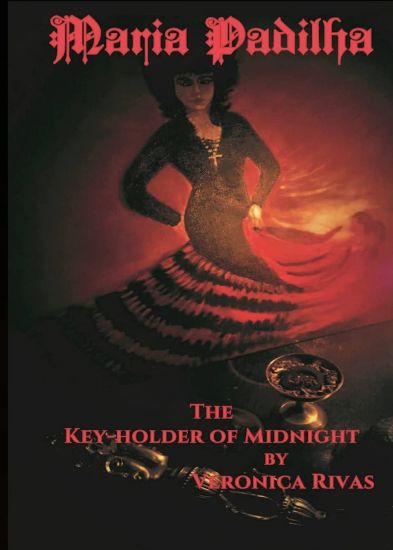
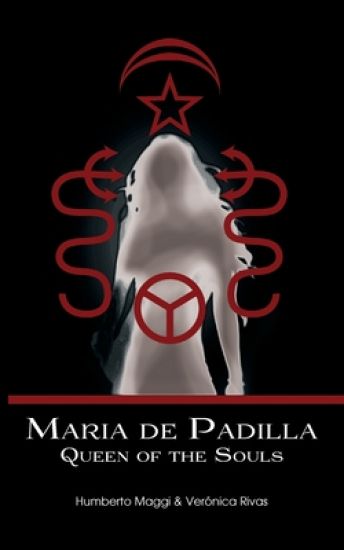
The Divine Dark Feminine series is intended as a subjective look at those individuals who work devotionally with a particular feminine deity, entity, energy, or archetype. In this book Veronica Rivas shares her journey with the key-holder of midnight: Maria Padilha.
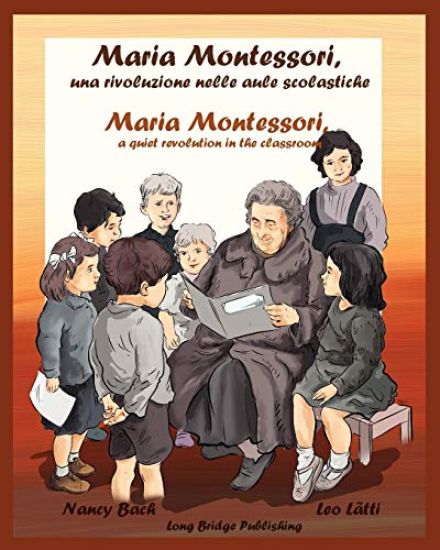
Maria Montessori, Una Rivoluzione Nelle Aule Scolastiche - Maria Montessori, a Quiet Revolution in the Classroom
Nancy Bach
Long Bridge Publishing
2012
pokkari
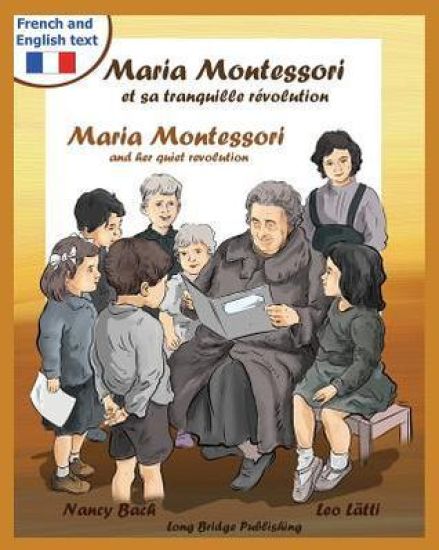
Maria Montessori Et Sa Tranquille Revolution - Maria Montessori and Her Quiet Revolution
Nancy Bach
Long Bridge Publishing
2013
pokkari