Take an evidence-based approach to health promotion across the lifespan and clinical specialties. Written for NPs and advanced practitioners, this text provides coaching in how to read, evaluate, and apply the best evidence to health promotion plans for individuals and their families to help them prevent or manage chronic and acute diseases and disorders. Step-by-step, a who's who of educators, researchers, and practitioners explore the models and skills you need to help your patients, including those with multiple co-morbidities, while evaluating medical evidence that changes rapidly, or may be unclear. You'll also be prepared for the health promotion questions on certification exams.
Marilyn Ray shows us how cultures influence one another through inter-cultural relationships, technology, globalization, and mass communication, and how these influences directly shape our cultural identities in today’s world. She integrates theory, practice, and evidence of transcultural caring to show you how to apply transcultural awareness to your clinical decision making.Go beyond common stereotypes using a framework that can positively impact the nurse-patient relationship and the decision-making process. You’ll learn how to deliver culturally competent care through the selection and application of transcultural assessment, planning and negotiation tools for interventions.Key Features:Explores transcultural caring dynamics, ethical principles, transcultural context, universal sources, and developing a personal, cultural, and decision-making foundation.Offers transcultural tools for caring dynamics assessment, culture–value conflict assessment, spiritual–ethical communicative caring, caring choice, and communicative interaction.Uses self-awareness tools to help you students understand your personal beliefs and how those beliefs influence your assessments of and care planning for your patients.Illustrates concepts with 25 case studies, real-life stories of transcultural caring experiences, written by practitioners from around the world, followed by learning activities that reinforce mastery of the techniques of transcultural assessment and caring.Nine new chapters that focus on real-world examples of transcultural caring.Thoroughly updated and revised throughout to reflect the art and science of nursing today.Includes access to DavisPlus online instructor and student resources.Instructor resources:Ebook, testbank, PowerPoint slides, instructor guideStudent resources:Ebook
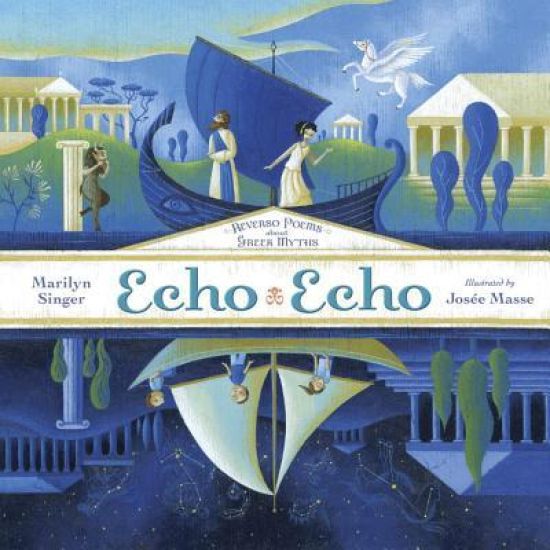
Marilyn Singer has created yet another collection of her ingenious reverso poems, this time holding up the mirror to classical Greek myths. Each tale is told in a single poem that, when read in reverse, reveals another meaning. As with Mirror Mirror and Follow Follow readers will delight in uncovering the dual points of view in well-known legends such as Pandora's Box and Echo and Narcissus, among others. Thoughtful explanatory notes about the original myths accompany each poem, and acclaimed artist Josee Masse's clever paintings-these in sun-drenched Mediterranean hues-contribute beauty plus visual meaning.
Each year, academic institutions produce thousands of social science graduates skilled in applied social researchùmany more than can be absorbed in the teaching profession. In one of the latest volumes in the Qualitative Research Methods series, author Marilyn Mitchell provides information often left out of the social science curriculumùhow and where can social scientists put their skills to use in the private sector? Employing Qualitative Methods in the Private Sector outlines some of the basic private sector research settings and provides clear and sensible advice on how one can rename oneÆs skills and market oneself most effectively to the business community. Mitchell, herself employed in the private sector, also examines project and business management. Straightforward and pragmatic, Employing Qualitative Methods in the Private Sector is an essential tool for the researcher looking for new avenues in which to apply their research.
Each year, academic institutions produce thousands of social science graduates skilled in applied social researchùmany more than can be absorbed in the teaching profession. In one of the latest volumes in the Qualitative Research Methods series, author Marilyn Mitchell provides information often left out of the social science curriculumùhow and where can social scientists put their skills to use in the private sector? Employing Qualitative Methods in the Private Sector outlines some of the basic private sector research settings and provides clear and sensible advice on how one can rename oneÆs skills and market oneself most effectively to the business community. Mitchell, herself employed in the private sector, also examines project and business management. Straightforward and pragmatic, Employing Qualitative Methods in the Private Sector is an essential tool for the researcher looking for new avenues in which to apply their research.
How does recent scholarship on ethnicity and race speak to the Jewish dimension of James Joyce's writing? What light has Joyce himself already cast on the complex question of their relationship? This book poses these questions in terms of models of the other drawn from psychoanalytic and cultural studies and from Jewish cultural studies, arguing that in Joyce the emblematic figure of otherness is "the Jew." The work of Emmanuel Levinas, Sander Gilman, Gillian Rose, Homi Bhabha, among others, is brought to bear on the literature, by Jews and non-Jews alike, that has forged the representation of Jews and Judaism in this century. Joyce was familiar with this literature, like that of Theodor Herzl. Joyce sholarship has largely neglected even these sources, however, including Max Nordau, who contributed significantly to the philosophy of Zionism, and the literature on the "psychobiology" of race—so prominent in the fin de siècle—all of which circulates around and through Joyce's depictions of Jews and Jewishness. Several Joyce scholars have shown the significance of the concept of the other for Joyce's work and, more recently, have employed a variety of approaches from within contemporary deliberations of the ideology of race, gender, and nationality to illuminate its impact. The author combines these approaches to demonstrate how any modern characterization of otherness must be informed by historical representations of "the Jew" and, consequently, by the history of anti-Semitism. She does so through a thematics and poetics of Jewishness that together form a discourse and method for Joyce's novel.
How does recent scholarship on ethnicity and race speak to the Jewish dimension of James Joyce’s writing? What light has Joyce himself already cast on the complex question of their relationship? This book poses these questions in terms of models of the other drawn from psychoanalytic and cultural studies and from Jewish cultural studies, arguing that in Joyce the emblematic figure of otherness is “the Jew.” The work of Emmanuel Levinas, Sander Gilman, Gillian Rose, Homi Bhabha, among others, is brought to bear on the literature, by Jews and non-Jews alike, that has forged the representation of Jews and Judaism in this century. Joyce was familiar with this literature, like that of Theodor Herzl. Joyce sholarship has largely neglected even these sources, however, including Max Nordau, who contributed significantly to the philosophy of Zionism, and the literature on the “psychobiology” of race—so prominent in the fin de siècle—all of which circulates around and through Joyce’s depictions of Jews and Jewishness. Several Joyce scholars have shown the significance of the concept of the other for Joyce’s work and, more recently, have employed a variety of approaches from within contemporary deliberations of the ideology of race, gender, and nationality to illuminate its impact. The author combines these approaches to demonstrate how any modern characterization of otherness must be informed by historical representations of “the Jew” and, consequently, by the history of anti-Semitism. She does so through a thematics and poetics of Jewishness that together form a discourse and method for Joyce’s novel.
This book explores the topic of family obligations following changes in family structure caused by divorce and remarriage. Family obligations are commonly defined as the rights and duties that accompany family roles. They have been described as the "glue" that connects generations, as well as the "oughts" and "shoulds" that surround individual family relationships. This book is primarily concerned with normative beliefs about what family members should do for each other. It differs from previous accounts of family obligation norms because it specifically focuses on family responsibilities after divorce and remarriage, two events that affect an increasing number of families today. The authors draw extensively upon the findings of 13 studies of normative beliefs regarding post-divorce intergenerational family obligations. This book fills a gap in the present literature concerning family obligation. It addresses the weaknesses of prior research by focusing on family transitions and by presenting data from studies that employ contextual methods. The content will provide guidance to policymakers and helping professionals who work with families, and the unique focus and procedures of the studies are likely to set the standard for future assessments of normative beliefs about family obligations.
This book challenges the assumptions of the event-dominated DSM model of posttraumatic stress disorder. Bowmam examines a series of questions directed at the current mental health model, reviewing the empirical literature. She finds that the dose-response assumptions are not supported; the severity of events is not reliable associated with PTSD, but is more reliably associated with important pre-event risk factors. She reviews evidence showing the greater role of individual differences including trait negative affectivity, belief systems, and other risk factors, in comparison with event characteristics, in predicting the disorder. The implications for treatment are significant, as treatment protocols reflect the DSM assertion that event exposure is the cause of the disorder, implying it should be the focus of treatment. Bowman also suggests that an event focus in diagnosis anad treatment risks increases the disorder because it does not provide sufficient attention to important pre-exisiting risk factors.
In a time of declining resources in institutions of higher education, we grapple with how priorities are to be set for the limited resources available. Most vulnerable are those students labeled underprepared by colleges and universities. Should we argue that the limited resources available ought to be used to support these students through their undergraduate years? And, if we decide that we want to do that, what evidence of their potential for success can we provide that will justify the use of these resources? Through longitudinal research that follows students who have been so labeled over all their college years, we can begin to find answers to these questions.Time to Know Them is the first book that follows the experiences of a group of students over their entire academic experience. No previous studies have brought together the factors incorporated in this study: *examining writing and learning on a true longitudinal basis; *studying a multicultural urban population; *investigating the relationship between writing and learning by examining papers written over time for regularly assigned academic courses across a range of disciplines; and *taking into consideration non-academic factors that influence academic performance such as race, gender, socio-economic status, and ideological orientation. Through interviews twice a semester over six years, the collection of papers written for all courses, observations of instructional settings, and analysis of required institutional tests of writing, the author has been able to pull together a more complete picture of writing and intellectual development over the college years than has previously been available in any study. Students are seen to acquire the ability to handle more complex reasoning tasks as they find themselves in more challenging intellectual settings and where risk-taking and exploration of new ideas are valued. The integration of students' previous life experiences into their academic studies allows them to analyze, critique, modify, and apply their previously held world views to their new learning. These changes are seen to occur over time with instructional settings and support providing key roles in writing development. Personal factors in students' lives present difficulties that require persistence and dedication to overcome. Never before have the complexities of real individual lives as they affect academic performance been so clearly presented.
In a time of declining resources in institutions of higher education, we grapple with how priorities are to be set for the limited resources available. Most vulnerable are those students labeled underprepared by colleges and universities. Should we argue that the limited resources available ought to be used to support these students through their undergraduate years? And, if we decide that we want to do that, what evidence of their potential for success can we provide that will justify the use of these resources? Through longitudinal research that follows students who have been so labeled over all their college years, we can begin to find answers to these questions.Time to Know Them is the first book that follows the experiences of a group of students over their entire academic experience. No previous studies have brought together the factors incorporated in this study: *examining writing and learning on a true longitudinal basis; *studying a multicultural urban population; *investigating the relationship between writing and learning by examining papers written over time for regularly assigned academic courses across a range of disciplines; and *taking into consideration non-academic factors that influence academic performance such as race, gender, socio-economic status, and ideological orientation. Through interviews twice a semester over six years, the collection of papers written for all courses, observations of instructional settings, and analysis of required institutional tests of writing, the author has been able to pull together a more complete picture of writing and intellectual development over the college years than has previously been available in any study. Students are seen to acquire the ability to handle more complex reasoning tasks as they find themselves in more challenging intellectual settings and where risk-taking and exploration of new ideas are valued. The integration of students' previous life experiences into their academic studies allows them to analyze, critique, modify, and apply their previously held world views to their new learning. These changes are seen to occur over time with instructional settings and support providing key roles in writing development. Personal factors in students' lives present difficulties that require persistence and dedication to overcome. Never before have the complexities of real individual lives as they affect academic performance been so clearly presented.
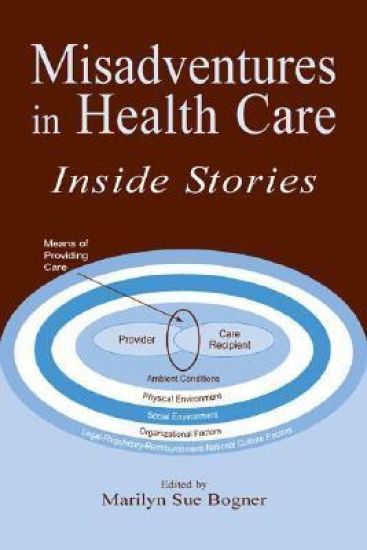
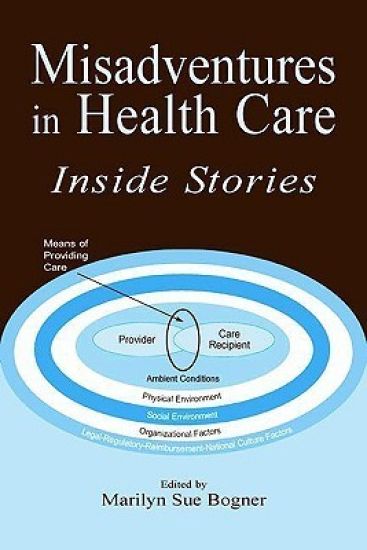
Misadventures in Health Care: Inside Stories presents an alternative approach to attributing the cause of medical error solely to the health care provider. That alternative, the systems approach, pursues why an incident occurs in terms of factors in the context of care that affect the care provider to induce an error. The basis for this approach is the fact that an error is an act, an act is behavior, and behavior is a function of the person interacting with the environment. Eleven vignettes illustrate the importance of the systems approach by describing health care incidents from the perspective of the care providers--the perspective that can identify the factors that actually affect the provider. These stories provide general readers with opportunities to apply their knowledge in analyzing incidents to identify error-inducing factors. This book is important reading for policymakers, researchers and practitioners in law and in all medical specialties, and professionals in the social sciences, human factors, and engineering. In addition to sensitizing the reader to the importance of contextual factors in error, Misadventures in Health Care is a case study reference to supplement texts in professional schools such as law and medicine, as well as the full range of academic disciplines. It also is important reading for the general public because it presents an approach for addressing a very pressing social problem-- that of misadventures in health care.
Misadventures in Health Care: Inside Stories presents an alternative approach to attributing the cause of medical error solely to the health care provider. That alternative, the systems approach, pursues why an incident occurs in terms of factors in the context of care that affect the care provider to induce an error. The basis for this approach is the fact that an error is an act, an act is behavior, and behavior is a function of the person interacting with the environment. Eleven vignettes illustrate the importance of the systems approach by describing health care incidents from the perspective of the care providers--the perspective that can identify the factors that actually affect the provider. These stories provide general readers with opportunities to apply their knowledge in analyzing incidents to identify error-inducing factors. This book is important reading for policymakers, researchers and practitioners in law and in all medical specialties, and professionals in the social sciences, human factors, and engineering. In addition to sensitizing the reader to the importance of contextual factors in error, Misadventures in Health Care is a case study reference to supplement texts in professional schools such as law and medicine, as well as the full range of academic disciplines. It also is important reading for the general public because it presents an approach for addressing a very pressing social problem-- that of misadventures in health care.
Screenwriting With a Conscience: Ethics for Screenwriters is for screenwriters who care deeply about what they write; who are aware that movie images matter and can influence audiences; and who want to create meaningful screenplays that make powerful statements while entertaining and winning over audiences. A user-friendly guide to ethical screenwriting, this book makes the case that social responsibility is endemic to public art while it emphatically champions First Amendment rights and condemns censorship.In this dynamic and practical volume, author Marilyn Beker provides methods for self-assessment of values, ideas, and ethical stances, and demonstrates the application of these values to the development of plot, character, and dialogue. Screenwriters are introduced to ethical decision making models and shown--through specific film examples--how they can be utilized in plot and character development. In addition, specific techniques and exercises are supplied to help screenwriters determine the difference between "good" and "evil," to write realistic and compelling characters based on this determination, and to present "messages" and write dialogue powerfully without preaching. This book also puts forth a livable work philosophy for dealing with the ethics of the screenwriting business, and presents a viable personal philosophy for surviving in the screenwriting world.Screenwriting With a Conscience: Ethics for Screenwriters is an indispensible, dynamic guide for the ethics-conscious screenwriter. It is intended for screenwriters at the student and professional level, and is appropriate for beginning to graduate screenwriting courses in film and English programs, and for film courses dealing with Ethics in the Media.
Screenwriting With a Conscience: Ethics for Screenwriters is for screenwriters who care deeply about what they write; who are aware that movie images matter and can influence audiences; and who want to create meaningful screenplays that make powerful statements while entertaining and winning over audiences. A user-friendly guide to ethical screenwriting, this book makes the case that social responsibility is endemic to public art while it emphatically champions First Amendment rights and condemns censorship.In this dynamic and practical volume, author Marilyn Beker provides methods for self-assessment of values, ideas, and ethical stances, and demonstrates the application of these values to the development of plot, character, and dialogue. Screenwriters are introduced to ethical decision making models and shown--through specific film examples--how they can be utilized in plot and character development. In addition, specific techniques and exercises are supplied to help screenwriters determine the difference between "good" and "evil," to write realistic and compelling characters based on this determination, and to present "messages" and write dialogue powerfully without preaching. This book also puts forth a livable work philosophy for dealing with the ethics of the screenwriting business, and presents a viable personal philosophy for surviving in the screenwriting world.Screenwriting With a Conscience: Ethics for Screenwriters is an indispensible, dynamic guide for the ethics-conscious screenwriter. It is intended for screenwriters at the student and professional level, and is appropriate for beginning to graduate screenwriting courses in film and English programs, and for film courses dealing with Ethics in the Media.
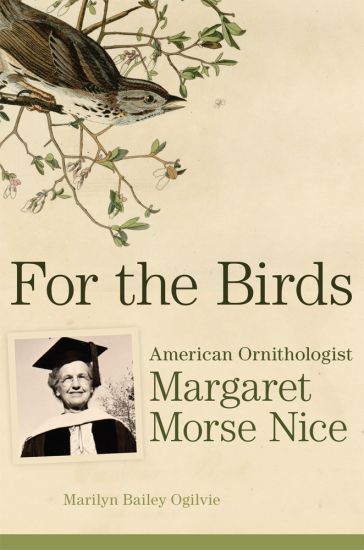
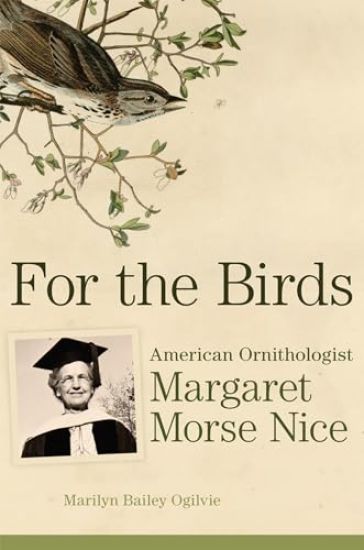
A first-rate ornithologist, Margaret Morse Nice (1883-1974) pioneered field studies on song sparrows and advocated for women's active role in the sciences. Yet her nontraditional path toward scientific progress, as well as her gender, meant that she had to reach the highest pinnacles of achievement in order to gain prominence in her chosen field. Luckily for Nice, she was more than up to the challenge. In this engaging first book-length biography, Marilyn Bailey Ogilvie sheds light on Nice's intellectual journey. The wife of an academic, Nice pursued her own scholarly interests through self-study and by cultivating and creating work partnerships with colleagues. Talented, ambitious, and creative, she did not define herself solely through her role as wife and mother, nor did her family responsibilities deter her from her professional achievements. From her undergraduate study at Mount Holyoke College to her fieldwork in Norman, Oklahoma, her coauthorship of Birds of Oklahoma and subsequent correspondence with George Sutton to her later years in Columbus, Ohio, Nice's career grew in tandem with her personal life - and in some cases, because of it. Although bridled by social constraints, her work spoke for itself: she produced more than 244 papers, articles, and published letters; seven books and book-length monographs; and 3,000 reviews. This voluminous and field-defining output earned her the respect of some of the most important biological scientists of the day, among them Konrad Lorenz and Ernst Mayr, who declared that she had ""almost singlehandedly"" initiated ""a new era in American ornithology.""For the Birds gives Nice her due recognition, lending compelling insight into her activism promoting conservation and preservation, her field methods, and the role of women in the history of science, particularly in ornithology. Nice's life acts as a looking glass into the various challenges faced by fellow female pioneers, their resolve, and their contributions.
A first-rate ornithologist, Margaret Morse Nice (1883–1974) pioneered field studies on song sparrows and advocated for women’s active role in the sciences. Yet her nontraditional path toward scientific progress, as well as her gender, meant that she had to reach the highest pinnacles of achievement in order to gain prominence in her chosen field. Luckily for Nice, she was more than up to the challenge. In this engaging first book-length biography, Marilyn Bailey Ogilvie sheds light on Nice’s intellectual journey. The wife of an academic, Nice pursued her own scholarly interests through self-study and by cultivating and creating work partnerships with colleagues. Talented, ambitious, and creative, she did not define herself solely through her role as wife and mother, nor did her family responsibilities deter her from her professional achievements. From her undergraduate study at Mount Holyoke College to her fieldwork in Norman, Oklahoma, her coauthorship of Birds of Oklahoma and subsequent correspondence with George Sutton to her later years in Columbus, Ohio, Nice’s career grew in tandem with her personal life—and in some cases, because of it. Although bridled by social constraints, her work spoke for itself: she produced more than 244 papers, articles, and published letters; seven books and book-length monographs; and 3,000 reviews. This voluminous and field-defining output earned her the respect of some of the most important biological scientists of the day, among them Konrad Lorenz and Ernst Mayr, who declared that she had “almost singlehandedly” initiated “a new era in American ornithology.”For the Birds gives Nice her due recognition, lending compelling insight into her activism promoting conservation and preservation, her field methods, and the role of women in the history of science, particularly in ornithology. Nice’s life acts as a looking glass into the various challenges faced by fellow female pioneers, their resolve, and their contributions.
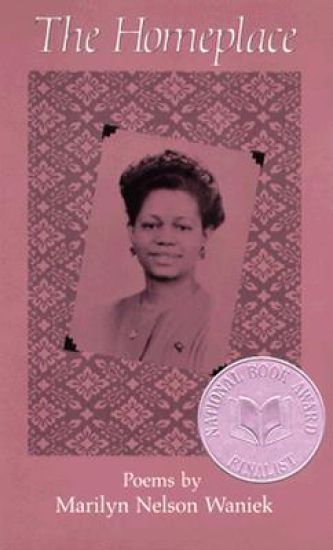
Finalist for the 1991 National Book AwardIn The Homeplace, the stories of a family become the history of a people as Marilyn Nelson Waniek sketches the lives descended from her great-great-grandmother Diverne.The poet's mother, Johnnie Mitchell Nelson, inspired this volume when she bequeathed to Waniek from her deathbed the tales that had shaped her life. The first section of the book presents those stories transformed into graceful, humorous, and deeply touching poems.In the book's second section Waniek honors her late father, Melvin Nelson, and tells the story of his ""family"": the fabled group of black World War II aviators known as the Tuskegee Airmen. Using the language and perspective of her father and his comrades, Waniek explores through a few of their individual stories the hardships and achievements of the thousand black flyers trained at Tuskegee Institute.Throughout The Homeplace, the reader is involved in a series of sharply portrayed lives. By telling a continuous story in a mix of free verse and traditional forms, Waniek gives her work pace and intensity. She handles the villanelle, the sonnet, and the popular ballad with equal skill and gusto. ""I just knew we were going to live some history,"" Johnnie Nelson said at the end of her life. Her daughter has produced an eloquent homage to that history, celebrating the survival of Afro-American pride.
As women of different eras, cultural backgrounds, racial identities, and places of origin, Sarah Orne Jewett and Toni Morrison would appear to have little in common. But in her study of these two seemingly dissimilar writers Marilyn Sanders Mobley finds elements that unite their fictional concerns.Mobley argues that a folk aesthetic gives structure and meaning to Jewett's and Morrison's work and that a mythic impulse informs their ability to depict people and values that the dominant American culture has traditionally neglected. Through close readings of Jewett's Deephaven, ""A White Heron,"" and The Country of Pointed Firs and of Morrison's Song of Solomon, Tar Baby, and Beloved, she demonstrates that the fiction of both writers attempts to preserve and affirm cultural difference, cultural knowledge, and cultural memory.Mobley's carefully argued study simultaneously offers important new insights into the works of two significant women writers and points out ways in which narrative may be used as a catalyst for cultural and social change.