Kirjojen hintavertailu. Mukana 12 016 292 kirjaa ja 12 kauppaa.

Kirjahaku

Etsi kirjoja tekijän nimen, kirjan nimen tai ISBN:n perusteella.

1000 tulosta hakusanalla Mary Kay Carson

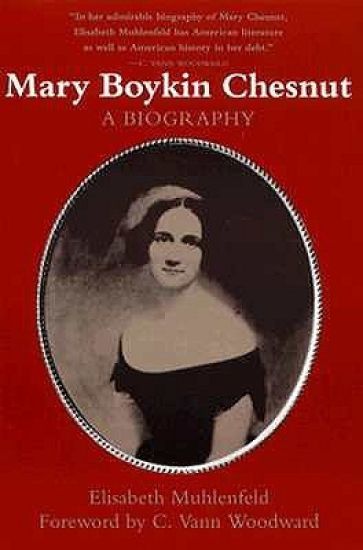
Mary Boykin Chesnut

Mary Boykin Chesnut

Elisabeth S. Muhlenfeld; C. Vann Woodward

Louisiana State University Press
1992
nidottu
In her admirable biography of Mary Chesnut, Elisabeth Muhlenfeld has American literature as well as American history in her debt."" - C. Vann WoodwardMary Boykin Miller Chesnut (1823-1886) is known today for her excellent firsthand account of life in the Confederate States of America. A Diary from Dixie (republished in 1981 as Mary Chesnut's Civil War)is far more than a simple diary, however, for Mrs. Chesnut's drawing room was a social center for many of the most prominent political and military figures in the Confederacy. Elisabeth Muhlenfeld's expert biography utilises Mrs. Chesnut's autobiographical writings, her papers, and those of her family, as well as published sources. It traces her life in South Carolina from her childhood, as the daughter of a governor and United States senator, through her schooling and her marriage to James Chesnut, Jr., the son of a wealthy South Carolina planter. During the war her husband served as an aide to P. G. T. Beauregard and to Jefferson Davis, achieving the rank of general.Muhlenfeld emphasises Mary Chesnut's last twenty years, when she helped her family through the intricacies of repaying immense debts incurred during the Civil War, rebuilding wrecked homes, and reestablishing some measure of order and security. These were also the years of her serious writing. She experimented with fiction, writing three novels and translating others from the French; and in 1881 she began the last revisions of her Civil War journal. In the descriptive passages, characterizations, thematic patterns, and overall structure of the revised journal, Chesnut employed the techniques she had learned by writing fiction.Besides adding to our knowledge of this unusual nineteenth-century southern woman, Mary Boykin Chesnut: A Biography enhances our knowledge of the history of women in general as it delineates the transformation of a wartime diary into the chronicle that remains a major document in southern history.
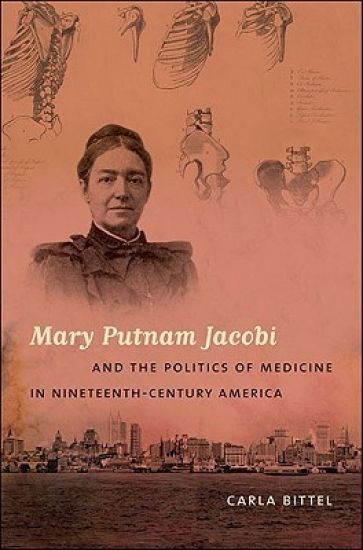
Mary Putnam Jacobi and the Politics of Medicine in Nineteenth-Century America
This book is about a physician for women's rights.In the late nineteenth century, as Americans debated the 'woman question', a battle over the meaning of biology arose in the medical profession. Some medical men claimed that women were naturally weak, that education would make them physically ill, and that women physicians endangered the profession. Mary Putnam Jacobi (1842-1906), a physician from New York, worked to prove them wrong and argued that social restrictions, not biology, threatened female health.""Mary Putnam Jacobi and the Politics of Medicine in Nineteenth-Century America"" is the first full-length biography of Jacobi, the most significant woman physician of her era and an outspoken advocate for women's rights. Jacobi rose to national prominence in the 1870s and went on to practice medicine, teach, and conduct research for over three decades. She campaigned for co-education, professional opportunities, labor reform, and suffrage - the most important women's rights issues of her day. Downplaying gender differences, she used the laboratory to prove that women were biologically capable of working, learning, and voting. Science, she believed, held the key to promoting and producing gender equality.Carla Bittel's biography of Jacobi offers a piercing view of the role of science in nineteenth-century women's rights movements and provides historical perspective on continuing debates about gender and science today.
Mary Putnam Jacobi and the Politics of Medicine in Nineteenth-Century America
In the late nineteenth century, as Americans debated the "woman question," a battle over the meaning of biology arose in the medical profession. Some medical men claimed that women were naturally weak, that education would make them physically ill, and that women physicians endangered the profession. Mary Putnam Jacobi (1842-1906), a physician from New York, worked to prove them wrong and argued that social restrictions, not biology, threatened female health. Mary Putnam Jacobi and the Politics of Medicine in Nineteenth-Century America is the first full-length biography of Mary Putnam Jacobi, the most significant woman physician of her era and an outspoken advocate for women's rights. Jacobi rose to national prominence in the 1870s and went on to practice medicine, teach, and conduct research for over three decades. She campaigned for co-education, professional opportunities, labor reform, and suffrage--the most important women's rights issues of her day. Downplaying gender differences, she used the laboratory to prove that women were biologically capable of working, learning, and voting. Science, she believed, held the key to promoting and producing gender equality. Carla Bittel's biography of Jacobi offers a piercing view of the role of science in nineteenth-century women's rights movements and provides historical perspective on continuing debates about gender and science today.
Mary in the Christian Tradition

Mary in the Christian Tradition

Owen F. Cummings

PAULIST PRESS INTERNATIONAL,U.S.
2022
nidottu
Owen Cummings explores the traditions regarding Mary that have developed since New Testament times. In addition to the patristic themes usually covered, he includes other traditions such as Syriac and Celtic. He includes Islam since their tradition comes from Christian sources such as the Protoevangelium of James, and more is written about Mary in the Qu’ran than there is in the New Testament. After surveying church history, especially in Europe and including the Reformation, he examines Vatican II, the relatively recently defined Marian doctrines, and devotion to Mary. †
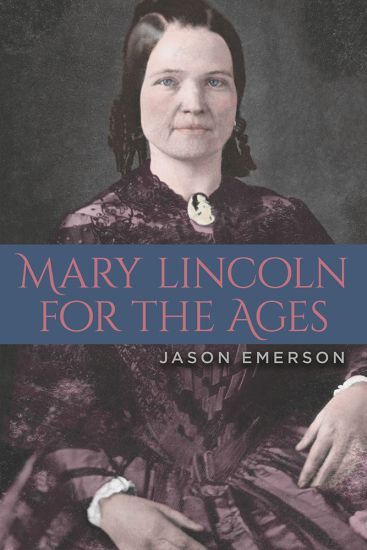
Mary Lincoln for the Ages

Mary Lincoln for the Ages

Jason Emerson

Southern Illinois University Press
2019
nidottu
In 1875 Mary Lincoln, the widow of a revered president, was committed to an insane asylum by her son, Robert. The trial that preceded her internment was a subject of keen national interest. The focus of public attention since Abraham Lincoln's election in 1860, Mary Lincoln had attracted plentiful criticism and visible scorn from much of the public, who perceived her as spoiled, a spendthrift, and even too much of a Southern sympathizer. Widespread scrutiny only increased following her husband's assassination in 1865 and her son Tad's death six years later, after which her overwhelming grief led to the increasingly erratic behavior that led to her being committed to a sanitarium. A second trial a year later resulted in her release, but the stigma of insanity stuck. In the years since, questions emerged with new force, as the populace and historians debated whether she had been truly insane and subsequently cured, or if she was the victim of family maneuvering.In this volume, noted Lincoln scholar Jason Emerson provides a documentary history of Mary Lincoln's mental illness and insanity case, evenhandedly presenting every possible primary source on the subject to enable a clearer view of the facts. Beginning with documents from the immediate aftermath of her husband's assassination and ending with reminiscences by friends and family in the mid-twentieth century, Mary Lincoln's Insanity Case: A Documentary History compiles more than one hundred letters, dozens of newspaper articles, editorials, and legal documents, and the daily patient progress reports from Bellevue Place Sanitarium during Mary Lincoln's incarceration. Including many materials that have never been previously published, Emerson also collects multiple reminiscences, interviews, and diaries of people who knew Mary Lincoln or were involved in the case, including the first-hand recollection of one of the jurors in the 1875 insanity trial.Suggesting neither accusation nor exoneration of the embattled First Lady, Mary Lincoln's Insanity Case: A Documentary History gives scholars and history enthusiasts incomparable access to the documents and information crucial to understanding this vexing chapter in American history.
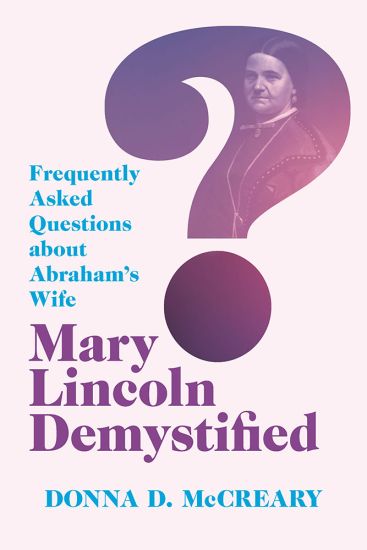
Mary Lincoln Demystified

Mary Lincoln Demystified

Donna D. McCreary

SOUTHERN ILLINOIS UNIVERSITY PRESS
2022
nidottu
Answering the most enigmatic questions about Mary Lincoln’s life After portraying Mary Todd Lincoln in hundreds of performances and giving lectures over a more than thirty-year career, Donna D. McCreary has fielded every imaginable inquiry about the First Lady. Gathered here, readers will find answers to the most frequently asked questions to come from live audiences. This first question-and-answer book arises directly from a public’s enduring curiosity with one the country’s most important historical figures. Decades of conversations with audiences, scholars, and relatives of the Todd family frame McCreary’s intimate and devoted research to offer a new and unique portrait of the most tragic First Lady. Though Mary has been portrayed in books and film, McCreary’s volume book contains information not found elsewhere—details others have overlooked and those that would not fit well into a narrative history—such as lists of Mary’s beaus, servants, and the Todd family slaves; appendixes that present mini-biographies of families and friends; and a uniquely thorough timeline. Mary Lincoln Demystified covers areas in which McCreary’s audiences have expressed the most interest: Mary’s sanity, her family relationships, her views on slavery and African Americans, her personality and habits, and what happened to her possessions and children after she died. While sympathetic to the woman she portrayed for two decades, McCreary examines both sides of controversial issues and presents the facts with her trademark style and flair. More than a good read, McCreary’s Q&A factbook, based as it is on decades of extensive research in primary and secondary sources, will be the definitive resource for answers about Mary for years to come.
The Circular Staircase by Mary Roberts Rinehart, Fiction, Classics, Mystery & Detective
For twenty years I had been perfectly comfortable; for twenty years I had had the window-boxes filled in the spring, the carpets lifted, the awnings put up and the furniture covered with brown linen; for as many summers I had said good-bye to my friends, and, after watching their perspiring hegira, had settled down to a delicious quiet in town, where the mail comes three times a day, and the water supply does not depend on a tank on the roof. And then -- the madness seized me. When I look back over the months I spent at Sunnyside, I wonder that I survived at all. As it is, I show the wear and tear of my harrowing experiences. I have turned very gray -- Liddy reminded me of it, only yesterday, by saying that a little bluing in the rinse-water would make my hair silvery, instead of a yellowish white. I hate to be reminded of unpleasant things and I snapped her off. "No," I said sharply, "I'm not going to use bluing at my time of life, or starch, either."
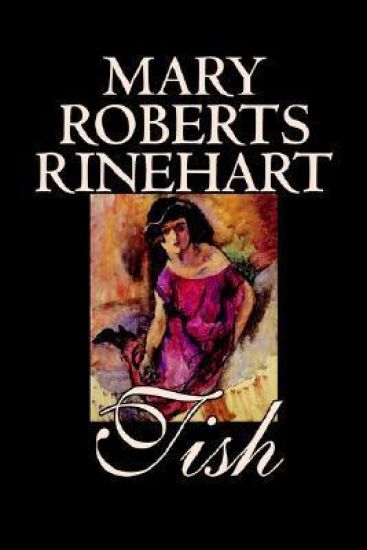
Tish by Mary Roberts Rinehart, Fiction

Tish by Mary Roberts Rinehart, Fiction

Mary Roberts Rinehart

WILDSIDE PRESS
2004
pokkari
So many unkind things have been said of the affair at Morris Valley that I think it best to publish a straightforward account of everything. The ill nature of the cartoon, for instance, which showed Tish in a pair of khaki trousers on her back under a racing-car was quite uncalled for. Tish did not wear the khaki trousers; she merely took them along in case of emergency. Nor was it true that Tish took Aggie along as a mechanician and brutally pushed her off the car because she was not pumping enough oil. The fact was that Aggie sneezed on a curve and fell out of the car, and would no doubt have been killed had she not been thrown into a pile of sand. It was in early September that Eliza Bailey, my cousin, decided to go to London, ostensibly for a rest, but really to get some cretonne at Liberty's. Eliza wrote me at Lake Penzance asking me to go to Morris Valley and look after Bettina. . . .
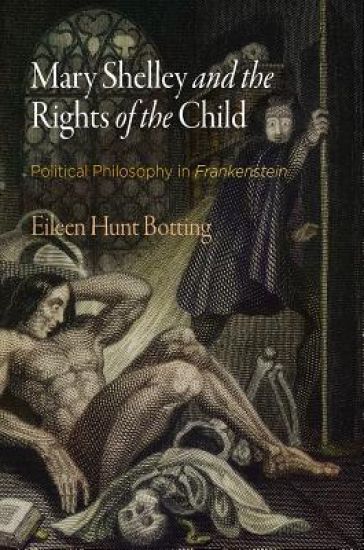
Mary Shelley and the Rights of the Child

Mary Shelley and the Rights of the Child

Eileen M. Hunt

University of Pennsylvania Press
2019
pokkari
From her youth, Mary Shelley immersed herself in the social contract tradition, particularly the educational and political theories of John Locke and Jean-Jacques Rousseau, as well as the radical philosophies of her parents, the feminist Mary Wollstonecraft and the anarchist William Godwin. Against this background, Shelley wrote Frankenstein; or, the Modern Prometheus, first published in 1818. In the two centuries since, her masterpiece has been celebrated as a Gothic classic and its symbolic resonance has driven the global success of its publication, translation, and adaptation in theater, film, art, and literature. However, in Mary Shelley and the Rights of the Child, Eileen Hunt Botting argues that Frankenstein is more than an original and paradigmatic work of science fiction-it is a profound reflection on a radical moral and political question: do children have rights? Botting contends that Frankenstein invites its readers to reason through the ethical consequences of a counterfactual premise: what if a man had used science to create a human life without a woman? Immediately after the Creature's "birth," his scientist-father abandons him and the unjust and tragic consequences that follow form the basis of Frankenstein's plot. Botting finds in the novel's narrative structure a series of interconnected thought experiments that reveal how Shelley viewed Frankenstein's Creature for what he really was-a stateless orphan abandoned by family, abused by society, and ignored by law. The novel, therefore, compels readers to consider whether children have the right to the fundamental means for their development as humans-namely, rights to food, clothing, shelter, care, love, education, and community. In Botting's analysis, Frankenstein emerges as a conceptual resource for exploring the rights of children today, especially those who are disabled, stateless, or genetically modified by medical technologies such as three-parent in vitro fertilization and, perhaps in the near future, gene editing. Mary Shelley and the Rights of the Child concludes that the right to share love and community, especially with parents or fitting substitutes, belongs to all children, regardless of their genesis, membership, or social status.
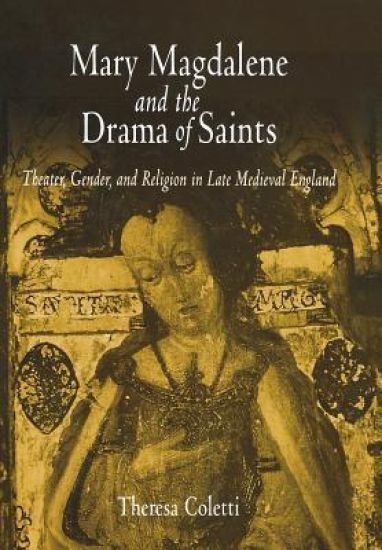
Mary Magdalene and the Drama of Saints

Mary Magdalene and the Drama of Saints

Theresa Coletti

University of Pennsylvania Press
2004
sidottu
A sinner-saint who embraced then renounced sexual and worldly pleasures; a woman who, through her attachment to Jesus, embodied both erotic and sacred power; a symbol of penance and an exemplar of contemplative and passionate devotion: perhaps no figure stood closer to the center of late medieval debates about the sources of spiritual authority and women's contribution to salvation history than did Mary Magdalene, and perhaps nowhere in later medieval England was cultural preoccupation with the Magdalene stronger than in fifteenth-century East Anglia. Looking to East Anglian texts including the N-Town Plays, The Book of Margery Kempe, The Revelations of Julian of Norwich, and Bokenham's Legend of Holy Women, Theresa Coletti explores how the gendered symbol of Mary Magdalene mediates tensions between masculine and feminine spiritual power, institutional and individual modes of religious expression, and authorized and unauthorized forms of revelation and sacred speech. Using the Digby play Mary Magdalene as her touchstone, Coletti engages a wide variety of textual and visual resources to make evident the discursive and material ties of East Anglian dramatic texts and feminine religion to broader traditions of cultural commentary and representation. In bringing the disciplinary perspectives of literary history and criticism, gender studies, and social and religious history to bear on specific local instances of dramatic practice, Mary Magdalene and the Drama of Saints highlights the relevance of Middle English dramatic discourse to the dynamic religious climate of late medieval England. In doing so, the book decisively challenges the marginalization of drama within medieval English studies, elucidates vernacular theater's kinship with influential late medieval religious texts and institutions, and articulates the changing possibilities for sacred representation in the decades before the Reformation.
Mary Shelley and the Rights of the Child

Mary Shelley and the Rights of the Child

Eileen M. Hunt

University of Pennsylvania Press
2017
sidottu
From her youth, Mary Shelley immersed herself in the social contract tradition, particularly the educational and political theories of John Locke and Jean-Jacques Rousseau, as well as the radical philosophies of her parents, the feminist Mary Wollstonecraft and the anarchist William Godwin. Against this background, Shelley wrote Frankenstein; or, the Modern Prometheus, first published in 1818. In the two centuries since, her masterpiece has been celebrated as a Gothic classic and its symbolic resonance has driven the global success of its publication, translation, and adaptation in theater, film, art, and literature. However, in Mary Shelley and the Rights of the Child, Eileen Hunt Botting argues that Frankenstein is more than an original and paradigmatic work of science fiction-it is a profound reflection on a radical moral and political question: do children have rights? Botting contends that Frankenstein invites its readers to reason through the ethical consequences of a counterfactual premise: what if a man had used science to create a human life without a woman? Immediately after the Creature's "birth," his scientist-father abandons him and the unjust and tragic consequences that follow form the basis of Frankenstein's plot. Botting finds in the novel's narrative structure a series of interconnected thought experiments that reveal how Shelley viewed Frankenstein's Creature for what he really was-a stateless orphan abandoned by family, abused by society, and ignored by law. The novel, therefore, compels readers to consider whether children have the right to the fundamental means for their development as humans-namely, rights to food, clothing, shelter, care, love, education, and community. In Botting's analysis, Frankenstein emerges as a conceptual resource for exploring the rights of children today, especially those who are disabled, stateless, or genetically modified by medical technologies such as three-parent in vitro fertilization and, perhaps in the near future, gene editing. Mary Shelley and the Rights of the Child concludes that the right to share love and community, especially with parents or fitting substitutes, belongs to all children, regardless of their genesis, membership, or social status.
Mary, Queen of Scots, and the Murder of Lord Darnley

Mary, Queen of Scots, and the Murder of Lord Darnley

Alison Weir

Random House Publishing Group
2004
nidottu
A brilliant investigation of one of Britain's notorious unsolved mysteries: the murder of Lord Darnley, second husband of Mary, Queen of Scots--from the New York Times bestselling author hailed as "the finest historian of English monarchical succession writing" (The Boston Globe) "All the elements of a juicy murder mystery are within these pages."--Fort Worth Star-Telegram "As dramatic as witnessing firsthand the most riveting court case."--Booklist, starred review Tall, handsome, accomplished, and charming, Henry Stuart, Lord Darnley, had it all, including a strong claim to the English throne, a fact that threatened the already insecure Elizabeth I. She therefore opposed any plan for Darnley to marry her cousin, Mary, Queen of Scots, who herself claimed to be Queen of England. But in 1565 Mary met and fell in love with Darnley--and defied Elizabeth by marrying him. It was not long before she discovered that her new husband was weak and vicious, and interested only in securing sovereign power for himself. Then, on February 10, 1567, an explosion at his lodgings left Darnley dead; the intrigue thickened after it was discovered that he had apparently been suffocated before the blast. The murder of Darnley ultimately led to Mary's ruin. After her deposition, there conveniently came to light a box of documents--the notorious Casket Letters--that her enemies claimed were proof of her guilt. But Mary was never allowed to see them, and they disappeared in 1584. The question of their authenticity has haunted historians ever since. After exhaustive reexamination and reevaluation of the source material, Alison Weir has come up with a solution to this enduring mystery that shatters many of the misconceptions about Mary, Queen of Scots. Complete with bright writing and stunning characterizations, Mary, Queen of Scots, and the Murder of Lord Darnley is an engaging excursion into Britain's bloodstained, power-obsessed past.
Mary Edwards Bryan

Mary Edwards Bryan

Canter Brown Jr; Larry E. Rivers

University Press of Florida
2015
sidottu
Mary Edwards Bryan became one of America's best-known writers of popular fiction in the nineteenth century. She reached literary success despite a tough frontier life, the upheavals of secession and war, disruptive affairs with authors and politicians, the tensions of emancipation, and pervading post-war economic disorder. Pairing historical insights with selections of Bryan's best writing, this book illustrates how the obstacles she overcame shaped what she wrote.Bryan's life in Florida, Georgia, and Louisiana shows how men often oppressed women-in her case, as fathers and husbands-but also sometimes allowed aspiring women writers key opportunities as publishers and editors of literary journals. This book reintroduces to the world a courageous and creative talent who yearned to express herself while navigating the restrictive morals and conventions of Victorian society.
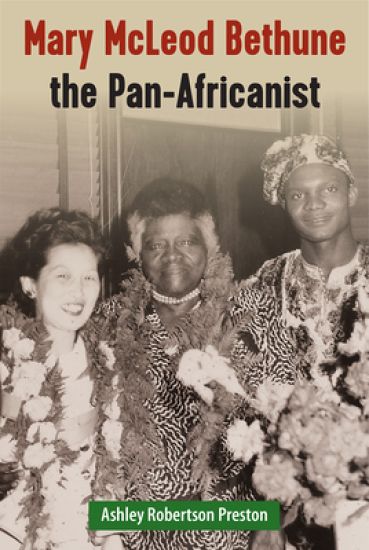
Mary McLeod Bethune the Pan-Africanist

Mary McLeod Bethune the Pan-Africanist

Ashley Robertson Preston

University Press of Florida
2023
pokkari
Highlighting Bethune’s global activism and her connections throughout the African diaspora.This book examines the pan-Africanism of Mary McLeod Bethune through her work, which internationalized the scope of Black women’s organizations to create solidarity among Africans throughout the diaspora. Broadening the familiar view of Bethune as an advocate for racial and gender equality within the United States, Ashley Preston argues that Bethune consistently sought to unify African descendants around the world with her writings, through travel, and as an advisor.Preston shows how Bethune’s early involvement with Black women’s organizations created personal connections across Cuba, Haiti, India, and Africa and shaped her global vision. Bethune founded and led the National Council of Negro Women, which strengthened coalitions with women across the diaspora to address issues in their local communities. Bethune served as director of the Division of Negro Affairs for the Franklin D. Roosevelt administration, and later as associate consultant for the United Nations alongside W.E.B. DuBois and Walter White, using her influence to address diversity in the military, decolonization, suffrage, and imperialism. Mary McLeod Bethune the Pan-Africanist provides a fuller, more accurate understanding of Bethune’s work, illustrating the perspective and activism behind Bethune’s much-quoted words: “For I am my mother’s daughter, and the drums of Africa still beat in my heart.Publication of this work made possible by a Sustaining the Humanities through the American Rescue Plan grant from the National Endowment for the Humanities.