Kirjojen hintavertailu. Mukana 11 342 296 kirjaa ja 12 kauppaa.

Kirjahaku

Etsi kirjoja tekijän nimen, kirjan nimen tai ISBN:n perusteella.

1000 tulosta hakusanalla Max Lucado

Max Weber

Max Weber

Stephen P. Turner

Routledge
2017
sidottu
This book is the first account of the way in which Weber appropriated and modified sources in the legal tradition, in which he was trained, to construct his sociology. It leads directly to a new understanding of Weber's intent and his relations to the tradition of social and political theory. the book takes the reader into the heart of Weber's conceptualizations of action and social science, without ever giving the impression that these are rarefied and marginal issues. This is an important book for understanding the significance of one of the key sociologist's of the twentieth century.
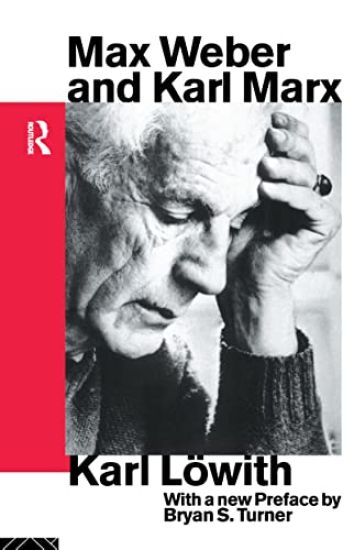
Max Weber and Karl Marx

Max Weber and Karl Marx

Karl Lowith

Routledge
2016
sidottu
First Published in 2004. Lowith's study of Max Weber and Karl Marx is a key text in modem interpretations of the theme of alienation in Marxist theory and rationalisation in Weber's sociology. It remains the best short student introduction to the differences and comparisons between these essential thinkers. This new edition includes a Preface by Professor Bryan S. Turner which demonstrates the relevance of the book for contemporary sociology.
Max Reger and Karl Straube

Max Reger and Karl Straube

Christopher Anderson

Routledge
2017
nidottu
Max Reger (1873-1916) is perhaps best-known for his organ music. This quickly assumed a prominent place in the repertory of German organists due in large measure to the efforts of Reger’s contemporary Karl Straube (1873-1950). The personal and collegial relationship between the composer and performer began in 1898 and developed until Reger’s death. By that time, Straube had established himself as an important artist and teacher in Leipzig and the central authority for the interpretation of Reger’s organ music. The Reger-Straube relationship functioned on a number of levels with decisive consequences both for the composition of the music and its interpretation over a period fraught with upheaval on sociopolitical, religious and aesthetic fronts. This book evaluates the significance of the relationship between the composer and organist using primary source materials such as autograph performing manuscripts, reviews, programmes, letters and archival sources from contemporary organ building. The result is a much enhanced understanding of Reger in terms of performance practice and reception history, and a re-examination of Straube and, more broadly, of Leipzig as a musical centre during this period.
Max Weber on Power and Social Stratification
First published in 1997, this book revolves around a textual analysis of the Weberian thesis that 'classes', 'status groups' and 'parties’ are phenomena of the distribution of power within a 'community'. An internal reconstruction of Weber’s own ideas on what is called social stratification in contemporary sociological discourse is undertaken. The reason for this reconstruction inheres in the fact that Weber’s thought (especially in the field of social stratification) has been modified and misappropriated to such an extent that Weber himself is usually lost in the commentaries. Moreover, this reconstruction is crucial because the secondary literature does not contain a single account teasing out the analytic structure underlying Weber’s statements on the nature of social inequality in various societies. It is the principal intention of the book, then, to retrieve the essential form and significance of Weber’s ideas on social stratification.
Max Weber on Power and Social Stratification
First published in 1997, this book revolves around a textual analysis of the Weberian thesis that 'classes', 'status groups' and 'parties’ are phenomena of the distribution of power within a 'community'. An internal reconstruction of Weber’s own ideas on what is called social stratification in contemporary sociological discourse is undertaken. The reason for this reconstruction inheres in the fact that Weber’s thought (especially in the field of social stratification) has been modified and misappropriated to such an extent that Weber himself is usually lost in the commentaries. Moreover, this reconstruction is crucial because the secondary literature does not contain a single account teasing out the analytic structure underlying Weber’s statements on the nature of social inequality in various societies. It is the principal intention of the book, then, to retrieve the essential form and significance of Weber’s ideas on social stratification.
Max Weber's Comparative-Historical Sociology Today
Bringing together the author's major scholarly work on Weber over the last thirty years, Max Weber's Comparative-Historical Sociology Today addresses major themes in Weber's thought, whilst also examining the mode of analysis practised in his comparative-historical writings. By exploring Weber's concepts and procedures, the individual chapters seek to convey the rigor of his research strategies, demonstrating their uniqueness. In this light, this study proceeds to identify as incomplete and then reconstruct the analyses undertaken by Weber of the rise of Confucianism in China, the caste system in India, and monotheism in ancient Israel. The analysis then advances to the modern era, utilising Weber's research procedures to explain the origins of four independent phenomena: the singularity of the American political culture, the cultural foundations of modern citizenship, cultural pessimism (Kulturpessimismus) in nineteenth century Germany, and the 'location' of work in contemporary German society. A dialogue with a variety of recent major schools is pursued throughout this volume. Offering a rich examination of the major themes in Weber's sociology, alongside a reconstruction of his mode of analysis and application of his approach, this book will appeal to scholars around the world with interests in social theory, German and American societies, cultural sociology, political sociology, the sociology of knowledge, comparative-historical sociology, and the sociology of civilizations.
Max Weber

Max Weber

Alan Sica

Routledge
2017
nidottu
The most profound and enduring social theorist of sociology's classical period, Max Weber speaks as cogently to concerns of the new century as he did to those of the past. In Max Weber and the New Century, Alan Sica demonstrated Weber's preeminent position and lasting vitality within social theory by applying his ideas to a broad range of topics of contemporary concern. Max Weber: A Comprehensive Bibliography is a companion volume that offers some 4,600 bibliographic listings of work on Weber, making it the most complete guide to the literature in English and a testament to the continued vitality of Weber's thought.Sica's work supersedes all previous bibliographical efforts covering the Weber literature, both in the quantity and accuracy of its references, and the clarity and convenience of its format. In order to demonstrate the enormous variety of Weberiana in English, Sica has adopted a liberal criterion for inclusion, rather than a critical one, choosing to mix the best with what may be more routine work. Following a preface in which previous bibliographies and bibliographic problems are discussed, the volume opens with a series of five specialized bibliographies. The first lists Weber's works in English translation. The second lists reviews of Weber's major works including those translated into English, while the third covers reviews of recent books and other work on Weber. The fourth section contains a selection of dissertations and theses relating to Weber or his ideas. The fifth includes primary and secondary sources treating Weber on rationality and rationalization processes. The last and largest section offers a comprehensive Weber bibliography of works in English.This large-scale endeavor attempts to identify with accuracy and completeness the entire universe of Weber scholarship in English. It will be an essential scholarly tool for sociologists, historians, economists, and students of cultural and intellectual history.
Max Weber and Islam

Max Weber and Islam

Wolfgang Schluchter

Routledge
2018
nidottu
Max Weber and Islam is a major effort by Islamic-studies specialists to reexamine and appraise Max Weber's perspectives on Islam and its historical development. Eight specialists on Islam and two sociologists explore many dimensions of Weber's comments on Islam, along with Weber's conceptual framework. The volume's introduction links the discussions to contemporary issues and debates.Wolfgang Schluchter reconstructs Weber's conceptual apparatus as it applies to Islam and its historical development. In subsequent chapters, Islamic specialists consider such major topics as the developmental history of Islam, Islamic fundamentalism, Islamic reform, Islamic law and capitalism, secularization in Islam, as well as the value of attempting to apply Weber's concept of sects to Islam. While some authors find flaws in Weber's factual knowledge of Islam, they also find considerable merit in the kinds of questions Weber raised.Contributors to the volume include highly respected contemporary international scholars of Islam: Ira Lapidus, Nehemia Levtzion, Richard M. Eaton, Peter Hardy, Rudolph Peters, Barbara Metcalf, Francis Robinson, Patricia Crone, Michael Cook, and S.N. Eisenstadt. Toby Huff's introduction not only knits the thematics of the separate essays together but adds its own stresses while engaging the contributors in dialogue and debate about fundamental issues. This acute collective analysis establishes a new benchmark for understanding Weber and Islam. This book also provides an up-to-date overview of the developmental history of many aspects of Islam. A major reappraisal of the entire span of Max Weber's sociological thought on Islam, this book will appeal to a wide range of scholars and laymen interested in the Islamic world. It will be of particular interest to sociologists specializing in religion and Middle East area specialists.
Max Weber and the New Century
The most profound and enduring social theorist of sociology's classical period, Max Weber speaks as cogently to concerns of the new century as he did to those of the past. Over the past seventy years, those special ideas that have become identified as "Weberian" have become especially pertinent to those who would analyze today's socioeconomic and cultural life. They offer the possibility of a more acute understanding of our immediate future than reliance on the ideas of any other social theorist in the pantheon. Alan Sica demonstrates Weber's preeminent position and lasting vitality within social theory by applying them to topics of contemporary concern. The result will appeal to experts and novices alike.Max Weber and the New Century documents the continuing usefulness of Weber's unrivalled social thought. Sica offers a series of linked studies that treat Weber's concept of rationalization as expressed in different cultural forms, the role of Weberian ideas in contemporary historiography, the uses of Weber's image in the popular imagination, the rhetorical structure of Economy and Society, and Weber's relationship to modern philosophical thought. Conceptually and practically, this volume is a companion piece to the author's forthcoming Max Weber: A Comprehensive Bibliography--a 3,600-item bibliography of works by and about Weber in English--which, for the first time, will allow scholars to explore the universe of Weberian analysis.Max Weber and the New Century is a valuable addition to the library of social scientists, historians, philosophers, economists, and students of intellectual history. It shows that Weber--the scholar as much as his ideas--continues to inspire fruitful social and cultural analyses.
Max Weber

Max Weber

Marianne Weber

Routledge
2017
sidottu
A founder of contemporary social science, Max Weber was born in Germany in 1864. At his death 56 years later, he was nationally known for his scholarly and political writings, but it was the international reception of his oeuvre over the last forty years that has made him world-famous. "The Protestant Ethic and the Spirit of Capitalism," "The Economic Ethics of the World Religions" and his magnum opus, "Economy and Society," with its treatment of the relations of economics, politics, law and religion, belong to the great achievements of 20th-century social science.The groundwork for the posthumous Weber reception was laid by Weber's widow Marianne, a well-known feminist writer, who followed up her edition of his collected works with one of the greatest biographies in a generation that produced many important accounts of itself. Although unavailable in English until a decade ago, the importance of Marianne Weber's 1926 work had been widely understood. Sociologist Robert A. Nisbet called it "a moving and deeply felt biographical memoir." Historian Gerhard Masur cited the book as "the foundation of all further inquiries into Max Weber's life and influence."Beginning with Max's ancestry and early years, Marianne Weber guides us through his life as student, young lawyer, scholar and political writer, quoting liberally from his voluminous correspondence. Her account of his nervous breakdown after 1897, which curtailed his academic career but ultimately strengthened his creative energies, provides deep insight into some of the personal tensions that troubled him to the end. In addition to her perceptive personal and intellectual life before the First World War, describing many scholars, social reformers, politicians and literary figures within and beyond the famous Heidelberg circle of the Webers. The new introduction by Guenther Roth situates Marianne Weber's own role in the contemporary setting and discusses the current state of Weber research and of the international Weber reception.
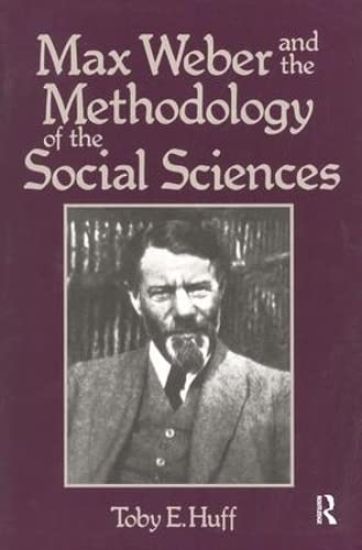
Max Weber and Methodology of Social Science
Huff provides a rare, full-scale study of the origins and development of Max Weber's methodology, which focuses on Weber's neglected early methodological essays that were not translated into English until the 1970s. He explores Weber's writings in light of developments in postempiricist philosophy of science, and shows that Weber was well aware of the epistemological foundations of the descriptive psychology school, whose intellectual heir was Husserl. This volume will help scholars and students understand in the broadest sense the issues central to the logic of social scientifi c explanation, and will appeal to philosophers, sociologists, political scientists, as well as scholars of Weber.
Max Klinger and Wilhelmine Culture

Max Klinger and Wilhelmine Culture

Marsha Morton

Routledge
2018
nidottu
The Wilhelmine Empire’s opening decades (1870s - 1880s) were crucial transitional years in the development of German modernism, both politically and culturally. Here Marsha Morton argues that no artist represented the shift from tradition to unsettling innovation more compellingly than Max Klinger. The author examines Klinger’s early prints and drawings within the context of intellectual and material transformations in Wilhelmine society through an interdisciplinary approach that encompasses Darwinism, ethnography, dreams and hypnosis, the literary Romantic grotesque, criminology, and the urban experience. His work, in advance of Expressionism, revealed the psychological and biological underpinnings of modern rational man whose drives and passions undermined bourgeois constructions of material progress, social stability, and class status at a time when Germans were engaged in defining themselves following unification. This book is the first full-length study of Klinger in English and the first to consistently address his art using methodologies adopted from cultural history. With an emphasis on the popular illustrated media, Morton draws upon information from reviews and early books on the artist, writings by Klinger and his colleagues, and unpublished archival sources. The book is intended for an academic readership interested in European art history, social science, literature, and cultural studies.
Max Liebermann

Max Liebermann

Marion F. Deshmukh

Routledge
2017
nidottu
Max Liebermann: Modern Art and Modern Germany is the first English-language examination of this German impressionist painter whose long life and career spanned nine decades. Through a close reading of key paintings and by a discussion of his many cultural networks across Germany and throughout Europe, this study by Marion Deshmukh illuminates Liebermann’s importance as a pioneer of German modernism. Critics and admirers alike saw his art as representing aesthetic European modernism at its best. His subjects included dispassionate depictions of the rural Dutch countryside, his colorful garden at the Wannsee, and his many portraits of Germany’s cultural, political, and military elites. Liebermann was the largest collector of French Impressionism in Germany - and his cosmopolitan outlook and his art created strong antipathies towards both by political and cultural conservatives throughout his life.
Max Weber's Interpretive Sociology of Law
This book presents a clear and precise account of the structure and content of Max Weber's sociology of law: situating its methodological and epistemological specificity in relation to other approaches to the sociology of law; as well as offering a critical evaluation of Weber's usefulness for contemporary socio-legal research. The book is divided into three parts. The first part deals with the methodological foundations of Weber's sociology of law. The second analyses the central theme of this sociology, the rationalisation of law, from the perspective of its internal logical coherence, its empirical validity, and finally its legitimacy. The third part questions the present-day relevance of the Weberian sociology of law for socio-legal research, notably with regard to legal pluralism. Max Weber, it is demonstrated, is not merely a 'founding father' of the sociology of law; rather, his methodology, concepts, and empirical analyses remain highly useful to the further development of work in this area.
Max Weber's 'Science as a Vocation'
Max Weber’s lecture ‘Science as a Vocation’ is a classic of social thought, in which central questions are posed about the nature of social and political thought and action. The lecture has often taken to be a summation of Weber’s thought. It can also be argued that, together with the responses of its admirers and critics, it provides a focus for discussion of the nature of modernity and its political consequences, and of the philosophical and political implications of the social or human sciences. This volume provides a full, clear, revised translation of the lecture, together with translations from the German of key contributions to the lively debate that followed its publication. The book concludes with a substantial essay on the current significance of the lecture, which discusses its relevance to the debates about the nature of science as a cultural phenomenon; the disjunction between science and nature; Weber’s conception of the disenchantment of the world; the division of scientific labour; and the fundamental nature and place of sociology.
Max Weber's 'Science as a Vocation'
Max Weber’s lecture ‘Science as a Vocation’ is a classic of social thought, in which central questions are posed about the nature of social and political thought and action. The lecture has often taken to be a summation of Weber’s thought. It can also be argued that, together with the responses of its admirers and critics, it provides a focus for discussion of the nature of modernity and its political consequences, and of the philosophical and political implications of the social or human sciences. This volume provides a full, clear, revised translation of the lecture, together with translations from the German of key contributions to the lively debate that followed its publication. The book concludes with a substantial essay on the current significance of the lecture, which discusses its relevance to the debates about the nature of science as a cultural phenomenon; the disjunction between science and nature; Weber’s conception of the disenchantment of the world; the division of scientific labour; and the fundamental nature and place of sociology.