Kirjojen hintavertailu. Mukana 11 536 136 kirjaa ja 12 kauppaa.

Kirjahaku

Etsi kirjoja tekijän nimen, kirjan nimen tai ISBN:n perusteella.

1000 tulosta hakusanalla Merav Mack; Benjamin Balint

Diese großen Entdecker, die Frankreich gemacht haben

Diese großen Entdecker, die Frankreich gemacht haben

Durand Meral; Marie-Pierre Besson de Vezac

Verlag Unser Wissen
2025
nidottu
Wer sind diese gro en franz sischen Entdecker, die die Entdeckung der Welt im Laufe der Jahrhunderte gepr gt haben? Von der Antike bis zur Neuzeit haben diese Abenteurer die Ozeane durchkreuzt, unbekannte Kontinente durchquert und die Grenzen des Wissens verschoben.Von den massaliotischen Seefahrern ber mittelalterliche Entdecker wie Guillaume de Rubrouck und Jean de Mandeville, Pioniere der Renaissance wie Jacques Cartier und Samuel de Champlain bis hin zu den gro en Entdeckern des 18. und 19. Jahrhunderts wie Bougainville, La P rouse oder Savorgnan de Brazza - jeder trug dazu bei, die Weltkarte zu erweitern und das Verst ndnis f r ferne Zivilisationen zu bereichern. Einige suchten nach neuen Handelsrouten, andere trugen zum kolonialen Aufschwung bei, w hrend einige wenige sich der Wissenschaft und der Erforschung unbekannter Gebiete widmeten.Mit dem 20. Jahrhundert bekam die Entdeckungsreise ein neues Gesicht. Jean-Baptiste Charcot ebnete den Weg f r Polarexpeditionen, Jacques-Yves Cousteau revolutionierte die Erforschung des Meeresbodens und Forscher wie Th odore Monod und Paul- mile Victor setzten ihre Suche nach unerforschten Gebieten fort. Nach und nach schrumpfte die Erde.
Wielcy odkrywcy, którzy stworzyli Francję

Wielcy odkrywcy, którzy stworzyli Francję

Durand Meral; Marie-Pierre Besson de Vezac

Wydawnictwo Nasza Wiedza
2025
nidottu
Kim są wielcy francuscy odkrywcy, kt rzy ksztaltowali odkrywanie świata na przestrzeni wiek w? Od starożytności po czasy wsp lczesne, ci poszukiwacze przyg d przemierzali oceany, przekraczali nieznane kontynenty i przesuwali granice wiedzy.Od masalijskich nawigator w po średniowiecznych odkrywc w, takich jak Guillaume de Rubrouck i Jean de Mandeville, od renesansowych pionier w, takich jak Jacques Cartier i Samuel de Champlain, po wielkich odkrywc w XVIII i XIX wieku, takich jak Bougainville, La P rouse i Savorgnan de Brazza, każdy z nich przyczynil się do poszerzenia mapy świata i wzbogacenia naszego zrozumienia odleglych cywilizacji. Niekt rzy poszukiwali nowych szlak w handlowych, inni brali udzial w boomie kolonialnym, podczas gdy kilku poświęcilo się nauce i badaniu nieznanych terytori w.W XX wieku eksploracja przybrala nowe oblicze. Jean-Baptiste Charcot utorowal drogę wyprawom polarnym, Jacques-Yves Cousteau zrewolucjonizowal badania dna morskiego, a odkrywcy tacy jak Th odore Monod i Paul- mile Victor kontynuowali poszukiwania niezbadanych terytori w. Stopniowo Ziemia zaczęla się kurczyc.
Os grandes exploradores que fizeram a França

Os grandes exploradores que fizeram a França

Durand Meral; Marie-Pierre Besson de Vezac

Edicoes Nosso Conhecimento
2025
nidottu
Quem s o os grandes exploradores franceses que marcaram a descoberta do mundo ao longo dos s culos? Desde a Antiguidade at aos nossos dias, estes aventureiros cruzaram os oceanos, atravessaram continentes desconhecidos e ultrapassaram as fronteiras do conhecimento.Dos navegadores massalianos aos exploradores medievais, como Guillaume de Rubrouck e Jean de Mandeville, dos pioneiros do Renascimento, como Jacques Cartier e Samuel de Champlain, aos grandes descobridores dos s culos XVIII e XIX, como Bougainville, La P rouse e Savorgnan de Brazza, todos contribu ram para alargar o mapa do mundo e enriquecer o nosso conhecimento de civiliza es distantes. Alguns procuraram novas rotas comerciais, outros participaram no boom colonial, enquanto outros se dedicaram ci ncia e ao estudo de territ rios desconhecidos. Jean-Baptiste Charcot abriu o caminho para as expedi es polares, Jacques-Yves Cousteau revolucionou o estudo dos fundos marinhos e exploradores como Th odore Monod e Paul- mile Victor continuaram a procura de territ rios inexplorados. Pouco a pouco, a Terra come ou a encolher.
I grandi esploratori che hanno fatto la Francia

I grandi esploratori che hanno fatto la Francia

Durand Meral; Marie-Pierre Besson de Vezac

Edizioni Sapienza
2025
nidottu
Chi sono i grandi esploratori francesi che hanno segnato la scoperta del mondo nel corso dei secoli? Dall'antichit all'epoca moderna, questi avventurieri hanno attraversato gli oceani, superato continenti sconosciuti e spinto indietro i confini della conoscenza.Dai navigatori massmediali agli esploratori medievali come Guillaume de Rubrouck e Jean de Mandeville, dai pionieri del Rinascimento come Jacques Cartier e Samuel de Champlain ai grandi scopritori del XVIII e XIX secolo come Bougainville, La P rouse e Savorgnan de Brazza, ognuno di loro ha contribuito ad ampliare la mappa del mondo e ad arricchire la nostra comprensione di civilt lontane. Alcuni cercarono nuove rotte commerciali, altri parteciparono al boom coloniale, altri ancora si dedicarono alla scienza e allo studio di territori sconosciuti. Con il XX secolo, l'esplorazione assunse un nuovo volto. Jean-Baptiste Charcot apr la strada alle spedizioni polari, Jacques-Yves Cousteau rivoluzion lo studio dei fondali marini ed esploratori come Th odore Monod e Paul- mile Victor continuarono la ricerca di territori inesplorati. A poco a poco, la terra cominci a ridursi.
The great explorers who made France

The great explorers who made France

Durand Meral; Marie-Pierre Besson de Vezac

Our Knowledge Publishing
2025
nidottu
Who were the great French explorers who shaped the discovery of the world over the centuries? From Antiquity to modern times, these adventurers criss-crossed the oceans, crossed unknown continents and pushed back the limits of knowledge.From Massalian navigators to medieval explorers such as Guillaume de Rubrouck and Jean de Mandeville, from Renaissance pioneers such as Jacques Cartier and Samuel de Champlain to the great 18th and 19th century discoverers such as Bougainville, La P rouse and Savorgnan de Brazza, each contributed to expanding the world map and enriching our understanding of distant civilizations. Some sought new trade routes, others took part in the colonial boom, while a few devoted themselves to science and the study of unknown territories.With the 20th century, exploration took on a new face. Jean-Baptiste Charcot paved the way for polar expeditions, Jacques-Yves Cousteau revolutionized the study of the seabed, and explorers like Th odore Monod and Paul- mile Victor continued the quest for unexplored territories. Little by little, the earth began to shrink.
Optimizing Electrical Networks with Metaheuristics, FACTS, and RES
This thesis presents a methodology to enhance the performance of electrical networks by integrating Flexible AC Transmission Systems (FACTS) with renewable energy sources, including wind and solar power. Addressing a complex challenge that demands precise system planning, we applied an Optimal Power Flow (OPF) approach using the Spider Wasp Optimizer (SWO) algorithm. The objectives include minimizing power losses, reducing fuel costs and emissions, and optimizing voltage profiles. For multi-objective scenarios, the method was extended to the Multi-Objective Spider Wasp Optimizer (MOSWO) and validated using standard mathematical and geometric test functions. Comparative results demonstrate the superior performance of the proposed algorithms. Furthermore, in the economic integration of renewables, with or without optimal placement of Static Var Compensators (SVCs), the approach effectively reduces generation costs through efficient scheduling of thermal, wind, and solar units. Optimal coordination of FACTS devices and renewable resources significantly improves system efficiency and economic outcomes while respecting operational constraints.
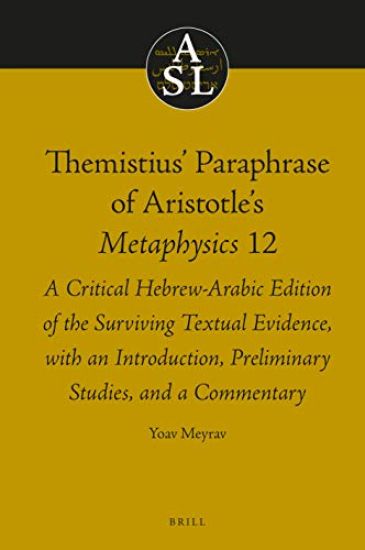
Themistius’ Paraphrase of Aristotle’s Metaphysics 12
Themistius’ (4th century CE) paraphrase of Aristotle’s Metaphysics 12 is the earliest surviving complete account of this seminal work. Despite leaving no identifiable mark in Late Antiquity, Themistius’ paraphrase played a dramatic role in shaping the metaphysical landscape of Medieval Arabic and Hebrew philosophy and theology. Lost in Greek, and only partially surviving in Arabic, its earliest full version is in the form of a 13th century Hebrew translation. In this volume, Yoav Meyrav offers a new critical edition of the Hebrew translation and the Arabic fragments of Themistius’ paraphrase, accompanied by detailed philological and philosophical analyses. In doing so, he provides a solid foundation for the study of one of the most important texts in the history of Aristotelian metaphysics.
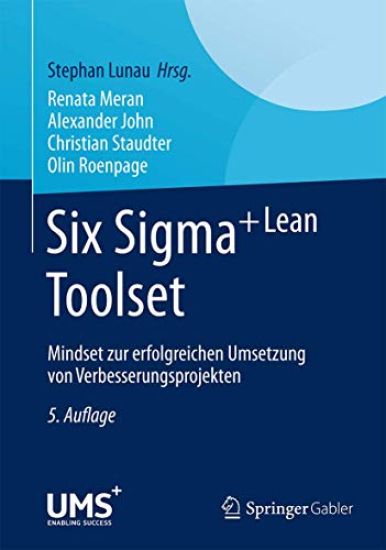
Six Sigma+Lean Toolset

Six Sigma+Lean Toolset

Renata Meran; Alexander John; Christian Staudter; Olin Roenpage

Springer-Verlag Berlin and Heidelberg GmbH Co. K
2014
sidottu
Das Six Sigma +Lean Toolset ist eine umfassende Sammlung aller für die Verbesserung von Prozessen notwendigen Werkzeuge, die für die Projekt- bzw. Workshoparbeit benötigt werden. Alle Werkzeuge sind in einer klaren und übersichtlichen Struktur abgebildet und durch Beispiele und Anwendungstipps ergänzt. Die Chronologie entspricht dem Vorgehen eines Verbesserungsprojekts mit den Schritten D(efine), M(easure), A(nalyze), I(mprove) und C(ontrol). In der vorliegenden 5., korrigierten Auflage wird der eingeschlagene Weg des Paradigmenwechsels vom Toolset zum Mindset konsequent weitergegangen. Kennzeichen dieses Mindsets sind die phasenbezogenen Leitfragen, die das Erkennen, Bewerten, Verstehen und Lösen von Problemen in den Mittelpunkt des Handelns stellen.
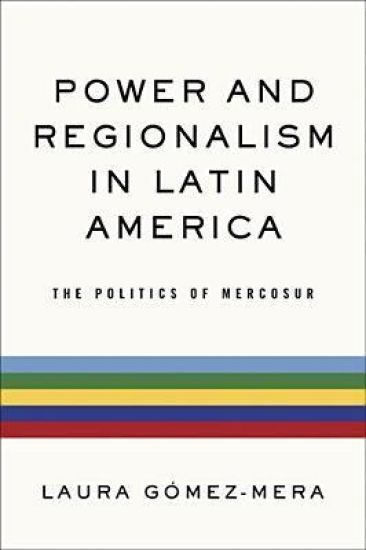
Power and Regionalism in Latin America

Power and Regionalism in Latin America

Laura Gómez-Mera

University of Notre Dame Press
2013
nidottu
In Power and Regionalism in Latin America: The Politics of MERCOSUR, Laura Gómez-Mera examines the erratic patterns of regional economic cooperation in the Southern Common Market (MERCOSUR), a political-economic agreement among Argentina, Brazil, Paraguay, Uruguay, and, recently, Venezuela that comprises the world's fourth-largest regional trade bloc. Despite a promising start in the early 1990s, MERCOSUR has had a tumultuous and conflict-ridden history. Yet it has survived, expanding in membership and institutional scope. What explains its survival, given a seemingly contradictory mix of conflict and cooperation? Through detailed empirical analyses of several key trade disputes between the bloc's two main partners, Argentina and Brazil, Gómez-Mera proposes an explanation that emphasizes the tension between and interplay of two sets of factors: power asymmetries within and beyond the region, and domestic-level politics. Member states share a common interest in preserving MERCOSUR as a vehicle for increasing the region's leverage in external negotiations. Gómez-Mera argues that while external vulnerability and overlapping power asymmetries have provided strong and consistent incentives for regional cooperation in the Southern Cone, the impact of these systemic forces on regional outcomes also has been crucially mediated by domestic political dynamics in the bloc's two main partners, Argentina and Brazil. Contrary to conventional wisdom, however, the unequal distribution of power within the bloc has had a positive effect on the sustainability of cooperation. Despite Brazil's reluctance to adopt a more active leadership role in the process of integration, its offensive strategic interests in the region have contributed to the durability of institutionalized collaboration. However, as Gómez-Mera demonstrates, the tension between Brazil's global and regional power aspirations has also added significantly to the bloc's ineffectiveness.
Power and Regionalism in Latin America

Power and Regionalism in Latin America

Laura Gómez-Mera

UNIVERSITY OF NOTRE DAME PRESS
2022
sidottu
In Power and Regionalism in Latin America: The Politics of MERCOSUR, Laura Gómez-Mera examines the erratic patterns of regional economic cooperation in the Southern Common Market (MERCOSUR), a political-economic agreement among Argentina, Brazil, Paraguay, Uruguay, and, recently, Venezuela that comprises the world's fourth-largest regional trade bloc. Despite a promising start in the early 1990s, MERCOSUR has had a tumultuous and conflict-ridden history. Yet it has survived, expanding in membership and institutional scope. What explains its survival, given a seemingly contradictory mix of conflict and cooperation? Through detailed empirical analyses of several key trade disputes between the bloc's two main partners, Argentina and Brazil, Gómez-Mera proposes an explanation that emphasizes the tension between and interplay of two sets of factors: power asymmetries within and beyond the region, and domestic-level politics. Member states share a common interest in preserving MERCOSUR as a vehicle for increasing the region's leverage in external negotiations. Gómez-Mera argues that while external vulnerability and overlapping power asymmetries have provided strong and consistent incentives for regional cooperation in the Southern Cone, the impact of these systemic forces on regional outcomes also has been crucially mediated by domestic political dynamics in the bloc's two main partners, Argentina and Brazil. Contrary to conventional wisdom, however, the unequal distribution of power within the bloc has had a positive effect on the sustainability of cooperation. Despite Brazil's reluctance to adopt a more active leadership role in the process of integration, its offensive strategic interests in the region have contributed to the durability of institutionalized collaboration. However, as Gómez-Mera demonstrates, the tension between Brazil's global and regional power aspirations has also added significantly to the bloc's ineffectiveness.
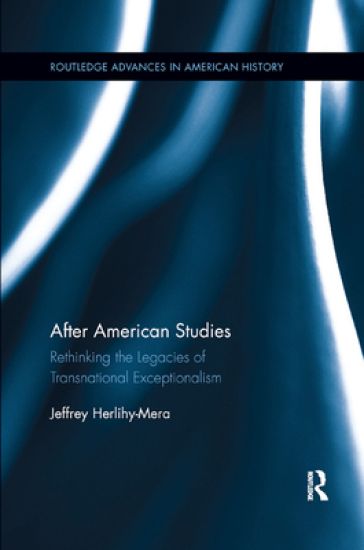
After American Studies

After American Studies

Jeffrey Herlihy-Mera

Routledge
2019
nidottu
After American Studies is a timely critique of national and transnational approaches to community, and their forms of belonging and trans/patriotisms. Using reports in multicultural psychology and cultural neuroscience to interpret an array of cultural forms—including literature, art, film, advertising, search engines, urban planning, museum artifacts, visa policy, public education, and ostensibly non-state media—the argument fills a gap in contemporary criticism by a focus on what makes cultural canons symbolically effective (or not) for an individual exposed to them. The book makes important points about the limits of transnationalism as a paradigm, evidencing how such approaches often reiterate presumptive and essentialized notions of identity that function as new dimensions of exceptionalism. In response to the shortcomings in trans/national criticism, the final chapter initiates a theoretical consideration of a postgeographic and postcultural form of community (and of cultural analysis).
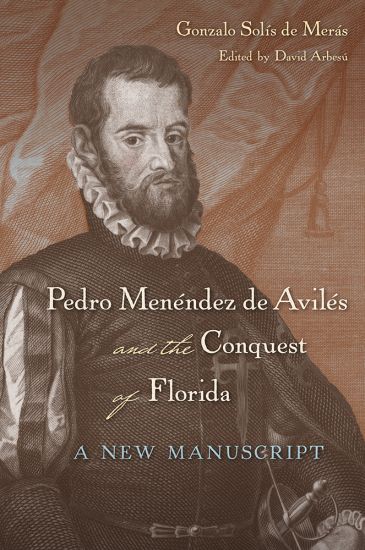
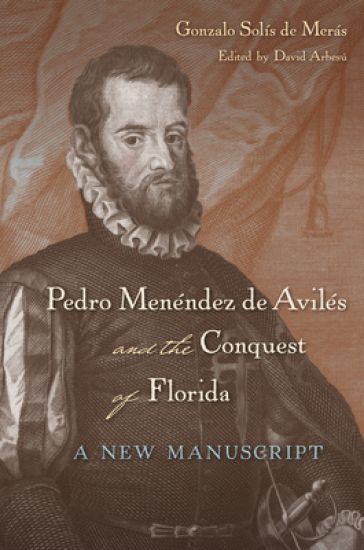
Pedro Menéndez De Avilés and the Conquest of Florida

Pedro Menéndez De Avilés and the Conquest of Florida

Gonzalo Solis de Merás

University Press of Florida
2017
sidottu
Pedro Menéndez de Avilés (1519-1574) founded St. Augustine in 1565. His expedition was documented by his brother-in-law, Gonzalo Solís de Merás, who left a detailed and passionate account of the events leading to the establishment of America’s oldest city.Until recently, the only extant version of Solís de Merás’s record was one single manuscript which Eugenio Ruidíaz y Caravia transcribed in 1893, and subsequent editions and translations have always followed Ruidíaz’s text. In 2012 David Arbesú discovered a more complete record: a manuscript including folios lost for centuries and, more important, excluding portions of the 1893 publication based on retellings rather than the original document.In the resulting volume, Pedro Menéndez de Avilés and the Conquest of Florida, Arbesú sheds light on principal events missing from the story of St. Augustine’s founding. By consulting the original chronicle, Arbesú provides readers with the definitive bilingual edition of this seminal text.
Pedro Menéndez De Avilés and the Conquest of Florida

Pedro Menéndez De Avilés and the Conquest of Florida

Gonzalo Solís de Merás

University Press of Florida
2020
pokkari
Pedro Menéndez de Avilés (1519-1574) founded St. Augustine in 1565. His expedition was documented by his brother-in-law, Gonzalo Solís de Merás, who left a detailed and passionate account of the events leading to the establishment of America's oldest city.Until recently, the only extant version of Solís de Merás's record was one single manuscript that Eugenio Ruidíaz y Caravia transcribed in 1893, and subsequent editions and translations have always followed Ruidíaz's text. In 2012, David Arbesú discovered a more complete record: a manuscript including folios lost for centuries and, more important, excluding portions of the 1893 publication based on retellings rather than the original document.In the resulting volume, Pedro Menéndez de Avilés and the Conquest of Florida, Arbesú sheds light on principal events missing from the story of St. Augustine's founding. By consulting the original chronicle, Arbesú provides readers with the definitive bilingual edition of this seminal text.