Kirjojen hintavertailu. Mukana 11 342 296 kirjaa ja 12 kauppaa.

Kirjahaku

Etsi kirjoja tekijän nimen, kirjan nimen tai ISBN:n perusteella.

1000 tulosta hakusanalla Monet Thompson

Money, Mandates, and Local Control in American Public Education

Money, Mandates, and Local Control in American Public Education

Bryan Shelly

The University of Michigan Press
2011
sidottu
Pointing to the disparities between wealthy and impoverished school districts in areas where revenue depends primarily upon local taxes, reformers repeatedly call for the centralization of school funding. Their proposals meet resistance from citizens, elected officials, and school administrators who fear the loss of local autonomy. Bryan Shelly finds, however, that local autonomy has already been compromised by federal and state governments, which exercise a tremendous amount of control over public education despite their small contribution to a school system's funding. This disproportionate relationship between funding and control allows state and federal officials to pass education policy yet excuses them from supplying adequate funding for new programs. The resulting unfunded and underfunded mandates and regulations, Shelly insists, are the true cause of the loss of community control over public education. Shelly outlines the effects of the most infamous of underfunded federal mandates, the No Child Left Behind Act of 2001 (NCLB), and explores why schools implemented it despite its unpopularity and out-of-pocket costs. Shelly's findings hold significant implications for school finance reform, NCLB, and the future of intergovernmental relations.
Manet

Manet

Françoise Cachin; Rachel Kaplan

Thames Hudson Ltd
1995
nidottu
The work of Manet is defined in this book - he was an artist who interpreted modern life with a fresh handling of colour and tone. Yet he craved official recognition and was dogged by notoriety. He rejected traditional conventions in paintings such as "Le Dejeuner sur l'herbe" and "Olympia".
Money and the Modern Mind

Money and the Modern Mind

Gianfranco Poggi

University of California Press
1993
sidottu
A major representative of the German sociological tradition, Georg Simmel (1858-1918) has influenced social thinkers ranging from the Chicago School to Walter Benjamin. His magnum opus, The Philosophy of Money, published in 1900, is nevertheless a difficult book that has daunted many would-be readers. Gianfranco Poggi makes this important work accessible to a broader range of scholars and students, offering a compact and systematically organized presentation of its main arguments. Simmel's insights about money are as valid today as they were a hundred years ago. Poggi provides a sort of reader's manual to Simmel's work, deepening the reader's understanding of money while at the same time offering a new appreciation of the originality of Simmel's social theory.
Money and the Corrosion of Power in Thucydides

Money and the Corrosion of Power in Thucydides

Lisa Kallet

University of California Press
2002
sidottu
Wealth and power are themes that preoccupy much of Greek literature from Homer on, and this book unravels the significance of these subjects in one of the most famous pieces of narrative writing from classical antiquity. Lisa Kallet brilliantly reshapes our literary and historical understanding of Thucydides' account of the disastrous Sicilian expedition of 415-413 b.c., a pivotal event in the Peloponnesian War. She shows that the second half of Thucydides' History contains a damning critique of Athens and its leaders for becoming corrupted by money and for failing to appropriately use their financial strength on military power. Focusing especially on the narrative techniques Thucydides used to build his argument, Kallet gives a close examination of the subjects of wealth and power in this account of naval war and its aftermath and locates Thucydides' writings on these themes within a broad intellectual context. Among other topics, Kallet discusses Thucydides' use of metaphor, his numerous intertextual references to Herodotus and Homer, and thematic links he makes among the topics of money, emotion, and sight. Overall, she shows that the subject of money constitutes a continuous thematic thread in books six through eight of the History. In addition, this book takes a fresh look at familiar epigraphic evidence. Kallet's ability to combine sophisticated literary analysis with a firm grasp of Attic inscriptions sheds new light on an important work of antiquity and provides a model example of how to unravel a dense historical text to reveal its underlying literary principles of construction.
Money, Expense, and Naval Power in Thucydides' History 1-5.24

Money, Expense, and Naval Power in Thucydides' History 1-5.24

Lisa Kallet

University of California Press
2018
pokkari
Thucydides has been found guilty of indifference toward financial matters without a consideration of all the evidence. Lisa Kallet-Marx redirects the approach to Thucydides' treatment of financial resources by studying his comments on finance in the context of the whole work and scrutinizes other, chiefly epigraphic, evidence as well. Her comprehensive inspection of the Archaeology, Pentekontaetia, and history of the Archidamian War demonstrates that the role of financial resources is central to Thucydides' ideas about naval power and figures prominently in his speeches and narrative. The accumulation of chremata, or money, and its relationship to nautikon, or the fleet, provide a key for analysis. Kallet-Marx's research reveals an important stage in the historical development of thought about state power, wealth, and imperialism. Her book will greatly interest classicists as well as scholars of ancient economics. This title is part of UC Press's Voices Revived program, which commemorates University of California Press’s mission to seek out and cultivate the brightest minds and give them voice, reach, and impact. Drawing on a backlist dating to 1893, Voices Revived makes high-quality, peer-reviewed scholarship accessible once again using print-on-demand technology. This title was originally published in 1993.
Money and Plan

Money and Plan

University of California Press
2022
pokkari
Money and Plan concerns the changing role of money and finance in the East European countries as they enact economic reforms designed to decentralize economic decisions, extend enterprise autonomy, and rationalize the management of their economies. The book is the first in the Western world to address itself directly to this theme. In the Stalinist economic system, which all European communist countries shared until the mid-sixties and which most still do, money lays a subordinate role. In the production sector its use in planning and by state-owned enterprises has been restricted and circumscribed in many ways. Objectives and performance standards are defined in physical terms (i.e., in physical units of inputs and output). Planning also is executed in physical units. Although banking and other financial institutions exist, they mainly supervise enterprises rather than redistribute national resources or appraise commercial prospects. As for foreign trade, it has been conducted largely on a barter basis. Nevertheless, insofar as money has been used, it has posed a number of important problems. One of these has been chronic inflationary pressure. In the present volume two contributors investigate the historical record and the cause of inflation in Poland, and develop theoretical models to explain the phenomenon. Inflation is only one national economic problem raised by current forms requiring new monetary and financial policies. Decentralization also raises important questions of full employment, balance of payments management, sectoral and regional relations, and incomes policy--matters that will have to be handled increasingly by monetary and financial means, often quite similar to those developed and practices in the West. Moreover, as individual enterprises gain more autonomy in their current operations and investment, and as physical planning and control are curtailed, redit policies, instruments, and institutions will have to be devised to guide micro-economic activity in consonance with national plans. The East European contries that are carrying economic reform much further than the rest are Czechoslovakia and Hungary, which intend to introduce a functioning market mechanism together with considerable enterprise autonomy in the production (state-owned) sector. Three contributors consider the case specially. Another contributor discusses the majore attempt thus far by the East European countries to abandon bilateral, barter-like trade among themselvs in favor of a financial framework for multilateral clearing and a new monetary unit, the "transferable ruble." The editor's Introduction and a concluding chapter by a final contributor view the changing role of money and finance in comprehensive terms. This title is part of UC Press's Voices Revived program, which commemorates University of California Press's mission to seek out and cultivate the brightest minds and give them voice, reach, and impact. Drawing on a backlist dating to 1893, Voices Revived makes high-quality, peer-reviewed scholarship accessible once again using print-on-demand technology. This title was originally published in 1968.
Money in Sixteenth-Century Florence

Money in Sixteenth-Century Florence

Carlo M. Cipolla

University of California Press
2021
pokkari
This title is part of UC Press's Voices Revived program, which commemorates University of California Press’s mission to seek out and cultivate the brightest minds and give them voice, reach, and impact. Drawing on a backlist dating to 1893, Voices Revived makes high-quality, peer-reviewed scholarship accessible once again using print-on-demand technology. This title was originally published in 1989.
Money and Plan

Money and Plan

University of California Press
2022
sidottu
Money and Plan concerns the changing role of money and finance in the East European countries as they enact economic reforms designed to decentralize economic decisions, extend enterprise autonomy, and rationalize the management of their economies. The book is the first in the Western world to address itself directly to this theme. In the Stalinist economic system, which all European communist countries shared until the mid-sixties and which most still do, money lays a subordinate role. In the production sector its use in planning and by state-owned enterprises has been restricted and circumscribed in many ways. Objectives and performance standards are defined in physical terms (i.e., in physical units of inputs and output). Planning also is executed in physical units. Although banking and other financial institutions exist, they mainly supervise enterprises rather than redistribute national resources or appraise commercial prospects. As for foreign trade, it has been conducted largely on a barter basis. Nevertheless, insofar as money has been used, it has posed a number of important problems. One of these has been chronic inflationary pressure. In the present volume two contributors investigate the historical record and the cause of inflation in Poland, and develop theoretical models to explain the phenomenon. Inflation is only one national economic problem raised by current forms requiring new monetary and financial policies. Decentralization also raises important questions of full employment, balance of payments management, sectoral and regional relations, and incomes policy--matters that will have to be handled increasingly by monetary and financial means, often quite similar to those developed and practices in the West. Moreover, as individual enterprises gain more autonomy in their current operations and investment, and as physical planning and control are curtailed, redit policies, instruments, and institutions will have to be devised to guide micro-economic activity in consonance with national plans. The East European contries that are carrying economic reform much further than the rest are Czechoslovakia and Hungary, which intend to introduce a functioning market mechanism together with considerable enterprise autonomy in the production (state-owned) sector. Three contributors consider the case specially. Another contributor discusses the majore attempt thus far by the East European countries to abandon bilateral, barter-like trade among themselvs in favor of a financial framework for multilateral clearing and a new monetary unit, the "transferable ruble." The editor's Introduction and a concluding chapter by a final contributor view the changing role of money and finance in comprehensive terms. This title is part of UC Press's Voices Revived program, which commemorates University of California Press's mission to seek out and cultivate the brightest minds and give them voice, reach, and impact. Drawing on a backlist dating to 1893, Voices Revived makes high-quality, peer-reviewed scholarship accessible once again using print-on-demand technology. This title was originally published in 1968.
Money in Sixteenth-Century Florence

Money in Sixteenth-Century Florence

Carlo M. Cipolla

University of California Press
2021
sidottu
This title is part of UC Press's Voices Revived program, which commemorates University of California Press’s mission to seek out and cultivate the brightest minds and give them voice, reach, and impact. Drawing on a backlist dating to 1893, Voices Revived makes high-quality, peer-reviewed scholarship accessible once again using print-on-demand technology. This title was originally published in 1989.
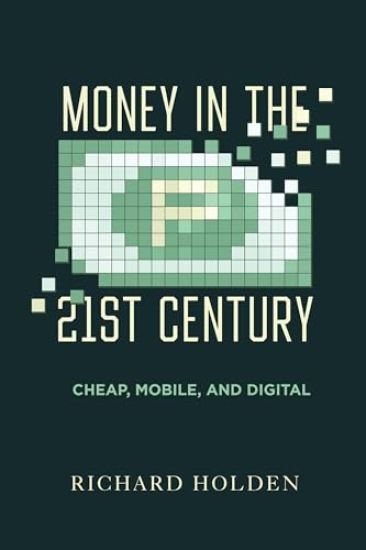
Money in the Twenty-First Century

Money in the Twenty-First Century

Richard Holden

University of California Press
2024
sidottu
An economist examines three modern forces that have redefined what "money" means, who controls it, and what the future of finance might look like. Money is increasingly cheap, digital, and mobile. In Money in the Twenty-First Century, economist Richard Holden examines the virtues and risks of low interest rates, mobile money, and cryptocurrencies, and explains how these three elemental forces will continue to play out—in our wallets, on the blockchain, and throughout major economies—in the decades to come. Holden weaves in the stories of three people who have exerted massive influence over the future of modern money: US treasury secretary Janet Yellen, Ethereum cofounder Vitalik Buterin, and Raghuram Rajan, former governor of the Reserve Bank of India and chief economist at the International Monetary Fund. Moving from micro to macro, Holden investigates the infrastructure that permits digital transactions, the currencies that underpin them, the race for control of those currencies, shifts in policy and the international monetary system, and the impact on our politics of money in the digital age. Ultimately, Money in the Twenty-First Century asks if governments can keep these three tectonic powers of low interest rates, mobile money, and decentralized finance under control.
Money, Expense, and Naval Power in Thucydides' History 1-5.24

Money, Expense, and Naval Power in Thucydides' History 1-5.24

Lisa Kallet

University of California Press
2024
sidottu
Thucydides has been found guilty of indifference toward financial matters without a consideration of all the evidence. Lisa Kallet-Marx redirects the approach to Thucydides' treatment of financial resources by studying his comments on finance in the context of the whole work and scrutinizes other, chiefly epigraphic, evidence as well. Her comprehensive inspection of the Archaeology, Pentekontaetia, and history of the Archidamian War demonstrates that the role of financial resources is central to Thucydides' ideas about naval power and figures prominently in his speeches and narrative. The accumulation of chremata, or money, and its relationship to nautikon, or the fleet, provide a key for analysis. Kallet-Marx's research reveals an important stage in the historical development of thought about state power, wealth, and imperialism. Her book will greatly interest classicists as well as scholars of ancient economics. This title is part of UC Press's Voices Revived program, which commemorates University of California Press’s mission to seek out and cultivate the brightest minds and give them voice, reach, and impact. Drawing on a backlist dating to 1893, Voices Revived makes high-quality, peer-reviewed scholarship accessible once again using print-on-demand technology. This title was originally published in 1993.
Money in the Twenty-First Century

Money in the Twenty-First Century

Richard Holden

University of California Press
2025
pokkari
An economist examines three modern forces that have redefined what "money" means, who controls it, and what the future of finance might look like. Money is increasingly cheap, digital, and mobile. In Money in the Twenty-First Century, economist Richard Holden examines the virtues and risks of low interest rates, mobile money, and cryptocurrencies, and explains how these three elemental forces will continue to play out—in our wallets, on the blockchain, and throughout major economies—in the decades to come. Holden weaves in the stories of three people who have exerted massive influence over the future of modern money: US treasury secretary Janet Yellen, Ethereum cofounder Vitalik Buterin, and Raghuram Rajan, former governor of the Reserve Bank of India and chief economist at the International Monetary Fund. Moving from micro to macro, Holden investigates the infrastructure that permits digital transactions, the currencies that underpin them, the race for control of those currencies, shifts in policy and the international monetary system, and the impact on our politics of money in the digital age. Ultimately, Money in the Twenty-First Century asks if governments can keep these three tectonic powers of low interest rates, mobile money, and decentralized finance under control.
Money Capital in the Theory of the Firm

Money Capital in the Theory of the Firm

Douglas Vickers

Cambridge University Press
2005
pokkari
The place of money capital in the theory of the firm has remained a relatively neglected question in traditions of economic analysis. In this highly integrative work, issues in production, pricing, capital investment and financial theory are brought to new levels of interdependence. Developing a three-part argument, Money Capital in the Theory of the Firm deals successively with the theoretical issues and analytic motivation, the neoclassical tradition and postclassical perspectives. In doing so, it presents a self-contained foundation in the basic structures of microeconomic analysis relating to optimize decision making in the firm and in the accounting concepts and statistical apparatus of probability theory relevant to the neoclassical aspects of the argument. Additionally, the book provides the essential mathematical development of such advanced topics as utility functions defined over stochastic arguments, the equilibrium theory of financial asset prices and yields, the cost of money capital, and investment decision criteria. This book makes an important contribution to the formation of new and analytically richer perspectives in the important area of economics it addresses. It will be of particular interest to those working in economic theory and microeconomics, and their advanced students.
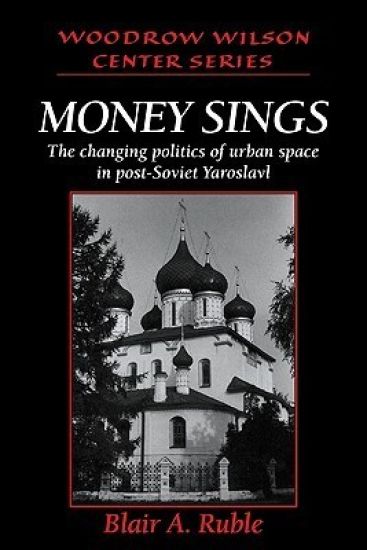
Money Sings

Money Sings

Blair A. Ruble

Cambridge University Press
2006
pokkari
The politics surrounding the use of urban space expose the interaction of economic, physical, social and political factors that shape contemporary society. This exposure is especially revealing when focused on a single community during a period of dramatic transformation. Money Sings explores the sweeping reorganization of Russian life during the initial post-Soviet era (August 1991–December 1993) by examining the politics of property in a Russian 'Middletown,' the historic industrial city of Yaroslavl. Through case studies of housing privatization, historic preservation and urban planning, this volume demonstrates important lessons about the bureaucratic and political dynamics of systemic change in post-Soviet Russia, the economic transition to the market, and the importance of economic factors in shaping the contemporary city.
Money, Markets, and the State

Money, Markets, and the State

Ton Notermans

Cambridge University Press
2007
pokkari
Money, Markets, and the State, first published in 2000, provides in-depth explanations behind the various successes and failures of the economic policies of social democratic governments in five Western European countries: Germany, Great Britain, Sweden, Norway and the Netherlands. Dr Notermans examines these economic systems from the inflation of the early twenties, through the Great Depression of the thirties and then continues his analysis up to present-day mass unemployment. Drawing on a wide range of historical and statistical sources, Dr Notermans argues that the fate of social democratic economic policy hinges critically on the political and institutional success of maintaining price stability and not on structural economic factors such as changing supply side conditions or increasing globalization of economic relations. Although social democracy has repeatedly been declared obsolete, the study concludes that even under present economic conditions, successful policies for full employment are possible by way of social democratic theory.
Money Laundering

Money Laundering

Guy Stessens

Cambridge University Press
2008
pokkari
This book gives a broad analysis of the legal issues raised by the international fight against money laundering. It offers an extensive comparative research of the criminal and preventive law aspects from an international perspective. Stessens portrays money laundering as a new criminal trend threatening both national and international societies which must be addressed multilaterally through banking practice, international conventions and human rights. Most of this volume is devoted to specific legal problems that spring from the international nature of the money laundering phenomenon. It contains a most detailed overview on the rules and practices of international co-operation in the fight against money laundering. The publication gives a thorough examination of the exchange of information, lifting banking secrecy, and seizing and confiscating assets, as well as the jurisdictional questions that inevitably arise in this context. The result is a rich and detailed study of international and comparative law.
Money Employment and Inflation

Money Employment and Inflation

Robert J. Barro; Herschel I. Grossman

Cambridge University Press
2008
pokkari
This is a textbook on macroeconomic theory that attempts to rework the theory of macroeconomic relations through a re-examination of their microeconomic foundations. In the tradition of Keynes's General Theory of Employment, Interest and Money (published in 1936), and Patinkin's Money, Interest, and Prices, published in 1956 and revised in 1965, this book represents a third generation of macroeconomic theory. This book presents a comprehensive choice-theoretic analysis of the determination of the level of employment and the rate of inflation. A central feature of the book is the recasting of macroeconomic analysis in terms of a theory of exchange under non-market-clearing conditions. In addition, the analysis incorporates other aspects of the current reformulation of macroeconomic theory, including the relation between inflationary expectations, rates of return, and unemployment, the dynamics of aggregate demand, and the significance of incomplete information regarding the spatial distribution of wages and prices.