Kirjojen hintavertailu. Mukana 11 627 220 kirjaa ja 12 kauppaa.

Kirjahaku

Etsi kirjoja tekijän nimen, kirjan nimen tai ISBN:n perusteella.

1000 tulosta hakusanalla Moritz

Counterfactuals and Probability

Counterfactuals and Probability

Moritz Schulz

Oxford University Press
2017
sidottu
Moritz Schulz explores counterfactual thought and language: what would have happened if things had gone a different way. Counterfactual questions may concern large scale derivations (what would have happened if Nixon had launched a nuclear attack) or small scale evaluations of minor derivations (what would have happened if I had decided to join a different profession). A common impression, which receives a thorough defence in the book, is that oftentimes we find it impossible to know what would have happened. However, this does not mean that we are completely at a loss: we are typically capable of evaluating counterfactual questions probabilistically: we can say what would have been likely or unlikely to happen. Schulz describes these probabilistic ways of evaluating counterfactual questions and turns the data into a novel account of the workings of counterfactual thought.
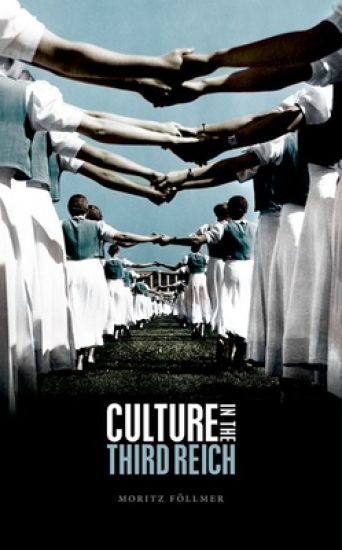
Culture in the Third Reich

Culture in the Third Reich

Moritz Follmer

Oxford University Press
2020
sidottu
'It's like being in a dream', commented Joseph Goebbels when he visited Nazi-occupied Paris in the summer of 1940. Dream and reality did indeed intermingle in the culture of the Third Reich, racialist fantasies and spectacular propaganda set-pieces contributing to this atmosphere alongside more benign cultural offerings such as performances of classical music or popular film comedies. A cultural palette that catered to the tastes of the majority helped encourage acceptance of the regime. The Third Reich was therefore eager to associate itself with comfortable middle-brow conventionality, while at the same time exploiting the latest trends that modern mass culture had to offer. And it was precisely because the culture of the Nazi period accommodated such a range of different needs and aspirations that it was so successfully able to legitimize war, imperial domination, and destruction. Moritz Föllmer turns the spotlight on this fundamental aspect of the Third Reich's successful cultural appeal in this ground-breaking new study, investigating what 'culture' meant for people in the years between 1933 and 1945: for convinced National Socialists at one end of the spectrum, via the legions of the apparently 'unpolitical', right through to anti-fascist activists, Jewish people, and other victims of the regime at the other end of the spectrum. Relating the everyday experience of people living under Nazism, he is able to give us a privileged insight into the question of why so many Germans enthusiastically embraced the regime and identified so closely with it.
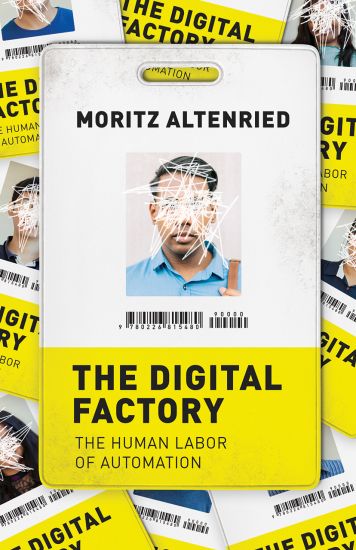
The Digital Factory

The Digital Factory

Moritz Altenried

University of Chicago Press
2022
nidottu
The Digital Factory reveals the hidden human labor that supports today’s digital capitalism. The workers of today’s digital factory include those in Amazon warehouses, delivery drivers, Chinese gaming workers, Filipino content moderators, and rural American search engine optimizers. Repetitive yet stressful, boring yet often emotionally demanding, these jobs require little formal qualification, but can demand a large degree of skills and knowledge. This work is often hidden behind the supposed magic of algorithms and thought to be automated, but it is in fact highly dependent on human labor. The workers of today’s digital factory are not as far removed from a typical auto assembly line as we might think. Moritz Altenried takes us inside today’s digital factories, showing that they take very different forms, including gig economy platforms, video games, and Amazon warehouses. As Altenried shows, these digital factories often share surprising similarities with factories from the industrial age. As globalized capitalism and digital technology continue to transform labor around the world, Altenried offers a timely and poignant exploration of how these changes are restructuring the social division of labor and its geographies as well as the stratifications and lines of struggle.
The Digital Factory

The Digital Factory

Moritz Altenried

University of Chicago Press
2022
sidottu
The Digital Factory reveals the hidden human labor that supports today’s digital capitalism. The workers of today’s digital factory include those in Amazon warehouses, delivery drivers, Chinese gaming workers, Filipino content moderators, and rural American search engine optimizers. Repetitive yet stressful, boring yet often emotionally demanding, these jobs require little formal qualification, but can demand a large degree of skills and knowledge. This work is often hidden behind the supposed magic of algorithms and thought to be automated, but it is in fact highly dependent on human labor. The workers of today’s digital factory are not as far removed from a typical auto assembly line as we might think. Moritz Altenried takes us inside today’s digital factories, showing that they take very different forms, including gig economy platforms, video games, and Amazon warehouses. As Altenried shows, these digital factories often share surprising similarities with factories from the industrial age. As globalized capitalism and digital technology continue to transform labor around the world, Altenried offers a timely and poignant exploration of how these changes are restructuring the social division of labor and its geographies as well as the stratifications and lines of struggle.
Der Weltkampf der Deutschen und Slaven seit dem Ende des fünften Jahrhunderts nach christlicher Zeit
This work has been selected by scholars as being culturally important, and is part of the knowledge base of civilization as we know it. This work was reproduced from the original artifact, and remains as true to the original work as possible. Therefore, you will see the original copyright references, library stamps (as most of these works have been housed in our most important libraries around the world), and other notations in the work.This work is in the public domain in the United States of America, and possibly other nations. Within the United States, you may freely copy and distribute this work, as no entity (individual or corporate) has a copyright on the body of the work.As a reproduction of a historical artifact, this work may contain missing or blurred pages, poor pictures, errant marks, etc. Scholars believe, and we concur, that this work is important enough to be preserved, reproduced, and made generally available to the public. We appreciate your support of the preservation process, and thank you for being an important part of keeping this knowledge alive and relevant.
Living Poor

Living Poor

Moritz Thomsen

University of Washington Press
1990
pokkari
At the age of 48, Moritz Thomsen sold his pig farm and joined the Peace Corps. As he tells the story, his awareness of the comic elements in the human situation--including his own--and his ability to convey it in fast-moving, earthy prose have made Living Poor a classic.
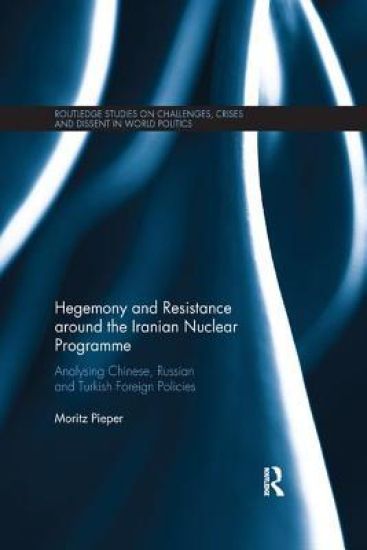
Hegemony and Resistance around the Iranian Nuclear Programme
The Iranian nuclear crisis is a proxy arena for competing visions about the functioning of international relations. This book is the first to provide comprehensive and comparative analyses to conceptualise the interaction between ‘hegemonic structures’ and those actors resisting them using the Iranian nuclear case as an illustration. It analyses the foreign policies of China, Russia and Turkey towards the Iranian nuclear programme and thereby answers the question to what extent these policies are indicative of a security culture that resists hegemony. Based on 70 elite interviews with experts and decision-makers closely involved with the Iranian nuclear file, it analyses resistance to hegemony across its ideational, material and institutional framework conditions. The cases examined show how ‘compliance’ on the part of China, Russia and Turkey with parts of US approaches to the Iranian nuclear conflict has been selective, and how US policy preferences in the Iran dossier have been resisted on other occasions. As such, the Iran nuclear case serves as an illustration to shed light on the contemporaneous interaction of the forces of consent and coercion in international politics. This book will be of key interest to scholars, students and practitioners in International Relations, Security Studies and Foreign Policy Analysis.