Kirjojen hintavertailu. Mukana 12 390 323 kirjaa ja 12 kauppaa.

Kirjahaku

Etsi kirjoja tekijän nimen, kirjan nimen tai ISBN:n perusteella.

1000 tulosta hakusanalla Napoleone Colajanni

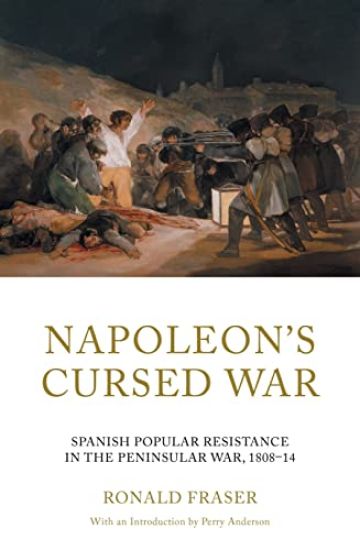
Napoleon's Cursed War

Napoleon's Cursed War

Ronald Fraser

Verso Books
2023
nidottu
In this definitive account of the Peninsular War (1808-14), Napoleon's six-year war against Spain, Ronald Fraser examines what led to the emperor's devastating defeat against the popular opposition - the guerrillas - and their British and Portuguese allies. As well as relating the histories of the great political and military figures of the war, Fraser brings to life the anonymous masses - the artisans, peasants and women who fought, suffered and died - and restores their role in this barbaric war to its rightful place while overturning the view that this was a straightforward military campaign. This vivid, meticulously researched book offers a distinct and profound vision of "Napoleon's Vietnam" and shows the reality of the disasters of war: the suffering, discontents and social upheaval that accompanied the fighting.With a new Introduction by Perry Anderson.

Napoleon's Expedition to Russia

Napoleon's Expedition to Russia

Chris Summerville

Robinson Publishing
2003
nidottu
Napoleon's invasion of Russia in 1812 remains one of the greatest military and humanitarian disasters of all time. Within six months a million lives were lost, the largest army ever assembled was destroyed, and the Emperor himself transformed from the master of a continent to a fugitive.General Count de Segur's first-hand account remains our chief source of information about this most dramatic of military debacles. From the Grand Army's first steps on Russian soil, to its miraculous escape at the River Berezina, this must rank as one of the greatest war stories ever written.First published in 1824, it caused a sensation. The author, who had served on the Emperor's staff, dared to present him as a flawed genius, resulting in a duel with Napoleon's former aide-de-camp, General Gourgaud. The public blood-letting (de Segur was wounded) only heightened demand and it was translated into every major European language.
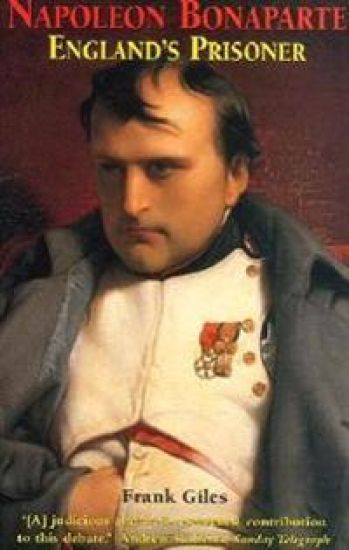
Napoleon Bonaparte: England's Prisoner

Napoleon Bonaparte: England's Prisoner

Frank Giles

Robinson Publishing
2002
nidottu
On 13 July 1815, after Waterloo, Napoleon dictated his famous letter to the Prince Regent. Avoiding any hint of surrender, still less responsibility for the defeat, he said he came 'like Themistocles to throw myself upon the hospitality of the British people.' But his idea of living peacefully in the English countryside was a pipedream: the island of St Helena was desolate and unappealing. The Governor, Sir Hudson Lowe, has been reviled by historians, but Giles gives a fresh perspective on Lowe, as on other aspects of the Emperor's exile.
Napoleon's Commanders (1)

Napoleon's Commanders (1)

Philip Haythornthwaite

Osprey Publishing
2001
nidottu
If the leading player of the Napoleonic Wars was Bonaparte himself, then a cast of colourful generals ably supported him. In the first of two volumes devoted to the most influential of the first empire's military leaders, the author summarizes the career of each commander and individual characters. This title details Napoleon's commanders. The commanders featured include Augereau, Bernadotte, Berthier, Carnot, Davout, Desaix, Junot, Kellerman, Kleber, Lannes, Lasalle, MacDonald, Massena, Moreau, Murat, Oudinot, Rapp, Serurier, Soult and Reynier. It includes quotations and anecdotes from their contemporaries bringing to life the characters of these legendary generals.
Napoleon's Commanders (2)

Napoleon's Commanders (2)

Philip Haythornthwaite

Osprey Publishing
2002
nidottu
On the Napoleonic battlefield victory or defeat could still depend on the skills, reactions and personalities of individual commanders. Even under a genius such as Bonaparte the dispersal of his armies on campaign, and the lack of fast communications, left command and control of the different corps and divisions in the hands of his marshals and generals. Continuing the author's study of the careers, peronalities and personal uniforms of the greatest French generals and marshals of the Napoleonic Wars, this volume describes and illustrates those leaders who made their names largely in the later years of the Empire, from 1809 to 1815. It includes leading figures such as Soult, Marmont, Murat, Espagne and Sucher.
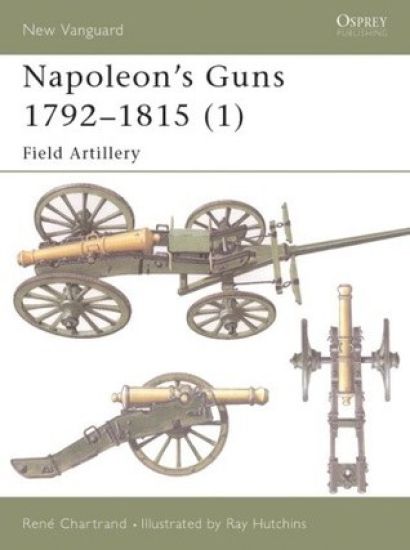
Napoleon's Guns 1792–1815 (1)

Napoleon's Guns 1792–1815 (1)

René Chartrand

Osprey Publishing
2003
nidottu
Napoleon, as a young artilleryman, was trained with the Gribeauval system, created to standardise the French field artillery. He remained faithful to this system throughout the Revolutionary and Napoleonic Wars, only introducing a few minor changes. The consistency of the Gribeauval system, along with Napoleon's personal preference for artillery ensured that the French artillery had a strong advantage over their opponents, possessing considerably more guns than any other army. This volume will deal with 4-, 8- and 12-pdr guns, light 1-pdr guns and later innovations such as the 6-pdr gun, which were used with great success by Napoleon in Italy, Germany and Austria.
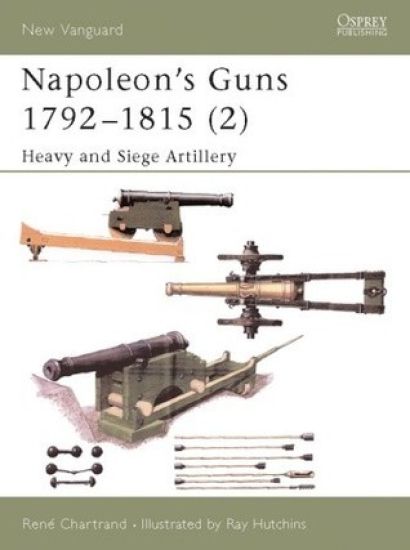
Napoleon's Guns 1792–1815 (2)

Napoleon's Guns 1792–1815 (2)

René Chartrand

Osprey Publishing
2003
nidottu
This volume is the second half of the story of the French artillery during the Revolutionary and Napoleonic Wars. It covers the howitzers, mortars and large siege (16- and 24-pdrs) and garrison (8- and 12-pdrs) guns, placing a special emphasis on their role, technical significance and operational use. The introduction of the Gribeauval system put in place a collection of mortars and large guns that were lighter and more manageable than those previously used, while offering first class hitting power.
Napoleon's Guards of Honour

Napoleon's Guards of Honour

Ronald Pawly

Osprey Publishing
2002
nidottu
After the disastrous Russian campaign in 1812, Napoleon was desperate to scrape together a new army to resist the inevitable Allied offensive in Germany. Particularly short of cavalry, he levied four complete regiments of "Guards of Honour" - totalling no less than 10,000 men - from the upper classes of Europe. This title details the history, organization and uniforms of this cavalry corps raised by Napoleon's last dazzling campaigns in 1813 and 1814. Supported by quotes from period letters and memoirs, and illustrated with portraits and photographs of surviving items of their hussar-style uniforms, it looks at these troubled troops' successes and failures.
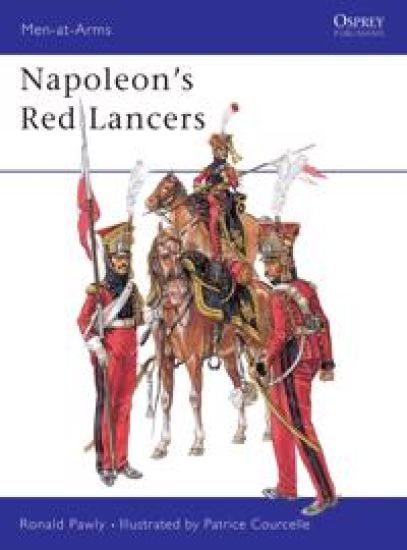
Napoleon's Red Lancers

Napoleon's Red Lancers

Ronald Pawly

Osprey Publishing
2003
nidottu
One of the most famous regiments of Napoleon's cavalry, the (Dutch) 2nd Light Horse Lancers of the Imperial Guard were universally known as the Red Lancers from their scarlet uniforms. They distinguished themselves in Russia 1812, at terrible cost; were rebuilt stronger than ever, and fought in the 1813-14 German and French campaigns; and rallied to Napoleon in 1815, charging the British squares at Waterloo. This book covers their organisation, uniforms, weapons and tactics in detail. It is based on surviving regimental documents, and rare private diaries and portraits in European family archives.
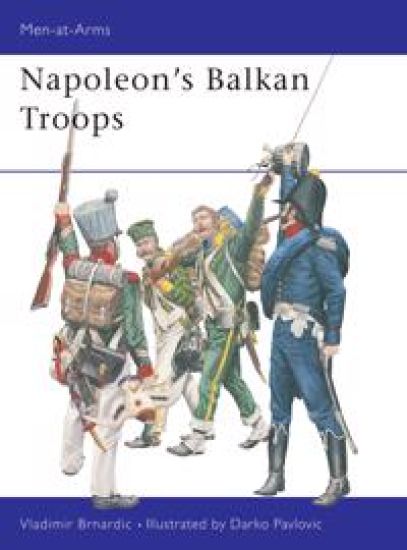
Napoleon's Balkan Troops

Napoleon's Balkan Troops

Vladimir Brnardic

Osprey Publishing
2004
nidottu
After defeating Austria at Austerlitz in 1805, Napoleon took over the territory then called 'Illyria' in western Croatia, but had to fight to occupy it in 1806-07. After defeat in 1809, Austria ceded more Balkan territories to the French Empire, but invaded and liberated these territories in 1814. This title examines the many former Austrian regiments from the areas that were taken into the French forces, for instance, Illyrian Chasseurs, Croatian and Dalmatian Regiments. Examined are the troops' uniform, weapons and organisation, all illustrated with detailed, colour artwork.
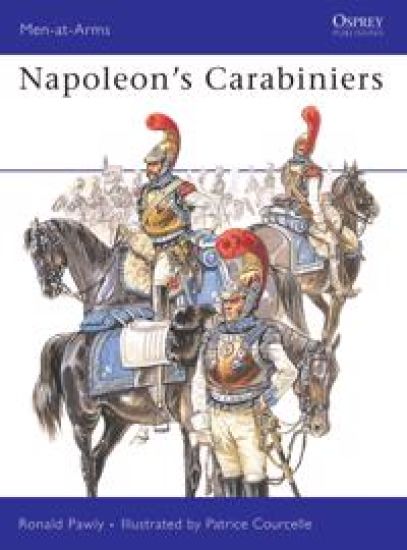
Napoleon’s Carabiniers

Napoleon’s Carabiniers

Ronald Pawly

Osprey Publishing
2005
nidottu
The two regiments of Carabiniers were reorganized in 1802 as part of Napoleon's cavalry reforms on taking the Consulate. They were the elite of the heavy horse, selected from the best men of the more numerous Cuirassier regiments and distinguished by tall bearskins. They fought in all Napoleon's early triumphs - Austerlitz, Friedland, Eckmuehl, Essling and Wagram. After this victorious campaign their dress was changed. They were issued cuirasses and helmets of brass, which were striking against their new white and sky-blue uniform. This book incorporates research and striking illustrations to tell the story of these brave men and detail their uniforms and equipment.
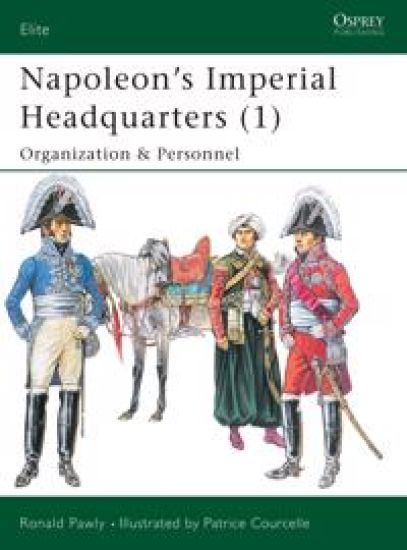
Napoleon’s Imperial Headquarters (1)

Napoleon’s Imperial Headquarters (1)

Ronald Pawly

Osprey Publishing
2004
nidottu
Napoleon's military successes were due to a large degree to the efficiency of his command and control systems or 'headquarters'. These comprised the Great Imperial Headquarters and the Small Imperial Headquarters, both staffed by members of the Military Household and the Civil Household including officers and men of many different departments. This book shows how their functions slotted together into a system that provided the Emperor with all the information he needed to make decisions; with the means to turn those decisions into specific orders, and to distribute them quickly; and with all the protection, logistic and other back-up services that allowed his court to function while on campaign.
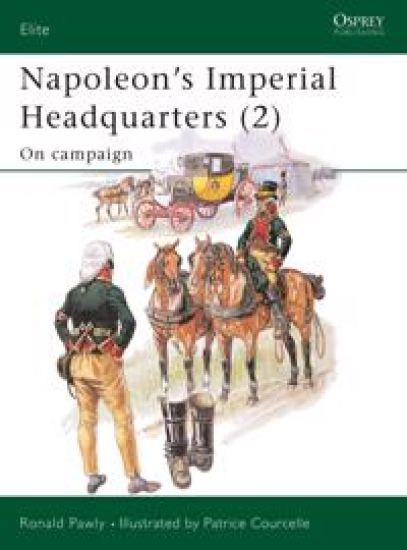
Napoleon’s Imperial Headquarters (2)

Napoleon’s Imperial Headquarters (2)

Ronald Pawly

Osprey Publishing
2004
nidottu
Napoleon's unrivalled career of victory was due not only to his genius, but also to the efficient system of command by which he controlled his armies. This, the second of two books looking at Napoleon's Imperial Headquarters, focuses on his campaign headquarters, examining the integration of the military and civil households within both the campaign and battlefield headquarters. The headquarters' organisation and lines of communication are discussed in detail as are Marshal Berthier's (chief of general staff) staff departments which included intelligence and the commissariat.
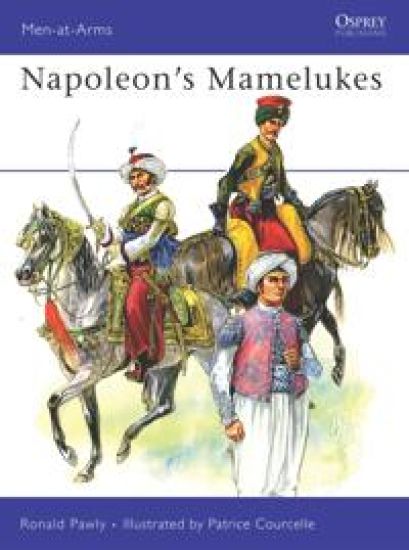
Napoleon’s Mamelukes

Napoleon’s Mamelukes

Ronald Pawly

Osprey Publishing
2006
nidottu
When the French army returned home following defeat in Egypt in 1801, they brought along with them several locally hired units. Among these units were the Mameluke cavalry, whose exotic dress reflected Turkish style. Napoleon eventually established a Mameluke squadron for his personal guard, and they fought in all of Napoleon's major campaigns as part of the Mounted Chasseurs regiment of the Imperial Guard. Although the Turks were gradually replaced by Frenchmen, they retained their Turkish uniforms. This book explores the history of Napoleon's Mamelukes throughout the Napoleonic wars, and features detailed illustrations that enhance the story of this extraordinary unit.
Napoleon’s Scouts of the Imperial Guard

Napoleon’s Scouts of the Imperial Guard

Ronald Pawly

Osprey Publishing
2006
nidottu
Napoleon's last 'Campaign of France' in 1814 proved to be one of his most brilliant. He relied as never before on committing his elite Imperial Guard cavalry to battle. He raised three new regiments of crack "claireurs" - 'Scouts', which were attached to the Guard Mounted Grenadiers, Empress's Dragoons and Polish Lancers respectively which would counterattack the Cossacks and gather vital information. Each regiment had its own style of uniform, but part of each was armed with lances. Although they were short-lived, these Scout units greatly distinguished themselves in the last battles of the collapsing Empire.
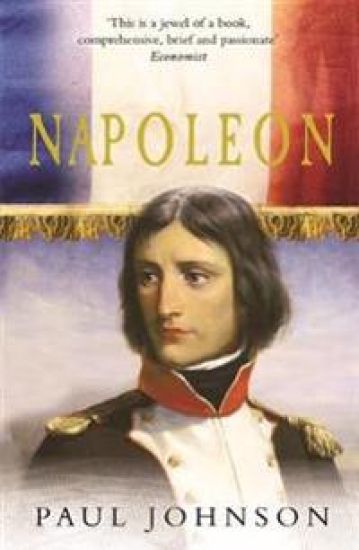
Napoleon

Napoleon

Paul Johnson

Orion Publishing Co
2003
pokkari
A short and vivid biography, which deconstructs the Napoleonic myth and reveals the reality of his rule. 'Thoughtful and incisive' INDEPENDENT
Napoleon and Wellington

Napoleon and Wellington

Andrew Roberts

Orion Publishing Co
2003
pokkari
A dual biography of the greatest opposing generals of their age who ultimately became fixated on one another, by a bestselling historian. 'Thoroughly enjoyable, beautifully written and meticulously researched' Observer
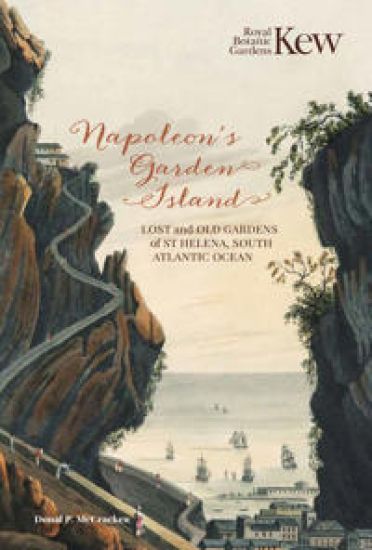
Napoleon’s Garden Island

Napoleon’s Garden Island

Donal P. McCracken

ROYAL BOTANIC GARDENS
2022
sidottu
There is more to St Helena than an exiled emperor; the tiny island in the middle of the wild South Atlantic Ocean has a rich garden heritage and an extraordinarily diverse flora, both exotic and endemic. This was the consequence of St Helena being the stopover for the vast East India Company fleets from the east on the way to Europe, their cargos carrying, along with spices, plants from China, Malaysia and India. In the age of sail only a small proportion of plants survived lengthy sea voyages, so plants being transported north were rested in gardens on the island before the final leg of their voyage. In this way Jamestown became a storeroom for plants coming in from the east and south Asia, resting in the gardens and then being shipped on to botanic gardens and wealthy collectors, or to be trialled for horticulture or agricultural economic potential. And some of these plants remained, giving the 47 square-mile (122 sq km) island a controversially globally diverse flora today. St Helena became a botanical hub and the East India Company and private plantation houses on the island developed extraordinarily botanically diverse gardens, which were maintained by enslaved labour and Chinese gardeners. This included the now re-established Emperor Napoleon’s Garden (it is a curious fact that the most enthusiastic gardener St Helena ever had was the Emperor Napoleon Bonaparte!) as well as the governor’s country estate garden at Plantation House. Illustrated throughout with stunning drawings, maps, and archival manuscript material, Napoleon’s Garden Island looks both to St Helena’s future and to its past, taking the reader on a botanical exploration of the island’s native and introduced flora, and its place in the botanical world today. The book ultimately appeals for a botanic garden to be re-established but to showcase the island’s endemic plants.