Written in an engaging and relatable manner, this book reviews the psychological theories and research on the topic of oppression—its evolution, its various forms, and its consequences. Painful historical examples and modern-day occurrences of oppression including mass incarceration, LGBTQ and transgender issues, police brutality, immigration reform, anti-Muslim sentiments, and systemic racism are explored. How oppression exists and operates on various levels, the mental and behavioral health consequences of oppression, and promising clinical and community programs to eradicate oppression are reviewed. The authors hope that by providing readers with a basic understanding of oppression, it will motivate them to combat bias to create a more just, harmonious, and healthy world. Highlights include: Introduces readers to the psychological theories and research on oppression whereas most other books focus on a sociological or ethnic studies perspective. Introduces readers to the fundamentals of oppression—what it is, who experiences it, and where and when it has taken place. Dissects the layers of oppression—how it is expressed blatantly or subtly and overtly or covertly. Explores how oppression is manifested on different levels (including interpersonal, institutional/systemic, and internalized) for a deeper understanding. Demonstrates how oppression influences peoples’ thoughts, attitudes, feelings, and behaviors, and how it influences peoples’ well-being and health. Explores why certain people are discriminated against simply because of their race, ethnicity, gender, or sexuality and the resulting psychological implications. Highlights what researchers and service providers are doing to address oppression via encouraging community and clinical interventions. Examines why oppression exists and has persisted throughout history and what it looks like today. Recommends future psychological work on oppression across research, clinical, and community contexts. Ideal as a text in upper-level undergraduate and beginning graduate courses on oppression, prejudice and discrimination, race relations, ethnic studies, ethnic and racial minorities, multicultural or cross-cultural psychology, multicultural counseling, diversity, women’s studies, LGBTQ studies, disability studies, and social justice taught in psychology, social work, and counseling. Behavioral and mental health providers in both clinical and community contexts will also appreciate this book.
Recent bombings of U.S. embassies in Africa remind us that U.S. citizens and U.S. interest are not immune to terrorism. Featuring the works of world-renowned experts, this book traces the recent evolution of international terrorism against civilian and U.S. military targets, looks ahead to where terrorism is going, and assesses how it might be contained.
Evaluates the progress and implementation of the Arkansas tobacco settlement program. Documents the initiation and first two years of activity by the seven funded health-related programs set up under the Tobacco Settlement Proceeds Act, evaluates their progress, and makes recommendations for future program activities and funding.
"Although it almost certainly won't get much credit for it, this is a near-perfect example of that rara avis, the impartial report on a white-hot public issue. Each chapter is full of meanigful quotation and value-neutral elucidation, and each is written in a rainwater-clear prose that makes the book nonpareil for learning what, in terms of law and public policy, abortion in the U.S. is all about." – ALA Booklist
This work has been selected by scholars as being culturally important and is part of the knowledge base of civilization as we know it.This work is in the public domain in the United States of America, and possibly other nations. Within the United States, you may freely copy and distribute this work, as no entity (individual or corporate) has a copyright on the body of the work.Scholars believe, and we concur, that this work is important enough to be preserved, reproduced, and made generally available to the public. To ensure a quality reading experience, this work has been proofread and republished using a format that seamlessly blends the original graphical elements with text in an easy-to-read typeface.We appreciate your support of the preservation process, and thank you for being an important part of keeping this knowledge alive and relevant.
In The Closing of the Auditor’s Mind?, author David J. O’Regan describes internal auditing as an important "binding agent" of social cohesion, for the accountability of individuals and organizations and also at aggregated levels of social trust. However, O’Regan also reveals that internal auditing faces two severe challenges – an external challenge of adaptation and an internal challenge of fundamental reform.The adaptation challenge arises from ongoing, paradigmatic shifts in accountability and social trust. The command-and-control, vertical hierarchies of traditional bureaucracies are being replaced in importance by networked, flattened patterns of accountability. The most challenging assurance demands of the modern era are increasingly located in three institutional domains – in the inner workings of organizations; in intermediary spaces at organizational boundaries; and in extra-mural locations. Internal auditing continues to cling, barnacle-like, to the inner workings of traditional, bureaucratic structures, and it has little to offer the emerging assurance demands on or beyond institutional boundaries. The reform challenge arises from internal auditing’s prevailing tendency toward a rigid, algorithmic, checklist mindset that suppresses practitioners’ creativity and critical thinking. This trend is increasingly narrowing internal auditing’s intellectual and moral horizons. Under the pressures of these challenges, internal auditing is struggling to fulfil its primary purpose of serving the public interest.O’Regan’s powerful book focuses on:The redistribution of social trust from traditional, hierarchical institutions to diffuse, horizontally distributed networksThe perennial validity of the classical virtues as the humane foundation of professional activityThe role of creative expertise in promoting professional wisdomThe Closing of the Auditor’s Mind? is a philosophical audit of a profession on the threshold of crisis. The book presupposes no prior knowledge of philosophy, nor indeed of auditing. Philosophical technicalities are contained in an Appendix, leaving the main text jargon-free. O’Regan provides original and striking perspectives on the malaise of modern internal auditing, and he proposes radical remedies. This captivating and well-informed book is a must-read for all who are concerned with our collective socio-economic and political well-being.
The third edition of this popular textbook offers a comprehensive and student-friendly exploration of the application of property valuation and appraisal techniques. Thoroughly revised and re-structured, it covers topics including risk, residential lease extensions, enfranchisement and cash flows. The text explain the theory concisely but at the same time seeks to show the application of different techniques in the contexts which are often encountered in practice. Detailed yet accessible, Property Valuation Techniques is ideal reading both for second and third year undergraduates; for postgraduates, both those new to the subject and those looking to extend their knowledge; and for practitioners who are not valuers but require some familiarity with the vocabulary, principles and application of the valuation toolkit or who are looking to refresh and develop their understanding of property valuation.
The fully revised and updated third edition of this textbook provides a comprehensive guide to the property development process, taking readers from initial project evaluation to planning, funding, construction and disposal. The last ten years have seen regional planning apparatus swept away and replaced by new neighbourhood plans and more prominence is now given to financial viability in planning policy and decision making. The uncertainty of the financial crisis and the associated housing crash have given way to a new wave of commercial and housing development, and in this period of growth it is more important than ever to be aware of the risks and opportunities inherent in the property market. This book is an ideal companion for students on courses in estate management, land economics, property development, real estate, surveying, construction, planning and related subjects. The book will also have value for practitioners in any of these fields who as part of their CPD obligations may be looking to refresh and update their knowledge.
Cognitive therapies are often biased in their assessment of clinical problems by their emphasis on the role of verbally-mediated thought in shaping our emotions, and in stressing the influence of thought upon feeling. Alternatively, a more phenomenological appraisal of psychological dysfunction suggests that emotion and thinking are complementary processes which influence each other.Cognitive psychology developed out of information-processing models, whereas phenomenological psychology is rooted in a philosophical perspective which avoids the assumptions of positivist methodology. But, despite their different origins, the two disciplines overlap and complement each other. This book, originally published in 1995, illustrates how feeling states are a crucial component of mental health problems and, if adequately differentiated, can result in a greater understanding of mental health.
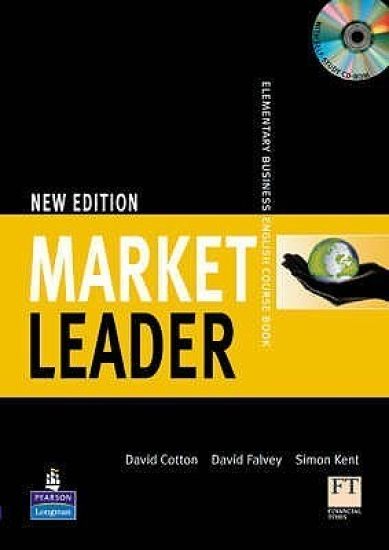
Market Leader Extra is a five-level English course for students who want to learn English and learn about business, and for business people who want to advance their careers. New business skills lessons develop the business skills students need for working in business.
This is an offprint of two chapters of a more complete monograph published by the author under the title of "How America's First Settlers Invented Chattel Slavery." That book is still available from the publisher, but the two chapters reproduced here are because they have particular relevance to contemporary subjects and discussions, particularly surrounding the recent canonization of Father Junipero Serra. The subject of the reprinted chapters is the dehumanization of Native Americans and Africans with Language, Laws, Guns, and Religion, especially during the colonization of early settlers in the United States. The two chapters reproduced in this offprint are from a larger work published in the Series "Berkeley Insights in Linguistics and Semiotics" and are reproduced here, by the author, with the kind permission of Peter Lang Publishers, Inc., New York.
This work has been selected by scholars as being culturally important, and is part of the knowledge base of civilization as we know it. This work was reproduced from the original artifact, and remains as true to the original work as possible. Therefore, you will see the original copyright references, library stamps (as most of these works have been housed in our most important libraries around the world), and other notations in the work.This work is in the public domain in the United States of America, and possibly other nations. Within the United States, you may freely copy and distribute this work, as no entity (individual or corporate) has a copyright on the body of the work.As a reproduction of a historical artifact, this work may contain missing or blurred pages, poor pictures, errant marks, etc. Scholars believe, and we concur, that this work is important enough to be preserved, reproduced, and made generally available to the public. We appreciate your support of the preservation process, and thank you for being an important part of keeping this knowledge alive and relevant.
Although vast and complex, the universe is orderly in many ways, and conditions at its beginning were right for the eventual evolution of life on this planet. But with life there is death, and with sentient life there is great pain and suffering, often with no apparent justification or purpose. Taking these things together, is it reasonable to conclude that the universe was brought about by God? Moreover, does the magnitude of seemingly pointless suffering square with the idea that God exists, or is it good reason to think there is no God? These questions come up for many people, not just religious believers, and are examined in this engaging and thought-provoking book. Starting out with no pre-disposition to theism, atheism, or agnosticism, God, Evil, and Design takes up these questions in order to see where an impartial investigation leads. To achieve impartiality, the reader is invited to simulate ignorance insofar as his or her own religious preference is concerned. With this approach, God, Evil, and Design provides both a fresh look at important and controversial issues in philosophy and an excellent introduction to the contemporary debates surrounding them. Lively and non-technical, this book will be accessible to anyone with an interest in these topics.