Selected by Peter Davison with an introduction by Edward Hirsch. Sissman was a true phenomenon in American poetry. He published his first book, a collection of antic, autobiographical episodes in blank verse, in 1968. Eight years and three books later, he died of Hodgkin's disease at the age of forty-eight. Of Sissman's remarkable final poems John Updike wrote, "What other poet had ever given such wry and unblinking witness to his own dying? His poetry gave back to life more generously than he had received, and carried his beautiful wit into darkness undimmed." Now Sissman's longtime editor, Peter Davison, has selected from his lifework the essential poems--the essence of an American original. (A Mariner Original)
Developing Cultures: Case Studies is a collection of 27 essays by a group of leading internationals scholars on the role of culture and cultural change in the evolution of countries and regions around the world.
Developing Cultures: Case Studies is a collection of 27 essays by a group of leading internationals scholars on the role of culture and cultural change in the evolution of countries and regions around the world.
Specifically designed for the introductory course, this text provides an overview of the field of instructional supervision. Acquaints students with not only the authors’ views on supervision, but with those of other specialists in the field, placing heavy emphasis on practice and the supervisor’s responsibilities as an instructional leader. Continues to stress that the relationship between the supervisor and teacher is built on trust and that the overall goal is to improve student achievement through better instruction.
This new edition of a successful, bestselling book continues to provide you with practical information on the use of statistical methods for solving real-world problems in complex industrial environments. Complete with examples from the chemical and pharmaceutical laboratory and manufacturing areas, this thoroughly updated book clearly demonstrates how to obtain reliable results by choosing the most appropriate experimental design and data evaluation methods. Unlike other books on the subject, Statistical Methods in Analytical Chemistry, Second Edition presents and solves problems in the context of a comprehensive decision-making process under GMP rules: Would you recommend the destruction of a $100,000 batch of product if one of four repeat determinations barely fails the specification limit? How would you prevent this from happening in the first place? Are you sure the calculator you are using is telling the truth? To help you control these situations, the new edition: *Covers univariate, bivariate, and multivariate data*Features case studies from the pharmaceutical and chemical industries demonstrating typical problems analysts encounter and the techniques used to solve them* Offers information on ancillary techniques, including a short introduction to optimization, exploratory data analysis, smoothing and computer simulation, and recapitulation of error propagation*Boasts numerous Excel files and compiled Visual Basic programs–no statistical table lookups required!*Uses Monte Carlo simulation to illustrate the variability inherent in statistically indistinguishable data setsStatistical Methods in Analytical Chemistry, Second Edition is an excellent, one-of-a-kind resource for laboratory scientists and engineers and project managers who need to assess data reliability; QC staff, regulators, and customers who want to frame realistic requirements and specifications; as well as educators looking for real-life experiments and advanced students in chemistry and pharmaceutical science.From the reviews of Statistical Methods in Analytical Chemistry, First Edition:"This book is extremely valuable. The authors supply many very useful programs along with their source code. Thus, the user can check the authenticity of the result and gain a greater understanding of the algorithm from the code. It should be on the bookshelf of every analytical chemist. "Applied Spectroscopy"The authors have compiled an interesting collection of data to illustrate the application of statistical methods . . . including calibrating, setting detection limits, analyzing ANOVA data, analyzing stability data, and determining the influence of error propagation." Clinical Chemistry"The examples are taken from a chemical/pharmaceutical environment, but serve as convenient vehicles for the discussion of when to use which test, and how to make sense out of the results. While practical use of statistics is the major concern, it is put into perspective, and the reader is urged to use plausibility checks."& mdash;Journal of Chemical Education"The discussion of univariate statistical tests is one of the more thorough I have seen in this type of book.... The treatment of linear regression is also thorough, and a complete set of equations for uncertainty in the results is presented.... The bibliography is extensive and will serve as a valuable resource for those seeking more information on virtually any topic covered in the book."Journal of American Chemical SocietyThis book treats the application of statistics to analytical chemistry in a very practical manner. [It] integrates PC computing power, testing programs, and analytical know-how in the context of good manufacturing practice/good laboratory practice (GMP/GLP).... The book is of value in many fields of analytical chemistry and should be available in all relevant libraries." Chemometrics and Intelligent Laboratory Systems
This book surveys the prospects for regional monetary integration in various parts of the world. Beginning with a brief review of the theory of optimal currency areas, it goes on to examine the structure and functioning of the European Monetary Union, then turns to the prospects for monetary integration elsewhere in the world - North America, South America, and East Asia. Such cooperation may take the form of full-fledged monetary unions or looser forms of monetary cooperation. The book emphasizes the economic and institutional requirements for successful monetary integration, including the need for a single central bank in the case of a full-fledged monetary union, and the corresponding need for multinational institutions to safeguard its independence and assure its accountability. The book concludes with a chapter on the implications of monetary integration for the United States and the US dollar.
This book surveys the prospects for regional monetary integration in various parts of the world. Beginning with a brief review of the theory of optimal currency areas, it goes on to examine the structure and functioning of the European Monetary Union, then turns to the prospects for monetary integration elsewhere in the world - North America, South America, and East Asia. Such cooperation may take the form of full-fledged monetary unions or looser forms of monetary cooperation. The book emphasizes the economic and institutional requirements for successful monetary integration, including the need for a single central bank in the case of a full-fledged monetary union, and the corresponding need for multinational institutions to safeguard its independence and assure its accountability. The book concludes with a chapter on the implications of monetary integration for the United States and the US dollar.
National Security Space Strategy is at a juncture with tremendously complex changing environments, global threats, phenomenally successful/unsuccessful space systems, and a perceived need to change. Our NSS Strategy started fifty years ago with President Eisenhower's two basic principles: Freedom of Space and Space for Peaceful Purposes. This community concentrated on three strategies to ensure their successes. The essence of the NSS Strategy, for 50 years, boiled down to acquiring the best technological solutions, locating them at the strategic high ground locations, operating them with the strategic and tactical operations in mind, and ensuring that the capabilities were sustained. This set of authors looked back in time; viewing our successes and failures; and, suggest a movement forward to stimulate a better understanding of the strengths of a NSS Strategy.
This introductory text explains the fundamentals of the chemistry of the natural environment and the effects of mankind's activities on the earth's chemical systems. Retains an emphasis on describing how natural geochemical processes operate over a variety of scales in time and space, and how the effects of human perturbation can be measured.Topics range from familiar global issues such as atmospheric pollution and its effect on global warming and ozone destruction, to microbiological processes that cause pollution of drinking water deltas.Contains sections and information boxes that explain the basic chemistry underpinning the subject covered.Each chapter contains a list of further reading on the subject area. Updated case studies.No prior chemistry knowledge required.Suitable for introductory level courses.
For more than two centuries, the U.S. Supreme Court has provided a battleground for nearly every controversial issue in our nation’s history. Now a veteran team of talented historians—including the editors of the acclaimed Landmark Law Cases and American Society series—have updated the most readable, astute single-volume history of this venerated institution with a new chapter on the Roberts Court.The Supreme Court chronicles an institution that dramatically evolved from six men meeting in borrowed quarters to the most closely watched tribunal in the world. Underscoring the close connection between law and politics, the authors highlight essential issues, cases, and decisions within the context of the times in which the decisions were handed down. Deftly combining doctrine and judicial biography with case law, they demonstrate how the justices have shaped the law and how the law that the Court makes has shaped our nation, with an emphasis on how the Court responded—or failed to respond—to the plight of the underdog. Each chapter covers the Court’s years under a specific Chief Justice, focusing on cases that are the most reflective of the way the Court saw the law and the world and that had the most impact on the lives of ordinary Americans. Throughout the authors reveal how—in times of war, class strife, or moral revolution—the Court sometimes voiced the conscience of the nation and sometimes seemed to lose its moral compass. Their extensive quotes from the Court’s opinions and dissents illuminate its inner workings, as well as the personalities and beliefs of the justices and the often-contentious relationships among them.Fair-minded and sharply insightful, The Supreme Court portrays an institution defined by eloquent and pedestrian decisions and by justices ranging from brilliant and wise to slow-witted and expedient. An epic and essential story, it illuminates the Court’s role in our lives and its place in our history in a manner as engaging for general readers as it is rigorous for scholars.
For more than two centuries, the U.S. Supreme Court has provided a battleground for nearly every controversial issue in our nation’s history. Now a veteran team of talented historians—including the editors of the acclaimed Landmark Law Cases and American Society series—have updated the most readable, astute single-volume history of this venerated institution with a new chapter on the Roberts Court.The Supreme Court chronicles an institution that dramatically evolved from six men meeting in borrowed quarters to the most closely watched tribunal in the world. Underscoring the close connection between law and politics, the authors highlight essential issues, cases, and decisions within the context of the times in which the decisions were handed down. Deftly combining doctrine and judicial biography with case law, they demonstrate how the justices have shaped the law and how the law that the Court makes has shaped our nation, with an emphasis on how the Court responded—or failed to respond—to the plight of the underdog. Each chapter covers the Court’s years under a specific Chief Justice, focusing on cases that are the most reflective of the way the Court saw the law and the world and that had the most impact on the lives of ordinary Americans. Throughout the authors reveal how—in times of war, class strife, or moral revolution—the Court sometimes voiced the conscience of the nation and sometimes seemed to lose its moral compass. Their extensive quotes from the Court’s opinions and dissents illuminate its inner workings, as well as the personalities and beliefs of the justices and the often-contentious relationships among them.Fair-minded and sharply insightful, The Supreme Court portrays an institution defined by eloquent and pedestrian decisions and by justices ranging from brilliant and wise to slow-witted and expedient. An epic and essential story, it illuminates the Court’s role in our lives and its place in our history in a manner as engaging for general readers as it is rigorous for scholars.
This biography of Sir William Jardine (1800-1874), the foremost Scottish naturalist of the 19th century, uses original source material (manuscripts, correspondence, etc.). Despite Jardine's considerable achievements as ornithologist, ichthyologist, publisher and catalyst of Victorian science, no comprehensive biography exists. Jardine owned the finest private natural history museum and library in Britain and made natural history available to anyone who could read by issuing 40 small volumes on birds, mammals, fishes and insects.
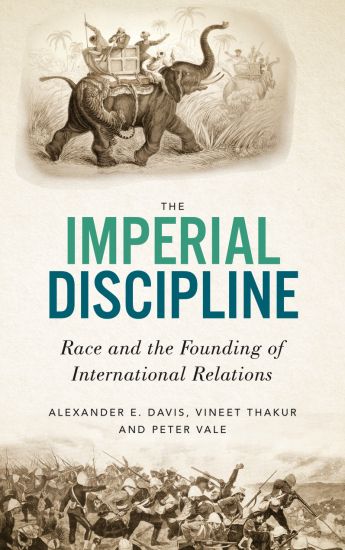
This book questions the accepted origins of the field of International Relations (IR). Commonly understood to have emerged from the horrors of WW1 with the goal of bringing about world peace, the authors argue that on the contrary, IR came from a somewhat less noble tradition – that of the Round Table. The Round Table were a network of imperialists emerging in the late 1800s across five key British imperial societies: Australia, Canada, New Zealand, South Africa and India. Their aim was to improve imperial governance, placing the empire into a position to control world affairs. Although they ultimately failed to rearrange world order according to their vision, they did help to build what we now call the discipline of IR. The Round Table's 'scientific method' for the study of world affairs was rapidly subsumed into each geopolitical context. Through telling this story, the authors recover it, and interrogate its meanings for the discipline of IR today. They show the importance of the Global South to IR's foundations, and argue that IR scholarship in this period was intertwined with imperial racial thought in ways that it should not and cannot forget.
This book questions the accepted origins of the field of International Relations (IR). Commonly understood to have emerged from the horrors of WW1 with the goal of bringing about world peace, the authors argue that on the contrary, IR came from a somewhat less noble tradition – that of the Round Table. The Round Table were a network of imperialists emerging in the late 1800s across five key British imperial societies: Australia, Canada, New Zealand, South Africa and India. Their aim was to improve imperial governance, placing the empire into a position to control world affairs. Although they ultimately failed to rearrange world order according to their vision, they did help to build what we now call the discipline of IR. The Round Table's 'scientific method' for the study of world affairs was rapidly subsumed into each geopolitical context. Through telling this story, the authors recover it, and interrogate its meanings for the discipline of IR today. They show the importance of the Global South to IR's foundations, and argue that IR scholarship in this period was intertwined with imperial racial thought in ways that it should not and cannot forget.
How might Scotland achieve independence? And what would be the consequences, for Scotland and the rest of the UK? Independence is ever-present on the Scottish political agenda. This book is the first serious study of the likely road to independence, and the consequences for the Scottish people and the Scottish economy. Scottish Independence starts with a detailed guide to the stages along the route to independence and goes on to analyse the legal, political and economic consequences. It asks key questions: *If Scots vote for an SNP government in Edinburgh, how will that government deliver its manifesto promise of achieving independence in Scotland? *If the Scots attain independence, what will change? What will Scotland's place be in the world? Can Scotland remain in the EU? *What are the economics of independence? Would there be a flight of capital and a stock-market fall? How much economic freedom would an independent Scotland have? *How much would change in the daily lives of Scots as a result of independence? How much autonomy would Scotland have as a small independent state in Europe?Scottish Independence will have an impact on public policy and on academic thinking, and is of key interest to politicians, civil servants, academics, journalists and anyone interested in Scotland's future.
This collection of over 200 archive photographs, most never before published, highlights some of the changes and developments that have taken place in and around the villages of Wyke and Low Moor, near Bradford. Although the in the nineteenth century Bradford flourished as the centre of the Yorkshire woollen trade it also boasted several iron foundries. Perhaps the most prestigious was the Low Moor Company whose works, mineral lines and pits dominated the area for over 150 years; Wyke and Low Moor still bear the scars to this day. Accompanied by supporting text, this pictorial history stands witness to the area's industrial past, its close communities, and their work, worship and play. Compiled by the respective local history groups of Wyke and Low Moor, this volume will delight those who want to know more about the history of these two villages, and evoke memories of a bygone time for those who live there.
Doing Exemplary Research is one of my favorite books because it is one of the most open and least contained books, out of whose intertextuality many other possible books can be written, journeys made, and exemplars established. It is a book that does much more than it says. It is capable of many readings, diverse indexing, and possible trajectories. It works, despite itself on occasion, as a postmodern text, rewritten every time it is read. Stewart Clegg in Contempory Sociology "The pieces by the original authors are very illuminating about the false starts, frustrations, and interpersonal problems in doing research in organizations, as well as difficulties associated with getting material published. In the book's last two chapters, the editors explore the common themes in the preceding chapters and then speculate about the broader significance of the seven exemplars. These two chapters are excellent and more insightful than most of the commentaries. Frost and Stablein reveal a number of common themes which are well illustrated with examples from the preceding discussions. . . . The book provides an excellent introduction to the nature of the research process as it is lived by researchers . . . as such it will be of immense use to students of research methodology." --Organization Studies "I could scarcely put Doing Exemplary Research down until I had finished it. I found it engrossing and enlightening. . . . Your book is the richest of all the texts and readings on organizational sociology to which I have been exposed. . . . You have made a tremendous contribution to my knowledge of the field and growth as a social scientist!" --Marcia R. Prior-Miller, Iowa State University "This book is an unusual and valuable one on how research in the social sciences is actually carried out. . . . The book's structure is itself innovative. . . . Frost and Stablein have themselves achieved a piece of exemplary research in this book. I found it engrossing and rewarding reading, and enthusiastically recommend it to anyone interested in how social scientists actually go about the process of doing good research. Its messages are of particular practical value to younger members of the research community who should benefit even more from their second and third readings. It could make the basis of a good short course within any post-graduate research program in business studies." --Creativity and Innovation Management "By having both junior and senior scholars reflect on the work that led up to their exemplary research publications, this book provides valuable insights into the contemplation, speculation, perspiration and frustration that constitute successful research. The emphasis on process in Doing Exemplary Research is unique and the book deserves a wide readership in all fields of management and the social sciences. In my class the students from mathematics, economics, and behavioral science backgrounds all found the book informative and, indeed, inspiring." --Kenneth R. MacCrimmon, E. D. MacPhee Professor of Management, University of British Columbia "Absorbing. Instructive. These are at least two of the terms that best describe this book for me. It is absorbing in the sense that any good book of short stories draws readers in and holds their interest tightly from one chapter to the next--virtually a 'can't put it down until I've finished' volume. It is, then, thoroughly engrossing in a charmingly engaging manner. However, the book is also much more than that--much more than the proverbial 'good read.' This is because it is also highly instructive in the way in which it makes you think and ponder while you are perusing it. No one, rookies or veterans alike, can come away from this collection of commentaries and observations without having learned something at a deeper level than before about the research process. This volume illuminates and teaches as well as entertains. . . . Together with their elicitation of authors' and experts' commentaries and their own analyses, (Frost and Stablein) have produced an exemplary book." --from the Foreword by Lyman Porter "This is a work of the spirit. It is an edited collection of moral journeys into the inner life and craft of scientific research in organization studies. . . . This format offers enlightening juxtapositions of the viewpoints of writers and readers of each research study and of the front-stage and back-stage goings-on of each research study. These juxtapositions also make for a dramatic structure that builds and holds the reader's interest. . . . Instead of lording over the reader with textbook commandments about how research ought to be done (commandments that confirm us all in sin), it beseeches the reader with moral stories of research done well. Far from the canonical ideal, these stories depict a research process that includes more error, more success, more effort, more serendipity, more despair, more humor, and more human drama. Charming anecdotes abound. . . . (These stories also) depict a research process that is a complex and nuanced whole, rather than a stylized construction of logical steps and simple techniques." --Lloyd Sandelands, University of Michigan Research is a curious process of immersion in ideas and data, passion, insight, challenge, uncertainty, persistence, and learning regardless of the outcome. Once in a while there comes along a book that opens a window on the research process, giving research a human face by introducing the human element into a methodical process. Doing Exemplary Research is just such a book. These fascinating recollections of research journeys provide an array of ideas and insights about how research takes place that leads to exemplary outcomes. Contributions feature recollections by the researchers on the origins, experiences, and outcomes of the studies and original expert commentaries upon those classic models. An exciting inside look at the give and take of scholarly collaboration and the process of doing empirical research, the candid accounts and revealing commentaries in this volume seek to demystify the research process and provide inspiration for future research. Doing Exemplary Research is an essential resource for advanced undergraduate and graduate students, as well as researchers across the social sciences. It will be of special interest to those in the organizational sciences, including organizational consultants, managers, and other professionals.
This book is a volume in the Penn Press Anniversary Collection. To mark its 125th anniversary in 2015, the University of Pennsylvania Press rereleased more than 1,100 titles from Penn Press's distinguished backlist from 1899-1999 that had fallen out of print. Spanning an entire century, the Anniversary Collection offers peer-reviewed scholarship in a wide range of subject areas.
"A good deal has been done to improve the safety of Americans on their own soil since the attacks of September 11, 2001. Yet there have been numerous setbacks. The Bush administration and Congress wasted at least six months in 2002 due to partisan disagreement over a new budget for homeland security, and as one consequence, resources were slow to reach first responders across the country. Most improvements in homeland security have focused on ""refighting the last war""—improving defenses against attacks similar to those the country has already suffered. Not enough has been done to anticipate possible new kinds of terrorist actions. Policymakers have also focused too much attention on the creation of a department of homeland security—rather than identifying and addressing the kinds of threats to which the country remains vulnerable. While the creation of a cabinet-level agency focusing on homeland security may have merit, the authors of this study argue that the department will not, in and of itself, make Americans safer. To the contrary, the complexity of merging so many disparate agencies threatens to distract Congress and the administration from other, more urgent security efforts. This second edition of Protecting the American Homeland urges policymakers to focus on filling key gaps that remain in the current homeland security effort: identifying better protection for private infrastructure; using information technology to share intelligence and more effectively ""connect the dots"" that could hold hints to possible terrorist tactics; expanding the capacities of the Coast Guard and Customs Service, as well as airline transportation security; dealing with the possible threat of surface-to-air missiles to airliners; and encouraging better coordination among intelligence agencies. While acknowledging the impossibility of preventing every possible type of terrorist violence, the authors recommend a more systematic approach to homeland security that focuses on preventing attacks that can cause large numbers of casualties, massive economic or societal disruption, or severe political harm to the nation."