Kirjojen hintavertailu. Mukana 12 459 402 kirjaa ja 12 kauppaa.

Kirjahaku

Etsi kirjoja tekijän nimen, kirjan nimen tai ISBN:n perusteella.

1000 tulosta hakusanalla Phillips Russell

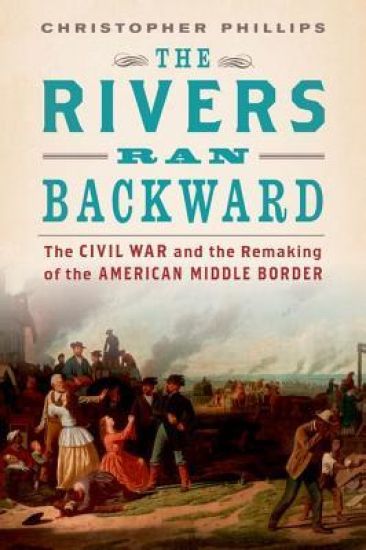
The Rivers Ran Backward: The Civil War and the Remaking of the American Middle Border
Most Americans imagine the Civil War in terms of clear and defined boundaries of freedom and slavery: a straightforward division between the slave states of Kentucky and Missouri and the free states of Illinois, Indiana, Ohio, and Kansas. However, residents of these western border states, Abraham Lincoln's home region, had far more ambiguous identities-and contested political loyalties-than we commonly assume. In The Rivers Ran Backward, Christopher Phillips sheds light on the fluid political cultures of the "Middle Border" states during the Civil War era. Far from forming a fixed and static boundary between the North and South, the border states experienced fierce internal conflicts over their political and social loyalties. White supremacy and widespread support for the existence of slavery pervaded the "free" states of Ohio, Indiana, and Illinois, which had much closer economic and cultural ties to the South, while those in Kentucky and Missouri held little identification with the South except over slavery. Debates raged at every level, from the individual to the state, in parlors, churches, schools, and public meeting places, among families, neighbors, and friends. Ultimately, the pervasive violence of the Civil War and the cultural politics that raged in its aftermath proved to be the strongest determining factor in shaping these states' regional identities, leaving an indelible imprint on the way in which Americans think of themselves and others in the nation. The Rivers Ran Backward reveals the complex history of the western border states as they struggled with questions of nationalism, racial politics, secession, neutrality, loyalty, and even place-as the Civil War tore the nation, and themselves, apart. In this major work, Phillips shows that the Civil War was more than a conflict pitting the North against the South, but one within the West that permanently reshaped American regions.
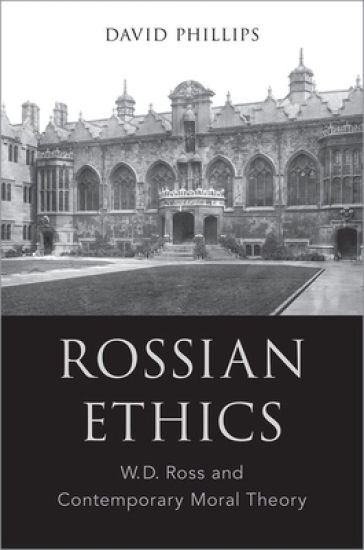
Rossian Ethics

Rossian Ethics

David Phillips

Oxford University Press Inc
2019
sidottu
W.D. Ross (1877-1971) was the most important opponent of utilitarianism and consequentialism in British moral philosophy between 1861 and 1939. In Rossian Ethics, David Phillips offers the first monograph devoted exclusively to Ross's seminal contribution to moral philosophy. The book has two connected aims. The first is to interpret and evaluate Ross's moral theory, focusing on its three key elements: his introduction of the concept of prima facie duty, his limited pluralism about the right, and his limited pluralism about the good. The metaethical and epistemological framework within which Ross develops his moral theory is the subject of the fifth and final chapter of the book. The second aim is to articulate a distinctive view intermediate between consequentialism and absolutist deontology, which Phillips calls "classical deontology." According to classical deontology the most fundamental normative principles are principles of prima facie duty, principles which specify general kinds of reasons. Consequentialists are right to think that reasons always derive from goods; ideal utilitarians are right, contra hedonistic utilitarians, to think that there are a small number of distinct kinds of intrinsic goods. But consequentialists are wrong to think that all reasons have the same weight for all agents. Instead there are a small number of distinct kinds of agent-relative intensifiers: features that increase the importance of certain goods for certain agents. Phillips claims that classical deontology combines the best elements of the moral theories of Ross and of Sidgwick, ultimately arguing that Ross is best interpreted as a classical deontologist.
Martha Graham's Cold War

Martha Graham's Cold War

Victoria Phillips

Oxford University Press Inc
2020
sidottu
Martha Graham's Cold War frames the story of Martha Graham and her particular brand of dance modernism as pro-Western Cold War propaganda used by the United States government to promote American democracy. Representing every seated president from Dwight D. Eisenhower through Ronald Reagan, Graham performed politics in the global field for over thirty years. Why did the State Department consistently choose Martha Graham? As with other art forms such as jazz or avant-garde paintings, modern dance was seen to demonstrate American values of individualism and freedom; the choreographer used the freed body to make a new dance technique that could find the essence of human narratives. Graham targeted elites and its youth with modern dance to propound the 'universalism' of human rights under the banner of American democracy. In her choreography, argues author Victoria Phillips, Graham recast the stories of the Western canon through female protagonists whom she captured as timeless, seemingly beyond current politics, and in so doing implied superior political and cultural values of the Free World. Centering on powerful yet not demonstrably American female characters, the stories Graham danced seduced and captured the imaginations of elite audiences without seeming to force a determinedly American agenda. When her characters grew mythic on stage, they became the stories of all mankind, as Graham termed it. "My dances are ages old in meaning," she declared. But Graham took the pro-American argument one step further than her artistic compatriots. She added the trope of the frontier to her repertory. In the Cold War, Graham's particular modernism and the woman herself ossified, as did political aims of a cultural diplomacy based on an appeal to foreign elites. Phillips lays bare the side-by-side trajectories between the aging of Graham's choreography, her work as an ambassador, and the political dominance of the United States as a global power. With her tours and Cold War modernism, she demonstrated the power of the individual, immigrants, republicanism, and freedom from walls and metaphorical fences through cultural diplomacy with the unfettered language of movement and dance.
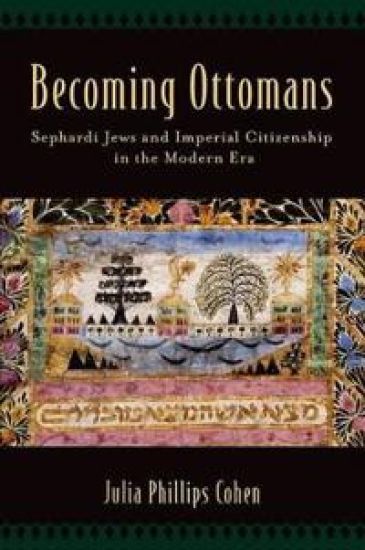
Becoming Ottomans

Becoming Ottomans

Julia Phillips Cohen

Oxford University Press Inc
2017
nidottu
The Ottoman-Jewish story has long been told as a romance between Jews and the empire. The prevailing view is that Ottoman Jews were protected and privileged by imperial policies and in return offered their unflagging devotion to the imperial government over many centuries. In this book, Julia Phillips Cohen offers a corrective, arguing that Jewish leaders who promoted this vision were doing so in response to a series of reforms enacted by the nineteenth-century Ottoman state: the new equality they gained came with a new set of expectations. Ottoman subjects were suddenly to become imperial citizens, to consider their neighbors as brothers and their empire as a homeland. Becoming Ottomans is the first book to tell the story of Jewish political integration into a modern Islamic empire. It begins with the process set in motion by the imperial state reforms known as the Tanzimat, which spanned the years 1839-1876 and legally emancipated the non-Muslims of the empire. Four decades later the situation was difficult to recognize. By the close of the nineteenth century, Ottoman Muslims and Jews alike regularly referred to Jews as a model community, or millet-as a group whose leaders and members knew how to serve their state and were deeply engaged in Ottoman politics. The struggles of different Jewish individuals and groups to define the public face of their communities is underscored in their responses to a series of important historical events. Charting the dramatic reversal of Jews in the empire over a half-century, Becoming Ottomans offers new perspectives for understanding Jewish encounters with modernity and citizenship in a centralizing, modernizing Islamic state in an imperial, multi-faith landscape.
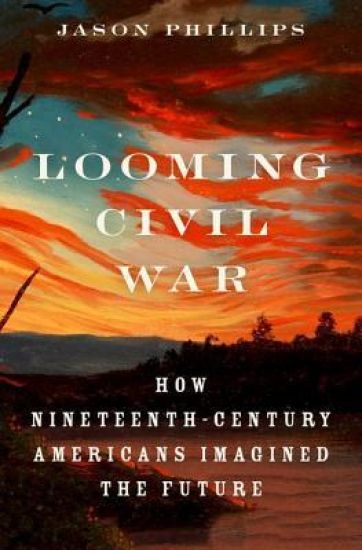
Looming Civil War

Looming Civil War

Jason Phillips

Oxford University Press Inc
2018
sidottu
How did Americans imagine the Civil War before it happened? The most anticipated event of the nineteenth century appeared in novels, prophecies, dreams, diaries, speeches, and newspapers decades before the first shots at Fort Sumter. People forecasted a frontier filibuster, an economic clash between free and slave labor, a race war, a revolution, a war for liberation, and Armageddon. Reading their premonitions reveals how several factors, including race, religion, age, gender, region, and class shaped what people thought about the future and how they imagined it. Some Americans pictured the future as an open, contested era that they progressed toward and molded with their thoughts and actions. Others saw the future as a closed, predetermined world that approached them and sealed their fate. When the war began, these opposing temporalities informed how Americans grasped and waged the conflict. In this creative history, Jason Phillips explains how the expectations of a host of characters--generals, politicians, radicals, citizens, and slaves--affected how people understood the unfolding drama and acted when the future became present. He reconsiders the war's origins without looking at sources using hindsight, that is, without considering what caused the cataclysm and whether it was inevitable. As a result, Phillips dispels a popular myth that all Americans thought the Civil War would be short and glorious at the outset, a ninety-day affair full of fun and adventure. Much more than rational power games played by elites, the war was shaped by uncertainties and emotions and darkened horizons that changed over time. Instead Looming Civil War highlights how individuals approached an ominous future with feelings, thoughts, and perspectives different from our sensibilities and unconnected to our view of their world. Civil War Americans had their own prospects to ponder and forge as they discovered who they were and where life would lead them. The Civil War changed more than America's future; it transformed how Americans imagined the future-and how Americans have thought about the future ever since.
Sternberg and Dietrich

Sternberg and Dietrich

James Phillips

Oxford University Press Inc
2019
sidottu
James Phillips's Sternberg and Dietrich: The Phenomenology of Spectacle reappraises the cinematic collaboration between the Austrian-American filmmaker Josef von Sternberg (1894-1969) and the German-American actor Marlene Dietrich (1901-92). Considered by his contemporaries one of the most significant directors of interwar Hollywood, Sternberg made seven films with Dietrich that helped establish her as a style icon and star and entrenched his own reputation for extravagance and aesthetic spectacle. These films enriched the technical repertoire of the industry, challenged the sexual mores of the times and notoriously tried the patience of management at Paramount Studios. Sternberg and Dietrich: The Phenomenology of Spectacle demonstrates how under Sternberg's direction Paramount's sound stages became laboratories for novel thought experiments. Analysing in depth the last four films on which Sternberg and Dietrich worked together, Phillips reconstructs the "cinematic philosophy" that Sternberg claimed for himself in his autobiography and for whose fullest expression Dietrich was indispensable. This book makes a case for the originality and perceptiveness with which these films treat such issues as the nature of trust, the status of appearance, the standing of women, the ethics and politics of the image, and the relationship between cinema and the world. Sternberg and Dietrich: The Phenomenology of Spectacle reveals that more is at stake in these films than the showcasing of a new star and the confectionery of glamour: Dietrich emerges here as a woman who is at ease in the world without being at home in it, an image of autonomy whose critical potential has yet to be realized, let alone exhausted.
The Marquis de Sade

The Marquis de Sade

John Phillips

Oxford University Press
2005
nidottu
Were it not for the Marquis de Sade's explicit use of language and complete disregard for the artificially constructed taboos of a religious morality he despised, the novelty and profundity of his thought, and above all, its fundamental modernity, would have long since secured him a place alongside the greatest authors and thinkers of the European Enlightenment. This Very Short Introduction aims to disentangle the 'real' Marquis de Sade from his mythical and demonic reputation of the past two hundred years. Phillips examines Sade's life and work: his libertine novels, his championing of atheism, and his uniqueness in bringing the body and sex back into philosophy. ABOUT THE SERIES: The Very Short Introductions series from Oxford University Press contains hundreds of titles in almost every subject area. These pocket-sized books are the perfect way to get ahead in a new subject quickly. Our expert authors combine facts, analysis, perspective, new ideas, and enthusiasm to make interesting and challenging topics highly readable.
The Ecology and Evolution of Invasive Populations

The Ecology and Evolution of Invasive Populations

Ben Phillips

Oxford University Press
2025
sidottu
Invasive populations are ubiquitous and invariably carry consequences. A gene for herbicide resistance spreads; a tumour grows in a loved one's body; an agricultural pest sweeps across the country; a new pathogen proliferates around the world. All of these are invasive populations — populations of genes, cells, or organisms spreading without control and having massive impact. Our collective desire to understand how invasive populations spread has inspired a rich body of basic theory developed from foundations laid in physics and statistics over a century ago. This theory has, however, often failed to explain real patterns in nature because a key consideration has been missing — evolution. The last few decades have seen a growing awareness that evolution plays out on timescales that matter to many systems. The recent emergence of evolutionary thinking in invasion biology has generated important new ideas and has enriched our understanding not only of invasions but of ecology and evolution more broadly. This accessible textbook introduces these new ideas. It provides both a survey of the field — a story about the history and development of our understanding — as well as a synthesis of the new developments. There are many titles on biological invasions that typically take a purely ecological viewpoint, whilst those texts in which evolution does feature have tended to concentrate on adaptation to new environments. This book instead focuses on the intimate interplay between ecological and evolutionary processes as populations spread through time and space. The Ecology and Evolution of Invasive Populations is an advanced textbook aimed at graduate students and researchers in ecology and evolutionary biology seeking a broad, up-to-date, and authoritative overview of the field. The study of biological invasions is no longer a specialized sub-discipline of ecology; this book will also be of relevance to a far broader academic readership from disciplines ranging across physics, mathematics, and medicine.
The Ecology and Evolution of Invasive Populations

The Ecology and Evolution of Invasive Populations

Ben Phillips

Oxford University Press
2025
nidottu
Invasive populations are ubiquitous and invariably carry consequences. A gene for herbicide resistance spreads; a tumour grows in a loved one's body; an agricultural pest sweeps across the country; a new pathogen proliferates around the world. All of these are invasive populations — populations of genes, cells, or organisms spreading without control and having massive impact. Our collective desire to understand how invasive populations spread has inspired a rich body of basic theory developed from foundations laid in physics and statistics over a century ago. This theory has, however, often failed to explain real patterns in nature because a key consideration has been missing — evolution. The last few decades have seen a growing awareness that evolution plays out on timescales that matter to many systems. The recent emergence of evolutionary thinking in invasion biology has generated important new ideas and has enriched our understanding not only of invasions but of ecology and evolution more broadly. This accessible textbook introduces these new ideas. It provides both a survey of the field — a story about the history and development of our understanding — as well as a synthesis of the new developments. There are many titles on biological invasions that typically take a purely ecological viewpoint, whilst those texts in which evolution does feature have tended to concentrate on adaptation to new environments. This book instead focuses on the intimate interplay between ecological and evolutionary processes as populations spread through time and space. The Ecology and Evolution of Invasive Populations is an advanced textbook aimed at graduate students and researchers in ecology and evolutionary biology seeking a broad, up-to-date, and authoritative overview of the field. The study of biological invasions is no longer a specialized sub-discipline of ecology; this book will also be of relevance to a far broader academic readership from disciplines ranging across physics, mathematics, and medicine.
Young Learners

Young Learners

Sarah Phillips

Oxford University Press
1993
nidottu
English lessons form an integral part of a young learner's whole education. This book ciontains guidance for teachers who are new to young learners, and ideas and materials for a wide variety of language practice activities, including art and crafts, drama, games, storytelling, and songs. This book is intended for teachers of English as a foreign language.
Incredible English: Starter: Class Book

Incredible English: Starter: Class Book

Sarah Phillips

Oxford University Press
2012
nidottu
Walk into an Incredible English classroom and there is a buzz … children acting out a story, using a Venn diagram or finishing a craft project confidently in English. The trusted methodology is based on things that children love, including: A wide variety of fun activities that challenge children of all learning styles to think.Learning other subjects and skills through English (CLIL – Content and Language Integrated Learning). Now, with a great new digital package, more skills development and more Cambridge English: Young Learners support, you can help your class learn Incredible English and more …
The Truth of Ecology

The Truth of Ecology

Dana Phillips

Oxford University Press Inc
2003
nidottu
The Truth of Ecology is a wide-ranging, polemical appraisal of contemporary environmental thought. Focusing on the new field of ecocriticism from a thoroughly interdisciplinary perspective, this book explores topics as diverse as the history of ecology in the United States; the distortions of popular environmental thought; the influence of Critical Theory on radical science studies and radical ecology; the need for greater theoretical sophistication in ecocriticism; the contradictions of contemporary American nature writing; and the possibilities for a less devotional, "wilder" approach to ecocritical and environmental thinking. Taking his cues from Thoreau, Stevens, and Ammons, from Wittgenstein, Barthes and Eco, from Bruno Latour and Michel Serres, from the philosophers Rorty, Hacking, and Dennett, and from the biologists Ernst Mayr and Stephen Jay Gould, author Dana Phillips emphasizes an eclectic but pragmatic approach to a variety of topics. His subject matter includes the doctrine of social construction; the question of what it means to be interdisciplinary; the disparity between scientific and literary versions of realism; the difficulty of resolving the tension between facts and values, or more broadly, between nature and culture; the American obsession with personal experience; and the intellectual challenges posed by natural history. Those challenges range from the near-impossibility of defining ecological concepts with precision to the complications that arise when a birder tries to identify chickadees in poor light on a winter's afternoon in the Poconos.
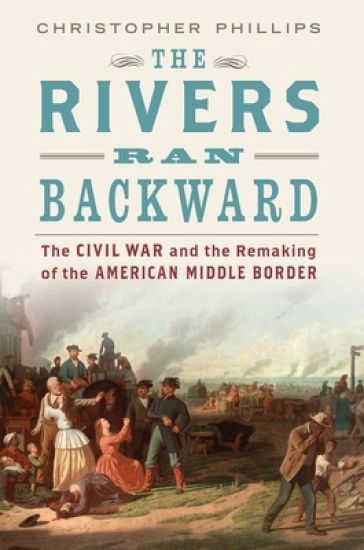
The Rivers Ran Backward

The Rivers Ran Backward

Christopher Phillips

Oxford University Press Inc
2016
sidottu
Most Americans believe that the Ohio River was a clearly defined and static demographic and political boundary between North and South, an extension of the Mason-Dixon Line. Once settled, the new states west of the Appalachians -- the slave states of Kentucky and Missouri and of the free states of Illinois, Indiana, Ohio, and Kansas -- formed a fixed boundary between freedom and slavery, extending the border that inevitably produced the war. None of this is true, except perhaps the outcome of war. But the centrality of the Civil War and its outcome in the making of these tropes is undeniable. Historian Christopher Phillips contests the assumption that regional identities throughout the "Middle Border" states were stable in the era of the Civil War. States such as Missouri and Kentucky tended to identify as more western than southern during the first half of the nineteenth century. Conversely, much of the population of the lower Midwestern states of Ohio, Illinois, and Indiana had stronger cultural, economic, and political ties to slave states than to New England or the Middle Atlantic. But across the region the Civil War left an indelible imprint on the way in which residents thought of themselves and other Americans, proving as much a shaper as a product of regional identities. A sweeping argument employing a strong narrative, telling vignettes, and the voices of regional and national figures, this book makes a major contribution to Civil War history and to American history on a broader scale.
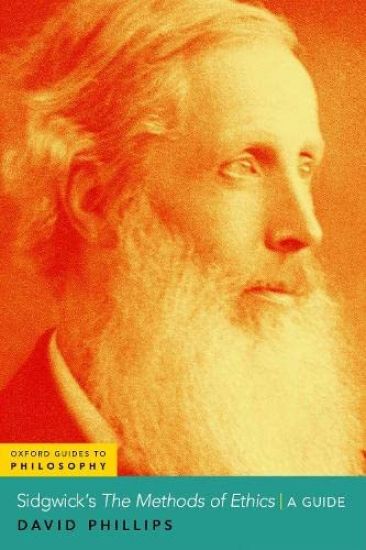
Sidgwick's The Methods of Ethics

Sidgwick's The Methods of Ethics

David Phillips

OXFORD UNIVERSITY PRESS INC
2022
sidottu
Henry Sidgwick's The Methods of Ethics has been a central part of the utilitarian canon since its publication in 1874. This book, part of the Oxford Guides to Philosophy series, is a consice companion to Sidgwick's masterpiece, written primarily to aid advanced undergraduate students and interested general readers in navigatiing and interpreting the original text. Author David Phillips connects Sidgwick's work to work in contemporary moral philosophy and in the history of moral philosophy, paying particular attention to his relationships with key predecessors, including Kant and Mill, and with Moore and Ross, his most influencial successors in the British intuitionist tradition. The book's first eight chapters end with brief suggestions for further reading. At the end of the final three chapters there are more substantial overviews of the secondary literature on the aspects of Sidgwick's work that have generated the most interest among his commentators: metaethics and moral epistemology; consequentialism versus deontology; and egoism and the dualism of practical reason. The result is an Oxford Guide that will be a helpful resource for both students and scholars.
Sidgwick's The Methods of Ethics

Sidgwick's The Methods of Ethics

David Phillips

OXFORD UNIVERSITY PRESS INC
2022
nidottu
Henry Sidgwick's The Methods of Ethics has been a central part of the utilitarian canon since its publication in 1874. This book, part of the Oxford Guides to Philosophy series, is a concise companion to Sidgwick's masterpiece, written primarily to aid advanced undergraduate students and interested general readers in navigating and interpreting the original text. Author David Phillips connects Sidgwick's work to work in contemporary moral philosophy and in the history of moral philosophy, paying particular attention to his relationships with key predecessors, including Kant and Mill, and with Moore and Ross, his most influential successors in the British intuitionist tradition. The book's first eight chapters end with brief suggestions for further reading. At the end of the final three chapters there are more substantial overviews of the secondary literature on the aspects of Sidgwick's work that have generated the most interest among his commentators: metaethics and moral epistemology; consequentialism versus deontology; and egoism and the dualism of practical reason. The result is an Oxford Guide that will be a helpful resource for both students and scholars.Â
Defenders of the Holy Land

Defenders of the Holy Land

Jonathan Phillips

Clarendon Press
1996
sidottu
The triumph of the First Crusade (1095-1099) led to the establishment of a Latin Christian community in the Levant. Remarkably, despite growing pressure from the neighbouring Muslim powers, and the failure of the Second Crusade (1145-49), the settlers were able to occupy Jerusalem and substantial areas of what are now Israel, Syria and the Lebanon for over three-quarters of a century. It was the fall of Jerusalem to Saladin in 1187 which precipitated the famous Third Crusade dominated by Richard the Lionheart. This is the first systematic investigation of the settlers' attempts to seek support for their vital role as guardians of the Holy Land. Jonathan Phillips draws together a disparate range of evidence to show how they turned to western Europe, and to a lesser extent Byzantium, for help. As attitudes and strategies evolved, the settlers' approach became increasingly sophisticated, peaking during the reign of King Amalric of Jerusalem (1163-1174), when diplomatic activity was particularly intense. The author also investigates the attitude of King Henry II of England towards the crusades, and the effects of the Becket dispute on western responses to the needs of the Holy Land. In this fascinating and original study, Jonathan Phillips demonstrates that contact between the Latin East and the West was far more complex than previously believed, and exposes for the first time the range and scale of the settlers' efforts to maintain Christian control of the Holy Land.
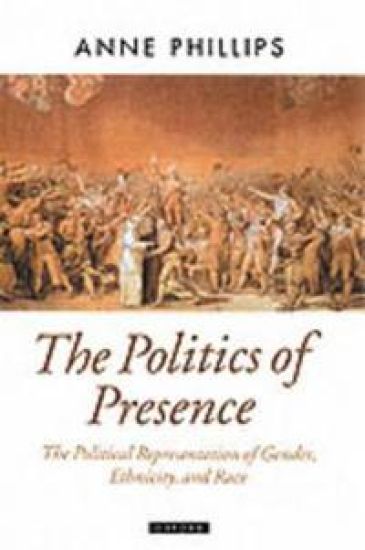
The Politics of Presence

The Politics of Presence

Anne Phillips

Oxford University Press
1998
nidottu
One of the most hotly-contested debates in contemporary democracy revolves around issues of political presence, and whether the fair representation of disadvantaged groups requires their presence in elected assemblies. Representation as currently understood derives its legitimacy from a politics of ideas, which considers accountability in relation to declared policies and programmes, and makes it a matter of relative indifference who articulates political preferences or beliefs. But what happens to the meaning of representation and accountability when we make the gender or ethnic composition of elected assemblies an additional area of concern? In this innovative contribution to the theory of representation - which draws on debates about gender quotas in Europe, minority voting rights in the USA, and the multi-layered politics of inclusion in Canada - Anne Phillips argues that the politics of ideas is an inadequate vehicle for dealing with political exclusion. But rejecting any essentialist grounding to group identity or group interest, she also argues against any either/or choice between ideas and political presence. The politics of presence then combines with contemporary explorations of deliberative democracy to establish a different balance between accountability and autonomy. Series description Oxford Political Theory presents the best new work in contemporary political theory. It is intended to be broad in scope, including original contributions to political philosophy, and also work in applied political theory. The series contains work of outstanding quality with no restriction as to approach or subject matter. The series editors are David Miller and Alan Ryan. `the latest, thoughtful contribution in Anne Phillip's ongoing enquiry into issues of equality, gender and democracy...an excellent contribution to democratic theory'. Political Studies
Pindar's Library

Pindar's Library

Tom Phillips

Oxford University Press
2015
sidottu
Pindar's Library is the first volume to explore how readers during the Hellenistic period encountered Pindar's poetry in book form, analysing in detail the role played by Pindar's literary, cultic, and scholarly reception in affecting readers' engagement with his epinician odes. The volume examines the poet's literary devices of encomiastic techniques, mythical narratives, and paraenetic discourses against the background of the song culture of the fifth century, considering the poems as both material documents and performance pieces. With a particular focus on the poems that begin and end the Olympian and Pythian books, the volume considers the continuities between reading and attending performances, highlighting elements of readers' experiences distinctive to Hellenistic culture. It also investigates the issue of quotations of poets in ancient commentaries, and how such citations influenced readers' understanding of intertextual relationships. Throughout the volume, the relations between Pindar's epinicians and the contextual factors that influence their reception are seen in dialogic terms: as well as exerting a powerful influence over subsequent literature, the poems are also recontextualized in ways that shift and extend their cultural significance.
Untimely Epic

Untimely Epic

Tom Phillips

Oxford University Press
2020
sidottu
Apollonius Rhodius' Argonautica is a voyage across time as well as space. The Argonauts encounter monsters, nymphs, shepherds, and kings who represent earlier stages of the cosmos or human society; they are given glimpses into the future, and themselves effect changes in the world through which they travel. Readers undergo a still more complex form of temporal transport, enabled not just to imagine themselves into the deep past, but to examine the layers of poetic and intellectual history from which Apollonius crafts his poem. Taking its lead from ancient critical preoccupations with poetry's ethical significance, this volume argues that the Argonautica produces an understanding of time and temporal experience which ramifies variously in readers' lives. When describing the people and creatures who occupied the past, Apollonius extends readers' capacity for empathetic response to the worlds inhabited by others. In the ecphrasis of Jason's cloak and the account of Jason's conversations with Medea, readers are invited to scrutinize the relationship between exempla and temporal change, while episodes such as the taking of the Golden Fleece explore links between perceptions and their temporal situation. Running through the poem, and through the readings that comprise this book, is an attention to the intellectual potential of the 'untimely' — objects, experience, and language which do not belong straightforwardly to a particular time. Treatment of such phenomena is crucial to the poem's aspiration to inform and expand readers' understanding of themselves as subjects in and of history.
The Political Economy of Investment Arbitration

The Political Economy of Investment Arbitration

Zoe Phillips Williams

Oxford University Press
2022
sidottu
The Political Economy of Investment Arbitration asks how political institutions and actors in the host state of an investment contribute to the emergence of investor-state disputes. Combining insights from international relations and political economy, it considers two opposing explanations for investor-state disputes: shifting state preferences toward FDI, or the lack of state capacity to maintain an investment-friendly environment. This book's overarching conclusion is that democratic institutions in host states contribute to the emergence of investor-state disputes. Phillips Williams argues that at the heart of many investor-state disputes are highly politicized distributional conflicts involving a range of domestic interest groups. Indeed, it is often pressure from these groups, whether through voting, protests or lobbying, which motivates states to take the policy decisions that are subsequently subject to investors' legal challenges. Thus, this monograph demonstrates that in the face of the potentially high costs posed by investment arbitration, governments continue to take measures which may harm investors in order to pursue specific policy goals. More importantly, these disputes are not only the result of corruption or weak rule of law, but of measures which are taken at the behest of broader interest groups and relate to clear public policy concerns. This has important implications of our normative assessment of the regime and is highly relevant to current debates in both international law and international political economy about the relationship between investment treaties and domestic politics.