Kirjojen hintavertailu. Mukana 11 342 296 kirjaa ja 12 kauppaa.

Kirjahaku

Etsi kirjoja tekijän nimen, kirjan nimen tai ISBN:n perusteella.

1000 tulosta hakusanalla Philo

Philosophy of Education
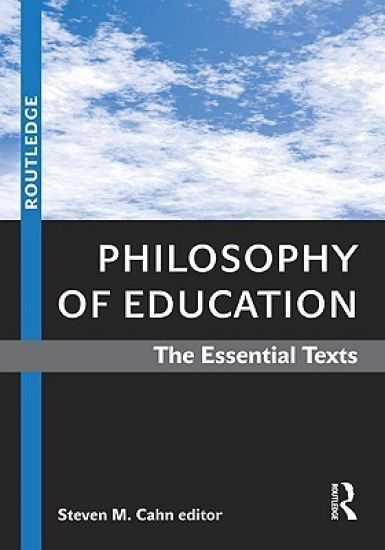
Philosophy of education is a study both of the aims of education and the most appropriate means of achieving those aims. This volume contains substantial selections from those works widely regarded as central to the development of the field. These are the "essential texts" that lay the foundation for further study. The text is historically organized, moving from classical thought (Plato, Aristotle), through the medieval period (Augustine), to modern perspectives (Locke, Rousseau, Wollstonecraft), and twentieth-century thinkers (Whitehead, Dewey). Each selection is followed by an extended interpretative essay in which a noted authority of our time highlights essential points from the readings and places them in a wider context.Exhibiting both breadth and depth, this text is ideal as a reader for courses in philosophy of education, foundations of education, and the history of ideas.
Philosophy of Education in the Era of Globalization
Terrorism, ethnocentrism, religious tension, competition over limited resources, war - these are just a few of the problems and challenges that have emerged in today's global economy. Globalization both implies and requires economic interdependence; and this should bring with it a heightened sense of the interconnectedness of the participating societies. But unfortunately, as recent events indicate, rather than our having formed a global community, today's society is more fragmented than ever. In light of this, education faces some formidable new challenges. How do we prepare future citizens for the world they will live in? How do we teach future generations to embrace the paradox of accepting the value of multiculturalism despite the conflicts it has produced? How do we instill religious tolerance in a time when fundamentalism has become inextricably tied with terrorism? How do we promote economic growth in the face of overpopulation and its depletion of resources? The authors of this collection of essays explore these and related challenges, and they suggest some novel ways of dealing with them.
Philosophy of Education
Philosophy of education is a study both of the aims of education and the most appropriate means of achieving those aims. This volume contains substantial selections from those works widely regarded as central to the development of the field. These are the "essential texts" that lay the foundation for further study. The text is historically organized, moving from classical thought (Plato, Aristotle), through the medieval period (Augustine), to modern perspectives (Locke, Rousseau, Wollstonecraft), and twentieth-century thinkers (Whitehead, Dewey). Each selection is followed by an extended interpretative essay in which a noted authority of our time highlights essential points from the readings and places them in a wider context.Exhibiting both breadth and depth, this text is ideal as a reader for courses in philosophy of education, foundations of education, and the history of ideas.
Philosophical-Political Profiles

Philosophical-Political Profiles

Jürgen Habermas

Heinemann Educational Publishers
1986
sidottu
"At the hands of a minor talent, profiles are often flat, two-dimensional outlines of a thinker’s intellectual physiognomy. At the hands of a master like Jürgen Habermas, they can become something far more substantial and profound. With astonishing economy, Habermas sketches his impressions of the giants of recent German thought, several of whom were his personal mentors. For those of his readers accustomed to the demandingly abstract level of his theoretical work, the results will prove a welcome surprise. Without sacrificing any of the rigor and brilliance of those longer studies, he displays a remarkable ability to combine depth with brevity. Philosophical-Political Profiles not only adds a new dimension to our understanding of the intellectual odyssey of Germany’s leading contemporary thinker but also provides a series of stunning insights into the thought of the generation that preceded him." Martin Jay, University of California, Berkley "With enormous sensitivity, judiciousness, and critical insight, Habermas engages in dialogue with many of the leading German-trained intellectuals of our time-including Heidegger, Jaspers, Löwith, Bloch, Adorno, Benjamin, Marcuse, Arendt, Gadamer, Scholem, and others. These essays range over the most central and vital issues of contemporary life. Whether dealing with Jewish mysticism or critiques of modernity, Habermas is always illuminating and incisive. These essays can serve as an excellent introduction to his thinking. They also help to situate his theoretical work by revealing his deepest concerns." Richard Bernstein, The New School for Social Research
Philosophy of Psychology and Cognitive Science
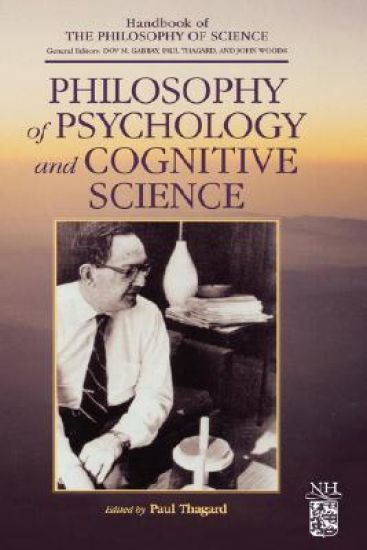
Psychology is the study of thinking, and cognitive science is the interdisciplinary investigation of mind and intelligence that also includes philosophy, artificial intelligence, neuroscience, linguistics, and anthropology. In these investigations, many philosophical issues arise concerning methods and central concepts. The Handbook of Philosophy of Psychology and Cognitive Science contains 16 essays by leading philosophers of science that illuminate the nature of the theories and explanations used in the investigation of minds. Topics discussed include representation, mechanisms, reduction, perception, consciousness, language, emotions, neuroscience, and evolutionary psychology.
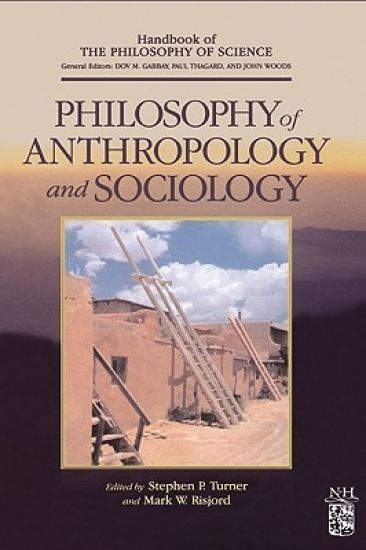
Philosophy of Anthropology and Sociology
This volume concerns philosophical issues that arise from the practice of anthropology and sociology. The essays cover a wide range of issues, including traditional questions in the philosophy of social science as well as those specific to these disciplines. Authors attend to the historical development of the current debates and set the stage for future work.
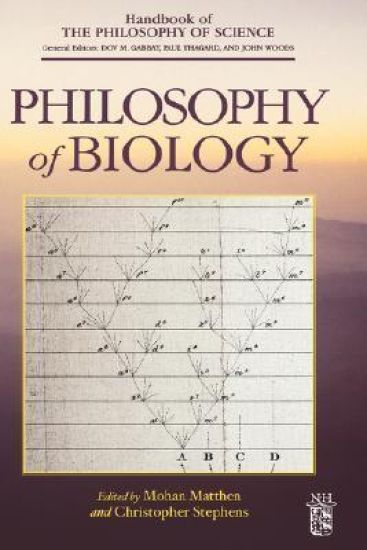
Philosophy of Biology
Philosophy of Biology is a rapidly expanding field. It is concerned with explanatory concepts in evolution, genetics, and ecology. This collection of 25 essays by leading researchers provides an overview of the state of the field. These essays are wholly new; none of them could have been written even ten years ago. They demonstrate how philosophical analysis has been able to contribute to sometimes contested areas of scientific theory making.
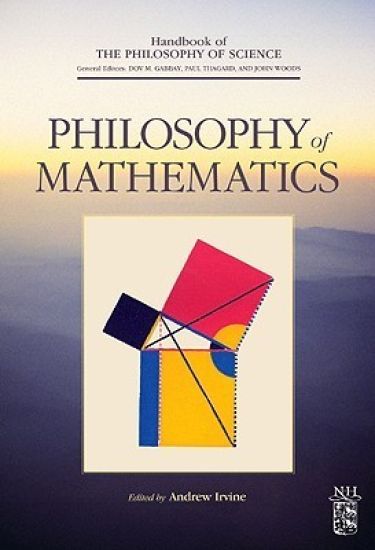
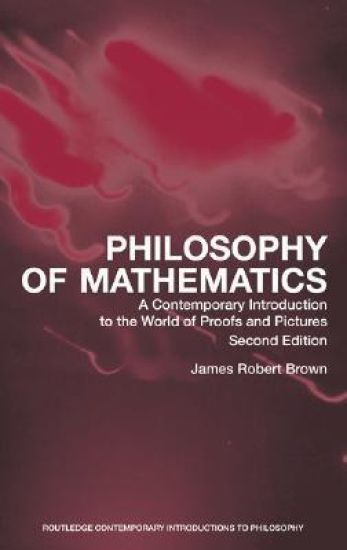
Philosophy of Mathematics
One of the most striking features of mathematics is the fact that we are much more certain about the mathematical knowledge we have than about what mathematical knowledge is knowledge of. Are numbers, sets, functions and groups physical entities of some kind? Are they objectively existing objects in some non-physical, mathematical realm? Are they ideas that are present only in the mind? Or do mathematical truths not involve referents of any kind? It is these kinds of questions that have encouraged philosophers and mathematicians alike to focus their attention on issues in the philosophy of mathematics. Over the centuries a number of reasonably well-defined positions about the nature of mathematics have been developed and it is these positions (both historical and current) that are surveyed in the current volume. Traditional theories (Platonism, Aristotelianism, Kantianism), as well as dominant modern theories (logicism, formalism, constructivism, fictionalism, etc.), are all analyzed and evaluated. Leading-edge research in related fields (set theory, computability theory, probability theory, paraconsistency) is also discussed. The result is a handbook that not only provides a comprehensive overview of recent developments but that also serves as an indispensable resource for anyone wanting to learn about current developments in the philosophy of mathematics.
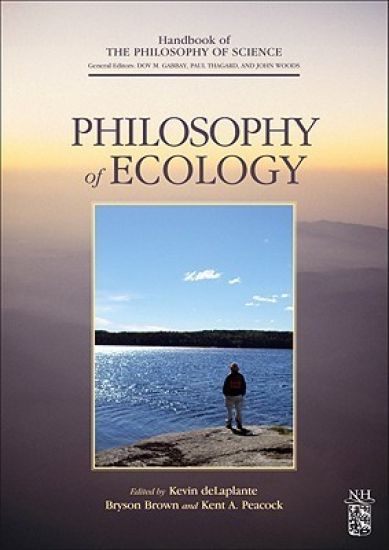
Philosophy of Ecology
The most pressing problems facing humanity today — over-population, energy shortages, climate change, soil erosion, species extinctions, the risk of epidemic disease, the threat of warfare that could destroy all the hard-won gains of civilization, and even the recent fibrillations of the stock market — are all ecological or have a large ecological component. in this volume philosophers turn their attention to understanding the science of ecology and its huge implications for the human project. To get the application of ecology to policy or other practical concerns right, humanity needs a clear and disinterested philosophical understanding of ecology which can help identify the practical lessons of science. Conversely, the urgent practical demands humanity faces today cannot help but direct scientific and philosophical investigation toward the basis of those ecological challenges that threaten human survival. This book will help to fuel the timely renaissance of interest in philosophy of ecology that is now occurring in the philosophical profession.
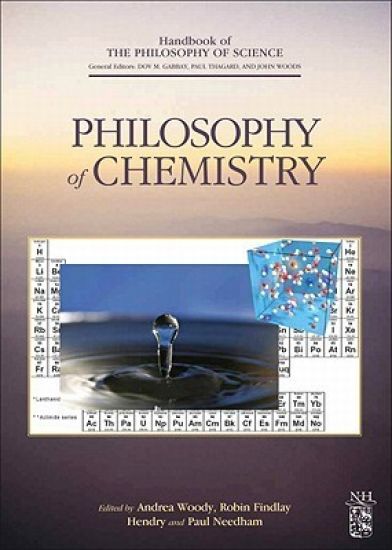
Philosophy of Chemistry
Philosophy of Chemistry investigates the foundational concepts and methods of chemistry, the science of the nature of substances and their transformations. This groundbreaking collection, the most thorough treatment of the philosophy of chemistry ever published, brings together philosophers, scientists and historians to map out the central topics in the field. The 33 articles address the history of the philosophy of chemistry and the philosophical importance of some central figures in the history of chemistry; the nature of chemical substances; central chemical concepts and methods, including the chemical bond, the periodic table and reaction mechanisms; and chemistry’s relationship to other disciplines such as physics, molecular biology, pharmacy and chemical engineering. This volume serves as a detailed introduction for those new to the field as well as a rich source of new insights and potential research agendas for those already engaged with the philosophy of chemistry.
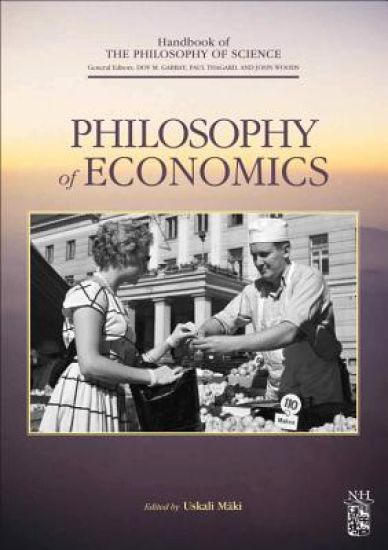
Philosophy of Economics
Part of the Handbook of the Philosophy of Science Series edited by: Dov M. Gabbay King's College, London, UK; Paul Thagard University of Waterloo, Canada; and John Woods University of British Columbia, Canada. Philosophy of Economics investigates the foundational concepts and methods of economics, the social science that analyzes the production, distribution and consumption of goods and services. This groundbreaking collection, the most thorough treatment of the philosophy of economics ever published, brings together philosophers, scientists and historians to map out the central topics in the field. The articles are divided into two groups. Chapters in the first group deal with various philosophical issues characteristic of economics in general, including realism and Lakatos, explanation and testing, modeling and mathematics, political ideology and feminist epistemology. Chapters in the second group discuss particular methods, theories and branches of economics, including forecasting and measurement, econometrics and experimentation, rational choice and agency issues, game theory and social choice, behavioral economics and public choice, geographical economics and evolutionary economics, and finally the economics of scientific knowledge. This volume serves as a detailed introduction for those new to the field as well as a rich source of new insights and potential research agendas for those already engaged with the philosophy of economics.
Philosophy of Information
Information is a recognized fundamental notion across the sciences and humanities, which is crucial to understanding physical computation, communication, and human cognition. The Philosophy of Information brings together the most important perspectives on information. It includes major technical approaches, while also setting out the historical backgrounds of information as well as its contemporary role in many academic fields. Also, special unifying topics are high-lighted that play across many fields, while we also aim at identifying relevant themes for philosophical reflection. There is no established area yet of Philosophy of Information, and this Handbook can help shape one, making sure it is well grounded in scientific expertise. As a side benefit, a book like this can facilitate contacts and collaboration among diverse academic milieus sharing a common interest in information.
Philosophy of Linguistics
Philosophy of Linguistics investigates the foundational concepts and methods of linguistics, the scientific study of human language. This groundbreaking collection, the most thorough treatment of the philosophy of linguistics ever published, brings together philosophers, scientists and historians to map out both the foundational assumptions set during the second half of the last century and the unfolding shifts in perspective in which more functionalist perspectives are explored. The opening chapter lays out the philosophical background in preparation for the papers that follow, which demonstrate the shift in the perspective of linguistics study through discussions of syntax, semantics, phonology and cognitive science more generally. The volume serves as a detailed introduction for those new to the field as well as a rich source of new insights and potential research agendas for those already engaged with the philosophy of linguistics. Part of the Handbook of the Philosophy of Science series edited by: Dov M. Gabbay, King's College, London, UK;Paul Thagard, University of Waterloo, Canada; and John Woods, University of British Columbia, Canada.
Philosophy of Medicine
This volume covers a wide range of conceptual, epistemological and methodological issues in the philosophy of science raised by reflection upon medical science and practice. Several chapters examine such general meta-scientific concepts as discovery, reduction, theories and models, causal inference and scientific realism as they apply to medicine or medical science in particular. Some discuss important concepts specific to medicine (diagnosis, health, disease, brain death). A topic such as evidence, for instance, is examined at a variety of levels, from social mechanisms for guiding evidence-based reasoning such as evidence-based medicine, consensus conferences, and clinical trials, to the more abstract analysis of experimentation, inference and uncertainty. Some chapters reflect on particular domains of medicine, including psychiatry, public health, and nursing. The contributions span a broad range of detailed cases from the science and practice of medicine, as well as a broad range of intellectual approaches, from conceptual analysis to detailed examinations of particular scientific papers or historical episodes.
Philosophy of Complex Systems
The domain of nonlinear dynamical systems and its mathematical underpinnings has been developing exponentially for a century, the last 35 years seeing an outpouring of new ideas and applications and a concomitant confluence with ideas of complex systems and their applications from irreversible thermodynamics. A few examples are in meteorology, ecological dynamics, and social and economic dynamics. These new ideas have profound implications for our understanding and practice in domains involving complexity, predictability and determinism, equilibrium, control, planning, individuality, responsibility and so on. Our intention is to draw together in this volume, we believe for the first time, a comprehensive picture of the manifold philosophically interesting impacts of recent developments in understanding nonlinear systems and the unique aspects of their complexity. The book will focus specifically on the philosophical concepts, principles, judgments and problems distinctly raised by work in the domain of complex nonlinear dynamical systems, especially in recent years.
Philosophy In The Flesh

Philosophy In The Flesh

George Lakoff

Basic Books
1999
pokkari
What are human beings like? How is knowledge possible? What is truth? Where do moral values come from? Questions like these have stood at the centre of Western philosophy for centuries. In addressing them, philosophers have made certain fundamental assumptions,that we can know our own minds by introspection, that most of our thinking about the world is literal, and that reason is disembodied and universal,that are now called into question by well-established results of cognitive science. It has been shown empirically that:Most thought is unconscious. We have no direct conscious access to the mechanisms of thought and language. Our ideas go by too quickly and at too deep a level for us to observe them in any simple way.Abstract concepts are mostly metaphorical. Much of the subject matter of philosopy, such as the nature of time, morality, causation, the mind, and the self, relies heavily on basic metaphors derived from bodily experience. What is literal in our reasoning about such concepts is minimal and conceptually impoverished. All the richness comes from metaphor. For instance, we have two mutually incompatible metaphors for time, both of which represent it as movement through space: in one it is a flow past us and in the other a spatial dimension we move along.Mind is embodied. Thought requires a body,not in the trivial sense that you need a physical brain to think with, but in the profound sense that the very structure of our thoughts comes from the nature of the body. Nearly all of our unconscious metaphors are based on common bodily experiences.Most of the central themes of the Western philosophical tradition are called into question by these findings. The Cartesian person, with a mind wholly separate from the body, does not exist. The Kantian person, capable of moral action according to the dictates of a universal reason, does not exist. The phenomenological person, capable of knowing his or her mind entirely through introspection alone, does not exist. The utilitarian person, the Chomskian person, the poststructuralist person, the computational person, and the person defined by analytic philosopy all do not exist.Then what does?Lakoff and Johnson show that a philosopy responsible to the science of mind offers radically new and detailed understandings of what a person is. After first describing the philosophical stance that must follow from taking cognitive science seriously, they re-examine the basic concepts of the mind, time, causation, morality, and the self: then they rethink a host of philosophical traditions, from the classical Greeks through Kantian morality through modern analytic philosopy. They reveal the metaphorical structure underlying each mode of thought and show how the metaphysics of each theory flows from its metaphors. Finally, they take on two major issues of twentieth-century philosopy: how we conceive rationality, and how we conceive language. Philosopy in the Flesh reveals a radically new understanding of what it means to be human and calls for a thorough rethinking of the Western philosophical tradition. This is philosopy as it has never been seen before.
Philosophy of Literature & Philosophy of Film and Motion Pictures, 2 Book Set
Pack includes 2 titles from the popular Blackwell Philosophy Anthologies Series: Philosophy of Literature: Contemporary and Classic Readings - An AnthologyEdited by Eileen John and Dominic McIver LopesISBN: 9781405112086 Essential readings in the philosophy of literature are brought together for the first time in this anthology. Contains forty-five substantial and carefully chosen essays and extractsProvides a balanced and coherent overview of developments in the field during the past thirty years, including influential work on fiction, interpretation, metaphor, literary value, and the definition and ontology of literatureIncludes an additional historical section featuring generous selections of the writings of early pioneers such as Plato, Aristotle, Nietzsche, and HumeServes as an ideal introduction to the philosophy of literature or the philosophy of art, as well as a handy compilation of contributions to the field by its leading figures Philosophy of Film and Motion Pictures: An AnthologyEdited by Noël Carroll and Jinhee ChoiISBN: 9781405120272 Designed for classroom use, this authoritative anthology presents key selections from the best contemporary work in philosophy of film. The featured essays have been specially chosen for their clarity, philosophical depth, and consonance with the current move towards cognitive film theoryEight sections with introductions cover topics such as the nature of film, film as art, documentary cinema, narration and emotion in film, film criticism, and film's relation to knowledge and moralityIssues addressed include the objectivity of documentary films, fear of movie monsters, and moral questions surrounding the viewing of pornographyReplete with examples and discussion of moving pictures throughout
Philosophical Foundations of Health Education
This book covers the philosophical and ethical foundations of the professional practice of health education in school, community, work site and hospital settings, as well as in health promotion consultant activities. Designed to be flexible, readers are prompted to develop their own philosophical and ethical approach(s) to the field after becoming familiar with the literature related to the discipline. It provides a state-of-the-art, conceptual framework and is targeted for health education majors who seek careers in health education and to provide other health science and health-related majors, who need to gain clear, succinct philosophical principles.
Philosophy For Dummies

Philosophy For Dummies

Martin Cohen

John Wiley Sons Inc
2010
nidottu
Confused by metaphysics? In a muddle with aesthetics? Intimidated by Kant? Then look no further! Philosophy For Dummies, UK Edition is a complete crash-course in philosophical thought, covering key philosophers, philosophical history and theory and the big questions that affect us today. Tying in with standard UK curricula and including core topics such as logic, ethics and political philosophy, this impartial, expert guide cuts through the jargon to give you the facts. Whether you're a philosophy student or a complete beginner, Philosophy For Dummies, UK Edition will get you thinking and talking about philosophy in no time, and with maximum confidence.