Kirjojen hintavertailu. Mukana 11 342 296 kirjaa ja 12 kauppaa.

Kirjahaku

Etsi kirjoja tekijän nimen, kirjan nimen tai ISBN:n perusteella.

1000 tulosta hakusanalla Randolph T Cuthbert

Jenatsch's Axe

Jenatsch's Axe

Randolph C. Head

University of Rochester Press
2016
pokkari
A richly documented investigation of a well-known figure in Swiss history who crossed diverse social and cultural boundaries in pre-modern Europe. During the turbulent events of Europe's Thirty Years' War, both ruthlessness and adaptability were crucial ingredients for success. In this engaging volume, Randolph C. Head traces the career of an extraordinarily adaptable and ruthless figure, George Jenatsch (1596-1639). Born a Protestant pastor's son, Jenatsch's career took him from the clergy to the military to the nobility. A passionate Calvinist in his youth, he converted to Catholicism and prudenceas his power grew. A native speaker of the Romansh language, he crossed the boundaries of language and local loyalty in his service to France, Venice, and his own people. Violence marked every turning point of his life. After fleeing the "Holy Massacre" of Protestants in the Valtellina in 1620, Jenatsch helped assassinate the powerful George Jenatsch in 1621, using an axe. He killed his commanding officer in a duel in 1629, and his own life ended in a tavern in 1639 when he was murdered -- with an axe -- by a man dressed as a bear. After his death, myth took over. Rumors spread that Jenatsch was killed by the same axe that he had wielded on von Planta -- and from therethe story only got better, culminating in Conrad Ferdinand Meyer's celebrated 1876 novel, Jurg Jenatsch. This study meticulously traces the social boundaries that characterized seventeenth-century Europe -- region, religion, social state, and kinship -- by analyzing a distinctive life that crossed them all. Professor Randolph C. Head teaches European History at the University of California, Riverside and is the author of Early Modern Democracy in the Grisons.
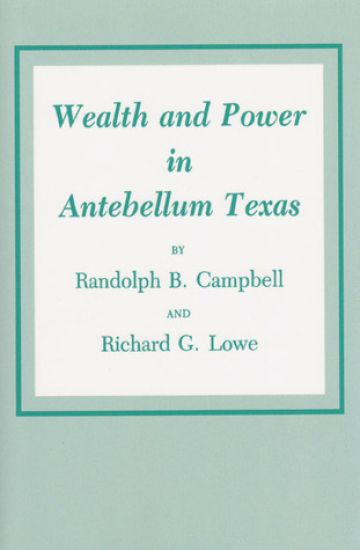
Wealth and Power in Antebellum Texas

Wealth and Power in Antebellum Texas

Randolph B. Campbell; Richard G. Lowe

Texas A M University Press
2000
nidottu
Americans have long lived with an optimistic view of their society, what might be termed the "egalitarian idea." The antebellum South, with its peculiar institution of Negro slavery, has stood in general as the most likely exception to this ideal, though the "planter vs. plain folk" debate has engaged generations of scholars. How closely did the South approximate the "egalitarian ideal"? And how did the South compare with the rest of the nation in terms of economic and political arrangements? Wealth and Power in Antebellum Texas investigates these questions for a relatively young and rapidly developing part of the slave South. Relying on quantitative evidence gathered from census records as well as on traditional historical materials, the authors examine all measures of the "egalitarian ideal" in the Lone Star state. Their close analysis of wealthholding, the interplay of economic and political relationships, and the direction and degree of change from 1850 to 1860 reveals a high and stable level of inequality in the distribution of wealth, a high concentration of wealthholding in Texas towns, and clear indication that those who held the greatest share of wealth also held the balance of political power. Where possible, comparisons have been made with other areas of the United States. Surprisingly, wealth in Texas before the Civil War was no more unequally distributed than it was elsewhere in the country, both North and South, during the same period. The "egalitarian ideal" may have been largely mythical in antebellum Texas, but it seems to have been equally mythical in the nation as a whole.
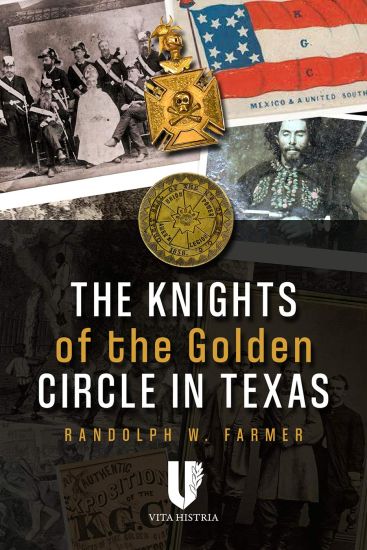
The Knights of the Golden Circle in Texas

The Knights of the Golden Circle in Texas

Randolph W. Farmer

Histria LLC
2021
sidottu
The United States today is a divided nation and some say the country may be heading toward breakup, or possibly civil war. That has happened before and the result was disastrous. As many as 750,000 Americans perished during the Civil War. A study of the causes of our last Civil War may help to prevent another. The Knights of the Golden Circle (KGC) played a major role in starting the Civil War in the United States. Although intended to remain a secret organization of conspirators, it is perhaps the most well-documented conspiracy in United States history. The goal of the KGC was the creation of a new society separate from the United States dedicated to the preservation and expansion of slavery into Latin America. The KGC existed in almost every state in the Union, but nowhere was it as powerful and successful as it was in Texas. Several governors, many senators and military leaders were members, having taken an oath to support the organization and their fellow members. Most of the documents generated by the KGC were destroyed after the war ended as its members feared execution for treason. Not everything was destroyed, though. This book relies on documents created by the organization and its members that have not previously been used by researchers. Many members of this organization remained in positions of authority in state affairs after the abolition of slavery. This book goes far beyond previous published work in establishing the identities of the members of this organization who promoted and encouraged the most disastrous war in American history. Randolph W. Farmer is a native Texan from a family whose ancestors first came to Texas as early as 1817 when it was still a Spanish possession. He is the author of two previously published books on Texas history.
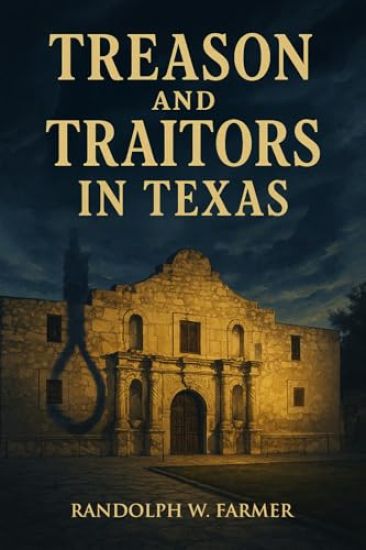
Treason and Traitors in Texas: Facilitators of the American Civil War
An expos on the influential members of the Knights of the Golden Circle (K.G.C.), the secretive and treasonous society that fueled the American Civil War.A follow-up to the highly acclaimed The Knights of the Golden Circle in Texas, this book uncovers even more conspirators and provides in-depth biographical details on those involved. It includes previously unpublished material on the lost years of George W. Bickley--often mistakenly credited as the organization's founder--as well as new revelations about the role played by a member of his own Bickley family.
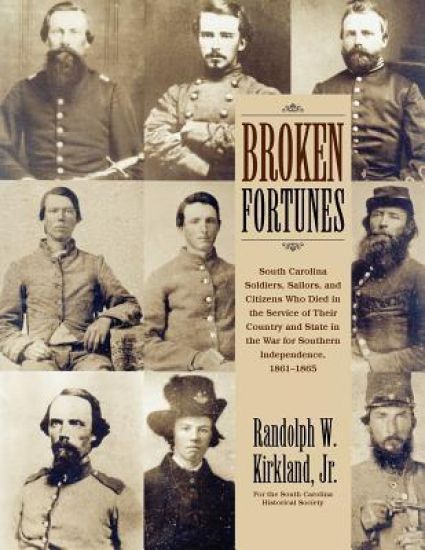
Broken Fortunes

Broken Fortunes

Randolph W. Kirkland Jr.

University of South Carolina Press
2012
nidottu
First published in 1995 by the South Carolina Historical Society, Broken Fortunes was the first of two landmark Civil War research projects carried out by Randolph W. Kirkland, Jr. Highly prized by collectors and historians, both of Kirkland’s monumental projects have now been restored to print as Civil War Sesquicentennial Editions by the University of South Carolina Press. Representing more than a decade of research, Kirkland’s Broken Fortunes compiles the records of some 18,666 soldiers, sailors and other South Carolina citizens who gave their lives to the Confederate States of America and to the state of South Carolina. Included in these records are the individuals’ names, ages, ranks, units, home districts, places and causes of death, and more. The information here compiled offers invaluable data for Civil War researchers and enthusiasts, genealogists, local historians, and others. It is the most complete record ever published of South Carolinians who died in service to the Confederacy.
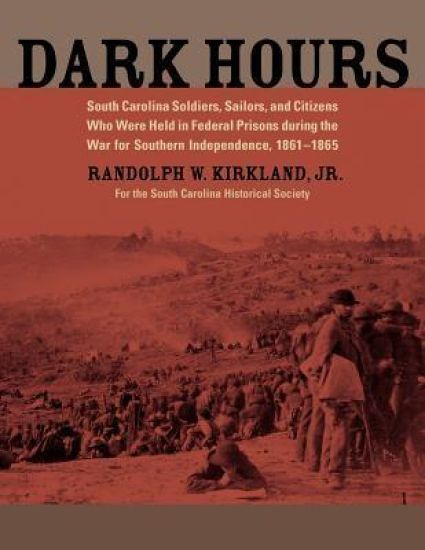
Dark Hours

Dark Hours

Randolph W. Kirkland Jr.

University of South Carolina Press
2012
nidottu
First published in 2002 by the South Carolina Historical Society, Dark Hours was the second of two landmark Civil War research projects carried out by Randolph W. Kirkland, Jr. The companion volume on South Carolinians killed in military service, Broken Fortunes, was published in 1995. Highly prized by collectors and historians, both of Kirkland’s monumental projects have now been restored to print as Civil War Sesquicentennial Editions by the University of South Carolina Press. Representing more than fifteen years of research drawn from some two hundred different sources, Kirkland’s Dark Hours is a compendium of the 11,238 South Carolinians held in captivity as a result of their service to the Confederacy. Kirkland’s list includes the individuals’ names, ranks, units, where and when they were captured, where they were held, when they were moved, their final dispositions, and sources to assist researchers. This volume is the most complete record ever published of South Carolinians held in Union captivity during the Civil War. In his introduction Kirkland provides meticulous details and background information to the circumstances, implications, and nuances of the federal prison system during the war. He also includes appendixes outlining source codes and abbreviations for place names and ranks along with extracts from official documents concerning prisoners of war.
Unforgettable Journey II, Mission Unknown

Unforgettable Journey II, Mission Unknown

Randolph Rothwell

Peppertree Press
2023
pokkari
Levi, Amos, and their younger brother Jack set out to discover the mysteries of Mars that Taylor Rossleft behind. They will find it difficult to unravel everything about Mars and will have NASA standing in their way to discover the truth. The road will be a dangerous one and will lead to death and destruction from some. Only with the help of some friends and family can they try to survive and discover the deep secrets within NASA and Mars. Other published work by Randolph Rothwell: Unforgettable Journey
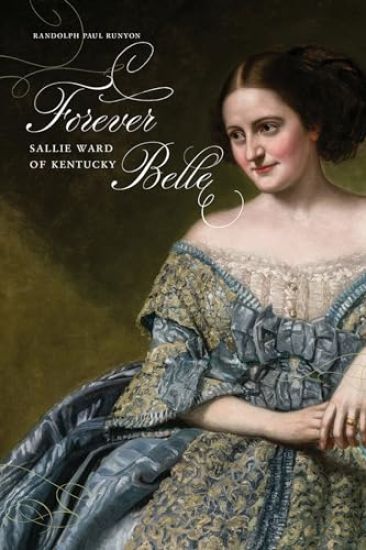
Forever Belle

Forever Belle

Randolph Paul Runyon

University of Tennessee Press
2024
nidottu
Forever Belle is the intriguing story of a nineteenth-century socialite, Sallie Ward Lawrence Hunt Armstrong Downs (1827–1896). Beautiful, charming, and kind—but also reckless and bold—she was born in Scott County, Kentucky, to a family of means beset by tragedy—early deaths, suicides, and even murders. Sallie basked in the national spotlight, appearing in newspapers as far-flung as Milwaukee and Charleston, written up for her exploits, which included such scandalous behavior as smoking cigars, dressing in “Turkish pantalets,” wearing rouge, and getting divorced. Such a character invites romanticizing, and in this new biography, Randolph Paul Runyon does much to ground Sallie Ward in reality, fact-checking stories such as her infamous horse ride through the Louisville market house and examining his subject in the context of her wealthy family. Runyon carefully details his subject’s life, beginning with her aristocratic origins as the descendant of slaveowners, merchants, and politicians who stole land from Native groups and grew rich off the labor of enslaved people. He accurately covers Sallie’s madcap adventures and charitable actions, faithfully representing her legacy as a Kentuckian, a mother, and a grandmother. Illustrated with images of the family, their property, and their lavish grave markers, this volume provides an entertaining and informative glimpse into the world of antebellum privilege in a border state, as well as an examination of the birth of celebrity for its own sake. Forever Belle, finally, is also the story of an early if conflicted feminist: a woman who believed she should have control over her own appearance, actions, political views, and marital status.
Texas and Texans in World War II

Texas and Texans in World War II

Randolph B. Campbell; Joseph G. Dawson; Bernadette Pruitt; Michael Hurd; Katherine Sharp Landdeck; Arnoldo De León; Zachary Montz; Houston Faust Mount II; Stephen M. Sloan; Henry C. Dethloff; Kelly E. Crager; Keith J. Volanto

Texas A M University Press
2022
sidottu
Texans in World War II offers an informative look at the challenges and changes faced by Texans on the home front during the Second World War. This collection of essays by leading scholars of Texas history covers topics from the African American and Tejano experience to organized labor, from the expanding opportunities for women to the importance of oil and agriculture. Texans in World War II makes local the frequently studied social history of wartime, bringing it home to Texas.An eye-opening read for Texans eager to learn more about this defining era in their state's history, this book will also prove deeply informative for scholars, students, and general readers seeking detailed, definitive information about World War II and its implications for daily life, economic growth, and social and political change in the Lone Star State.