Kirjojen hintavertailu. Mukana 11 244 527 kirjaa ja 12 kauppaa.

Kirjahaku

Etsi kirjoja tekijän nimen, kirjan nimen tai ISBN:n perusteella.

1000 tulosta hakusanalla Ray Perman

X-Ray Astronomy in the Exosat Era
Algol is a triple system containing a 70 hr eclipsing binary (K IV and B8 V) in a 694 day orbit with an A V star. The X-ray emission from this system (Schnopper et al 1976) is thought to be associated with a corona surrounding the lobe filling and synchron­ ously rotating K IV star. This is based on the similarity of the X-ray spectrum and luminosity of this system to that of the RS CVn binaries which also contain K sub-giants with similar rotation periods and the fact that the luminosity of any coronae surrounding the B8 V and AV companion stars should not be enhanced by rapid rotation (Pallavicini et al 1980, White et al 1980). The Einstein SSS measurement showed the X-ray spectrum to be two component with 6 7 temperatures of 7. 10 K and 3. 10 K (White et al. 1980). As dis­ cussed by Swank et al. (1981), the problem in understanding stellar coronae in general is how to scale up the solar model to account for the enhanced luminosities. The close to 900 inclination and similar sizes for the Band K stars of 3. 6 and 3. 8 R0 respectively make Algol an ideal candidate for an X-ray eclipse measurement wherein the size of the X-ray emitting coronal structures can be directly measured. In this paper we report a continuous observation through the secondary eclipse of Algol using the EXOSAT Observatory. 2.
X-Ray Astronomy

X-Ray Astronomy

R.D. Andresen

Springer
2014
nidottu
The 15th ESLAB symposium was held at the end of June 1981 in Amsterdam with the topic being X-ray astronomy. The aim of this symposium was to bring together the international astrophysical community in order to 1. review the present state of X-ray astronomy in the light of new observations gathered in recent missions and to review data on interesting objects in correlated wavelen8th regions; 2. discuss theoretical models describing the phenomena observed; 3. present ESA's European X-ray Observatory Satellite (EXOSAT) and to discuss future X-ray missions and their associated instrumenta­ tion. These topics seemed to be so interesting for the scientific community that more than 120 contributions were submitted. Of these, 94 were finally accepted and approximately 200 participants attended the 5-day meeting. The symposium was organised in nine sessions covering the whole field. Every main topic was introduced by a review lecture covering the state­ of-the-art. The aim of the meeting was to assess the impact of the new X-ray findings on the general astronomical knowled8e. The discussion ranged from non-degenerated stellar X-ray sources and stellar coronae tL supernovae, bursters, globular clusters, normal galaxies and finally to cosmology. In each field the philosophy was to bring together the relevant information obtained in radio, optical and X-ray observations followed by theoretical discussions. A large number of contributed papers were also presented within this framework.
X-Ray Lasers 2008
The 11th International Conference on X-Ray Lasers had contributions in the following topical areas: Transient Collisional X-Ray Lasers, Table-Top High Repetition Rate X-Ray Lasers, Optical-Field Ionised (OFI) X-Ray Lasers, Theory and Simulation of X-Ray Lasers, High Order Harmonic Generation, XUV Optics and X-Ray Laser Applications, Capillary Discharge X-Ray Lasers, Alternative Sources of coherent XUV Radiation. The proceedings of this conference constitute a comprehensive source of reference for scientists involved in researching the development and application of coherent X-Ray sources.
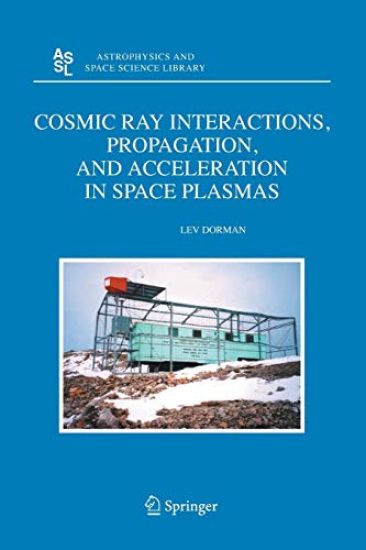
Cosmic Ray Interactions, Propagation, and Acceleration in Space Plasmas
xxii CONTENTS In 1957 I was invited to work on special problems in Magnetic Laboratory of the Academy of Sciences of USSR as a Head of Department of Magnetic Hydrodynamics. In few years this Laboratory was transfered into the I. V. Kurchatov Institute of Atomic Energy, and I continued to work in this Institute up to 1965. In parallel I also worked at Moscow State University as Professor in the CR and Space Research Team. I also gave lectures in Irkutsk, Alma-Ata, Nalchik, Tbilisi, Erevan, Samarkand, and others places. Over about 40 years of teaching under my supervision more than hundred graduate students and scientists in USSR and some other countries gained their Ph. D. and several tenths became Doctors of Science. As my hobby I continued to work in CR research, and as Vice-President of All-Union Section of Cosmic Rays and Radiation Belts, took an active part in preparing the Soviet net of CR stations to the IGY (International Geophysical Year, 1957-1958): we equipped all soviet stations in USSR and in Antarctica with standard cubic and semi-cubic muon telescopes and with neutron monitors of IGY (or Simpson’s) type. In connection with preparing for the IQSY (the International Quiet Sun Year, 1964-1965), the soviet net of CR stations was extended about two fold and they were equipped with neutron super-monitors of IQSY type (with an effective surface about 10 times bigger than the previous monitor of IGY type).
X-Ray Lasers 2010
This book provides a thorough account of the current status of achievements made in the area of soft X-Ray laser source development and of the increasingly diverse applications being demonstrated using such radiation sources. There is significant effort worldwide to develop very bright, short duration radiation sources in the X-Ray spectral region – driven by the multitude of potential applications in all branches of science. This book contains updates on several different approaches for comparative purposes but concentrates on developments in the area of laser-produced plasmas, whereby transient population inversion and gain between ion states is pumped by optical lasers interacting with pre-formed plasmas. Topics covered will include Laser-driven XRLs, Collisional XRLs, Recombination XRLs, Transient Inversion Collisional XRLs, Optical Field Ionization XRLs, Alternative XRL, pumping schemes Theory and simulations of XRL gain media and beam properties High order harmonic sources of XUVradiation, Free-electron lasers and other accelerator based X-Ray sources, X-Ray Laser drives, X-Ray optics and instrumentation Spectroscopy, and other diagnostics of laser media Applications of XRLs.
Gamma-Ray Bursts
This topical volume reviews a comprehensive set of problems raised by the use of Gamma Ray Bursts (GRBs) as cosmological probes, as they were addressed and debated during the ISSI-Beijing workshop “Gamma Ray Bursts: A Tool to Explore the Young Universe," which took place from April 13 to 17, 2015, in Beijing. The invited authors represent both the GRB community stricto sensu and the community studying high-redshift galaxies and star formation history. The chapters of the book elucidate the connection between GRBs and the deep universe, stimulating thoughts on how to develop worldwide synergies between high-redshift GRB studies and surveys of the deep universe. Originally published in Space Science Reviews, Volume 202, Issue 1-4, December 2016
Gamma-Ray Bursts
This topical volume reviews a comprehensive set of problems raised by the use of Gamma Ray Bursts (GRBs) as cosmological probes, as they were addressed and debated during the ISSI-Beijing workshop “Gamma Ray Bursts: A Tool to Explore the Young Universe," which took place from April 13 to 17, 2015, in Beijing. The invited authors represent both the GRB community stricto sensu and the community studying high-redshift galaxies and star formation history. The chapters of the book elucidate the connection between GRBs and the deep universe, stimulating thoughts on how to develop worldwide synergies between high-redshift GRB studies and surveys of the deep universe. Originally published in Space Science Reviews, Volume 202, Issue 1-4, December 2016
Man Ray and Fashion

Man Ray and Fashion

Stockmans Art Books
2025
nidottu
Man Ray and Fashion was published in addition to the exhibition at MoMu (Fashion Museum Antwerp) in 2023. Man Ray was a widely versatile artist who worked with a range of different media and did not like to be pigeonholed. The way he portrayed women and their clothing continues to influence fashion photographers today. Man Ray used new and unexpected angles, employed artistic staging, and applied such innovative processes as solarization and multiple exposure to his fashion photography. In recent decades, fashion designers continue to find inspiration in his Surrealist imagery. This is most notably true for Belgian designers, with their avant-garde mindset. Completely in line with the concept of Surrealism, these references are often subconscious. Part of Man Ray’s extensive history is brought together in this book alongside contemporary works by the likes of Paul Kooiker, Martin Margiela and Céline (among others).
X-Ray Spectroscopy
The x-ray is the only invention that became a regular diagnostic tool in hospitals within a week of its first observation by Roentgen in 1895. Even today, x-rays are a great characterization tool at the hands of scientists working in almost every field, such as medicine, physics, material science, space science, chemistry, archeology, and metallurgy. With vast existing applications of x-rays, it is even more surprising that every day people are finding new applications of x-rays or refining the existing techniques. This book consists of selected chapters on the recent applications of x-ray spectroscopy that are of great interest to the scientists and engineers working in the fields of material science, physics, chemistry, astrophysics, astrochemistry, instrumentation, and techniques of x-ray based characterization. The chapters have been grouped into two major sections based upon the techniques and applications. The book covers some basic principles of satellite x-rays as characterization tools for chemical properties and the physics of detectors and x-ray spectrometer. The techniques like EDXRF, WDXRF, EPMA, satellites, micro-beam analysis, particle induced XRF, and matrix effects are discussed. The characterization of thin films and ceramic materials using x-rays is also covered.
X-ray Characterization of Nanostructured Energy Materials by Synchrotron Radiation
Nowadays, nanomaterials are attracting huge attentions not only from a basic research point of view but also for their potential applications. Since finding the structure-property-processing relationships can open new windows in the application of materials, the material characterizations play a crucial role in the research and development of materials science. The increasing demand for energy with the necessity to find alternative renewable and sustainable energy sources leads to the rapid growth in attention to energy materials. In this book, the results of some outstanding researches on synchrotron-based characterization of nanostructured materials related to energy applications are presented.
Cosmic Ray Muography

Cosmic Ray Muography

WORLD SCIENTIFIC PUBLISHING CO PTE LTD
2023
sidottu
Muography is a term recently introduced to embrace different techniques that profit from the penetration capability of the muon component of cosmic rays to investigate the interior of large and otherwise inaccessible structures. Primary cosmic rays — high energy particles originating outside the solar system — interact with the Earth atmosphere and generate muons, particles with the same electric charge as the electron, while their mass is 200 times heavier. At the Earth's surface, cosmic muons represent the most abundant component of cosmic rays, and favourably, they can feature energies sufficiently high to penetrate even thick and dense materials, giving the opportunity of unveiling the internal structure of large volumes.Muography was made possible by the development of detectors in the field of particle physics, allowing the exploitation of this natural source for imaging in a vast variety of fields, characterizing this technique as truly interdisciplinary, and leading to significant advances in several disciplines. This book tries to cover all aspects of this methodology, with the different chapters pointing to the general physics principles, to the technological and image reconstruction challenges and to the principal applications in several fields, such as archaeology and geology but also civil and industrial applications.The volume contributors had omitted unnecessary technical details, while focusing on the main features and methodologies. Hence, the book not only targets scientists working in the field but also non-specialists, who might enjoy the reading as a tutorial.
X-ray Studies of the Central Engine in Active Galactic Nuclei with Suzaku
The aim of this research was to use the X-ray satellite Suzaku to establish a picture of a central engine that effectively converts the gravitational energy of accreting matter onto the supermassive black hole to a huge amount of radiation in an active galactic nucleus. Although the engine is known to consist of a Comptonizing corona and an accretion disk, its image has remained unclear because primary emissions, coming directly from the engine, cannot be identified in X-ray spectra without models. The book describes a technique of time variability assisted spectral decomposition to model-independently examine X-ray signals, and how this was applied to the Suzaku archive data of active galactic nuclei. As a result, at least three distinct primary X-ray components have been discovered in an X-ray from an active galactic nucleus, presumably indicating a novel picture that the engine is composed of multiple coronae with different physical properties in an accretion flow. Furthermore, the determination of the spectral shapes of the primary X-rays has a significant impact on estimations of black hole spins, because it is essential to quantify reprocessed X-ray spectra. The successful model-independent decomposition of X-ray spectral components with flux variations of active galactic nuclei is likely to be effective in future data analyses from the soon-to-be-launched Japanese X-ray satellite ASTRO-H, which is capable of achieving unprecedented fine spectroscopy and broad energy band coverage.
X-ray Pulsar-based Navigation

X-ray Pulsar-based Navigation

Wei Zheng; Yidi Wang

Springer Verlag, Singapore
2020
sidottu
This book discusses autonomous spacecraft navigation based on X-ray pulsars, analyzing how to process X-ray pulsar signals, how to simulate them, and how to estimate the pulse’s time of arrival based on epoch folding. In turn, the book presents a range of X-ray pulsar-based spacecraft positioning/time-keeping/attitude determination methods. It also describes the error transmission mechanism of the X-ray pulsar-based navigation system and its corresponding compensation methods. Further, the book introduces readers to navigation based on multiple measurement information fusion, such as X-ray pulsar/traditional celestial body integrated navigation and X-ray pulsar/INS integrated navigation. As such, it offers readers extensive information on both the theory and applications of X-ray pulsar-based navigation, and reflects the latest developments in China and abroad.
X-ray Pulsar-based Navigation

X-ray Pulsar-based Navigation

Wei Zheng; Yidi Wang

Springer Verlag, Singapore
2021
nidottu
This book discusses autonomous spacecraft navigation based on X-ray pulsars, analyzing how to process X-ray pulsar signals, how to simulate them, and how to estimate the pulse’s time of arrival based on epoch folding. In turn, the book presents a range of X-ray pulsar-based spacecraft positioning/time-keeping/attitude determination methods. It also describes the error transmission mechanism of the X-ray pulsar-based navigation system and its corresponding compensation methods. Further, the book introduces readers to navigation based on multiple measurement information fusion, such as X-ray pulsar/traditional celestial body integrated navigation and X-ray pulsar/INS integrated navigation. As such, it offers readers extensive information on both the theory and applications of X-ray pulsar-based navigation, and reflects the latest developments in China and abroad.
X-Ray CT

X-Ray CT

Hiroyuki Toda

Springer Verlag, Singapore
2021
sidottu
This book provides easy-to-understand explanations to systematically and comprehensively describe the X-ray CT technologies, techniques, and skills used for industrial and scientific purposes. Included are many references along with photographs, figures, and equations prepared by the author. These features all facilitate the reader's gaining a deeper understanding of the topics being discussed. The book presents expertise not only on fundamentals but also about hardware, software, and analytical methods for the benefit of technical users. The book targets engineers, researchers, and students who are involved in research, development, design, and quality assurance in industry and academia.
X-Ray CT

X-Ray CT

Hiroyuki Toda

SPRINGER VERLAG, SINGAPORE
2022
nidottu
This book provides easy-to-understand explanations to systematically and comprehensively describe the X-ray CT technologies, techniques, and skills used for industrial and scientific purposes. Included are many references along with photographs, figures, and equations prepared by the author. These features all facilitate the reader's gaining a deeper understanding of the topics being discussed. The book presents expertise not only on fundamentals but also about hardware, software, and analytical methods for the benefit of technical users. The book targets engineers, researchers, and students who are involved in research, development, design, and quality assurance in industry and academia.
X-Ray Spectroscopy for Chemical State Analysis

X-Ray Spectroscopy for Chemical State Analysis

Jun Kawai

SPRINGER VERLAG, SINGAPORE
2022
sidottu
This book focuses on X-ray spectroscopy for chemical state analysis covering X-ray physics, spectroscopic characteristics used for functional and toxic materials, and the author's ideas related to X-ray experiments. This book also provides novel theoretical interpretations of X-ray spectra along with experimental techniques needed for both synchrotron radiation users and laboratory experimentalists. Presenting not only practical information, this book also covers basic knowledge of commercially available spectrometers and the basic physics of optics and electromagnetism related to X-rays. Furthermore, the author introduces the forgotten history of X-ray physics in the beginning of twentieth century. This book is of use for researchers studying catalysts, charge-transfer materials, surface characterization, and toxic trace elements via X-ray spectroscopy for chemical state analysis as well as quantitative analysis.
X-Ray Spectroscopy for Chemical State Analysis

X-Ray Spectroscopy for Chemical State Analysis

Jun Kawai

SPRINGER VERLAG, SINGAPORE
2023
nidottu
This book focuses on X-ray spectroscopy for chemical state analysis covering X-ray physics, spectroscopic characteristics used for functional and toxic materials, and the author's ideas related to X-ray experiments. This book also provides novel theoretical interpretations of X-ray spectra along with experimental techniques needed for both synchrotron radiation users and laboratory experimentalists. Presenting not only practical information, this book also covers basic knowledge of commercially available spectrometers and the basic physics of optics and electromagnetism related to X-rays. Furthermore, the author introduces the forgotten history of X-ray physics in the beginning of twentieth century. This book is of use for researchers studying catalysts, charge-transfer materials, surface characterization, and toxic trace elements via X-ray spectroscopy for chemical state analysis as well as quantitative analysis.
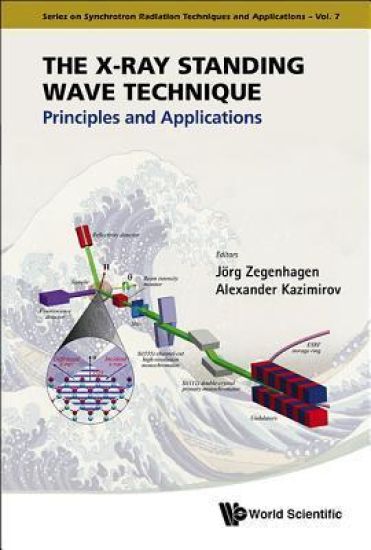
X-ray Standing Wave Technique, The: Principles And Applications
The X-ray standing wave (XSW) technique is an X-ray interferometric method combining diffraction with a multitude of spectroscopic techniques. It is extremely powerful for obtaining information about virtually all properties of surfaces and interfaces on the atomic scale. However, as with any other technique, it has strengths and limitations. The proper use and necessary understanding of this method requires knowledge in quite different fields of physics and technology. This volume presents comprehensively the theoretical background, technical requirements and distinguished experimental highlights of the technique. Containing contributions from the most prominent experts of the technique, such as Andre Authier, Boris Batterman, Michael J Bedzyk, Jene Golovchenko, Victor Kohn, Michail Kovalchuk, Gerhard Materlik and D Phil Woodruff, the book equips scientists with all the necessary information and knowledge to understand and use the XSW technique in practically all applications.