Kirjojen hintavertailu. Mukana 11 699 587 kirjaa ja 12 kauppaa.

Kirjahaku

Etsi kirjoja tekijän nimen, kirjan nimen tai ISBN:n perusteella.

1000 tulosta hakusanalla Raymond Faure

Gentleman Jim

Gentleman Jim

Raymond Briggs

Vintage Publishing
2008
sidottu
Encouraged by his wife, Hilda, also eager to incorporate more adventure into her life, Jim sets out to bring these dreams to fruition by accumulating various accoutrements, only to discover that the life of an executive, an artist or a cowboy is more complicated and costly than it appears.
Education and the Cult of Efficiency

Education and the Cult of Efficiency

Raymond E. Callahan

University of Chicago Press
1964
nidottu
Raymond Callahan's lively study exposes the alarming lengths to which school administrators went, particularly in the period from 1910 to 1930, in sacrificing educational goals to the demands of business procedures. He suggests that even today the question still asked is: "How can we operate our schools?" Society has not yet learned to ask: "How can we provide an excellent education for our children?"
Dogs

Dogs

Raymond Coppinger; Lorna Coppinger

University of Chicago Press
2002
pokkari
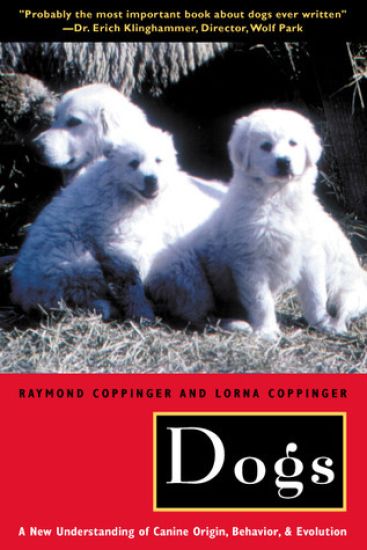
Biologists, breeders and trainers, and champion sled dog racers, Raymond and Lorna Coppinger have more than four decades of experience with literally thousands of dogs. Offering a scientifically informed perspective on canines and their relations with humans, the Coppingers take a close look at eight different types of dogs - household, village, livestock guarding, herding, sled-pulling, pointing, retrieving, and hound. They argue that dogs did not evolve directly from wolves, nor were they trained by early humans; instead, dogs domesticated themselves to exploit a new ecological niche: Mesolithic village dumps. Tracing the evolution of today's breeds from these village dogs, the Coppingers show how characteristic shapes and behaviors - from pointing and baying to the sleek shapes of running dogs - arise from both genetic heritage and the environments in which pups are raised. For both dogs and humans to get the most out of each other, we need to understand and adapt to the biological needs and dispositions of our canine companions, just as they have to ours.
What Is a Dog?

What Is a Dog?

Raymond Coppinger; Lorna Coppinger; Alan Beck

University of Chicago Press
2016
sidottu
Of the world’s dogs, less than two hundred million are pets, living with humans who provide food, shelter, squeaky toys, and fashionable sweaters. But roaming the planet are four times as many dogs who are their own masters—neighborhood dogs, dump dogs, mountain dogs. They are dogs, not companions, and these dogs, like pigeons or squirrels, are highly adapted scavengers who have evolved to fit particular niches in the vicinity of humans. In What Is a Dog? experts on dog behavior Raymond and Lorna Coppinger present an eye-opening analysis of the evolution and adaptations of these unleashed dogs and what they can reveal about the species as a whole. Exploring the natural history of these animals, the Coppingers explain how the village dogs of Vietnam, India, Africa, and Mexico are strikingly similar. These feral dogs, argue the Coppingers, are in fact the truly archetypal dogs, nearly uniform in size and shape and incredibly self-sufficient. Drawing on nearly five decades of research, they show how dogs actually domesticated themselves in order to become such efficient scavengers of human refuse. The Coppingers also examine the behavioral characteristics that enable dogs to live successfully and to reproduce, unconstrained by humans, in environments that we ordinarily do not think of as dog friendly. Providing a fascinating exploration of what it actually means—genetically and behaviorally—to be a dog, What Is a Dog? will undoubtedly change the way any beagle or bulldog owner will reflect on their four-legged friend.
How Dogs Work

How Dogs Work

Raymond Coppinger; Mark Feinstein; Gordon M. Burghardt

University of Chicago Press
2015
sidottu
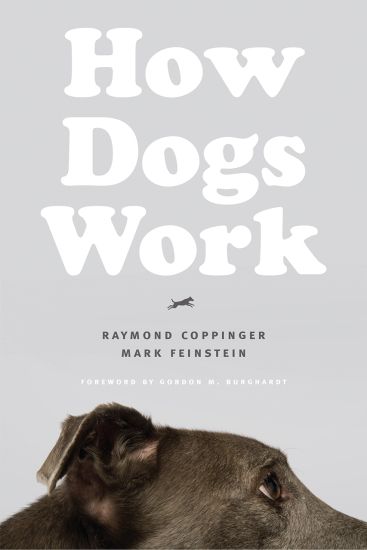
How well do we really know dogs? People may enjoy thinking about them as "man's best friend," but what actually drives the things they do? What is going on in their fur-covered heads as they look at us with their big, expressive eyes? Raymond Coppinger and Mark Feinstein know something about these questions, and with How Dogs Work, they're ready to share; this is their guide to understanding your dog and its behavior. Approaching dogs as a biological species rather than just as pets, Coppinger and Feinstein accessibly synthesize decades of research and field experiments to explain the evolutionary foundations behind dog behaviors. They examine the central importance of the shape of dogs: how their physical body (including the genes and the brain) affects behavior, how shape interacts with the environment as animals grow, and how all of this has developed over time. Shape, they tell us, is what makes a champion sled dog or a Border collie that can successfully herd sheep. Other chapters in How Dogs Work explore such mysteries as: why dogs play; whether dogs have minds, and if so what kinds of things they might know; why dogs bark; how dogs feed and forage; and the influence of the early relationship between mother and pup. Going far beyond the cozy lap dog, Coppinger and Feinstein are equally fascinated by what we can learn from the adaptations of dogs, wolves, coyotes, jackals, dingoes, and even pumas in the wild, as well as the behavior of working animals like guarding and herding dogs. We cherish dogs as family members and deeply value our lengthy companionship with them. But, isn't it time we knew more about who Fido and Trixie really are? How Dogs Work will provide some keys to unlocking the origins of many of our dogs' most common, most puzzling, and most endearing behaviors.
The National Balance Sheet of the United States, 1953-1980

The National Balance Sheet of the United States, 1953-1980

Raymond W. Goldsmith

University of Chicago Press
1982
sidottu
In what constitutes a landmark in the field of national accounts, Raymond W. Goldsmith gives detailed estimates of the nation's assets and liabilities year by year from 1953 through 1975 and for the benchmark years of 1900, 1929, and 1980. Special features of this work include presentation of data sector by sector, which casts light on the changing roles of financial institutions, and Goldsmith's expression of data in the form of ratios rather than in absolute dollar values, a device that makes the material both more informative and easier to absorb. The most comprehensive and extensive study of national wealth ever attempted, The National Balance Sheet will be a rich resource for researchers and users of national accounts.
What Is a Dog?

What Is a Dog?

Raymond Coppinger; Lorna Coppinger; Alan Beck

University of Chicago Press
2017
nidottu
Of the world's dogs, less than two hundred million are pets, living with humans who provide food, shelter, squeaky toys, and fashionable sweaters. But roaming the planet are four times as many dogs who are their own masters neighborhood dogs, dump dogs, mountain dogs. They are dogs, not companions, and these dogs, like pigeons or squirrels, are highly adapted scavengers who have evolved to fit particular niches in the vicinity of humans. In What Is a Dog? experts on dog behavior Raymond and Lorna Coppinger present an eye-opening analysis of the evolution and adaptations of these unleashed dogs and what they can reveal about the species as a whole. Exploring the natural history of these animals, the Coppingers explain how the village dogs of Vietnam, India, Africa, and Mexico are strikingly similar. These feral dogs, argue the Coppingers, are in fact the truly archetypal dogs, nearly uniform in size and shape and incredibly self-sufficient. Drawing on nearly five decades of research, they show how dogs actually domesticated themselves in order to become such efficient scavengers of human refuse. The Coppingers also examine the behavioral characteristics that enable dogs to live successfully and to reproduce, unconstrained by humans, in environments that we ordinarily do not think of as dog friendly. Providing a fascinating exploration of what it actually means genetically and behaviorally to be a dog, What Is a Dog? will undoubtedly change the way any beagle or bulldog owner will reflect on their four-legged friend.
Aramaic Ritual Texts from Persepolis

Aramaic Ritual Texts from Persepolis

Raymond A. Bowman

Oriental Institute of the University of Chicago
1970
sidottu
We now have Raymond Bowman's long awaited edition of the Aramaic texts from Persepolis, unearthed during the expedition by the University of Chicago under Erich F. Schmidt between 1936 and 1938. Bowman has assembled important data on the chronology of Persepolis during the first half of the fifth century B.C. from the personal names and official titles listed in the Aramaic texts. He shows acumen in attacking certain textual problems, and his commentary and introduction provide the scholar with information necessary for a proper understanding of this corpus of some two hundred brief, formulaic inscriptions written on various stone implements-mortars and pestles, plates and trays-found in the treasury at Persepolis. [From an article by Baruch A. Levine in the Journal of the American Oriental Society 92 (1972) 70-79].
How Dogs Work

How Dogs Work

Raymond Coppinger; Mark Feinstein; Gordon M Burghardt

University of Chicago Press
2019
pokkari
How well do we really know dogs? People may enjoy thinking about them as "man's best friend," but what actually drives the things they do? What is going on in their fur-covered heads as they look at us with their big, expressive eyes? Raymond Coppinger and Mark Feinstein know something about these questions, and with How Dogs Work, they're ready to share; this is their guide to understanding your dog and its behavior. Approaching dogs as a biological species rather than just as pets, Coppinger and Feinstein accessibly synthesize decades of research and field experiments to explain the evolutionary foundations underlying dog behaviors. They examine the central importance of the shape of dogs: how their physical body (including the genes and the brain) affects behavior, how shape interacts with the environment as animals grow, and how all of this has developed over time. Shape, they tell us, is what makes a champion sled dog or a Border collie that can successfully herd sheep. Other chapters in How Dogs Work explore such mysteries as why dogs play; whether dogs have minds, and if so what kinds of things they might know; why dogs bark; how dogs feed and forage; and the influence of the early relationship between mother and pup. Going far beyond the cozy lap dog, Coppinger and Feinstein are equally fascinated by what we can learn from the adaptations of dogs, wolves, coyotes, jackals, dingoes, and even pumas in the wild, as well as the behavior of working animals like guarding and herding dogs. We cherish dogs as family members and deeply value our lengthy companionship with them. But, isn't it time we knew more about who Fido and Trixie really are? How Dogs Work will provide some keys to unlocking the origins of many of our dogs' most common, most puzzling, and most endearing behaviors.
Maimonides' Ethics

Maimonides' Ethics

Raymond L. Weiss

University of Chicago Press
1991
sidottu
In this book Raymond L. Weiss examines how a seminal Jewish thinker negotiates the philosophical conflict between Athens and Jerusalem in the crucial area of ethics. Maimonides, a master of both the classical and the biblical-rabbinic traditions, reconciled their differing views of morality primarily in the context of Jewish jurisprudence. Taking into consideration the entire corpus of Maimonides' writings, Weiss focuses on the ethical sections of the Commentary on the Mishnah and the Mishneh Torah, but also discusses the Guide of the Perplexed, the letters of Maimonides, and his medical works. The gulf between classical philosophy and the Torah made the task of Maimonides extraordinarily difficult. Weiss shows that Maimonides subtly preserves the tension between those traditions while producing a practical accommodation between them. To explain how Maimonides was able to accomplish this twofold goal, Weiss takes seriously the multilevel character of Maimonides' works. Weiss interprets Maimonides as a heterodox thinker who, with utter integrity, faces the Law's encounter with philosophy and gives both the Torah and philosophy their due.
The Sociology of Culture

The Sociology of Culture

Raymond Williams; Bruce Robbins

University of Chicago Press
1995
pokkari
Raymond Williams helped to establish the field of cultural sociology with "Marxism and Literature" and "Culture and Society." Continuing the work of those studies, "The Sociology of Culture" offers debate on the origin and evolution of culture. It defines sociology of culture as a convergence of various fields and explores ways in which culture is socially mediated.
Spirit of the Grassroots People

Spirit of the Grassroots People

Raymond Mason

McGill-Queen's University Press
2020
sidottu
Raymond Mason is an Ojibway activist who campaigns for the rights of residential school survivors and a founder of Spirit Wind, an organization that played a key role in the development of the Indian Residential School Settlement Agreement. This memoir offers a firsthand account of the personal and political challenges Mason confronted on this journey. A riveting and at times harrowing read, Spirit of the Grassroots People describes the author's experiences in Indian day and residential schools in Manitoba and his struggles to find meaning in life after trauma and abuse. Mason details the work that he and his colleagues did over many years to gain recognition and compensation for their suffering. Drawing from Indigenous oral traditions as well as Western historiography, the work applies the concept of two-eyed seeing to the histories of colonialism and education in Canada. The memoir is supplemented by a final chapter in which Theodore Michael Christou and Jackson Pind put Mason's story into a historical and educational context. An essential key to understanding the legacy of Indian residential and day schools, this text is both a documentation of history and a deeply personal story of a human experience.
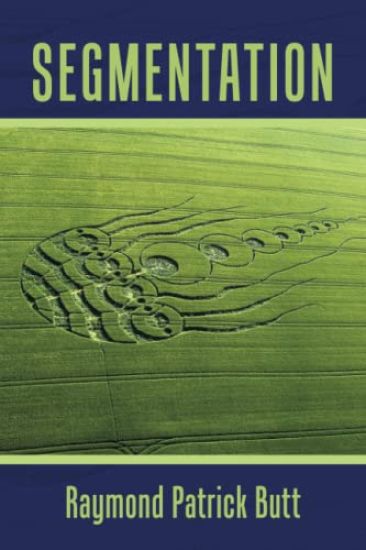
Segmentation

Segmentation

Raymond Patrick Butt

Tellwell Talent
2021
pokkari
Venerable disputations of an alienated heart and mind. Existential poetry in a whorl of abstract myth, foreign bodies, musick and sea stirrings. Two full years in editing; Segmentation pushes the human boundaries of space, time and thought. Prepare for a lucid plunge into deep water.
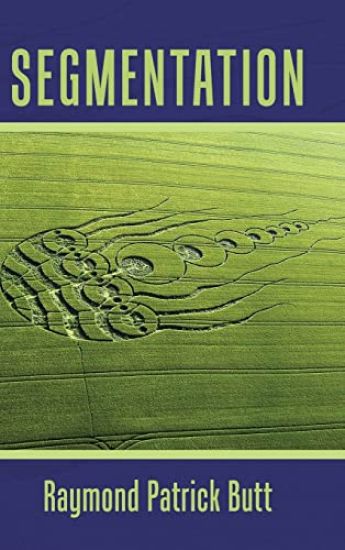
Segmentation

Segmentation

Raymond Patrick Butt

Tellwell Talent
2021
sidottu
Venerable disputations of an alienated heart and mind. Existential poetry in a whorl of abstract myth, foreign bodies, musick and sea stirrings. Two full years in editing; Segmentation pushes the human boundaries of space, time and thought. Prepare for a lucid plunge into deep water.
Evidence

Evidence

Raymond N. Emson

Red Globe Press
2010
nidottu
From DNA profiling to consideration of the accused's previous conduct, the law of evidence is a fascinating amalgam of logic, common sense, philosophy and tactics. Evidence explains the fundamentals and looks at the principles behind it.
The Columbia Guide to the Latin American Novel Since 1945

The Columbia Guide to the Latin American Novel Since 1945

Raymond Williams

Columbia University Press
2007
sidottu
In this expertly crafted, richly detailed guide, Raymond Leslie Williams explores the cultural, political, and historical events that have shaped the Latin American and Caribbean novel since the end of World War II. In addition to works originally composed in English, Williams covers novels written in Spanish, Portuguese, French, Dutch, and Haitian Creole, and traces the profound influence of modernization, revolution, and democratization on the writing of this era. Beginning in 1945, Williams introduces major trends by region, including the Caribbean and U.S. Latino novel, the Mexican and Central American novel, the Andean novel, the Southern Cone novel, and the novel of Brazil. He discusses the rise of the modernist novel in the 1940s, led by Jorge Luis Borges's reaffirmation of the right of invention, and covers the advent of the postmodern generation of the 1990s in Brazil, the Generation of the "Crack" in Mexico, and the McOndo generation in other parts of Latin America. An alphabetical guide offers biographies of authors, coverage of major topics, and brief introductions to individual novels. It also addresses such areas as women's writing, Afro-Latin American writing, and magic realism. The guide's final section includes an annotated bibliography of introductory studies on the Latin American and Caribbean novel, national literary traditions, and the work of individual authors. From early attempts to synthesize postcolonial concerns with modernist aesthetics to the current focus on urban violence and globalization, The Columbia Guide to the Latin American Novel Since 1945 presents a comprehensive, accessible portrait of a thoroughly diverse and complex branch of world literature.
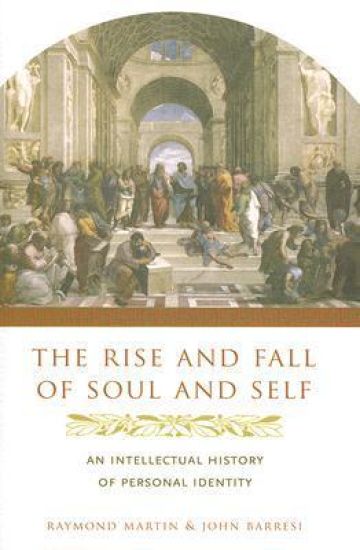
The Rise and Fall of Soul and Self

The Rise and Fall of Soul and Self

Raymond Martin; John Barresi

Columbia University Press
2006
sidottu
This book traces the development of theories of the self and personal identity from the ancient Greeks to the present day. From Plato and Aristotle to Freud and Foucault, Raymond Martin and John Barresi explore the works of a wide range of thinkers and reveal the larger intellectual trends, controversies, and ideas that have revolutionized the way we think about ourselves. The authors open with ancient Greece, where the ideas of Plato, Aristotle, and the materialistic atomists laid the groundwork for future theories. They then discuss the ideas of the church fathers and medieval and Renaissance philosophers, including St. Paul, Philo, Augustine, Aquinas, and Montaigne. In their coverage of the emergence of a new mechanistic conception of nature in the seventeenth century, Martin and Barresi note a shift away from religious and purely philosophical notions of self and personal identity to more scientific and social conceptions, a trend that has continued to the present day. They explore modern philosophy and psychology, including the origins of different traditions within each discipline, and explain both the theoretical relevance of feminism and gender and ethnic studies and also the ways that Derrida and other recent thinkers have challenged the very idea that a unified self or personal identity even exists. Martin and Barresi cover a number of issues broached by philosophers and psychologists, such as the existence of a fixed and unchanging self and whether the concept of the soul has a use outside of religious contexts. They address the question of whether notions of the soul and the self are still viable in today's world. Together, they reveal the fascinating ways in which great thinkers have grappled with these and other questions and the astounding impact their ideas have had on the development of self-understanding in the west.
The Rise and Fall of Soul and Self

The Rise and Fall of Soul and Self

Raymond Martin; John Barresi

Columbia University Press
2008
pokkari
This book traces the development of theories of the self and personal identity from the ancient Greeks to the present day. From Plato and Aristotle to Freud and Foucault, Raymond Martin and John Barresi explore the works of a wide range of thinkers and reveal the larger intellectual trends, controversies, and ideas that have revolutionized the way we think about ourselves. The authors open with ancient Greece, where the ideas of Plato, Aristotle, and the materialistic atomists laid the groundwork for future theories. They then discuss the ideas of the church fathers and medieval and Renaissance philosophers, including St. Paul, Philo, Augustine, Aquinas, and Montaigne. In their coverage of the emergence of a new mechanistic conception of nature in the seventeenth century, Martin and Barresi note a shift away from religious and purely philosophical notions of self and personal identity to more scientific and social conceptions, a trend that has continued to the present day. They explore modern philosophy and psychology, including the origins of different traditions within each discipline, and explain both the theoretical relevance of feminism and gender and ethnic studies and also the ways that Derrida and other recent thinkers have challenged the very idea that a unified self or personal identity even exists. Martin and Barresi cover a number of issues broached by philosophers and psychologists, such as the existence of a fixed and unchanging self and whether the concept of the soul has a use outside of religious contexts. They address the question of whether notions of the soul and the self are still viable in today's world. Together, they reveal the fascinating ways in which great thinkers have grappled with these and other questions and the astounding impact their ideas have had on the development of self-understanding in the west.
Evolution and the Emergent Self

Evolution and the Emergent Self

Raymond L. Neubauer

Columbia University Press
2011
sidottu
Evolution and the Emergent Self is an eloquent and evocative new synthesis that explores how the human species emerged from the cosmic dust. Lucidly presenting ideas about the rise of complexity in our genetic, neuronal, ecological, and ultimately cosmological settings, the author takes readers on a provocative tour of modern science's quest to understand our place in nature and in our universe. Readers fascinated with "Big History" and drawn to examine big ideas will be challenged and enthralled by Raymond L. Neubauer's ambitious narrative. How did humans emerge from the cosmos and the pre-biotic Earth, and what mechanisms of biological, chemical, and physical sciences drove this increasingly complex process? Neubauer presents a view of nature that describes the rising complexity of life in terms of increasing information content, first in genes and then in brains. The evolution of the nervous system expanded the capacity of organisms to store information, making learning possible. In key chapters, the author portrays four species with high brain:body ratios-chimpanzees, elephants, ravens, and dolphins-showing how each species shares with humans the capacity for complex communication, elaborate social relationships, flexible behavior, tool use, and powers of abstraction. A large brain can have a hierarchical arrangement of circuits that facilitates higher levels of abstraction. Neubauer describes this constellation of qualities as an emergent self, arguing that self-awareness is nascent in several species besides humans and that potential human characteristics are embedded in the evolutionary process and have emerged repeatedly in a variety of lineages on our planet. He ultimately demonstrates that human culture is not a unique offshoot of a language-specialized primate, but an analogue of fundamental mechanisms that organisms have used since the beginning of life on Earth to gather and process information in order to buffer themselves from fluctuations in the environment. Neubauer also views these developments in a cosmic setting, detailing open thermodynamic systems that grow more complex as the energy flowing through them increases. Similar processes of increasing complexity can be found in the "self-organizing" structures of both living and nonliving forms. Recent evidence from astronomy indicates that planet formation may be nearly as frequent as star formation. Since life makes use of the elements commonly seeded into space by burning and expiring stars, it is reasonable to speculate that the evolution of life and intelligence that happened on our planet may be found across the universe.