Kirjojen hintavertailu. Mukana 12 390 323 kirjaa ja 12 kauppaa.

Kirjahaku

Etsi kirjoja tekijän nimen, kirjan nimen tai ISBN:n perusteella.

1000 tulosta hakusanalla Raymond Valinoti

Freedom Riders Abridged

Freedom Riders Abridged

Raymond Arsenault

Oxford University Press Inc
2011
nidottu
The saga of the Freedom Rides is an improbable, almost unbelievable story. In the course of six months in 1961, four hundred and fifty Freedom Riders expanded the realm of the possible in American politics, redefining the limits of dissent and setting the stage for the civil rights movement. In this new version of his encyclopedic Freedom Riders, Raymond Arsenault offers a significantly condensed and tautly written account. With characters and plot lines rivaling those of the most imaginative fiction, this is a tale of heroic sacrifice and unexpected triumph. Arsenault recounts how a group of volunteers--blacks and whites--came together to travel from Washington DC through the Deep South, defying Jim Crow laws in buses and terminals and putting their lives on the line for racial justice. News photographers captured the violence in Montgomery, shocking the nation and sparking a crisis in the Kennedy administration. Here are the key players--their fears and courage, their determination and second thoughts, and the agonizing choices they faced as they took on Jim Crow--and triumphed. Winner of the Owsley Prize Publication is timed to coincide with the airing of the American Experience miniseries documenting the Freedom Rides "Arsenault brings vividly to life a defining moment in modern American history." --Eric Foner, The New York Times Book Review "Authoritative, compelling history." --William Grimes, The New York Times "For those interested in understanding 20th-century America, this is an essential book." --Roger Wilkins, Washington Post Book World "Arsenault's record of strategy sessions, church vigils, bloody assaults, mass arrests, political maneuverings and personal anguish captures the mood and the turmoil, the excitement and the confusion of the movement and the time." --Michael Kenney, The Boston Globe
Understanding Anger Disorders

Understanding Anger Disorders

Raymond DiGiuseppe; Raymond Chip Tafrate

Oxford University Press Inc
2010
nidottu
Since classical times, philosophers and physicians have identified anger as a human frailty that can lead to violence and human suffering, but with the development of a modern science of abnormal psychology and mental disorders, it has been written off as merely an emotional symptom and excluded from most accepted systems of psychiatric diagnosis. Yet despite the lack of scientific recognition, anger-related violence is often in the news, and courts are increasingly mandating anger management treatment. It is time for a fresh scientific examination of one of the most fundamental human emotions and what happens when it becomes pathological, and this thorough, persuasive book offers precisely such a probing analysis. Using both clinical data and a variety of case studies, esteemed anger researchers Raymond DiGiuseppe and Raymond Chip Tafrate argue for a new diagnostic classification, Anger Regulation and Expression Disorder, that will help bring about clinical improvements and increased scientific understanding of anger. After situating anger in both historical and emotional contexts, they report research that supports the existence of several subtypes of the disorder and review treatment outcome studies and new interventions to improve treatment. The first book that fully explores anger as a clinical phenomenon and provides a reliable set of assessment criteria, it represents a major step toward establishing the clear definitions and scientific basis necessary for assessing, diagnosing, and treating anger disorders.
One Islam, Many Muslim Worlds

One Islam, Many Muslim Worlds

Raymond William Baker

Oxford University Press Inc
2015
sidottu
By all measures, the late twentieth century was a time of dramatic decline for the Islamic world, the Ummah, particularly its Arab heartland. Sober Muslim voices regularly describe their current state as the worst in the 1,400-year history of Islam. Yet, precisely at this time of unprecedented material vulnerability, Islam has emerged as a civilizational force strong enough to challenge the imposition of Western, particularly American, homogenizing power on Muslim peoples. This is the central paradox of Islam today: at a time of such unprecedented weakness in one sense, how has the Islamic Awakening, a broad and diverse movement of contemporary Islamic renewal, emerged as such a resilient and powerful transnational force and what implications does it have for the West? In One Islam, Many Muslim Worlds Raymond W. Baker addresses this question. Two things are clear, Baker argues: Islam's unexpected strength in recent decades does not originate from official political, economic, or religious institutions, nor can it be explained by focusing exclusively on the often-criminal assertions of violent, marginal groups. While extremists monopolize the international press and the scholarly journals, those who live and work in the Islamic world know that the vast majority of Muslims reject their reckless calls to violence and look elsewhere for guidance. Baker shows that extremists draw their energy and support not from contributions to the reinterpretation and revival of Islamic beliefs and practices, but from the hatreds engendered by misguided Western policies in Islamic lands. His persuasive analysis of the Islamic world identifies centrists as the revitalizing force of Islam, saying that they are responsible for constructing a modern, cohesive Islamic identity that is a force to be reckoned with.
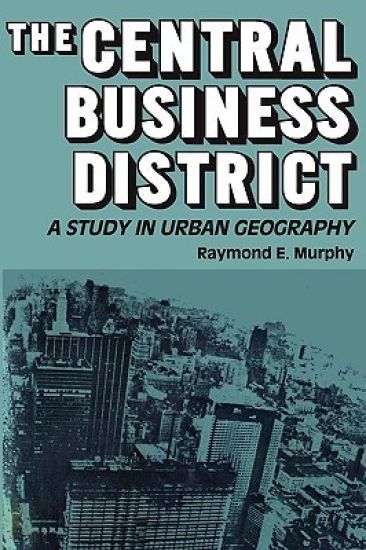
The Central Business District

The Central Business District

Raymond E. Murphy

AldineTransaction
2007
nidottu
The rapidly changing structure of urban social and economic activity in recent years has given rise to a great deal of concern regarding the fate of that area of the city where economic activity is chiefly concentrated: the central business district (CBD). This book, a geographic study of the changing nature of CBDs, represents a concise, well-ordered, and readable attempt to deal with that concern. Written by a widely known authority on the subject, it provides a comprehensive summary and analysis of much of the research done on CBDs over the past two decades and establishes many striking generalizations regarding the past, present and future evolutions of CBDs, both in this country and abroad.Using maps and diagrams where helpful, Murphy, a pioneer researcher in this field from the standpoint of economic geography, provides the record of his own and others' attempts to define CBDs and to develop theories about them. He not only presents the story of the research attack on the CBDs of a number of cities, including estimates of their probable future, but also details a practicable technique for delimiting and studying CBDs.An important feature of the book is the attention Murphy devotes to the valuable work done in this field outside America, and his examples, which fully cover the American experience, are by no means confined to it, taking in important urban centres throughout the world. This book, intended for anyone interested in the urban scene, will be particularly helpful to students and teachers of urban geography and to practicing urban planners.
Role Playing in Psychotherapy

Role Playing in Psychotherapy

Raymond Corsini

AldineTransaction
2010
nidottu
Role playing is the most naturalistic form of psychotherapy. In the safety and privacy of an office, psychiatrists and psychologists guide patients in more competent ways of living, and help patients see how they behave. Role playing, which is also used for diagnostic purposes by therapists, is an unparalleled procedure for letting patients see themselves in action, and helps them establish and assimilate in concrete fashion the insights achieved in the interview.From the point of view of the patient, psychotherapy has two main aspects; the personality of the therapist, which includes the attitude towards the patient and their understanding; and the procedures used by the therapist, such as how he conducts therapy. The therapist sees psychotherapy as a process which helps the patient to understand themselves, to modify their attitudes and levels of aspiration, and generate new ways of behaving. It is a process of change in the sense of abandoning old concepts, coming to new generalizations, and learning new behavior patterns for a current generation.Role playing as a psychotherapeutic technique is not as well understood as it merits. The beliefs that role playing is an exotic method which commits the user to a special school of thought, that it is used only in group therapy, or that it is difficult to learn, are common erroneous notions. This book gives a clear picture of therapeutic role playing, and explains how it is used and for what purposes. A rationale for its value and examples of its use are provided by the author.
Gentleman Jim

Gentleman Jim

Raymond Briggs

Vintage Publishing
2008
sidottu
Encouraged by his wife, Hilda, also eager to incorporate more adventure into her life, Jim sets out to bring these dreams to fruition by accumulating various accoutrements, only to discover that the life of an executive, an artist or a cowboy is more complicated and costly than it appears.
Education and the Cult of Efficiency

Education and the Cult of Efficiency

Raymond E. Callahan

University of Chicago Press
1964
nidottu
Raymond Callahan's lively study exposes the alarming lengths to which school administrators went, particularly in the period from 1910 to 1930, in sacrificing educational goals to the demands of business procedures. He suggests that even today the question still asked is: "How can we operate our schools?" Society has not yet learned to ask: "How can we provide an excellent education for our children?"
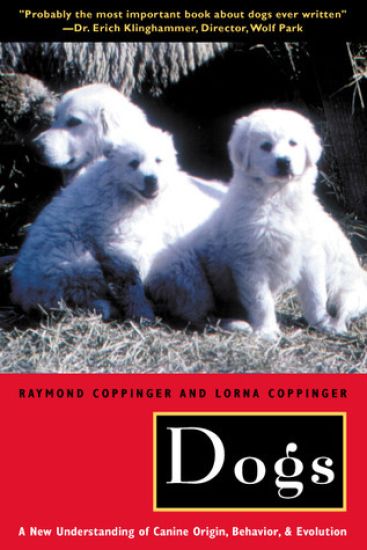
Dogs

Dogs

Raymond Coppinger; Lorna Coppinger

University of Chicago Press
2002
pokkari
Biologists, breeders and trainers, and champion sled dog racers, Raymond and Lorna Coppinger have more than four decades of experience with literally thousands of dogs. Offering a scientifically informed perspective on canines and their relations with humans, the Coppingers take a close look at eight different types of dogs - household, village, livestock guarding, herding, sled-pulling, pointing, retrieving, and hound. They argue that dogs did not evolve directly from wolves, nor were they trained by early humans; instead, dogs domesticated themselves to exploit a new ecological niche: Mesolithic village dumps. Tracing the evolution of today's breeds from these village dogs, the Coppingers show how characteristic shapes and behaviors - from pointing and baying to the sleek shapes of running dogs - arise from both genetic heritage and the environments in which pups are raised. For both dogs and humans to get the most out of each other, we need to understand and adapt to the biological needs and dispositions of our canine companions, just as they have to ours.
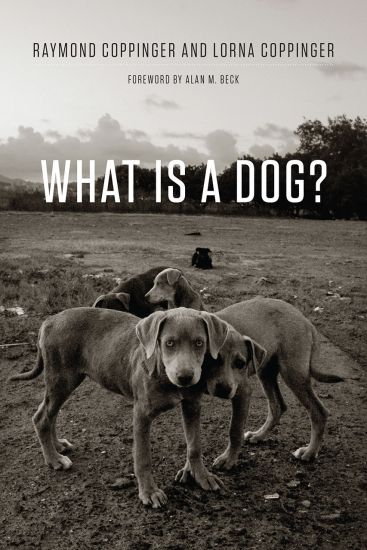
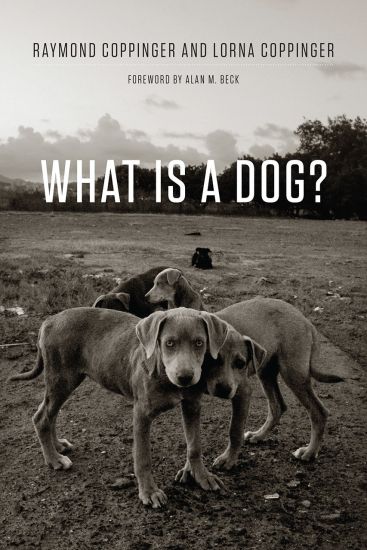
What Is a Dog?

What Is a Dog?

Raymond Coppinger; Lorna Coppinger; Alan Beck

University of Chicago Press
2016
sidottu
Of the world’s dogs, less than two hundred million are pets, living with humans who provide food, shelter, squeaky toys, and fashionable sweaters. But roaming the planet are four times as many dogs who are their own masters—neighborhood dogs, dump dogs, mountain dogs. They are dogs, not companions, and these dogs, like pigeons or squirrels, are highly adapted scavengers who have evolved to fit particular niches in the vicinity of humans. In What Is a Dog? experts on dog behavior Raymond and Lorna Coppinger present an eye-opening analysis of the evolution and adaptations of these unleashed dogs and what they can reveal about the species as a whole. Exploring the natural history of these animals, the Coppingers explain how the village dogs of Vietnam, India, Africa, and Mexico are strikingly similar. These feral dogs, argue the Coppingers, are in fact the truly archetypal dogs, nearly uniform in size and shape and incredibly self-sufficient. Drawing on nearly five decades of research, they show how dogs actually domesticated themselves in order to become such efficient scavengers of human refuse. The Coppingers also examine the behavioral characteristics that enable dogs to live successfully and to reproduce, unconstrained by humans, in environments that we ordinarily do not think of as dog friendly. Providing a fascinating exploration of what it actually means—genetically and behaviorally—to be a dog, What Is a Dog? will undoubtedly change the way any beagle or bulldog owner will reflect on their four-legged friend.
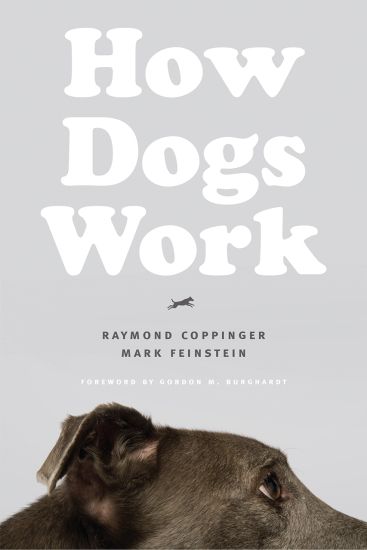
How Dogs Work

How Dogs Work

Raymond Coppinger; Mark Feinstein; Gordon M. Burghardt

University of Chicago Press
2015
sidottu
How well do we really know dogs? People may enjoy thinking about them as "man's best friend," but what actually drives the things they do? What is going on in their fur-covered heads as they look at us with their big, expressive eyes? Raymond Coppinger and Mark Feinstein know something about these questions, and with How Dogs Work, they're ready to share; this is their guide to understanding your dog and its behavior. Approaching dogs as a biological species rather than just as pets, Coppinger and Feinstein accessibly synthesize decades of research and field experiments to explain the evolutionary foundations behind dog behaviors. They examine the central importance of the shape of dogs: how their physical body (including the genes and the brain) affects behavior, how shape interacts with the environment as animals grow, and how all of this has developed over time. Shape, they tell us, is what makes a champion sled dog or a Border collie that can successfully herd sheep. Other chapters in How Dogs Work explore such mysteries as: why dogs play; whether dogs have minds, and if so what kinds of things they might know; why dogs bark; how dogs feed and forage; and the influence of the early relationship between mother and pup. Going far beyond the cozy lap dog, Coppinger and Feinstein are equally fascinated by what we can learn from the adaptations of dogs, wolves, coyotes, jackals, dingoes, and even pumas in the wild, as well as the behavior of working animals like guarding and herding dogs. We cherish dogs as family members and deeply value our lengthy companionship with them. But, isn't it time we knew more about who Fido and Trixie really are? How Dogs Work will provide some keys to unlocking the origins of many of our dogs' most common, most puzzling, and most endearing behaviors.
The National Balance Sheet of the United States, 1953-1980

The National Balance Sheet of the United States, 1953-1980

Raymond W. Goldsmith

University of Chicago Press
1982
sidottu
In what constitutes a landmark in the field of national accounts, Raymond W. Goldsmith gives detailed estimates of the nation's assets and liabilities year by year from 1953 through 1975 and for the benchmark years of 1900, 1929, and 1980. Special features of this work include presentation of data sector by sector, which casts light on the changing roles of financial institutions, and Goldsmith's expression of data in the form of ratios rather than in absolute dollar values, a device that makes the material both more informative and easier to absorb. The most comprehensive and extensive study of national wealth ever attempted, The National Balance Sheet will be a rich resource for researchers and users of national accounts.
What Is a Dog?

What Is a Dog?

Raymond Coppinger; Lorna Coppinger; Alan Beck

University of Chicago Press
2017
nidottu
Of the world's dogs, less than two hundred million are pets, living with humans who provide food, shelter, squeaky toys, and fashionable sweaters. But roaming the planet are four times as many dogs who are their own masters neighborhood dogs, dump dogs, mountain dogs. They are dogs, not companions, and these dogs, like pigeons or squirrels, are highly adapted scavengers who have evolved to fit particular niches in the vicinity of humans. In What Is a Dog? experts on dog behavior Raymond and Lorna Coppinger present an eye-opening analysis of the evolution and adaptations of these unleashed dogs and what they can reveal about the species as a whole. Exploring the natural history of these animals, the Coppingers explain how the village dogs of Vietnam, India, Africa, and Mexico are strikingly similar. These feral dogs, argue the Coppingers, are in fact the truly archetypal dogs, nearly uniform in size and shape and incredibly self-sufficient. Drawing on nearly five decades of research, they show how dogs actually domesticated themselves in order to become such efficient scavengers of human refuse. The Coppingers also examine the behavioral characteristics that enable dogs to live successfully and to reproduce, unconstrained by humans, in environments that we ordinarily do not think of as dog friendly. Providing a fascinating exploration of what it actually means genetically and behaviorally to be a dog, What Is a Dog? will undoubtedly change the way any beagle or bulldog owner will reflect on their four-legged friend.
Aramaic Ritual Texts from Persepolis

Aramaic Ritual Texts from Persepolis

Raymond A. Bowman

Oriental Institute of the University of Chicago
1970
sidottu
We now have Raymond Bowman's long awaited edition of the Aramaic texts from Persepolis, unearthed during the expedition by the University of Chicago under Erich F. Schmidt between 1936 and 1938. Bowman has assembled important data on the chronology of Persepolis during the first half of the fifth century B.C. from the personal names and official titles listed in the Aramaic texts. He shows acumen in attacking certain textual problems, and his commentary and introduction provide the scholar with information necessary for a proper understanding of this corpus of some two hundred brief, formulaic inscriptions written on various stone implements-mortars and pestles, plates and trays-found in the treasury at Persepolis. [From an article by Baruch A. Levine in the Journal of the American Oriental Society 92 (1972) 70-79].
How Dogs Work

How Dogs Work

Raymond Coppinger; Mark Feinstein; Gordon M Burghardt

University of Chicago Press
2019
pokkari
How well do we really know dogs? People may enjoy thinking about them as "man's best friend," but what actually drives the things they do? What is going on in their fur-covered heads as they look at us with their big, expressive eyes? Raymond Coppinger and Mark Feinstein know something about these questions, and with How Dogs Work, they're ready to share; this is their guide to understanding your dog and its behavior. Approaching dogs as a biological species rather than just as pets, Coppinger and Feinstein accessibly synthesize decades of research and field experiments to explain the evolutionary foundations underlying dog behaviors. They examine the central importance of the shape of dogs: how their physical body (including the genes and the brain) affects behavior, how shape interacts with the environment as animals grow, and how all of this has developed over time. Shape, they tell us, is what makes a champion sled dog or a Border collie that can successfully herd sheep. Other chapters in How Dogs Work explore such mysteries as why dogs play; whether dogs have minds, and if so what kinds of things they might know; why dogs bark; how dogs feed and forage; and the influence of the early relationship between mother and pup. Going far beyond the cozy lap dog, Coppinger and Feinstein are equally fascinated by what we can learn from the adaptations of dogs, wolves, coyotes, jackals, dingoes, and even pumas in the wild, as well as the behavior of working animals like guarding and herding dogs. We cherish dogs as family members and deeply value our lengthy companionship with them. But, isn't it time we knew more about who Fido and Trixie really are? How Dogs Work will provide some keys to unlocking the origins of many of our dogs' most common, most puzzling, and most endearing behaviors.
Maimonides' Ethics

Maimonides' Ethics

Raymond L. Weiss

University of Chicago Press
1991
sidottu
In this book Raymond L. Weiss examines how a seminal Jewish thinker negotiates the philosophical conflict between Athens and Jerusalem in the crucial area of ethics. Maimonides, a master of both the classical and the biblical-rabbinic traditions, reconciled their differing views of morality primarily in the context of Jewish jurisprudence. Taking into consideration the entire corpus of Maimonides' writings, Weiss focuses on the ethical sections of the Commentary on the Mishnah and the Mishneh Torah, but also discusses the Guide of the Perplexed, the letters of Maimonides, and his medical works. The gulf between classical philosophy and the Torah made the task of Maimonides extraordinarily difficult. Weiss shows that Maimonides subtly preserves the tension between those traditions while producing a practical accommodation between them. To explain how Maimonides was able to accomplish this twofold goal, Weiss takes seriously the multilevel character of Maimonides' works. Weiss interprets Maimonides as a heterodox thinker who, with utter integrity, faces the Law's encounter with philosophy and gives both the Torah and philosophy their due.
The Sociology of Culture

The Sociology of Culture

Raymond Williams; Bruce Robbins

University of Chicago Press
1995
pokkari
Raymond Williams helped to establish the field of cultural sociology with "Marxism and Literature" and "Culture and Society." Continuing the work of those studies, "The Sociology of Culture" offers debate on the origin and evolution of culture. It defines sociology of culture as a convergence of various fields and explores ways in which culture is socially mediated.
Spirit of the Grassroots People

Spirit of the Grassroots People

Raymond Mason

McGill-Queen's University Press
2020
sidottu
Raymond Mason is an Ojibway activist who campaigns for the rights of residential school survivors and a founder of Spirit Wind, an organization that played a key role in the development of the Indian Residential School Settlement Agreement. This memoir offers a firsthand account of the personal and political challenges Mason confronted on this journey. A riveting and at times harrowing read, Spirit of the Grassroots People describes the author's experiences in Indian day and residential schools in Manitoba and his struggles to find meaning in life after trauma and abuse. Mason details the work that he and his colleagues did over many years to gain recognition and compensation for their suffering. Drawing from Indigenous oral traditions as well as Western historiography, the work applies the concept of two-eyed seeing to the histories of colonialism and education in Canada. The memoir is supplemented by a final chapter in which Theodore Michael Christou and Jackson Pind put Mason's story into a historical and educational context. An essential key to understanding the legacy of Indian residential and day schools, this text is both a documentation of history and a deeply personal story of a human experience.
Segmentation

Segmentation

Raymond Patrick Butt

Tellwell Talent
2021
pokkari
Venerable disputations of an alienated heart and mind. Existential poetry in a whorl of abstract myth, foreign bodies, musick and sea stirrings. Two full years in editing; Segmentation pushes the human boundaries of space, time and thought. Prepare for a lucid plunge into deep water.
Segmentation

Segmentation

Raymond Patrick Butt

Tellwell Talent
2021
sidottu
Venerable disputations of an alienated heart and mind. Existential poetry in a whorl of abstract myth, foreign bodies, musick and sea stirrings. Two full years in editing; Segmentation pushes the human boundaries of space, time and thought. Prepare for a lucid plunge into deep water.
Evidence

Evidence

Raymond N. Emson

Red Globe Press
2010
nidottu
From DNA profiling to consideration of the accused's previous conduct, the law of evidence is a fascinating amalgam of logic, common sense, philosophy and tactics. Evidence explains the fundamentals and looks at the principles behind it.