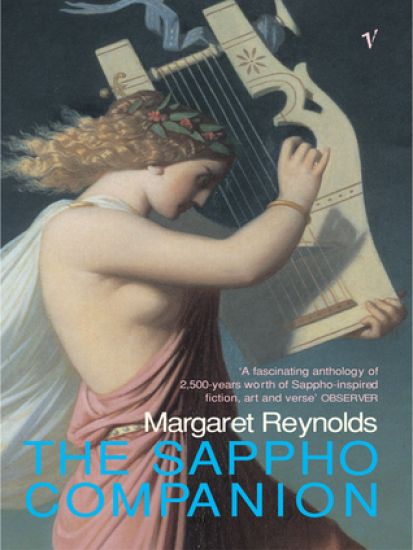
Born around 630BC on the Greek island of Lesbos, Sappho is now regarded as the greatest lyrical poet of ancient Greece, ironic and passionate, capturing the troubled depths of love. This anthology displays the way different periods have taken up Sappho's haunting story bringing together many different kinds of work.
Reach your audience through simplicity and storytelling Garr Reynolds, the bestselling author of Presentation Zen, is back with a third edition that covers advances in PowerPoint, Keynote, and other presentation technology. Garr tackles storytelling through slides and shares his approach to effective presentation design. Draw inspiration from fresh examplesCombine design principles with Zen simplicityCreate simpler, more effective presentations that will motivate your audiences Garr offers techniques for cutting through the noise and distractions of modern life and truly engaging with your audiences in a meaningful way. "Presentation Zen changed my life and the lives of my clients. The philosophy and approach so elegantly explained in Garr's book will inspire your audience. Don't even think of giving another presentation without it!" —Carmine Gallo, author of The Presentation Secrets of Steve Jobs and Talk Like TED "Garr has broken new ground in the way we think about the power of presentations, and more important, has taught an entire generation of communicators how to do a better job. Don't miss this one." —Seth Godin, legendary presenter and author of This is Marketing "If you care about the quality and clarity of your presentations—and you should—pick up this book, read every page, and heed its wisdom. Presentation Zen is a contemporary classic." —Daniel H. Pink, author of A Whole New Mind and Drive
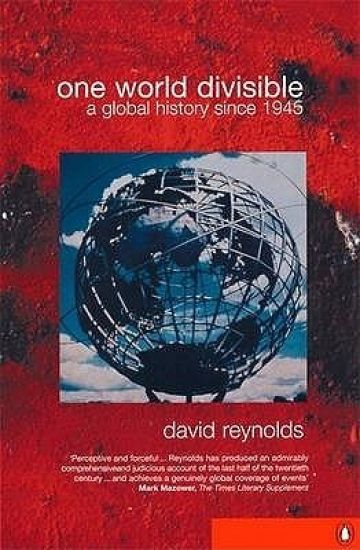
The second half of the twentieth century was dominated by the unfolding drama of the Cold War, from the Berlin blockade to the fall of the Berlin Wall. A booming global economy has had its sinister shadow in the apparently insoluble crises that havebeset much of the Third World. Above all, peace in the West has been offset by wars of unbelievable murderousness elsewhere. Reynolds' account is both an overview of the trends underlying this spectacular and awful variety, and an insight into the lives led in its midst.
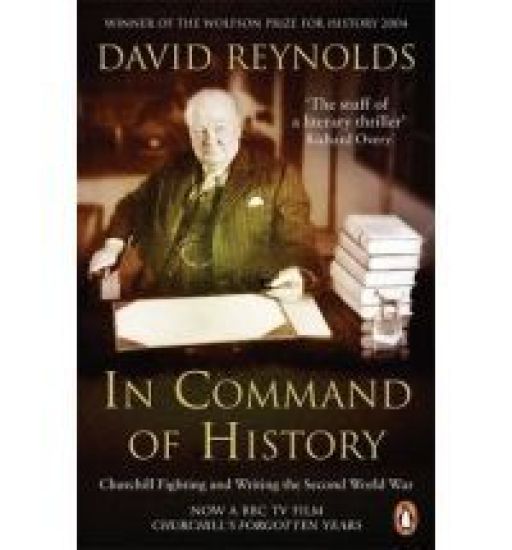
Churchill fought the war twice over - as Prime Minister and again as its premier historian. In 1948-54 he published six volumes of memoirs which secured his reputation and shaped our understanding of the conflict to this day. Using the drafts and correspondence for The Second World War, David Reynolds opens our eyes to Churchill the author and to the research 'syndicate' on whom he depended. We see how the memoirs were censored by Whitehall to conceal secrets such as the codebreakers at Bletchley Park, and how Churchill himself censored them to avoid offending current world leaders. This book forces us to reconsider much received wisdom about the war and illuminates an unjustly neglected period of his life - the Second Wilderness Years of 1945-51, when Churchill, now over seventy, wrote himself into history, politicked himself back into Downing Street and delivered some of the most important speeches of his career.
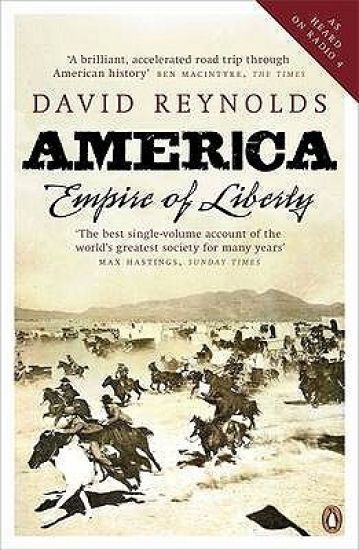
It was Thomas Jefferson who envisioned the United States as a great 'empire of liberty.' In the first new one-volume history in two decades, David Reynolds takes Jefferson's phrase as a key to the saga of America - helping unlock both its grandeur and its paradoxes. He examines how the anti-empire of 1776 became the greatest superpower the world has seen, how the country that offered liberty and opportunity on a scale unmatched in Europe nevertheless founded its prosperity on the labour of black slaves and the dispossession of the Native Americans. He explains how these tensions between empire and liberty have often been resolved by faith - both the evangelical Protestantism that has energized U.S. politics since the foundation of the nation and the larger faith in American righteousness that has impelled the country's expansion. Reynolds' account is driven by a compelling argument which illuminates our contemporary world.
The New York Times bestseller that explains how groundbreaking scientific discoveries can help each of us achieve our personal bestEvery week, Gretchen Reynolds single-handedly influences how millions of Americans work out. In her popular New York Times column, she debunks myths, spurs conversation, and stirs controversy by questioning widely held beliefs about exercise.Here, Reynolds consults experts in a range of fields to share paradigm-shifting findings that were previously only available in academic and medical journals, including: - 20 minutes of cardio is all you need (and sometimes six minutes is enough)- Stretching before a workout is counterproductive- Chocolate milk is better than Gatorade for recoveryWhether you're running ultramarathons or just want to climb the stairs without losing your breath, The First 20 Minutes will show you how to be healthy today and perform better tomorrow.
A music journalist and author of Generation Ecstasy explores the inventive and innovative music created in the years following the heyday of punk, looking at the contributions of Talking Heads, Devo, Joy Division, Gang of Four, and others to the evolution of modern music. Original.
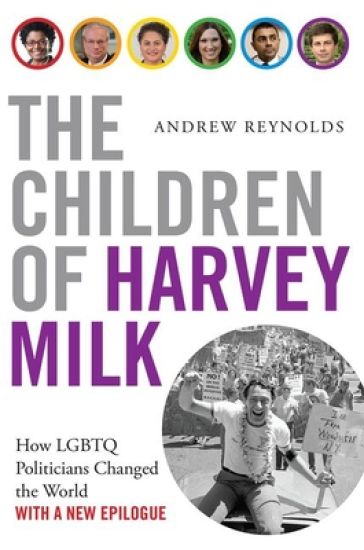
Part political thriller, part meditation on social change, part love story, The Children of Harvey Milk tells the epic stories of courageous men and women around the world who came forward to make their voices heard during the struggle for equal rights. Featuring LGBTQ icons from America to Ireland, Britain to New Zealand; Reynolds documents their successes and failures, heartwarming stories of acceptance and heartbreaking stories of ostracism, demonstrating the ways in which an individual can change the views and voting behaviors of those around them. The book also includes rare vignettes of LGBTQ leaders in Africa, Asia, Latin America and the Caribbean who continue to fight for equality in spite of threats, violence, and homophobia. A touchstone narrative of the tumultuous journey towards LGBTQ rights, The Children of Harvey Milk is a must-read for anyone with an interest in social change. Updated in paperback, this new edition accounts for developments such as the US presidential candidacy of Pete Buttigieg.
Teaching Humanities and Social Sciences in the Primary School, Fourth Edition provides a comprehensive overview of how to teach in the humanities and social sciences areas of the curriculum, with practical strategies and contemporary teaching techniques to take into the classroom. The fourth edition has been written and restructured to address the Australian Curriculum - Humanities and Social Sciences and covers all four strands of the subject: History, Geography, Civics and Citizenship and Economics and Business. Cross-curriculum priorities of Aboriginal and Torres Strait Islander Histories and Cultures, Australian's engagement with Asia and Sustainability are incorporated throughout each chapter. Rich with activities, exercises and practical tasks to support learning and help apply theory to practice, Teaching Humanities and Social Sciences in the Primary School is also accompanied by a digital support package, to help pre-service teachers strengthen their subject knowledge and test their own skills.
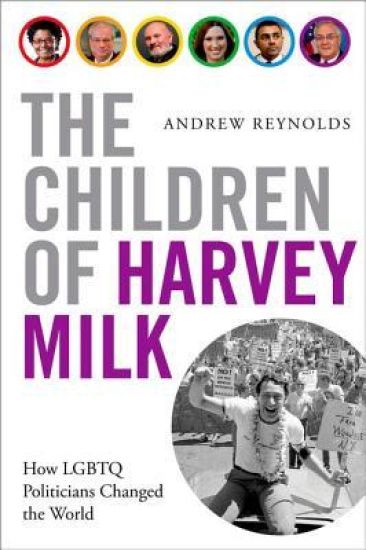
Part political thriller, part meditation on social change, part love story, The Children of Harvey Milk tells the epic stories of courageous men and women around the world who came forward to make their voices heard during the struggle for equal rights. Featuring LGBTQ icons from America to Ireland, Britain to New Zealand; Reynolds documents their successes and failures, heartwarming stories of acceptance and heartbreaking stories of ostracism, demonstrating the ways in which an individual can change the views and voting behaviors of those around them. The book also includes rare vignettes of LGBTQ leaders in Africa, Asia, Latin America and the Caribbean who continue to fight for equality in spite of threats, violence, and homophobia. A touchstone narrative of the tumultuous journey towards LGBTQ rights, The Children of Harvey Milk is a must-read for anyone with an interest in social change.
There is a hidden question at the heart of media studies, so fundamental that it has largely remained implicit and unexamined. Where do you end, and where do media begin? In Media in Mind, author Daniel Reynolds draws upon naturalist philosophies of the mind from John Dewey through contemporary theories of embodied and extended cognition to make the case that the lines separating media from the minds of their users are not blurry or variable so much as they never existed to begin with. Through analyses of films and video games from 1900 to the present, Media in Mind shows how media forms and technologies challenge dominant models of perception and mental representation, and how they complicate theoretical understanding of concepts like the platform and the interface. In order to do justice to the profound and literally mind-changing power of media, Reynolds argues, we need to think not so much about the relationship between media and the mind as about the roles that media play in our minds. Through this crucial distinction, Media in Mind surveys more than a century of media theory to illustrate the ways that scholars of film and digital media have situated and reconsidered a series of divisions between media, user, and world, and how these these conceptual divisions have reflected and inflected their ways of understanding the mind.
Where do you end, and where do media begin? In Media in Mind, author Daniel Reynolds draws upon naturalist philosophies of the mind from John Dewey through contemporary theories of embodied and extended cognition to make the case that the lines separating media from the minds of their users are not blurry or variable so much as they never existed to begin with. Through analyses of films and video games from 1900 to the present, Media in Mind shows how media forms and technologies challenge dominant models of perception and mental representation, and how they complicate theoretical understanding of concepts like the platform and the interface. In order to do justice to the profound and literally mind-changing power of media, Reynolds argues, we need to think not so much about the relationship between media and the mind as about the roles that media play in our minds. Through this crucial distinction, Media in Mind surveys more than a century of media theory to illustrate the ways that scholars of film and digital media have situated and reconsidered a series of divisions between media, user, and world, and how these these conceptual divisions have reflected and inflected their ways of understanding the mind.
Between 1815 and the Duke of Wellington's death in 1852, the Battle of Waterloo became much more than simply a military victory. While other countries marked the battle and its anniversary, only Britain actively incorporated the victory into their national identity, guaranteeing that it would become a ubiquitous and multi-layered presence in British culture. By examining various forms of commemoration, celebration, and recreation, Who Owned Waterloo? demonstrates that Waterloo's significance to Britain's national psyche resulted in a different kind of war altogether: one in which civilian and military groups fought over and established their own claims on different aspects of the battle and its remembrance. By weaponizing everything from memoirs, monuments, rituals, and relics to hippodramas, panoramas, and even shades of blue, veterans pushed back against civilian claims of ownership; English, Scottish, and Irish interests staked their claims; and conservatives and radicals duelled over the direction of the country. Even as ownership was contested among certain groups, large portions of the British population purchased souvenirs, flocked to spectacles and exhibitions, visited the battlefield itself, and engaged in a startling variety of forms of performative patriotism, guaranteeing not only the further nationalization of Waterloo, but its permanent place in nineteenth century British popular and consumer culture.
Between 1815 and the Duke of Wellington's death in 1852, the Battle of Waterloo became much more than simply a military victory. While other countries marked the battle and its anniversary, only Britain actively incorporated the victory into their national identity, guaranteeing that it would become a ubiquitous and multi-layered presence in British culture. By examining various forms of commemoration, celebration, and recreation, Who Owned Waterloo? demonstrates that Waterloo's significance to Britain's national psyche resulted in a different kind of war altogether: one in which civilian and military groups fought over and established their own claims on different aspects of the battle and its remembrance. By weaponizing everything from memoirs, monuments, rituals, and relics to hippodramas, panoramas, and even shades of blue, veterans pushed back against civilian claims of ownership; English, Scottish, and Irish interests staked their claims; and conservatives and radicals duelled over the direction of the country. Even as ownership was contested among certain groups, large portions of the British population purchased souvenirs, flocked to spectacles and exhibitions, visited the battlefield itself, and engaged in a startling variety of forms of performative patriotism, guaranteeing not only the further nationalization of Waterloo, but its permanent place in nineteenth century British popular and consumer culture.
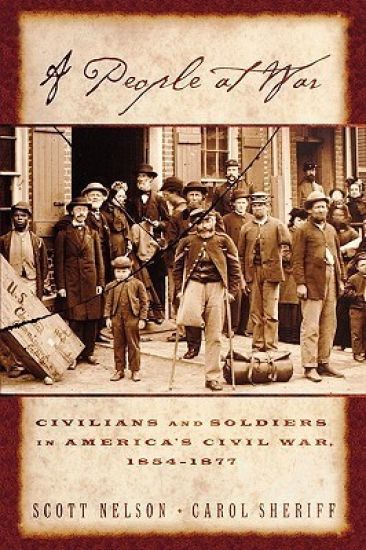
Claiming more than 600,000 lives, the American Civil War had a devastating impact on countless numbers of common soldiers and civilians, even as it brought freedom to millions. This book shows how average Americans coped with despair as well as hope during this vast upheaval. A People at War brings to life the full humanity of the war's participants, from women behind their plows to their husbands in army camps; from refugees from slavery to their former masters; from Mayflower descendants to freshly recruited Irish sailors. We discover how people confronted their own feelings about the war itself, and how they coped with emotional challenges (uncertainty, exhaustion, fear, guilt, betrayal, grief) as well as physical ones (displacement, poverty, illness, disfigurement). The book explores the violence beyond the battlefield, illuminating the sharp-edged conflicts of neighbor against neighbor, whether in guerilla warfare or urban riots. The authors travel as far west as China and as far east as Europe, taking us inside soldiers' tents, prisoner-of-war camps, plantations, tenements, churches, Indian reservations, and even the cargo holds of ships. They stress the war years, but also cast an eye at the tumultuous decades that preceded and followed the battlefield confrontations. An engrossing account of ordinary people caught up in life-shattering circumstances, A People at War captures how the Civil War rocked the lives of rich and poor, black and white, parents and children--and how all these Americans pushed generals and presidents to make the conflict a people's war.
Claiming more than 600,000 lives, the American Civil War had a devastating impact on countless numbers of common soldiers and civilians, even as it brought freedom to millions. This book shows how average Americans coped with despair as well as hope during this vast upheaval. A People at War brings to life the full humanity of the war's participants, from women behind their plows to their husbands in army camps; from refugees from slavery to their former masters; from Mayflower descendants to freshly recruited Irish sailors. We discover how people confronted their own feelings about the war itself, and how they coped with emotional challenges (uncertainty, exhaustion, fear, guilt, betrayal, grief) as well as physical ones (displacement, poverty, illness, disfigurement). The book explores the violence beyond the battlefield, illuminating the sharp-edged conflicts of neighbor against neighbor, whether in guerilla warfare or urban riots. The authors travel as far west as China and as far east as Europe, taking us inside soldiers' tents, prisoner-of-war camps, plantations, tenements, churches, Indian reservations, and even the cargo holds of ships. They stress the war years, but also cast an eye at the tumultuous decades that preceded and followed the battlefield confrontations. An engrossing account of ordinary people caught up in life-shattering circumstances, A People at War captures how the Civil War rocked the lives of rich and poor, black and white, parents and children--and how all these Americans pushed generals and presidents to make the conflict a people's war.
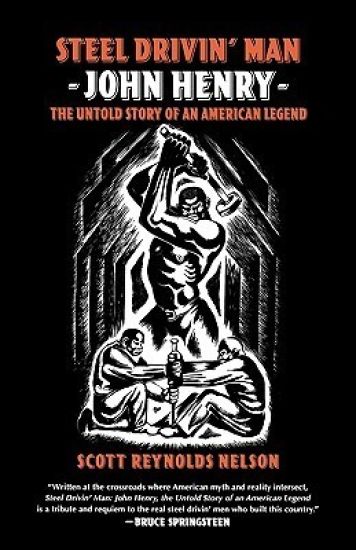
The ballad "John Henry" is the most recorded folk song in American history and John Henry--the mighty railroad man who could blast through rock faster than a steam drill--is a towering figure in our culture. But for over a century, no one knew who the original John Henry was--or even if there was a real John Henry. In Steel Drivin' Man, Scott Reynolds Nelson recounts the true story of the man behind the iconic American hero, telling the poignant tale of a young Virginia convict who died working on one of the most dangerous enterprises of the time, the first rail route through the Appalachian Mountains. Using census data, penitentiary reports, and railroad company reports, Nelson reveals how John Henry, victimized by Virginia's notorious Black Codes, was shipped to the infamous Richmond Penitentiary to become prisoner number 497, and was forced to labor on the mile-long Lewis Tunnel for the C&O railroad. Nelson even confirms the legendary contest between John Henry and the steam drill (there was indeed a steam drill used to dig the Lewis Tunnel and the convicts in fact drilled faster). Equally important, Nelson masterfully captures the life of the ballad of John Henry, tracing the song's evolution from the first printed score by blues legend W. C. Handy, to Carl Sandburg's use of the ballad to become the first "folk singer," to the upbeat version by Tennessee Ernie Ford. We see how the American Communist Party appropriated the image of John Henry as the idealized American worker, and even how John Henry became the precursor of such comic book super heroes as Superman or Captain America. Attractively illustrated with numerous images, Steel Drivin' Man offers a marvelous portrait of a beloved folk song--and a true American legend.
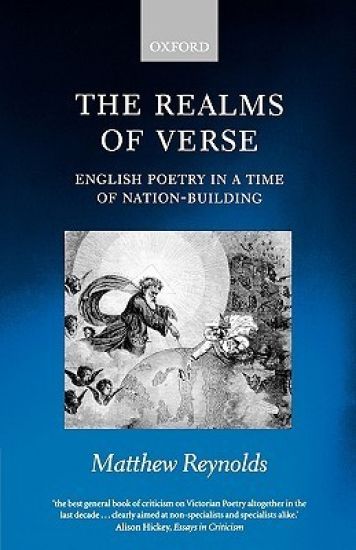
The poets of the mid-nineteenth century lived in a time of 'nation-building'. The Realms of Verse brings that political and intellectual context to life. It shows that the Italian Risorgimento raised questions about community and individual liberty which were especially problematic for subjects of the multi-national United Kingdom, and argues that these questions are at the heart of the poetry of Robert and Elizabeth Browning, Tennyson, and Clough. Their long poems characteristically tell stories about marriage, investigating the symbolic and actual interactions between that personal union and national unity. Their verse as a whole exploits correspondences between formal control and political government, and is alert to its own role in fostering a common culture. Historically detailed, theoretically astute, critically nimble, and stylishly written, The Realms of Verse is the most far-reaching reassessment of Victorian poetry to have been published in recent years.