Kirjojen hintavertailu. Mukana 11 244 527 kirjaa ja 12 kauppaa.

Kirjahaku

Etsi kirjoja tekijän nimen, kirjan nimen tai ISBN:n perusteella.

1000 tulosta hakusanalla Richard Cook

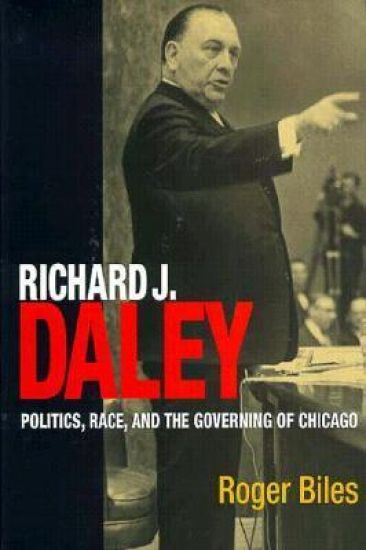
Richard J. Daley

Richard J. Daley

Roger Biles

Northern Illinois University Press
1995
sidottu
From his first election in 1955 to 1976, Mayor Richard J. Daley dominated Chicago's political landscape. A product of the Irish Catholic working class, Daley never lost touch with his roots as he rose through the Democratic Party machine-whose workings he perfected-to become a powerful and enduring political figure. The story of Daley is also the story of Chicago. Faced with issues confronting many American cities in the twentieth century-civil rights, integration, race riots, fiscal crisis, housing, suburban flight, urban renewal-Daley conducted Chicago's business with a steadfast resolve to withstand the many changes that threatened to engulf his city. Richard J. Daley portrays one of the most prominent American mayors in a balanced perspective and sheds new light on his place in urban history.
Richard J. Daley

Richard J. Daley

Roger Biles

Northern Illinois University Press
1995
pokkari
From his first election in 1955 to 1976, Mayor Richard J. Daley dominated Chicago's political landscape. A product of the Irish Catholic working class, Daley never lost touch with his roots as he rose through the Democratic Party machine-whose workings he perfected-to become a powerful and enduring political figure. The story of Daley is also the story of Chicago. Faced with issues confronting many American cities in the twentieth century-civil rights, integration, race riots, fiscal crisis, housing, suburban flight, urban renewal-Daley conducted Chicago's business with a steadfast resolve to withstand the many changes that threatened to engulf his city. Richard J. Daley portrays one of the most prominent American mayors in a balanced perspective and sheds new light on his place in urban history.
Richard Benson

Richard Benson

Peter Barberie

Yale University Press
2022
sidottu
A wide-ranging retrospective that reveals a master printer’s own photographs to be technically brilliant work of remarkable breadth and complexity This book presents the first in-depth survey of photographs by Richard Benson (1943–2017), who approached photography as a thrilling set of technical challenges and used the medium to craft profound depictions of people, the spaces of their lives and work, and the products of their labor. An essay by curator Peter Barberie interweaves examination of Benson’s photographic practices with the story of his ideas, writing, and reproductive printing, while photographer An-My Lê, Benson’s former student, offers her perspective on his teaching, family life, and art. The book begins with his stunning darkroom prints in silver and platinum and follows his trajectory toward extraordinary digital photography, culminating in later color prints that are at once elegant and garish, representing the contemporary world in vivid detail. Benson’s democratic eye also extended to human subjects: he photographed loved ones and strangers with extraordinary attention, and directed the same gaze to the buildings and landscapes entwined with individual lives.Published in association with the Philadelphia Museum of ArtExhibition Schedule:Philadelphia Museum of Art (October 3, 2021–January 23, 2022)
The Works of Richard Methley

The Works of Richard Methley

Richard Methley

Liturgical Press
2021
pokkari
Richard Methley (ca. 1450–1527/8), a Carthusian of Mount Grace, was the last great mystic before the English Reformation. Most of his prolific works are lost, but the treatises translated here display the same kind of experiential, affective, and ecstatic mysticism that is often labeled "feminine." Dating from the 1480s, they include a guide to contemplative prayer, a spiritual diary, and an unknown work on the discernment of spirits. Indebted to Richard Rolle and compared by one of his contemporaries to Margery Kempe, Methley will be an exciting discovery for students of late medieval religion.
Gather: Richard Van Camp on the Joy of Storytelling

Gather: Richard Van Camp on the Joy of Storytelling

Richard Van Camp

University of Regina Press
2021
sidottu
Master storyteller and bestselling author Richard Van Camp on how to tell a good story Gathering around a campfire, or the dinner table, we humans have always told stories. Through the stories we tell, we define our own identities and shape our understanding of the world. Master storyteller and bestselling author Richard Van Camp writes of the power of storytelling and its potential to transform both the speaker and the audience in Gather. Describing the elements required to make a story, he offers insights into how to read a room, how to capture the attention of listeners, how to create community through storytelling, and how to banish loneliness. A member of the Tlicho Dene First Nation, Van Camp includes stories from Elders whose wisdom influenced him.
Richard Flury

Richard Flury

Chris Walton

Toccata Press
2017
sidottu
The first extensive study of the life and music of the Swiss composer, Richard Flury (1896-1967). The late-Romantic composer Richard Flury (1896-1967) was born in Biberist, a tiny town outside the Baroque city of Solothurn in northern Switzerland. He went to school in Solothurn, later taught there, conducted its orchestra, andhad his operas and ballets performed at the local theatre by its semi-professional ensemble. But Flury was more than just another conservative composer stuck in the provinces. His teachers included Ernst Kurth and JosephMarx of Vienna, and his music was performed by conductors such as Felix Weingartner and Hermann Scherchen and star instrumentalists like Wilhelm Backhaus and Georg Kulenkampff. His first opera was conducted by a former student ofBerg and Schoenberg who became his staunch advocate, and during the Second World War Flury worked closely with several Jewish emigré writers and musicians from Germany and Czechoslovakia. In his music of the early 1930s, the influence of Berg and Hindemith became apparent as Flury dabbled in modernism and free tonality before moving back to a more traditionalist stance; but he was also a fine tunesmith who loved writing Viennese waltzes and violin miniatures after the manner of Kreisler. In both his aesthetic and his career, Flury offers a fascinating case of a man negotiating constantly between the centre and the periphery - and composing some very good music in the process.The book includes a 23 track CD of Flury's music. CHRIS WALTON teaches music history at the Basel University of Music in Switzerland. He is the author of Othmar Schoeck: Life and Works (2009) and Richard Wagner's Zurich: The Muse of Place (2007).
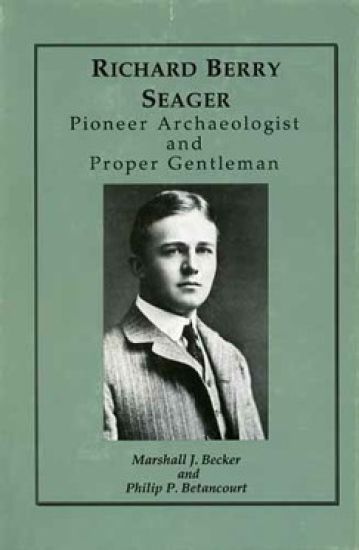
Richard Berry Seager – Archaeologist and Proper Gentleman

Richard Berry Seager – Archaeologist and Proper Gentleman

Marshall J. Becker; Philip P. Betancourt

University of Pennsylvania Press
1997
sidottu
An examination of the life of Richard Seager is important for two reasons. First, it provides a glimpse of a character of a member of the second generation of researchers to work in Cretan archaeology and, second, Seager and his generation helped form our own preconceptions about the early history of Greece. His underlying thesis, that the Early Minoan society was the first European civilization, thus the foundation of Greek and later Western history, is considered valid today.
Richard Artschwager

Richard Artschwager

University of Wisconsin Press
1992
nidottu
A series of essays discussing the Elvehjem Museum of Art's outdoor sculpture, ""Generations"", which opened to the public in 1991. This exhibit was designed as an educational vehicle which would promote an understanding and acceptance of the new sculpture and inspire further interest in public art.
Richard Rezac

Richard Rezac

Renaissance Society at the University of Chicago
2018
sidottu
The title of Richard Rezac's Renaissance Society exhibition, Address, plays on the multivalent quality of the word. As a noun, it refers to a unique identifier of a precise location. As a verb, it refers to a form of communication crafted for a specific people, time, and place. This exhibition drew upon both elements of the word's two meanings: the artist deliberately created and selected works in response to the architecture of the Renaissance Society's gallery space, and the title also nods to the sculptures' relationship to their presumptive audience. This book showcases twenty pieces featured in the exhibition that are made of a wide range of materials including cherry wood, cast bronze, and aluminum and that span Rezac's career--including newly commissioned pieces.s Through the concept of address, the exhibit and book explore the artist's ongoing engagement with both tangible, mathematical ordering systems and the elusive mechanisms of memory and interpretation. This publication continues Rezac's address, extending it to a greater audience of readers through a generous selection of images, a conversation between the artist and curator Solveig vsteb , and new texts by Matthew Goulish, Jennifer R. Gross, and James Rondeau.
Richard Pousette-Dart: 1930s

Richard Pousette-Dart: 1930s

Drawing Center, U.S.
2016
pokkari
Best known as a founding member of the New York School of painting, Richard Pousette-Dart (1916-1992) initially pursued a career as a sculptor. The son of Nathaniel Pousette, a painter, art director, educator and art writer, and Flora Louise Dart, a poet and musician, Pousette-Dart was raised in an environment surrounded by music, poetry and the visual arts, and began drawing and painting by the age of eight. Introduced to African, Oceanic and Native American art by his father, Pousette-Dart made frequent visits to the Museum of Natural History as a young man. In 1938, he forged a close friendship with John Graham, whose writings were closely aligned with his own interests in spiritual concerns and so-called primitive art. Throughout the 1930s, Pousette-Dart was most entranced by the work of Henri Gaudier-Brzeska, whose abstract sculptures, drawings and forms in brass greatly informed the orientation of the young American artist.Published to accompany an exhibition at The Drawing Center, this volume is the first in-depth consideration of Richard Pousette-Dart's drawings from the 1930s, a period when the artist pursued directly-carved sculpture, yet also painted, experimented with photography and created numerous works on paper. These early drawings explore Pousette-Dart's concerns about sculpture and working three-dimensionally, and many reference the figure through full-frontal or profile views as they consider space, orientation and volume. Additionally, numerous studies allude to dance, animal forms, masks and heads, and many examples offer an accumulation of abstract and geometric forms, particularly for his brasses--small sculptures meant to be "held in the hand." The exhibition includes approximately 80 works from the 1930s including drawings, notebooks and brasses.
The Life and Times of Richard Castro

The Life and Times of Richard Castro

Richard Gould

Colorado Historical Society,U.S.
2007
nidottu
Hispanic leader Richard Castro was not above a good street fight. Denver police beat him bloody during a 1960s confrontation, and political rivals later shot him and bombed his home. But he emerged from the early struggles of Denver's Hispanic movement - el Movimento - to become one of Colorado's most important political figures. During his ten years as a state representative and, later, as a key ally of Denver mayor Federico Pena, Castro personified the Hispanic community's new-found political power. "The Life and Times of Richard Castro" traces Castro's path from the streets of Denver to the chambers of the State Capital. It also chronicles a community's coming of age - an event that transformed politics and society in Colorado and the West.