Celebrating 85 years of Sparking Imaginations A beautiful clothbound edition of the much-loved modern classic Percy Jackson and the Olympians: The Lightning Thief. Bound in real cloth with two coloured foils and sprayed coloured edges, this deluxe edition is a perfect gift or collector’s item. Part of an eight book set published to mark the 85th anniversary of Puffin Books. With a brand-new foreword from Nazneen Ahmed Pathak.HALF BOY - HALF GOD - ALL HERO.Look, I never asked to be the song of a Greek god, I was just a normal kid. . . until I accidentally vaporized my maths teacher.Percy Jackson is having a bad week. His life has gone from totally normal to monsters-from-Greek-mythology-randomly-appearing kind of strange. Worse still, the king of the gods thinks Percy has stolen his all-powerful lightning bolt - and it seems making Zeus angry is a very bad idea.Now Percy and his friends have just ten days to catch the true lightning thief and stop all-out war from erupting on Mount Olympus. . .What could possibly go wrong?Collect all eight titles in the Puffin Clothbound 85th Anniversary CollectionTHE STORY OF TRACY BEAKER by Jacqueline Wilson with a foreword by Beth LincolnDIARY OF A WIMPY KID by Jeff Kinney with a foreword by Dapo AdeolaCHARLOTTE’S WEB by E.B. White with a foreword by Jordan LeesMATILDA by Roald Dahl with a foreword by Robin StevensTHE EXTREMELY EMBARRASSING LIFE OF LOTTIE BROOKS by Katie Kirby with a foreword by Nadia ShireenPERCY JACKSON AND THE OLYMPIANS: THE LIGHTNING THIEF by Rick Riordan with a foreword by Nazneen Ahmed PathakPIG-HEART BOY by Malorie Blackman with a foreword by Adam KayWONDER by R.J. Palacio with a foreword by Tom Fletcher
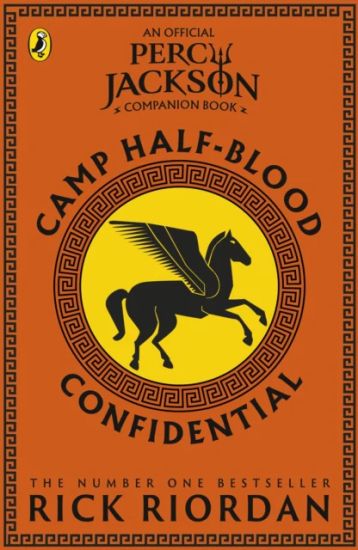
A complete guide to Camp Half-Blood, narrated by the world's greatest hero Percy Jackson. After watching the awful camp orientation video created by Apollo, Percy Jackson and his friends decide to write their own guide to Camp Half-Blood, for new demigods. They will answer all your questions, like 'What even is this place?' and 'Do I get to keep the T-shirt?' and share insider information about the divine cabins, the magical landmarks, and the training arenas. But it’s not all about the grounds. Despite what Apollo’s orientation video claims, campers do not always co-exist in peace and harmony. The camp is not run with superior efficiency. And prophecies do not flow forth with great regularity. Sprinkled throughout are stories from heroes who have called Camp Half-Blood home or just passed through on their way to places unknown. And, of course, divine words of wisdom from the god Apollo himself are included, because the demigod authors would prefer not to be struck down by him, thank you very much.
Man Talk UK aimed to help all men across the community open up about their mental health to tackle the stigma against mental illness and get men the support and help they need. In this book: - Professional help, information, resources, and guidelines - Useful real-life experience and case studies - An understanding of various types of mental health conditions Tried and tested techniques and coping skills that have been successful for - Medical and recommendations of the best way of dealing with a medical condition. About the Author: Rick Rowe is an activist and a charity organiser. He has been affiliated and worked with several mental health and charitable organisations for the past 16 years. Having gone through his own mental health battles, Rick aims at reaching all men in crisis. Men's mental health is very close to his heart and a subject he has a great passion for.
DR. MACABRE Death walks among us! A dark soul, propelled by a centuries old curse, hell bent on destroying anything or anyone in its path! Kate Hobbs returns in this exciting sequel to BLUE SENSE. A maniacal serial killer walks the streets of the windy city, leaving in his wake, a string of mutilated corpses. Both the Chicago Police Department and the FBI are baffled. Desperate to catch the murderer, they enlist the help of 'BLUE SENSE' psychic detective, Kate Hobbs, in the hope of tracking down the deranged madman before he takes his next victim. But unbeknownst to Kate, she will soon become the hunted and the unwitting target of this obsessed psychopath. And what is the true secret of DR. MACABRE? - ""Exciting, twisted & definitely macabre."" - Follow Kate as she becomes caught in a web of dark souls, the remnants of a centuries old curse. Then, face to face with the killer in a struggle for her very life! Rick McLaren
Kelly Travis had the perfect life. With her loving husband and son, she was living the dream and life couldn't get any better. Until one dark rainy night, they were taken from her in a tragic car accident. Kelly Travis had lost everything! As her world fell apart, she lost all sense of hope and belief, not only in herself but in that of love and life itself. Kelly was rapidly dying inside. Her situation was desperate. In a last ditch bid to find meaning, along with a reason to go on living, Kelly travels to outback Australia where she encounters a way of life which would have normally seemed alien to her. Deep within the Nangurran Region of Australia's central north-west, in a landscape shrouded in ancient indigenous folklore and mysticism, Kelly becomes embroiled in a local conspiracy and the target of a hidden foe. Her quest for a new beginning, soon becomes a fight for survival which could cost Kelly - her very life!
In the wake of a recent breakup, a young woman and her daughter move to the country in search of a new beginning, but they soon discover that the home of their dreams hides a bizarre secret... ...they are not alone.
Media Power in Central America explores the political and cultural interplay between the media and those in power in Costa Rica, El Salvador, Guatemala, Honduras, Panama, and Nicaragua. Highlighting the subtle strangulation of opposition media voices in the region, the authors show how the years since the guerrilla wars have not yielded the free media systems that some had expected. Rick Rockwell and Noreene Janus examine the region country by country and deal with the specific conditions of government-sponsored media repression, economic censorship, corruption, and consumer trends that shape the political landscape. Challenging the notion of the media as a democratizing force, Media Power in Central America shows how governments use the media to block democratic reforms and outlines the difficulties of playing watchdog to rulers who use the media as a tool of power.
Rick Halpern examines the links between race relations and unionization in Chicago's meatpacking industry. Drawing on oral histories and archival materials, Halpern explores the experiences of and relationship between black and white workers in a fifty-year period that included labor actions during World War I, Armour's violent reaction to union drives in the late 1930s, and organizations like the Stockyards Labor Council and the United Packinghouse Workers of America.
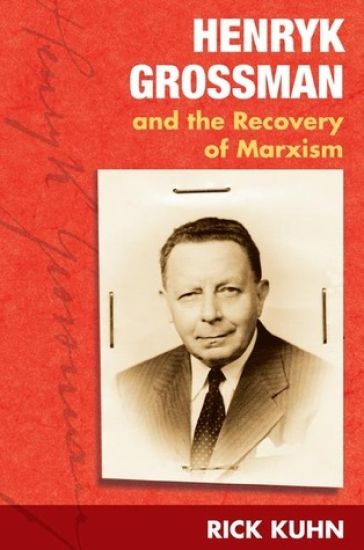
Rick Kuhn’s Henryk Grossman and the Recovery of Marxism is the definitive study of the life and work of this renowned economist, activist, and intellectual. As a young man, Grossman joined the socialist movement and participated in Jewish workers' strikes and demonstrations, as well as in boycotts against employers and the Austro-Hungarian state. He moved to Vienna, but was driven back to Poland by the Austrian state's racist citizenship policies. A member of the illegal Polish Communist Party, Grossman was frequently arrested and jailed, finally leaving Poland for a post at the Institute for Social Research in Frankfurt am Main, which gave rise to the famous 'Frankfurt School'. Grossman published his best known work in Frankfurt, including studies of Marx's method in Capital and theories of economic crisis that remain influential today. In tracing Grossman's experiences, from Kraków to New York, and offering a detailed account of his ideas, the biography provides an intimate account of key events in twentieth century history, including the politicization of east European Jewry, the World Wars, the rise of Stalinism and Nazism, and the cold war.
Now in paperback! Little Labels —Big Sound Small Record Companies and the Rise of American Music Rick Kennedy and Randy McNutt Foreword by Al Kooper A wild ride through American popular music. "[T]hese cats had their ears to the ground and cut vinyl that created the hip sounds of the day, sounds that still reverberate today. . . . Little Labels—Big Sound is a great primer into the history of these . . . independent record labels." —Blue Suede News "[L]ike the labels it celebrates and the 45s and the 78s those labels put out . . . full of exciting and vital content." —San Francisco Chronicle "In this straightforward and engaging collection of histories and profiles, the authors present a brisk overview of important indies and a look at several distinctive companies and the men who ran them . . ." —Billboard "Show me a man today who could stand up to a Syd Nathan or a Don Robey, and I'll show you a man behind bars—not behind a desk. Why, without Sam Phillips, the founder of Sun Records and the man who unearthed Elvis, Carl Perkins, Johnny Cash, Roy Orbison, Jerry Lee Lewis, Rufus Thomas, and Howling Wolf to name but a few, there might not even have been any rock 'n' roll, electric blues, or rockabilly music." —Al Kooper, from the Foreword Rick Kennedy, a media relations manager and former journalist, is author of Jelly Roll, Bix, and Hoagy (Indiana University Press). Randy McNutt, a longtime reporter with the Cincinnati Enquirer, is author of We Wanna Boogie and a book on Ohio ghost towns. March 2001 (cloth 1999) 224 pages, 33 b&w photos, 6 x 9, notes, bibl., index, append. cloth0-253-33548-5$24.95 t / £18.95 paper0-253-21434-3$17.95 t / £13.95
"Smerk's account, thankfully, is not just another exercise in quantitative analysis. He makes his points with words and sentences, not numbers and charts. The result is a free-flowing narrative in which changes in federal policy over the years are shown to have occurred because people interacted within certain political frames of reference. . . . I highly recommend this book . . . " —Brian J. Cudahy, Business Horizons " . . . a solid history of an important component of modern public policy . . . ably integrated with scholarship on metropolitan development so that urbanists can learn much here." —Choice "This book is 'must' reading for anyone who has deep interests in transit issues specifically and transportation problems in general, but it is also for all those who are more than casually curious about the dynamics of urbanization." —Economic Geography " . . . a highly in-depth study of the impact of governmental policies on the mass transit industry over the last few decades and where it may soon be heading." —Railfan and Railroad Magazine " . . . a timely and important book." —Business History Review This important new book is the only available comprehensive survey and analysis of federal policies and programs for urban mass transit. It is a must book for anyone interested in the plight of our cities and the efforts being made to solve our transportation problems.
In this historically-informed work in moral psychology, Rick Anthony Furtak develops a conceptual account of the emotions that addresses the conventional idea that reason and emotion stand in sharp opposition. Furtak begins with a critical examination of the ancient Stoic position that emotions ought to be avoided by rational human beings. He argues that, on the contrary, emotions ought to be understood as embodying a kind of authentic insight, which enables us to attain a meaningful and truthful way of seeing the world. Furtak's positive alternative to Stoicism draws heavily on the writings of Søren Kierkegaard, particularly "Either/Or" and "Works of Love," while also engaging with a wide range of other relevant philosophical, literary, and religious sources. He argues that a morality of virtue and narrative awareness is necessary for accurate emotional perception, and then attempts to define a qualified value realism based upon a reverential trust in love as the ground of life as we know it. The outcome of this inquiry into the possibility of reliable emotion is an account of the ideal state in which a person could trust himself or herself to be rational in being passionate. Wisdom in Love makes an original contribution to the philosophy of the emotions and provides a new and compelling interpretation of Kierkegaard's work as a whole.
In this historically-informed work in moral psychology, Rick Anthony Furtak develops a conceptual account of the emotions that addresses the conventional idea that reason and emotion stand in sharp opposition. Furtak begins with a critical examination of the ancient Stoic position that emotions ought to be avoided by rational human beings. He argues that, on the contrary, emotions ought to be understood as embodying a kind of authentic insight, which enables us to attain a meaningful and truthful way of seeing the world. Furtak's positive alternative to Stoicism draws heavily on the writings of Søren Kierkegaard, particularly "Either/Or" and "Works of Love," while also engaging with a wide range of other relevant philosophical, literary, and religious sources. He argues that a morality of virtue and narrative awareness is necessary for accurate emotional perception, and then attempts to define a qualified value realism based upon a reverential trust in love as the ground of life as we know it. The outcome of this inquiry into the possibility of reliable emotion is an account of the ideal state in which a person could trust himself or herself to be rational in being passionate. Wisdom in Love makes an original contribution to the philosophy of the emotions and provides a new and compelling interpretation of Kierkegaard's work as a whole.
The editors have collected original papers dealing with the impact of commissions on educational policy and reform. This book is a combination of the perspectives of practitioners directly involved with writing or reacting to commission reports, and scholars analyzing the significance and impact of educational policy. Chapters are written by some of the country's leading authorities on education. This book will prove to be a valuable resource for educators, administrators, political scientists, sociologists, and others interested in the state of education. Includes a foreword by Paul E. Peterson of Harvard University.
Despite the ubiquitous nature of emotions as part of the human psyche, the emotional side of leadership is largely ignored in formal and informal training of managers, often resulting in miscommunication and contributing to stress in the workplace. Though concepts such as emotional intelligence have entered the mainstream, they are often marginalized in managerial practice. This book argues that without acknowledging the powerful influence of emotions—your own as well as others'—managers are doomed to fail in their interactions with employees, peers, and bosses, and ultimately in their ability to manage and lead effectively. Ginsberg and Davies draw from primary research, including interviews with managers in a variety of settings, to introduce readers to the emotional side of leadership and demonstrate its positive effects on individual and organizational performance. They present practical tools for honing emotional navigation skills and applying them toward decision making, problem solving, communication, feedback, and performance improvement.Any management decision that involves people (in other words, any management decision) has an emotional component. Given the ubiquitous nature of emotions as part of the human psyche, one would expect leaders and managers to be well-trained and equipped to deal with emotions in the workplace. On the contrary, the emotional side of being a leader is largely ignored in formal and informal training programs, often resulting in miscommunication between managers and their employees, and contributing to workplace stress. Though concepts such as emotional intelligence have entered the mainstream, systematic development of skills in managing emotions in the workplace have yet to emerge, and are often relegated to the touchy-feely end of the spectrum.This book argues that without acknowledging the powerful influence of emotions—their own as well as others'—managers are doomed to fail in their interactions with employees, peers, and bosses, and ultimately in their ability to manage and lead effectively. Ginsberg and Davies draw from primary research, including interviews with managers in a variety of settings, to introduce readers to the emotional side of leadership and demonstrate its positive effects on individual and organizational performance. They present practical tools for honing emotional navigation skills and applying them toward decision making, problem solving, communication, feedback, and performance improvement.
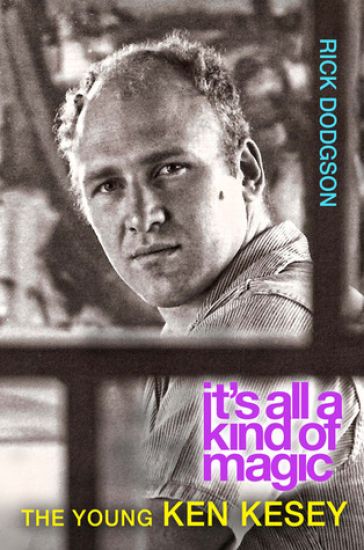
Counterculture icon and best-selling author of the anti-authoritarian novels One Flew Over the Cuckoo's Nest and Sometimes a Great Notion, Ken Kesey said he was ""too young to be a beatnik and too old to be a hippie."" It's All a Kind of Magic is the first biography of Kesey. It reveals a youthful life of brilliance and eccentricity that encompassed wrestling, writing, magic and ventriloquism, CIA-funded experiments with hallucinatory drugs, and a notable cast of characters that would come to include Wallace Stegner, Larry McMurtry, Tom Wolfe, Neal Cassady, Timothy Leary, the Grateful Dead, and Hunter S. Thompson.A child of the Depression, Kesey was born in 1935 to a migrant farming family that settled in Oregon during World War II. Based on meticulous research and many interviews with friends and family, Rick Dodgson's biography documents Kesey's early life, from his time growing up in Oregon as a farm boy and wrestling champion through his college years, his first drug experiences, and the writing of his most famous books. While a graduate student in creative writing at Stanford University in the late 1950s and early 1960s, Kesey worked the night shift at the Menlo Park Veterans Administration hospital, where he earned extra money taking LSD and other psychedelic drugs for medical studies. Soon he and his bohemian crowd of friends were using the same substances to conduct their own experiments, exploring the frontiers of their minds and testing the boundaries of their society. With the success of One Flew Over the Cuckoo's Nest, Kesey moved to La Honda, California, in the foothills of San Mateo County, creating a scene that Hunter S. Thompson remembered as the ""world capital of madness."" There, Kesey and his growing band of Merry Prankster friends began hosting psychedelic parties and living a ""hippie"" lifestyle before anyone knew what that meant. Tom Wolfe's book The Electric Kool-Aid Acid Test mythologised Kesey's adventures in the 1960s.Illustrated with rarely seen photographs, It's All a Kind of Magic depicts a precocious young man brimming with self-confidence and ambition who—through talent, instinct, and fearless spectacle—made his life into a performance, a wild magic act that electrified American and world culture.
Exploring an unjustly overlooked figure in 20th-century British visual culture This book offers a comprehensive overview to the work and legacy of David King (1943–2016), whose fascinating career bridged journalism, graphic design, photography, and collecting. King launched his career at Britain’s Sunday Times Magazine in the 1960s, starting as a designer and later branching out into image-led journalism. He developed a particular interest in revolutionary Russia and began amassing a collection of graphic art and photographs—ultimately accumulating around 250,000 images that he shared with news outlets. Throughout his life, King blended political activism with his graphic design work, creating anti-Apartheid and anti-Nazi posters, covers for books on Communist history, album artwork for The Who and Jimi Hendrix, catalogues on Russian art and society for the Museum of Modern Art in Oxford, and typographic covers for the left-wing magazine City Limits. This well-researched and finely illustrated publication ties together King’s accomplishments as a visual historian, artist, journalist, and activist.