Kirjojen hintavertailu. Mukana 11 627 374 kirjaa ja 12 kauppaa.

Kirjahaku

Etsi kirjoja tekijän nimen, kirjan nimen tai ISBN:n perusteella.

1000 tulosta hakusanalla Robert A. Kann

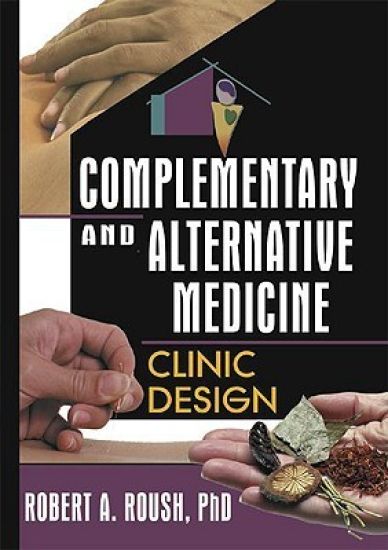
Complementary and Alternative Medicine

Complementary and Alternative Medicine

Robert A Roush

Routledge Member of the Taylor and Francis Group
2003
sidottu
The information you need to chooseor to help createa complementary/alternative medicine facility Learn about emerging and traditional treatment techniques such as Ayurveda, Chinese medicine, Reiki, reflexology, prayer, homeopathy, yoga, meditation, aromatherapy, and massage. Author Robert Roush analyzes these modalities for effectiveness, and argues for an evidence-based approach for their use. Complementary and Alternative Medicine is useful to consumers and hospitals or clinics considering incorporating these modalities.Complementary and Alternative Medicine works toward eliminating camps in heath care, seeking to establish treatment that has more to do with the patient than promoting one brand of medicine or a singular view of good health. The book presents comprehensive information on alternative medical systems, mind/body interventions, and biological-based, manipulative/body-based, and energy/metaphysical therapies, addressing education, licensing, and regulation needs for complementary and alternative medicine (CAM).Complementary and Alternative Medicine includes: guidance on choosing modalities discussion of industry regulation and practitioner credentialing review of literature for CAM modalities recommendations for clinic design and structure recommendations for CAM industry standards for education and practice and much more!This book addresses the for or against debate about CAM by establishing acceptable methods for combining complementary and alternative medicine modalities with conventional medicine. It is designed to be an essential resource for holistic practitioners, holistic medical doctors (AHMS), nurse practitioners (holistic), integrated medicine hospital programs, chiropractors, general public, medical schools, and holistic health teaching organizations.
Complementary and Alternative Medicine

Complementary and Alternative Medicine

Robert A Roush

Routledge Member of the Taylor and Francis Group
2003
nidottu
The information you need to chooseor to help createa complementary/alternative medicine facility Learn about emerging and traditional treatment techniques such as Ayurveda, Chinese medicine, Reiki, reflexology, prayer, homeopathy, yoga, meditation, aromatherapy, and massage. Author Robert Roush analyzes these modalities for effectiveness, and argues for an evidence-based approach for their use. Complementary and Alternative Medicine is useful to consumers and hospitals or clinics considering incorporating these modalities.Complementary and Alternative Medicine works toward eliminating camps in heath care, seeking to establish treatment that has more to do with the patient than promoting one brand of medicine or a singular view of good health. The book presents comprehensive information on alternative medical systems, mind/body interventions, and biological-based, manipulative/body-based, and energy/metaphysical therapies, addressing education, licensing, and regulation needs for complementary and alternative medicine (CAM).Complementary and Alternative Medicine includes: guidance on choosing modalities discussion of industry regulation and practitioner credentialing review of literature for CAM modalities recommendations for clinic design and structure recommendations for CAM industry standards for education and practice and much more!This book addresses the for or against debate about CAM by establishing acceptable methods for combining complementary and alternative medicine modalities with conventional medicine. It is designed to be an essential resource for holistic practitioners, holistic medical doctors (AHMS), nurse practitioners (holistic), integrated medicine hospital programs, chiropractors, general public, medical schools, and holistic health teaching organizations.
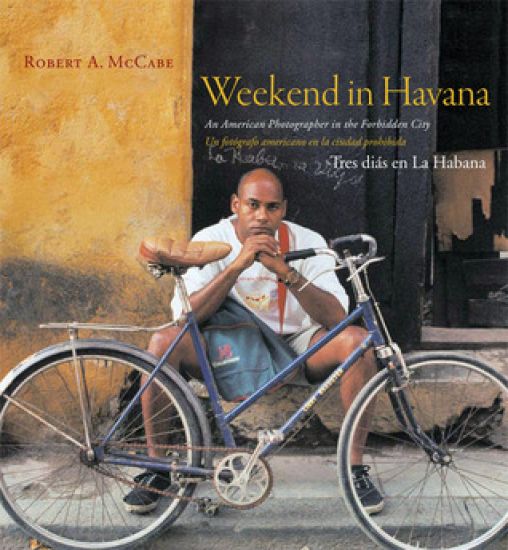
Weekend in Havana

Weekend in Havana

Robert A. McCabe

Abbeville Press Inc.,U.S.
2007
sidottu
Both Cuba and the United States have strict rules governing photographic activity in Cuba. The U.S. carefully delineates what kinds of photographic undertakings are forbidden, while Cuba has, in the past, imprisoned photographers for giving a "distorted image of Cuban reality." Nevertheless, photographer Robert A. McCabe managed to satisfy the many regulations, and spent four eventful days in Havana, taking pictures of a people rarely seen by the rest of the world. Weekend in Havana celebrates Havana’s citizens in a compilation of moving and thought-provoking photographs, 97 in total and all in full colour. From images of buildings which combine classical influences with splashes of vibrant colour to intimate portraits of the people, the book’s presentation of Havana is fresh and realistic. The reader will meet a range of closely observed personalities, such as a policeman patrolling in a shabby police car, an expression of boredom and frustration flitting across his face; women young and old labelling bottles of rum in a factory; and children in both the red school uniforms of the Communist regime and in everyday American clothing. Introductions by Robert A. McCabe and Andrew Szegedy-Maszak, who has published widely on the history of photography, cover such topics as the difficulties facing photographers in Cuba, the differences between popular conceptions of Cuba and its reality, and the poverty, politics, and flux between old and new which mark Havana today. Weekend in Havana is a trilingual edition featuring English, Spanish, and Greek, making the book uniquely accessible.
Weekend in Havana

Weekend in Havana

Robert A. McCabe

Abbeville Press Inc.,U.S.
2007
nidottu
Both Cuba and the United States have strict rules governing photographic activity in Cuba. The U.S. carefully delineates what kinds of photographic undertakings are forbidden, while Cuba has, in the past, imprisoned photographers for giving a "distorted image of Cuban reality." Nevertheless, photographer Robert A. McCabe managed to satisfy the many regulations, and spent four eventful days in Havana, taking pictures of a people rarely seen by the rest of the world. Weekend in Havana celebrates Havana’s citizens in a compilation of moving and thought-provoking photographs, 97 in total and all in full colour. From images of buildings which combine classical influences with splashes of vibrant color to intimate portraits of the people, the book’s presentation of Havana is fresh and realistic. The reader will meet a range of closely observed personalities, such as a policeman patrolling in a shabby police car, an expression of boredom and frustration flitting across his face; women young and old labeling bottles of rum in a factory; and children in both the red school uniforms of the Communist regime and in everyday American clothing. Introductions by Robert A. McCabe and Andrew Szegedy-Maszak, who has published widely on the history of photography, cover such topics as the difficulties facing photographers in Cuba, the differences between popular conceptions of Cuba and its reality, and the poverty, politics, and flux between old and new which mark Havana today. Weekend in Havana is a trilingual edition featuring English, Spanish, and Greek, making the book uniquely accessible.
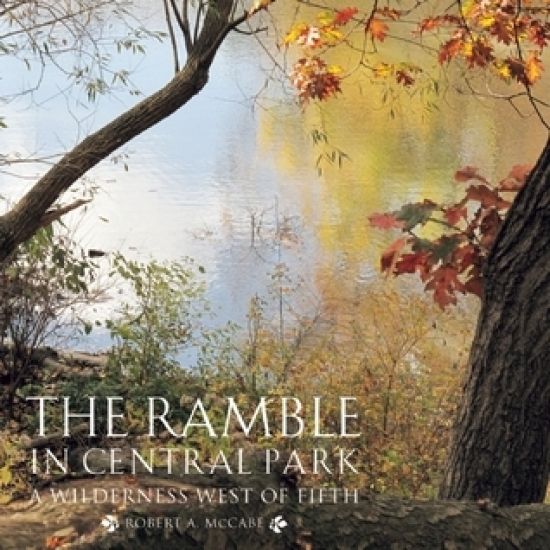
The Ramble in Central Park

The Ramble in Central Park

Robert A. McCabe

Abbeville Press Inc.,U.S.
2011
sidottu
For many New Yorkers, Central Park is Manhattan's crown jewel and what makes the city liveable year round. For tourists, this urban oasis is a must-see destination on any sightseeing visit. For acclaimed photographer Robert A. McCabe, Central Park is defined by its Ramble-a densely forested 38 acres replete with stunning lake vistas, enormous granite boulders, a canopy of trees, winding paths and streams, and ornate and rustic bridges. McCabe's photographs in The Ramble in Central Park: A Wilderness West of Fifth have captured this wooded labyrinth in its off-the-beaten-path glory in its most photogenic seasons. The Ramble in Central Park is primarily organised by four regions, supplemented by one large map by Christopher Kaeser of the entire area and four close-ups of each section. The text is a series of essays by writers including The New Yorker's E. B. White and C. Stevens. Topics cover the history of the park's creation by Frederick Law Olmsted and Calvert Vaux, and the failed attempt of Robert Moses to essentially eliminate the Ramble in the 1950s, as well as the Ramble's 250 species of woodland birds and the area's remarkable geology and plant life. A compelling introduction by Central Park Conservancy President and Administrator Douglas Blonsky describes the recent renovation and continued protection of the Ramble. This photography book should appeal to nature lovers, bird watchers, and New York residents and visitors alike. It is the perfect tourist souvenir before or after a visit to Central Park and The Ramble.
The Ramble in Central Park

The Ramble in Central Park

Robert A. McCabe

Abbeville Press Inc.,U.S.
2014
nidottu
A handsome photographic tribute to The Ramble, the untamed “wild garden” of Central Park in New York City. For many New Yorkers, Central Park is Manhattan’s crown jewel and what makes the city livable year round. For tourists, this urban oasis is a must-see destination on any sightseeing visit. For acclaimed photographer Robert A. McCabe, Central Park is defined by its Ramble—a densely forested thirty-eight acres replete with stunning lake vistas, enormous granite boulders, a canopy of trees, winding paths and streams, and ornate and rustic bridges. McCabe’s photographs in The Ramble in Central Park: A Wilderness West of Fifth have captured this wooded labyrinth in its off-the-beaten-path glory in its most photogenic seasons. The Ramble in Central Park is primarily organised by four regions, supplemented by one large map by Christopher Kaeser of the entire area and four close-ups of each section. The text is a series of essays by writers including The New Yorker’s E. B. White and C. Stevens. Topics cover the history of the park’s creation by Frederick Law Olmsted and Calvert Vaux, and the failed attempt of Robert Moses to essentially eliminate the Ramble in the 1950s, as well as the Ramble’s 250 species of woodland birds and the area’s remarkable geology and plant life. A compelling introduction by Central Park Conservancy President and Administrator Douglas Blonsky describes the recent renovation and continued protection of the Ramble. This photography book should appeal to nature lovers, bird watchers, and New York residents and visitors alike. It is the perfect tourist souvenir before or after a visit to Central Park and The Ramble. .
Mycenae

Mycenae

Robert A. McCabe

Artabras
2016
sidottu
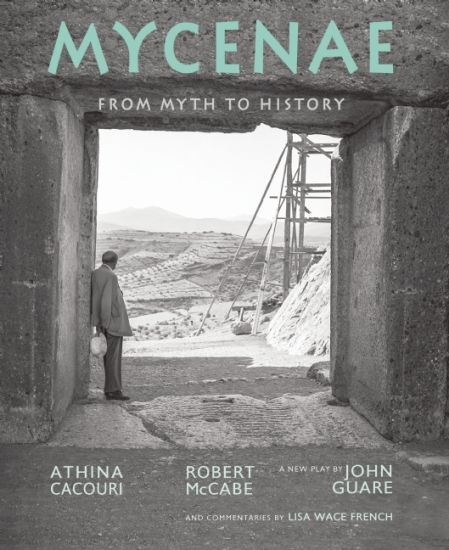
The Mycenaean civilisation flourished more than 800 years before the classical Greeks, with a complex society, strong artistic tendencies, and a distinct system of writing. Famous for its lion gate and citadel, Mycenae was long believed to be the city that fought Troy in Homer's epic, The Iliad. But after flourishing nearly three thousand years ago the society vanished, becoming nothing more than a legend. Mycenae: From Myth to History brings readers into the heart of this mystery, as it was being solved, through lively text, stunning photographs, and an original take on Greek history and mythology. Using the pivotal summer of 1954 - a year after Linear B, the mysterious language present on all Mycenaean artifacts, was decoded - as her entry point, author Athina Cacouri reveals the fascinating archaeological history of the site, from the pioneering work of Heinrich Schliemann to the discovery of hundreds of 'seal stones', marked with an unknown language. Cacouri's text is complemented by the photographs of Robert A. McCabe, whose lens captured the site before it was opened to the general public, giving his atmospheric images a poignant, unmatched immediacy. An original play, commissioned for this volume from renowned American playwright John Guare, sets the mythological stage for the archaeological discoveries to come by recounting the history of the House of Atreus and King Agamemnon's Trojan War, while commentary on the photographs from archaeologist Lisa Wace French ties those myths to very real discoveries at the site. An essay by Daniel Fallu, detailing the importance of Mycenae's geology, rounds out this unparalleled survey of one of Greece's treasured archaeological sites. A multifaceted look at a brilliant civilisation and the tireless work that led to its rediscovery, Mycenae is a fast-paced, lushly illustrated exploration of one of the most intriguing mysteries of antiquity that is sure to delight lovers of classical civilisation, photography, and travel.
Mykonos

Mykonos

Robert A. McCabe

Abbeville Press Inc.,U.S.
2019
sidottu
There are hundreds of Greek islands. Why did Mykonos become, in just a few decades, one of the world’s top vacation spots? Part of the answer can be found in these remarkable images, which show the natural beauty and traditional island culture that initially attracted artists, writers, and celebrities like Jackie Kennedy. These photographs, taken in 1955 and 1957 - many for National Geographic - re-create a daylong visit to Mykonos in the days before cars, running water, and electricity. We disembark in the Old Harbor and wander the picturesque streets of Chora (the main town), watching the townspeople at their daily tasks. We visit St. Panteleimon Monastery on a festival day, and take a caïque (a traditional wooden boat) to see the ruins on the neighbouring island of Delos. Every photograph is reproduced as a full-page tritone of surpassing quality, and accompanied by a detailed caption. This book will fascinate modern-day visitors to Mykonos, as well as those who trace their roots to the Greek islands.
The Last Monk of the Strofades

The Last Monk of the Strofades

Robert A. McCabe

Abbeville Press Inc.,U.S.
2019
sidottu
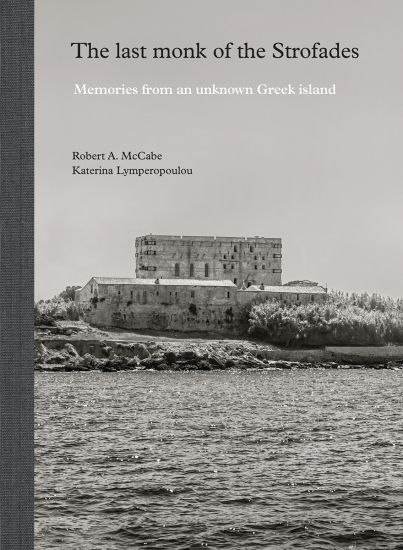
The Strofades: two small, flat, windswept islands rising out of the Ionian Sea, known to the ancient Greeks as the home of the terrible Harpies, and to most modern Greeks simply unknown. On the larger of the two islets, Stamfani, stands a massive fortified monastery, founded as early as the 13th century, for centuries a refuge for honest seafarers and a target for pirates and Turkish raiders. In its heyday, this imposing compound was home to some 40 farmer-monks, who kept the entire island under cultivation; by 1976, it was home to just one, Father Gregory Kladis (1937–2017), who alone tended the monastery until 2014. Today the monastery—badly damaged by an earthquake in 1997—lies empty and in danger of ruin. This book is intended to tell the world about the Holy Monastery at Strofades, and encourage its preservation. At its core are the words of the last monk himself, Father Gregory, who guides the reader through his historic monastery—its chapels, refectory, mills, bakehouse, and living quarters—and the natural beauties of its island setting, as depicted in Robert McCabe’s superb photographs. The testimonies of the boatman who brought Father Gregory his supplies, as well as the lighthouse keeper who was once his only companion on the island, lend texture and context—as do essays on the history, geology, and architecture of the Strofades, and architectural drawings that reconstruct the monastery’s phases of construction. Nobody who peruses this volume—the result of a yearslong collaboration between more than a dozen researchers and friends of the Strofades—will be able to forget the islands’ last monk, or be unmoved by the plight of his monastery.
Santorini

Santorini

Robert A. McCabe

Abbeville Press Inc.,U.S.
2020
sidottu
Today Santorini is visited by some 2.5 million people a year. But when Robert McCabe and his brother arrived there in 1954, they were the only visitors on the island. In this collection of stunning photographs from the 1950s and 1960s - reproduced as tritones of surpassing quality - McCabe has recorded the hardscrabble, yet often romantic, life of a vanished era. Picturesque whitewashed houses dug into the volcanic pumice; the harvest of the island's famous cherry tomatoes; the winding road to the ruins of ancient Thera - all this was captured by his lens. McCabe's photographs are complemented by two essays from the noted Greek journalist Margarita Pournara, one poetically evoking her grandmother's childhood on Santorini and the other explaining the geological forces that have given this volcanic island its dramatic form. A companion to McCabe's recent volume on Mykonos, this book will fascinate modern-day visitors to Santorini, as well as those who trace their roots to the Greek islands.
Greece After the War

Greece After the War

Robert A. McCabe

ABBEVILLE PRESS INC.,U.S.
2023
sidottu
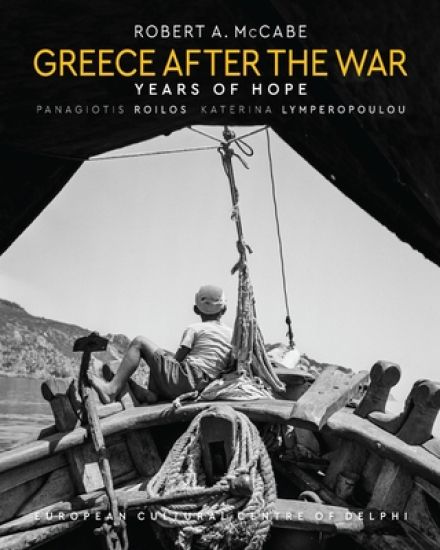
"Beautifully evocative of people and ways of life gone by, in their timeless setting." — Harvard Magazine Stirring images of Greece and her people in a time of change, from noted photographer Robert A. McCabe. When photographer Robert A. McCabe first came to Greece as a college student in 1954, he found a country still scarred by the Axis occupation of World War II and the civil war that followed: poverty was widespread, and the infrastructure was underbuilt and battered. But, at the same time, these were years of hope: new ventures ranging from shipping lines to state-sponsored tourist hotels to ice cream distribution heralded the nation’s rapid development into a modern European state. And all around was the beauty of the Greek landscape, the splendour of the Greek archaeological heritage, and the optimism of the Greek people, who maintained age-old cultural traditions even in the most challenging conditions. This volume, published on the occasion of an important exhibition at the European Culture Centre of Delphi, collects 118 of the most compelling photographs that McCabe took in Greece between 1954 and 1965. Working in both black and white and colour, he ranged through the mainland, the Peloponnese, and the islands, capturing scenes of a country on the brink of rapid change: a policeman directing traffic from a booth in the middle of an Athens intersection, before the city had traffic lights; a caique full of freshly harvested grapes pulling into the port of Katapola on Amorgos; a performance of Euripides’ Hippolytos in the ancient theatre at the very first Epidauros Festival. Furnished with meticulously researched captions, as well as essays by the literary scholar Panagiotis Roilos, the journalist Katerina Lymperopoulou, and McCabe himself, Greece after the War is an essential visual document of modern European history.
Community Service and Higher Learning

Community Service and Higher Learning

Robert A. Rhoads

State University of New York Press
1997
pokkari
Portrays the experiences and development of students as they commit themselves to community service during their college years.In Community Service and Higher Learning, Robert A. Rhoads examines the experiences of students as they commit themselves to community service during their college years. The author explores how a student's sense of self may be challenged through involvement in the lives of others within the context of community service relationships. Central to his "explorations of the self" is the role "caring" plays as a source of self understanding and identity development.Drawing upon classic symbolic interactionists such as George Herbert Mead as well as contemporary feminists such as Carol Gilligan and Nel Noddings, Rhoads suggests ways in which the self might be reconsidered with an ethic-of-care philosophy at its core. He argues that higher education ought to play a key role in fostering more relational and caring individuals and that community service offers a pedagogical opportunity for encouraging the development of more caring selves. He maintains that as society becomes increasingly complex, diverse, and potentially fragmented, caring becomes a more important facet of one's sense of self than perhaps ever before. It is only through an increasing concern for the other (the essence of caring) that one is able to bridge the relational barriers posed by the postmodern condition.
Fluid Mechanics, Water Hammer, Dynamic Stresses and Piping Design

Fluid Mechanics, Water Hammer, Dynamic Stresses and Piping Design

Robert A. Leishear

American Society of Mechanical Engineers,U.S.
2013
sidottu
A “Water Hammer” may be defined as an extreme fluid transient recognized by the loud bang, or hammering sound sometimes associated with piping accidents and fatalities. It may also evoke images of broken and bent piping, multi-million dollar damages, loss of water supply to cities, and death due to water-hammer related accidents. The primary purpose of this comprehensive text is to provide practicing engineers with the analytical tools required to identify water hammer concerns and to prevent equipment and environmental damage, personnel injuries and fatalities.
Supplement to Fluid Mechanics, Water Hammer, Dynamic Stresses, and Piping Design

Supplement to Fluid Mechanics, Water Hammer, Dynamic Stresses, and Piping Design

Robert A. Leishear

American Society of Mechanical Engineers,U.S.
2015
nidottu
This 2014 Addendum includes recommended additions and corrections to the original text, which was published by ASME Press in 2013. Numerous reviews were performed on the original text for this book, and manuscripts for this book were used to teach the topics in the text to four separate classes of engineers at SRS and prior to publication.Comments from these four day classes were incorporated into the manuscripts between classes to improve the quality of presentation. Even so, improvements and some corrections to the text have been noted since ASME classes were taught after publication. This Addendum captures these additions and changes. Also included in this Addendum are appendices to summarize this book through “A Discussion of DLFs for Piping Design” and the “Design of Piping Systems for Dynamic Loads From Fluid Transients.
Parallel Machines: Parallel Machine Languages
It is universally accepted today that parallel processing is here to stay but that software for parallel machines is still difficult to develop. However, there is little recognition of the fact that changes in processor architecture can significantly ease the development of software. In the seventies the availability of processors that could address a large name space directly, eliminated the problem of name management at one level and paved the way for the routine development of large programs. Similarly, today, processor architectures that can facilitate cheap synchronization and provide a global address space can simplify compiler development for parallel machines. If the cost of synchronization remains high, the pro­ gramming of parallel machines will remain significantly less abstract than programming sequential machines. In this monograph Bob Iannucci presents the design and analysis of an architecture that can be a better building block for parallel machines than any von Neumann processor. There is another very interesting motivation behind this work. It is rooted in the long and venerable history of dataflow graphs as a formalism for ex­ pressing parallel computation. The field has bloomed since 1974, when Dennis and Misunas proposed a truly novel architecture using dataflow graphs as the parallel machine language. The novelty and elegance of dataflow architectures has, however, also kept us from asking the real question: "What can dataflow architectures buy us that von Neumann ar­ chitectures can't?" In the following I explain in a round about way how Bob and I arrived at this question.
Anatomy of the New Testament

Anatomy of the New Testament

Robert A. Spivey; D. Moody Smith

Fortress Press,U.S.
2013
pokkari
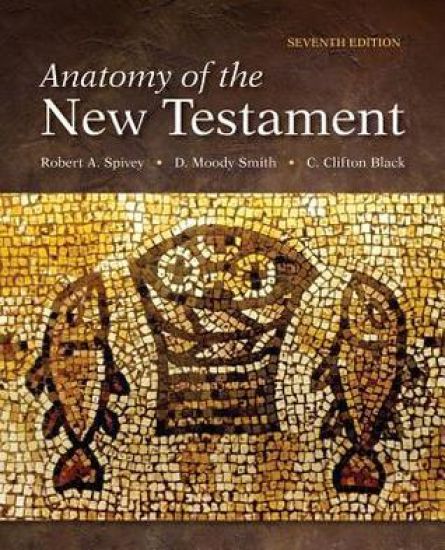
This broadly adopted textbook weds literary and historical approaches to focus on the New Testament's structure and meaning. Anatomy of the New Testament is systematic, critical, and reliable in its scope and content.This seventh edition has been revised throughout, to take account of current trends in scholarship and to discuss important interpretative issues, such as the Gospel of Thomas. Each chapter includes two new features: Have You Learned It? offering questions for analysis and synthesis; What Do They Mean? presenting definitions of key terms to enhance student comprehension and critical thinking.
Worldly Acts and Sentient Things

Worldly Acts and Sentient Things

Robert A. Chodat

Cornell University Press
2008
sidottu
Ants, ghosts, cultures, thunderstorms, stock markets, robots, computers: this is just a partial list of the sentient things that have filled American literature over the last century. From modernism forward, writers have given life and voice to both the human and the nonhuman, and in the process addressed the motives, behaviors, and historical pressures that define lives—or things—both everyday and extraordinary. In Worldly Acts and Sentient Things Robert Chodat exposes a major shortcoming in recent accounts of twentieth-century discourse. What is often seen as the "death" of agency is better described as the displacement of agency onto new and varied entities. Writers as diverse as Gertrude Stein, Saul Bellow, Ralph Ellison, and Don DeLillo are preoccupied with a cluster of related questions. Which entities are capable of believing something, saying something, desiring, hoping, hating, or doing? Which things, in turn, do we treat as worthy of our care, respect, and worship? Drawing on a philosophical tradition exemplified by Ludwig Wittgenstein and Wilfrid Sellars, Chodat shows that the death of the Cartesian ego need not entail the elimination of purposeful action altogether. Agents do not dissolve or die away in modern thought and literature; they proliferate—some in human forms, some not. Chodat distinguishes two ideas of agency in particular. One locates purposes in embodied beings, "persons," the other in disembodied entities, "presences." Worldly Acts and Sentient Things is a an engaging blend of philosophy and literary theory for anyone interested in modern and contemporary literature, narrative studies, psychology, ethics, and cognitive science.