Kirjojen hintavertailu. Mukana 12 390 708 kirjaa ja 12 kauppaa.

Kirjahaku

Etsi kirjoja tekijän nimen, kirjan nimen tai ISBN:n perusteella.

1000 tulosta hakusanalla Rohan Haggart

Roman Siege Warfare

Roman Siege Warfare

Josh Levithan

The University of Michigan Press
2013
sidottu
Roman siege warfare had its own structure and customs, and expectations both by the besieged and by the attacking army. Sieges are typically sorted by the techniques and technologies that attackers used, but the more fruitful approach offered in Roman Siege Warfare examines the way a siege follows or diverges from typical narrative and operational plotlines. Author Josh Levithan emphasizes the human elements—morale and motivation—rather than the engineering, and he recaptures the sense of a siege as an event in progress that offers numerous attitudes, methods, and outcomes. Sieges involved a concentration of violent effort in space and the practical challenge posed by a high wall: unlike field battles they were sharply defined in time, in space, and in operational terms.Chapters examine motivation and behavior during a siege and focus on examples from both the Roman Republic and the Empire: Polybius, Livy, Julius Caesar, Flavius Josephus, and Ammianus Marcellinus. Levithan examines the “gadgetary turn,” during which writers began to lavish attention on artillery and wall-damaging techniques, fetishizing technology and obscuring the centrality of the assault and of human behavior.This volume speaks to classicists and historians of all stripes. All passages are translated, and references are accessible to nonspecialists. Military historians will also find much of interest in the volume, in its treatment both of Roman military conduct and of wider military practice.
Roman Artists, Patrons, and Public Consumption

Roman Artists, Patrons, and Public Consumption

Brenda Longfellow; Ellen Perry

The University of Michigan Press
2017
sidottu
In recent decades, the study of Roman art has shifted focus dramatically from issues of connoisseurship, typology, and chronology to analyses of objects within their contemporary contexts and local environments. Scholars challenge the notion, formerly taken for granted, that extant historical texts—the writings of Vitruvius, for example—can directly inform the study of architectural remains. Roman-era statues, paintings, and mosaics are no longer dismissed as perfunctory replicas of lost Greek or Hellenistic originals; they are worthy of study in their own right. Further, the scope of what constitutes Roman art has expanded to include the vast spectrum of objects used in civic, religious, funerary, and domestic contexts and from communities across the Roman Empire. The work gathered in Roman Artists, Patrons, and Public Consumption displays the breadth and depth of scholarship in the field made possible by these fundamental changes. The first five essays approach individual objects and artistic tropes, as well as their cultural contexts and functions, from fresh and dynamic angles. The latter essays focus on case studies in Pompeii, demonstrating how close visual analysis firmly rooted in local and temporal contexts not only strengthens understanding of ancient interactions with monuments but also sparks a reconsideration of long-held assumptions reinforced by earlier scholarship. These rigorous essays reflect and honor the groundbreaking scholarship of Elaine K. Gazda. In addition to volume editors Brenda Longfellow and Ellen E. Perry, contributors include Bettina Bergmann, Elise Friedland, Barbara Kellum, Diana Y. Ng, Jessica Powers, Melanie Grunow Sobocinski, Lea M. Stirling, Molly Swetnam-Burland, Elizabeth Wolfram Thill, and Jennifer Trimble.
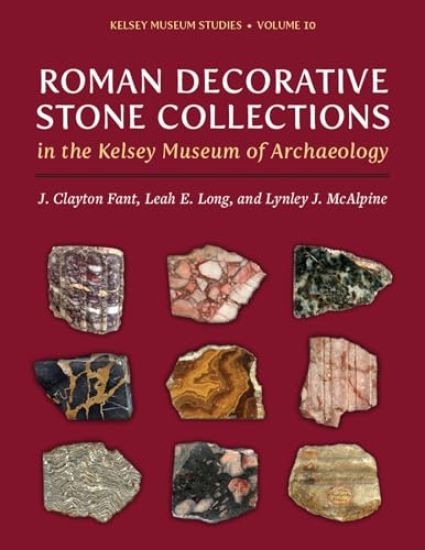
Roman Decorative Stone Collections in the Kelsey Museum of Archaeology

Roman Decorative Stone Collections in the Kelsey Museum of Archaeology

J. Clayton Fant; Leah E. Long; Lynley J. McAlpine

THE UNIVERSITY OF MICHIGAN PRESS
2024
sidottu
At the turn of the twentieth century, Francis W. Kelsey began to amass a large collection of artifacts from ancient sites across the Mediterranean, with an emphasis on Imperial Rome, to broaden the teaching of antiquity at the University of Michigan. Among the objects now housed in the museum that bears his name is a collection of seven hundred colorful stones dating to the Roman period, one of the largest and most varied collections of Roman decorative stones outside Europe. These pieces were obtained as archaeological artifacts, mostly architectural, with many deriving from well-known ancient buildings, such as the Baths of Diocletian in Rome and the Palace of Herod in Jericho, allowing for new interpretations of their architectural decoration and design. Chapters trace the formation of the collection, study the archaeology of the artifacts, and detail the history of each stone and its study with a comprehensive bibliography. In keeping with the nature of the collection, Roman Decorative Stone Collections focuses on archaeological contexts and object biographies, from the stones’ first use to their eventual display in the Kelsey Museum. Entries are accompanied by rich photographs detailing the stones’ appearances, environmental factors, and their collectors. The fully illustrated catalog includes essays deriving from Kelsey’s original notes on sources, buildings, sites, and dealers. As the first formal catalog of these items, Roman Decorative Stone Collections is an accessible resource of Roman archaeology, antiquities, and the decorative arts.
Roman Historical Sources and Institutions

Roman Historical Sources and Institutions

The University of Michigan Press
1904
nidottu
This volume of papers presents studies by individual authors on topics relating to Roman history and historiography, such as the origin of the Tarpeian Rock, Dio Cassius on epigraphic sources, and centurions as alternate commanders for corps of auxiliary soldiers. This is the first in a series of volumes that will alternate between historical and philological topics.
Roman Mythology

Roman Mythology

David Stuttard

Thames Hudson Ltd
2019
sidottu
All Roads Lead to Rome, as the famous saying goes. The sites and events throughout the ancient world provided Romans with a rich tapestry to weave the stories of their past. Rome itself was a melting pot of peoples from across the Mediterranean and beyond, each bringing their myths and legends of heroes and heroines, gods and goddesses. Whether for aristocrats dressing up for banquet, or bloodthirsty audiences in the amphitheatres thrilled to watch condemned criminals forced to enact the roles of mythological creatures, Roman myths formed the backdrop to the rituals and customs of everyday life. Offering a fresh approach to Roman mythology, each site begins with a brief, evocative description of the location and landscape, followed by its associated myths and stories, as well as any rituals performed there in antiquity. Drawing on the great works of Dionysius of Halicarnassus and Plutarch, Ovid, Horace and Virgil, and with maps, illustrations and a gazetteer giving practical information about the sites today, this is a fresh look at a subject of great fascination.
Roman Britain

Roman Britain

Guy de la Bédoyère

Thames Hudson Ltd
2013
nidottu
This lively, authoritative account of a crucial period in Britain’s history has been revised and updated to incorporate the very latest findings and research. Guy de la Bédoyère – the popular face of Romano-British archaeological studies – puts the Roman conquest and occupation within the larger context of Romano-British society and how it functioned. With nearly 300 illustrations and dramatic aerial views of Roman sites, and brimming with the very latest research and discoveries, Roman Britain will delight and inform all those with an interest in this seminal epoch of British history.
Roman Honor

Roman Honor

Carlin A. Barton

University of California Press
2001
sidottu
This book is an attempt to coax Roman history closer to the bone, to the breath and matter of the living being. Drawing from a remarkable array of ancient and modern sources, Carlin Barton offers the most complex understanding to date of the emotional and spiritual life of the ancient Romans. Her provocative and original inquiry focuses on the sentiments of honor that shaped the Romans' sense of themselves and their society. Speaking directly to the concerns and curiosities of the contemporary reader, Barton brings Roman society to life, elucidating the complex relation between the inner life of its citizens and its social fabric. Though thoroughly grounded in the ancient writings--especially the work of Seneca, Cicero, and Livy--this book also draws from contemporary theories of the self and social theory to deepen our understanding of ancient Rome. Barton explores the relation between inner desires and social behavior through an evocative analysis of the operation, in Roman society, of contests and ordeals, acts of supplication and confession, and the sense of shame. As she fleshes out Roman physical and psychological life, she particularly sheds new light on the consequential transition from republic to empire as a watershed of Roman social relations. Barton's ability to build productively on both old and new scholarship on Roman history, society, and culture and her imaginative use of a wide range of work in such fields as anthropology, sociology, psychology, modern history, and popular culture will make this book appealing for readers interested in many subjects. This beautifully written work not only generates insight into Roman history, but also uses that insight to bring us to a new understanding of ourselves, our modern codes of honor, and why it is that we think and act the way we do.
Roman Satire

Roman Satire

J. Wight Duff

University of California Press
2021
pokkari
This title is part of UC Press's Voices Revived program, which commemorates University of California Press’s mission to seek out and cultivate the brightest minds and give them voice, reach, and impact. Drawing on a backlist dating to 1893, Voices Revived makes high-quality, peer-reviewed scholarship accessible once again using print-on-demand technology. This title was originally published in 1936.
Roman Satire

Roman Satire

J. Wight Duff

University of California Press
2021
sidottu
This title is part of UC Press's Voices Revived program, which commemorates University of California Press’s mission to seek out and cultivate the brightest minds and give them voice, reach, and impact. Drawing on a backlist dating to 1893, Voices Revived makes high-quality, peer-reviewed scholarship accessible once again using print-on-demand technology. This title was originally published in 1936.
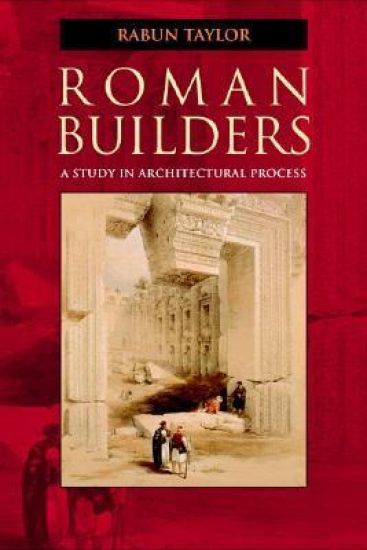
Roman Builders

Roman Builders

Rabun Taylor

Cambridge University Press
2003
pokkari
How were the architectural ideas behind great Roman building projects carried out in practice? Roman Builders is the first, general interest book to address this question. Using the Baths of Caracalla, the Pantheon, the Coliseum, and the great temples at Baalbek as physical documents for their own building histories, this book traces the thought processes and logistical considerations - the risks, reversals, compromises, and refinements - that led to ultimate success. Each major phase of the building process is considered: design, groundwork, support structures, complex armatures, such as the superstructures of amphitheaters, vaults, and decorations. New hypotheses are advanced on the raising of monolithic columns, the construction sequence of the Coliseum, and the vaulting of the Pantheon. The illustrations include archival and original photographs, as well as numerous explanatory drawings.
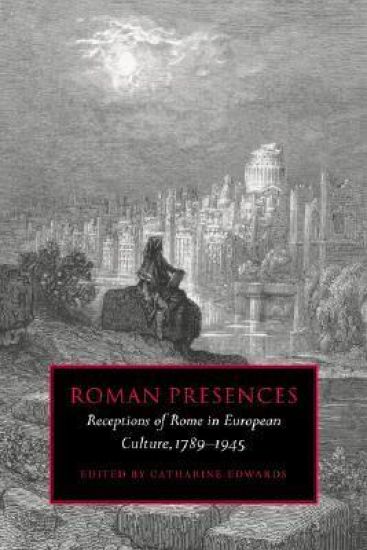
Roman Presences

Roman Presences

Cambridge University Press
2007
pokkari
This collection of essays explores aspects of the reception of ancient Rome in a number of European countries from the late eighteenth century to the end of the Second World War. Rome has been made to stand for literary authority, republican heroism, imperial power and decline, the Catholic Church, the pleasure of ruins. The studies offered here examine some of the sometimes strange and unexpected places where Roman presences have manifested themselves during this period. Scholars from several disciplines, including English literature and history of art, as well as classics, bring to bear a variety of approaches on a wide range of images and texts, from statues of Napoleon to Freud's analysis of dreams. Rome's seemingly boundless capacity for multiple, indeed conflicting, signification has made it an extraordinarily fertile paradigm for making sense of - and also for destabilizing - history, politics, identity, memory and desire.
Roman Law and Common Law

Roman Law and Common Law

W. W. Buckland; Arnold D. McNair

Cambridge University Press
2008
pokkari
Roman Law and Common Law was first published in 1936. The second edition, entirely reset, revised throughout and supplemented by Professor F. H. Lawson, Fellow of Brasenose College and Professor of Comparative Law in the University of Oxford, appeared in 1952. This was done at the suggestion of Lord McNair, who read the revised copy. Professor Lawson's work of revision was extensive and touches every part of the book. In 1965 many small corrections were made. The book remains in this edition a 'comparison in outline'. It does not set out to be a comprehensive statement of Roman Law and Common Law comparatively treated, or a comparative study of legal methods. It is concerned rather with the fundamental rules and institutions of the two systems, and examines the independent approaches of the two peoples and their lawyers to the same facts of human life.
Roman Catholics in England

Roman Catholics in England

Michael P. Hornsby-Smith

Cambridge University Press
2008
pokkari
This book is about change in the Roman Catholic community in England and Wales. It argues that in the post-war years of economic growth and expanded educational opportunities, Catholics born in Great Britain achieved rates of upward social mobility comparable to those of the general population. In so doing there arose a 'new Catholic middle class', likely to be crucial for the future of Roman Catholicism in England and Wales. However, since one quarter of English Catholics were first-generation immigrants who had experienced some downward mobility, it could not be said that English Catholics generally had experienced a 'mobility momentum' relative to the rest of the population. Apart from the effects of social change, post-war Catholicism was also transformed as a result of the religious reforms legitimated by the Second Vatican Council in the early 1960s. The net effect of these social and religious forces on English Catholicism was the dissolution of the boundaries which had formerly defended a 'fortress' church in a hostile world. The book identifies this, inter alia, in the widespread heterodoxy of belief and practice, and in the decline of marital endogamy and communal involvement.
Roman Catholic Beliefs in England

Roman Catholic Beliefs in England

Michael P. Hornsby-Smith

Cambridge University Press
2009
pokkari
This 1991 book makes available an empirical study of the transformations in religious beliefs that have occurred amongst English Catholics. It complements Dr Hornsby-Smith's well received Roman Catholics in England (1987) which provides the social and historical context for this present study. In Roman Catholic beliefs in England, Michael Hornsby-Smith explores Catholic beliefs over a range of concerns from doctrinal matters to questions of personal and social morality and assesses how religious beliefs are differentiated between different types of Catholics. He also examines the legitimacy accorded by English Catholics to both papal authority and religious authority in general.
Roman History from Coins

Roman History from Coins

Michael Grant

Cambridge University Press
1968
pokkari
In this 1968 study, Michael Grant examines the varied ways in which Rome used currency to inform direct or deceive public opinion and also considers results of this exploitation. Cunning historians can read in the coins matters of art politics, religion, economics – even personalities not to be found in surviving books: or if found, can set what the books say against what the coins say. Professor Grant astutely masters his difficult and complex subject matter, producing a brief exposition of it in words which the general reader and specialist alike can understand and profit from. Complemented by a series of half-tone plates, Professor Grant's book is an excellent introduction for students of history to the value of coins as evidence for their subject.
Roman Republican Theatre

Roman Republican Theatre

Gesine Manuwald

Cambridge University Press
2011
sidottu
Theatre flourished in the Roman Republic, from the tragedies of Ennius and Pacuvius to the comedies of Plautus and Terence and the mimes of Laberius. Yet apart from the surviving plays of Plautus and Terence the sources are fragmentary and difficult to interpret and contextualise. This book provides a comprehensive history of all aspects of the topic, incorporating recent findings and modern approaches. It discusses the origins of Roman drama and the historical, social and institutional backgrounds of all the dramatic genres to be found during the Republic (tragedy, praetexta, comedy, togata, Atellana, mime and pantomime). Possible general characteristics are identified, and attention is paid to the nature of and developments in the various genres. The clear structure and full bibliography also ensure that the book has value as a source of reference for all upper-level students and scholars of Latin literature and ancient drama.
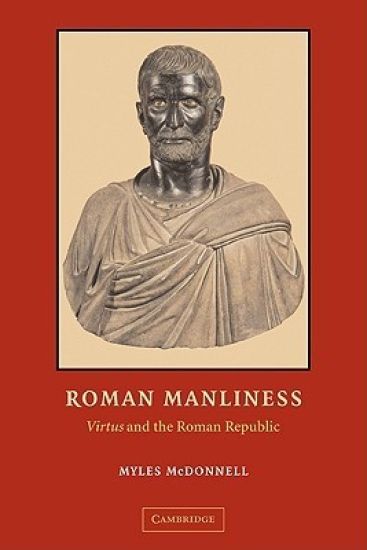
Roman Manliness

Roman Manliness

Myles McDonnell

Cambridge University Press
2009
pokkari
Some studies of ancient Roman masculinities have concentrated on the private aspects of the subject, particularly sexuality, and have drawn conclusions from a narrow field of reference, usually rhetorical practice. In contrast, this 2006 book examines the public and the most important aspect of Roman masculinity: manliness as represented by the concept of virtus. Using traditional historical, philological, and archaeological analyses, together with the methods of socio-linguistics and gender studies, it presents a comprehensive picture of how Roman manliness developed from the middle to the late Republic. Arguing that virtus was not, in essence, a moral concept, Myles McDonnell shows how the semantic range of the word, together with the manly ideal that it embodied, were altered by Greek cultural ideas; and how Roman manliness was contested in the religion, culture, and politics of the late Republic.
Roman Political Thought

Roman Political Thought

Dean Hammer

Cambridge University Press
2018
pokkari
Roman Political Thought is the first comprehensive treatment of the political thought of the Romans. Dean Hammer argues that the Romans were engaged in a wide-ranging and penetrating reflection on politics. The Romans did not create utopias. Instead, their thinking was relentlessly shaped by their own experiences of violence, the enormity and frailty of power, and an overwhelming sense of loss of the traditions that oriented them to their responsibilities as social, political, and moral beings. However much the Romans are known for their often complex legal and institutional arrangements, the power of their political thought lies in their exploration of the extra-institutional, affective foundations of political life. The book includes chapters on Cicero, Lucretius, Sallust, Virgil, Livy, Seneca, Tacitus, Marcus Aurelius, and Augustine, and discussions of Polybius, the Stoics, Epicurus, and Epictetus.