

Kirjahaku
Etsi kirjoja tekijän nimen, kirjan nimen tai ISBN:n perusteella.
1000 tulosta hakusanalla S. Englander

England's Financial Supremacy; a Translation of "Die Englische Finanzvormacht
Hutson Street Press
2025
sidottu

England's Financial Supremacy; a Translation of "Die Englische Finanzvormacht
Hutson Street Press
2025
pokkari



England's Sea Story, A Popular Record Of The English Navy
Albert Lee
Hutson Street Press
2025
sidottu

England's Sea Story, A Popular Record Of The English Navy
Albert Lee
Hutson Street Press
2025
pokkari

England's Naval And Military Weakness ... The Volunteer Force, Incentives To Future Strength And Progress
Lancs Artillery James Walter (Major
Hutson Street Press
2025
sidottu
England's Naval And Military Weakness ... The Volunteer Force, Incentives To Future Strength And Progress
Hutson Street Press
2025
pokkari
The Rise and Decline of England's Watchmaking Industry, 1550–1930
Alun C. Davies
TAYLOR FRANCIS LTD
2022
sidottu
This survey of the rise and decline of English watchmaking fills a gap in the historiography of British industry. Clerkenwell in London was supplied with 'rough movements' from Prescot, 200 miles away in Lancashire. Smaller watchmaking hubs later emerged in Coventry, Liverpool, and Birmingham. The English industry led European watchmaking in the late eighteenth century in output, and its lucrative export markets extended to the Ottoman Empire and China. It also made marine chronometers, the most complex of hand-crafted pre-industrial mechanisms, crucially important to the later hegemony of Britain’s navy and merchant marine. Although Britain was the 'workshop of the world', its watchmaking industry declined. Why? First, because cheap Swiss watches were smuggled into British markets. Later, in the era of Free Trade, they were joined by machine-made watches from factories in America, enabled by the successful application to watch production of the 'American system' in Waltham, Massachusetts after 1858. The Swiss watch industry adapted itself appropriately, expanded, and reasserted its lead in the world’s markets. English watchmaking did not: its trajectory foreshadowed and was later followed by other once-prominent British industries. Clerkenwell retained its pre-industrial production methods. Other modernization attempts in Britain had limited success or failed.
The Rise and Decline of England's Watchmaking Industry, 1550–1930
Alun C. Davies
TAYLOR FRANCIS LTD
2024
nidottu
This survey of the rise and decline of English watchmaking fills a gap in the historiography of British industry. Clerkenwell in London was supplied with 'rough movements' from Prescot, 200 miles away in Lancashire. Smaller watchmaking hubs later emerged in Coventry, Liverpool, and Birmingham. The English industry led European watchmaking in the late eighteenth century in output, and its lucrative export markets extended to the Ottoman Empire and China. It also made marine chronometers, the most complex of hand-crafted pre-industrial mechanisms, crucially important to the later hegemony of Britain’s navy and merchant marine. Although Britain was the 'workshop of the world', its watchmaking industry declined. Why? First, because cheap Swiss watches were smuggled into British markets. Later, in the era of Free Trade, they were joined by machine-made watches from factories in America, enabled by the successful application to watch production of the 'American system' in Waltham, Massachusetts after 1858. The Swiss watch industry adapted itself appropriately, expanded, and reasserted its lead in the world’s markets. English watchmaking did not: its trajectory foreshadowed and was later followed by other once-prominent British industries. Clerkenwell retained its pre-industrial production methods. Other modernization attempts in Britain had limited success or failed.
Exploring what the early English Protestants came to believe about the afterlife, and how they arrived at their positions, this much-needed book fills a gap in the scholarly literature. In surveying the authorised doctrinal works of the English church through the Reformation period, the progress of eschatological thinking is traced from the earliest days of change to the solidification of the formularies which remain binding across the worldwide Anglican Church today.Fresh observations are made on some well-known texts such as the Books of Common Prayer, Articles of Religion and official Tudor homilies, and these are complemented by commentary on surprisingly understudied documents of the period including primers, catechisms, and the paratexts of the early printed English Bibles. The result is a fascinating study of the English reformers’ navigation past both Roman Catholic and radical anabaptist beliefs, and it shows that their arrival at a relatively barren destination was due in part to a complete switch in theological priorities and in part to a fear of the implications of formally adopting some of the highly contested views.Establishment Eschatology will prove to be an important resource for students and scholars of England’s early modern religious and cultural history.
Exploring what the early English Protestants came to believe about the afterlife, and how they arrived at their positions, this much-needed book fills a gap in the scholarly literature. In surveying the authorised doctrinal works of the English church through the Reformation period, the progress of eschatological thinking is traced from the earliest days of change to the solidification of the formularies which remain binding across the worldwide Anglican Church today.Fresh observations are made on some well-known texts such as the Books of Common Prayer, Articles of Religion and official Tudor homilies, and these are complemented by commentary on surprisingly understudied documents of the period including primers, catechisms, and the paratexts of the early printed English Bibles. The result is a fascinating study of the English reformers’ navigation past both Roman Catholic and radical anabaptist beliefs, and it shows that their arrival at a relatively barren destination was due in part to a complete switch in theological priorities and in part to a fear of the implications of formally adopting some of the highly contested views.Establishment Eschatology will prove to be an important resource for students and scholars of England’s early modern religious and cultural history.
This book is a detailed examination of the sources and protocols John Foxe used to justify the Reformation, and claim that the Church of Rome had fallen into the grip of Antichrist. The focus is on the pre-Lollard, medieval history in the first two editions of the Acts and Monuments. Comparison of the narrative that Foxe writes to the possible sources helps us to better understand what it was that Foxe was trying to do, and how he came to achieve his aims. A focus on sources also highlights the collaborative circle in which Foxe worked, recognizing the essential role of other scholars and clerics such as John Bale and Matthew Parker.

First published in 1983, England’s Sea Empire was originally part of the Early Modern Europe Today book series. It explores the relationships between the increase of English merchant shipping, the growth of naval power and the early experiments in overseas trade and colonisation. No other book combines these topics for the period from the middle of the 16th to the middle of the 17th century. In dealing with economic, strategic and technical problems, the authors write in language which is intelligible to non-specialist readers. They illustrate the arguments with generous quotations from contemporary sources and with maps of the regions under discussion. This book will be of value on undergraduate courses in early British or colonial or maritime history.

First published in 1983, England’s Sea Empire was originally part of the Early Modern Europe Today book series. It explores the relationships between the increase of English merchant shipping, the growth of naval power and the early experiments in overseas trade and colonisation. No other book combines these topics for the period from the middle of the 16th to the middle of the 17th century. In dealing with economic, strategic and technical problems, the authors write in language which is intelligible to non-specialist readers. They illustrate the arguments with generous quotations from contemporary sources and with maps of the regions under discussion. This book will be of value on undergraduate courses in early British or colonial or maritime history.
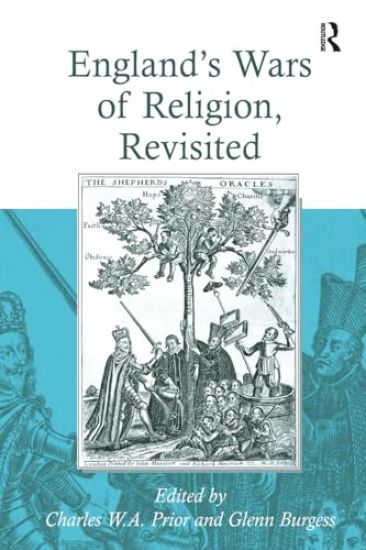
The causes and nature of the civil wars that gripped the British Isles in the mid-seventeenth century remain one of the most studied yet least understood historical conundrums. Religion, politics, economics and affairs local, national and international, all collided to fuel a conflict that has posed difficult questions both for contemporaries and later historians. Were the events of the 1640s and 50s the first stirrings of modern political consciousness, or, as John Morrill suggested, wars of religion? This collection revisits the debate with a series of essays which explore the implications of John Morrill's suggestion that the English Civil War should be regarded as a war of religion. This process of reflection constitutes the central theme, and the collection as a whole seeks to address the shortcomings of what have come to be the dominant interpretations of the civil wars, especially those that see them as secular phenomena, waged in order to destroy monarchy and religion at a stroke. Instead, a number of chapters present a portrait of political thought that is defined by a closer integration of secular and religious law and addresses problems arising from the clash of confessional and political loyalties. In so doing the volume underlines the extent to which the dispute over the constitution took place within a political culture comprised of many elements of fundamental agreement, and this perspective offers a richer and more nuanced readings of some of the period's central figures, and draws firmer links between the crisis at the centre and its manifestation in the localities.