Kirjojen hintavertailu. Mukana 12 459 402 kirjaa ja 12 kauppaa.

Kirjahaku

Etsi kirjoja tekijän nimen, kirjan nimen tai ISBN:n perusteella.

1000 tulosta hakusanalla S. Rice

S.E. 210 Caravelle

S.E. 210 Caravelle

Wolfgang Borgmann

SCHIFFER PUBLISHING LTD
2023
sidottu
The Sud Aviation S.E. 210 Caravelle was a 1950s-era French-built jet airliner named after the famed 15th-century caravela ships used during the Age of Exploration. Along with the British de Havilland Comet, on which it was partially based, the Caravelle was one of the earliest jet-powered passenger airliners. In April 1959, it became the world’s first successful jet airliner to enter scheduled service, which it did with Scandinavian Air Lines System (SAS). The S.E. 210 remained in production until 1972 and eventually retired in 2005. With its unusual rear-mounted engines, it influenced such later jet airliner designs as the Douglas DC-9 and Tupolev Tu-134. The history of the Caravelle’s design, development, and operational use is presented in detail in this book, as is its use by many of the world’s most famous airlines of the era, including Air France, SAS, Swissair, Finnair, Royal Jordanian, Austrian Airlines (AUA), United, Indian Airlines, and VARIG. Technical specifications for the Caravelle and its variants, as well as period photographs, bring to life the fascinating history of this early, and influential, commercial jet airliner.
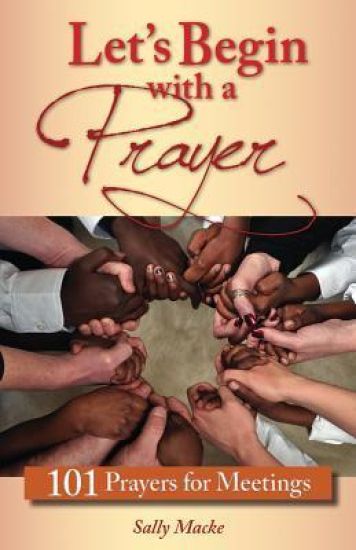
Let's Begin with a Prayer

Let's Begin with a Prayer

S Macke

Liguori Publications,U.S.
2014
sidottu
There is no finer way to start a meeting or get together than taking it to the Lord in prayer. From board meetings to book clubs, large assemblies to small groups, this new collection of original prayers will become your best resource for asking God's blessings on your get together. Each prayer starts with a Scripture quote and includes a short meditation. Prayer topics include: Collaboration Team-building Diversity Feast days and saint celebrations Holidays (New Year's, Thanksgiving, Labor Day, July 4) Liturgical seasons Virtues Gifts and fruits of the Holy Spirit Healing, grief
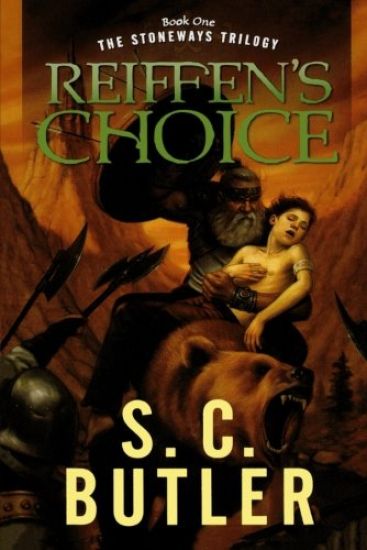
Reiffen's Choice: Book One of the Stoneways Trilogy
Reiffen's Choice is the first book in a trilogy about innocence and struggle that can only be compared to Eragon and the Inheritance Cycle, The Once and Future King, and Raymond E. Feist's Magician. It will be an experience you will never forget. Reiffen, only twelve years old, is the true heir to the thrones of both Wayland and Banking. He and his friends Avender and Ferris live in a magical world of talking animals, dwarves, and shape-shifting bears but...he lives with the shame of knowing that no one will ever let him rule these kingdoms, that their crowns will bring him nothing but betrayal and sorrow...and that he is powerless. Reiffen will have only a short life of child's innocence, a brief respite from the trial of impossible adult responsibility, the trial of attempting to finish a task he can never complete. And then he is shown the nations of his world from the peak of a fortress drear and tempted with fame and fortune and his rightful place on the throne of great kingdoms-his kingdoms. He need only surrender his humanity; kill his loves and he would have his childhood fantasy. He would be granted great Black knowledge, more furious than anything he had ever imagined. He could desire justice...but would have to kill everything he loved to get it. His prayers would be answered...if only he would sacrifice everything he held dear.
Breathers: A Zombie's Lament

Breathers: A Zombie's Lament

S. G. Browne

Crown Publishing Group (NY)
2009
nidottu
For fans of Max Brooks's The Zombie Survival Guide and zombie aficionados everywhere, a hilarious debut novel about life (and love) after death. Meet Andy Warner, a recently deceased everyman and newly minted zombie. Resented by his parents, abandoned by his friends, and reviled by a society that no longer considers him human, Andy is having a bit of trouble adjusting to his new existence. But all that changes when he goes to an Undead Anonymous meeting and finds kindred souls in Rita, an impossibly sexy recent suicide with a taste for the formaldehyde in cosmetic products, and Jerry, a twenty-one-year-old car-crash victim with an exposed brain and a penchant for Renaissance pornography. When the group meets a rogue zombie who teaches them the joys of human flesh, things start to get messy, and Andy embarks on a journey of self-discovery that will take him from his casket to the SPCA to a media-driven class-action lawsuit on behalf of the rights of zombies everywhere. Darkly funny, surprisingly touching, and gory enough to satisfy even the most discerning reader, Breathers is a romantic zombie comedy (rom-zom-com, for short) that will leave you laughing, squirming, and clamoring for more.
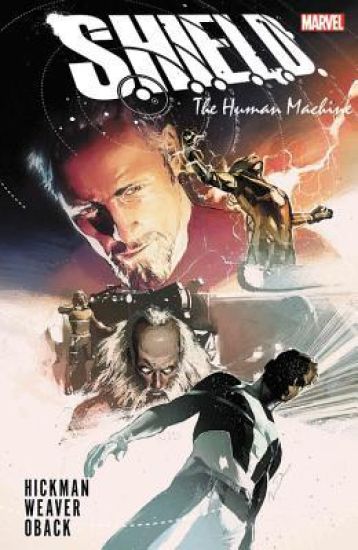
S.h.i.e.l.d. By Hickman & Weaver: The Human Machine
A long-awaited modern classic The hidden past of S.H.I.E.L.D. is revealed, courtesy of some of history's greatest minds Michelangelo has been pulling the strings for years - but can even he keep Leonardo da Vinci and Isaac Newton from killing each other and destroying the Brotherhood of the Shield? The battle for the Immortal City comes to a climactic conclusion Michelangelo and Nikola Tesla kick their plan into high gear Galileo takes on Galactus The truth behind Nostradamus is uncovered And Howard Stark lays the foundation for the espionage organization you know and love But the battle that decides our present will be fought in the future... COLLECTING S.H.I.E.L.D. (2011) 1-4, S.H.I.E.L.D. BY HICKMAN & WEAVER 5-6, S.H.I.E.L.D. INFINITY
S O S: Poems 1961-2013

S O S: Poems 1961-2013

Amiri Baraka

Grove Press / Atlantic Monthly Press
2016
pokkari
One of the New York Times Book Review's 100 Notable Books WITH AN APPENDIX OF NEVER-BEFORE-PUBLISHED WORK Fusing the personal and the political in high-voltage verse, Amiri Baraka was one of the preeminent literary innovators of the past century. This volume comprises the fullest spectrum of his rousing, revolutionary poems, from his first collection to unpublished pieces composed during his final years. Throughout Baraka's career as a prolific writer in several genres (also published under the name LeRoi Jones), he was vehemently outspoken against oppression of African American citizens, and he radically altered the discourse surrounding racial inequality. His legacy in world literature is matched by his widespread influence as an activist and cultural leader. Praised for its lyricism and introspection, his early poetry emerged from the Beat generation, while his later writing is marked by the Black Arts Movement's intensely rebellious fervor and subversive ideology. All along, his primary focus was on how to live and love in the present moment despite the enduring difficulties of human history.
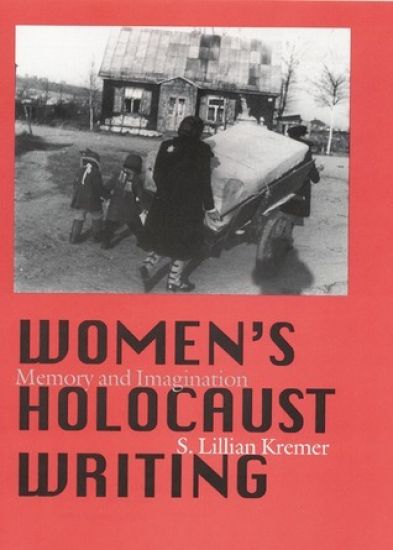
Women's Holocaust Writing

Women's Holocaust Writing

S. Lillian Kremer

University of Nebraska Press
1999
sidottu
"Women's Holocaust Writing" extends Holocaust and literary studies by examining women's artistic representations of female Holocaust experiences, as given voice by Cynthia Ozick, Ilona Karmel, Elzubieta Ettinger, Hana Demetz, Susan Fromberg Schaeffer, Norma Rosen, and Marge Piercy. Through close, insightful reading of fiction, S. Lillian Kremer explores Holocaust representations in works distinguished by the power of their literary expression and attention to women's diverse experiences. She draws upon history, psychology, women's studies, literary analysis, and interviews with authors to compare writing by eyewitnesses working from memory with that by remote "witnesses through the imagination." S. Lillian Kremer teaches in the Department of English at Kansas State University. She is the author of "Witness through the Imagination: Jewish-American Holocaust Literature".
Women's Holocaust Writing

Women's Holocaust Writing

S. Lillian Kremer

University of Nebraska Press
2001
pokkari
Women's Holocaust Writing extends Holocaust and literary studies by examining women's artistic representations of female Holocaust experiences, as given voice by Cynthia Ozick, Ilona Karmel, Elzbieta Ettinger, Hana Demetz, Susan Fromberg Schaeffer, Norma Rosen, and Marge Piercy. Through close, insightful reading of fiction, S. Lillian Kremer explores Holocaust representations in works distinguished by the power of their literary expression and attention to women's diverse experiences. She draws upon history, psychology, women's studies, literary analysis, and interviews with authors to compare writing by eyewitnesses working from memory with that by remote "witnesses through the imagination."
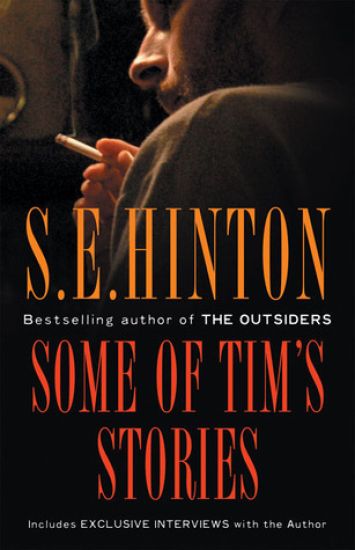
Some of Tim's Stories

Some of Tim's Stories

S. E. Hinton

University of Oklahoma Press
2007
sidottu
Short Stories from the bestselling author of The Outsiders, plus exclusive interviews A teenager when she first gained fame, now a seasoned writer, S. E. Hinton takes her trademark themes to a new level in Some of Tim's Stories - fourteen original stories depicting adults trapped in lives of missed connections and opportunities. The stories in this collection merge into a larger narrative about two cousins, Terry and Mike, whose lives and families are intertwined but whose paths lead to very different futures: one in prison, the other enduring a guilt-ridden existence working in a bar.The tales are made especially distinctive in the telling. The ""author"" of the stories is a bartender named Tim - the ""Mike"" of his own narrative - whose idiosyncrasies are perfectly captured in Hinton's intriguing use of metafiction.The book also features exclusive interviews with Hinton conducted by Teresa Miller, host of public television's Writing Out Loud. Hinton allows readers into her world as she never has before - speaking openly about her life and career. Complementing the book are line drawings that illustrate the stories and photographs that document the author's life.In one interview, Hinton calls Some of Tim's Stories ""the best writing I've ever done."" These stories capture the feel of the earlier books that won her fame while demonstrating an adult edginess and a more disciplined talent. Some of Tim's Stories is sure to captivate Hinton's long-time fans as it shows new readers that her soul-searching fiction extends masterfully to adult themes as well.
Aristotle's Poetics

Aristotle's Poetics

S. H. Butcher

Hill Wang
2003
nidottu
Introduced by Francis Fergusson, the Poetics, written in the fourth century B.C., is still an essential study of the art of drama, indeed the most fundamental one we have. It has been used by both playwrights and theorists of many periods, and interpreted, in the course of its two thousand years of life, in various ways. The literature which has accumulated around it is, as Mr. Fergusson points out, "full of disputes so erudite that the nonspecialist can only look on in respectful silence." But the Poetics itself is still with us, in all its suggestiveness, for the modern reader to make use of in his turn and for his own purposes. Francis Fergusson's lucid, informative, and entertaining Introduction will prove invaluable to anyone who wishes to understand and appreciate the Poetics. Using Sophocles' Oedipus Rex, as Aristotle did, to illustrate his analysis, Mr. Fergusson pints out that Aristotle did not lay down strict rules, as is often thought: "The Poetics," he says, "is much more like a cookbook than it is like a textbook of elementary engineering." Read in this way, it is an essential guide not only to Sophoclean tragedy, but to the work of so modern a playwright as Bertolt Brecht, who considered his own "epic drama" the first non-Aristotelian form.
Where's the Rhetoric?

Where's the Rhetoric?

S Scott Graham

Ohio State University Press
2020
sidottu
The emergence of rhetorical new materialisms and computational rhetorics has provoked something of an existential crisis within rhetorical studies. In Where's the Rhetoric?, S. Scott Graham tackles this titular question by arguing first that scholarly efforts in rhetorical new materialisms and computational rhetoric be understood as coextensive with longstanding disciplinary commitments in rhetoric. In making this argument, Graham excavates the shared intellectual history of traditional rhetorical inquiry, rhetorical new materialisms, and computational rhetoric with particular emphasis on the works of Carolyn Miller, Kenneth Burke, and Henri Bergson. Building on this foundation, Graham then argues for a more unified approach to contemporary rhetorical inquiry-one that eschews disciplinary demarcations between rhetoric's various subareas. Specifically, Graham uses his unified field theory to explore 1) the rise of the "tweetorial" as a parascientific genre, 2) inventional practices in new media design, 3) statistical approaches to understanding biomedical discourse, and 4) American electioneering rhetorics. The book overall demonstrates how seemingly disparate intellectual approaches within rhetoric can be made to speak productively to one another in the pursuit of shared scholarly goals around questions of genre, media, and political discourse-thereby providing a foundation for imagining a more unified field.
Where's the Rhetoric?

Where's the Rhetoric?

S Scott Graham

Ohio State University Press
2020
pokkari
The emergence of rhetorical new materialisms and computational rhetorics has provoked something of an existential crisis within rhetorical studies. In Where's the Rhetoric?, S. Scott Graham tackles this titular question by arguing first that scholarly efforts in rhetorical new materialisms and computational rhetoric be understood as coextensive with longstanding disciplinary commitments in rhetoric. In making this argument, Graham excavates the shared intellectual history of traditional rhetorical inquiry, rhetorical new materialisms, and computational rhetoric with particular emphasis on the works of Carolyn Miller, Kenneth Burke, and Henri Bergson. Building on this foundation, Graham then argues for a more unified approach to contemporary rhetorical inquiry-one that eschews disciplinary demarcations between rhetoric's various subareas. Specifically, Graham uses his unified field theory to explore 1) the rise of the "tweetorial" as a parascientific genre, 2) inventional practices in new media design, 3) statistical approaches to understanding biomedical discourse, and 4) American electioneering rhetorics. The book overall demonstrates how seemingly disparate intellectual approaches within rhetoric can be made to speak productively to one another in the pursuit of shared scholarly goals around questions of genre, media, and political discourse-thereby providing a foundation for imagining a more unified field.
Bolivia's Radical Tradition

Bolivia's Radical Tradition

S. Sandor John

University of Arizona Press
2012
nidottu
In December 2005, following a series of convulsive upheavals that saw the overthrow of two presidents in three years, Bolivian peasant leader Evo Morales became the first Indian president in South American history. Consequently, according to S. Sándor John, Bolivia symbolizes new shifts in Latin America, pushed by radical social movements of the poor, the dispossessed, and indigenous people once crossed off the maps of 'official' history. But, as John explains, Bolivian radicalism has a distinctive genealogy that does not fit into ready-made patterns of the Latin American left. According to its author, this book grew out of a desire to answer nagging questions about this unusual place. Why was Bolivia home to the most persistent and heroically combative labor movement in the Western Hemisphere? Why did this movement take root so deeply and so stubbornly? What does the distinctive radical tradition of Trotskyism in Bolivia tell us about the past fifty years there, and what about the explosive developments of more recent years? To answer these questions, John clearly and carefully pieces together a fragmented past to show a part of Latin American radical history that has been overlooked for far too long. Based on years of research in archives and extensive interviews with labor, peasant, and student activists--as well as Chaco War veterans and prominent political figures--the book brings together political, social, and cultural history, linking the origins of Bolivian radicalism to events unfolding today in the country that calls itself 'the heart of South America.'
Bolivia's Radical Tradition

Bolivia's Radical Tradition

S. Sandor John

University of Arizona Press
2009
sidottu
In December 2005, following a series of convulsive upheavals that saw the overthrow of two presidents in three years, Bolivian peasant leader Evo Morales became the first Indian president in South American history. Consequently, according to S. Sandor John, Bolivia symbolizes new shifts in Latin America, pushed by radical social movements of the poor, the dispossessed, and indigenous people once crossed off the maps of official history. But, as John explains, Bolivian radicalism has a distinctive genealogy that does not fit into ready-made patterns of the Latin American left. According to its author, this book grew out of a desire to answer nagging questions about this unusual place. Why was Bolivia home to the most persistent and heroically combative labor movement in the Western Hemisphere? Why did this movement take root so deeply and so stubbornly? What does the distinctive radical tradition of Trotskyism in Bolivia tell us about the past fifty years there, and what about the explosive developments of more recent years? To answer these questions, John clearly and carefully pieces together a fragmented past to show a part of Latin American radical history that has been overlooked for far too long. Based on years of research in archives and extensive interviews with labor, peasant, and student activists, s well as Chaco War veterans and prominent political figures the book brings together political, social, and cultural history, linking the origins of Bolivian radicalism to events unfolding today in the country that calls itself the heart of South America.?
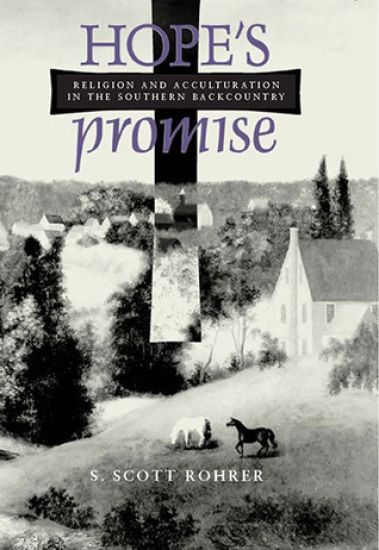
Hope's Promise

Hope's Promise

S. Scott Rohrer

The University of Alabama Press
2014
nidottu
This eloquent study describes the complex process of assimilation that occurred among multi-ethnic groups in Wachovia, the evangelical community that settled a 100,000-acre tract in Piedmont North Carolina from 1750 to 1860. It counters commonplace notions that evangelicalism was a divisive force in the antebellum South, demonstrating instead the ability of evangelical beliefs and practices to unify diverse peoples and foster shared cultural values. In Hope's Promise, Scott Rohrer dissects the internal workings of the ecumenical Moravian movement at Wachovia?how this disparate group of pilgrims hailing from many countries (Germany, Ireland, Scandinavia, England) and different denominations (Lutheran, Reformed, Methodist, Anglican) yielded their ethnicities as they became, above all, a people of faith. By examining the ""open"" farm congregations of Hope, Friedberg, and Friedland, Rohrer offers a sensitive portrayal of their evangelical life and the momentous cultural changes it wrought: the organization of tight-knit congregations bound by ""heart religion;"" the theology of the new birth; the shape of religious discipline; the sacrament of communion; and the role of music. Drawing on courthouse documents and church records, Rohrer carefully demonstrates how various groups began to take on traits of the others. He also illustrates how evangelical values propelled interaction with the outside world?at the meetinghouse and the frontier store, for example?and fostered even more collective and accelerated change. As the Moravians became ever more ""American"" and ""southern,"" the polyglot of ethnicities that was Wachovia would, under the unifying banner of evangelicalism, meld into one of the most sophisticated religious communities in early America.
S. S. Savannah, the Elegant Steam Ship

S. S. Savannah, the Elegant Steam Ship

Frank O. Braynard

University of Georgia Press
2008
pokkari
This is the story of a ship and her pioneer master, Moses Rogers, who had the idea of making the first transatlantic voyage in a steam-propelled vessel. His "laudable and meritorious experiment" marked one of the world's maritime epochs.The conception and building of the S. S. Savannah was guided by the engineering genius of Captain Rogers who, with Robert Fulton, was a leading exponent of steam in his day. The momentous voyage began in Savannah, Georgia, in 1819, and took the courageous crew to England, Sweden, and Russia. These were the elegant steam ship's times of triumph. Yet she also had moments of pathos, from the first doubts and fears of a public that dubbed her a "steam coffin" to that sad day when a Washington newspaper said her engine could be removed for only $200, leaving her "just as good" as any other ship.The previously untold story of the first steam-powered vessel to cross the Atlantic is written in a scholarly, well-documented fashion, yet with the color, imagination, and humor of the men who lived it.