Kirjojen hintavertailu. Mukana 11 717 486 kirjaa ja 12 kauppaa.

Kirjahaku

Etsi kirjoja tekijän nimen, kirjan nimen tai ISBN:n perusteella.

1000 tulosta hakusanalla Samson Eure

Flying Tiger

Flying Tiger

Jack Samson

Globe Pequot Press
2011
pokkari
The Flying Tigers and the U.S. Fourteenth will be the subject of a huge upcoming film from IMAX and director John Woo. The film is scheduled to start shooting in spring 2011 with no firm release date stated yet. The role of Chenault in the film is likely to be the role of a lifetime for a huge star. When a sickly, half-deaf, forty-seven-year-old retired U.S. Army Air Corps Captain went to China in 1937 to survey Chiang Kai-shek's Chinese Air Force, little did the world know this would be the man to stem the Japanese tide in the Far East. Almost every military expert predicted his handful of pilots of the American Volunteer Group would not last three weeks. Yet in seven months in 1942, the AVG, fighting a rear-guard action over Burma, China, Thailand, and French Indonesia, destroyed a confirmed 199 planes, with another 153 "probables" as well. They did this losing only four pilots and twelve P-40s in air combat and sixty-one on the ground.In this definitive biography of General Claire Chennault, veteran reporter Jack Samson offers a rare and fascinating inside look at this legendary man behind the Flying Tigers.Unlike Eisenhower and MacArthur, Chennault was no saintly military leader. He was a chain-smoking, bourbon-drinking, womanizing man. He was the kind of leader his men knew could and did fly better than they--in any kind of plane. But first and last, he was a fighter--a tough, single-minded warrior who was never confused by who the enemy was in Asia, regardless of what the State Department thought.Following Chennault from this command of the Fourteenth U.S. Army Air Force during World War II to the part of his life that is not well known--the intriguing postwar years in China and Formosa, where his Civilian Air Transport (CAT) became the scourge of the Red Chinese--The Flying Tiger is an extraordinary portrait of one of America's great military commanders.
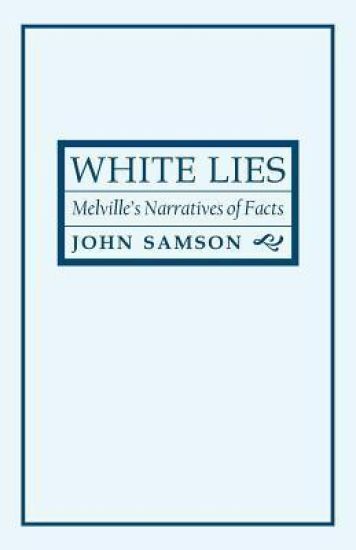
White Lies

White Lies

John Samson

Cornell University Press
1989
sidottu
The narrative of facts—probably best exemplified in the literature of exploration—was an immensely popular genre in mid-nineteenth-century America. In White Lies, John Samson offers full contextual readings of Melville's five major narratives of facts—Typee, Omoo, Redburn, White-Jacket, and Israel Potter. Samson demonstrates that in these novels Melville critically rewrote the sources on which he drew, in effect making the genre itself a subject of his writing. In his introduction, Samson discusses Melville's knowledge of the genre and its ideology. He then reads each novel in terms of Melville's confrontation with its sources. In each, Samson says, an unreliable narrator represents particular ideological tendencies in Melville's sources. Melville heightens and extends these tendencies, exposes the contradictions and biases within them, and ends by showing the narrator evading or denying experiences that conflict with his ideology. According to Samson, Melville sees the concept of historical progress as the basis of these biases and evasions. In these five novels, Melville reveals the conflict between democratic, humanitarian, and individualistic principles, on the one hand, and the forces of racial superiority, religious bigotry, economic determinism, and political conservatism, on the other. Taken together, Samson asserts, these novels deconstruct the intellectual foundations of the form of historical narration endorsed by white patriarchal culture. Scholars and students of nineteenth-century American literature, specialists in the novel, and other readers of Melville will welcome Samson's provocative reinterpretation of these key works in American culture.
White Lies

White Lies

John Samson

Cornell University Press
2011
pokkari
The narrative of facts—probably best exemplified in the literature of exploration—was an immensely popular genre in mid-nineteenth-century America. In White Lies, John Samson offers full contextual readings of Melville's five major narratives of facts—Typee, Omoo, Redburn, White-Jacket, and Israel Potter. Samson demonstrates that in these novels Melville critically rewrote the sources on which he drew, in effect making the genre itself a subject of his writing. In his introduction, Samson discusses Melville's knowledge of the genre and its ideology. He then reads each novel in terms of Melville's confrontation with its sources. In each, Samson says, an unreliable narrator represents particular ideological tendencies in Melville's sources. Melville heightens and extends these tendencies, exposes the contradictions and biases within them, and ends by showing the narrator evading or denying experiences that conflict with his ideology. According to Samson, Melville sees the concept of historical progress as the basis of these biases and evasions. In these five novels, Melville reveals the conflict between democratic, humanitarian, and individualistic principles, on the one hand, and the forces of racial superiority, religious bigotry, economic determinism, and political conservatism, on the other. Taken together, Samson asserts, these novels deconstruct the intellectual foundations of the form of historical narration endorsed by white patriarchal culture. Scholars and students of nineteenth-century American literature, specialists in the novel, and other readers of Melville will welcome Samson's provocative reinterpretation of these key works in American culture.
Hide

Hide

Naomi Samson; Kenneth Jacobson

Bison Books
2000
pokkari
In 1942 German Nazis and Polish collaborators drove nine-year-old Naomi Rosenberg and her family from the town of Goray, Poland, and into hiding. For nearly two years they were forced to take refuge in a crawl space beneath a barn. In this tense and moving memoir, the author tells of her terror and confusion as a child literally buried alive. Her family owed their survival to the reluctant and constantly wavering support of the barn owners, gentiles torn between compassion for Naomi's family and fear of a Nazi death sentence if the family was discovered.
The Balance of Payments Analysis of Developing Economies

The Balance of Payments Analysis of Developing Economies

Olumuyiwa Samson Adedeji; Handa Jagdish; Alexander Bilson Darku

CRC Press Inc
2017
sidottu
Developing countries - given their extreme economic vulnerability - are likely to be better served by maintaining flexible exchange rate regimes. That is the finding of this informative and enlightening book. Presenting unique theoretical and econometric analysis of the current account of the balance of payments of Nigeria and Ghana, this book examines the features common to the economic position of developing countries (such as recurring deficits and continual increases in external debt). The book presents a number of new theoretical modifications to the standard version of the value model of the current account, in order to reflect the major characteristics of developing economies. The book also uses rigorous econometric analyses to determine the validity of theoretical models, and examines the sustainability of these various countries' current account deficits.
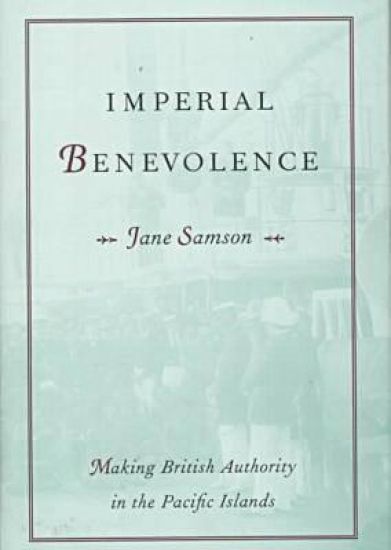
Imperial Benevolence

Imperial Benevolence

Jane Samson

University of Hawai'i Press
1998
sidottu
This analysis of British imperialism in the south Pacific explores the impulses behind British calls for the protection and ""improvement"" of islanders. From kingmaking projects in Hawai'i, Tonga and Fiji to the ""antislavery"" campaign against the labour trade in the western Pacific, the author examines the subjective cultural roots permeating Britons' attitudes toward Pacific islanders. By teasing out the connections between those attitudes and the British humanitarian and antislavery movements, this text reminds the reader that 19th-century Britain was engaged in a global canpaign for ""Christianization and civilization"". Using official and unofficial records, this text shows how British Naval officers and their humanitarian supporters responded to a variety of Pacific encounters, developing their own interpretations of culture and contact in the islands. The book aims to overturn traditional historical treatments of Britain's naval operations in the islands, particularly on the issue of ""gunboat diplomacy"". It reveals how deeply divided British opinion was about the use of force against islanders and the unpredictable responses of the islanders.
Martin Margiela

Martin Margiela

Alexandre Samson

Rizzoli International Publications
2018
sidottu
Timed to coincide with a major exhibition, this volume revisits the years during which celebrated designer Martin Margiela achieved the status as one of the most important designers at work today. One of the Antwerp group of six who changed the face of contemporary fashion, Margiela created 41 runway shows between 1989 and 2009 which promoted a unique vision of understated luxury -- monochromes, oversize volumes, and his signature constructed-deconstructed cuts - whose credo is comfort, timelessness, sensuality, and authenticity. Famously reclusive, Margiela never showed his face even at his own shows in order that the work could stand purely on its own, free from any link to celebrity or self-promotion. This volume chronicles these amazing fashion shows in careful detail: the extraordinary spaces, the music, the designer's intentions, the iconic pieces. Over the years, recurring motifs and inspirations become more apparent including anonymity, whiteness, past and anteriority, diversion. The book reveals the sensitive, poetic and incredibly innovative universe of this most influential contemporary fashion designer.
A Way of Life That Does not Exist

A Way of Life That Does not Exist

Colin Samson

Memorial University Press
2003
pokkari
This book is about the social and political processes involved in the extinguishment of a unique way of life of the Innu people of Nitassinan, the Labrador-Quebec peninsula. In the 1950s and 60s, the Innu were prompted by Canadian authorities to abandon permanent nomadic hunting, the way of life that had made them independent and self-reliant occupants of the Subarctic. These people, who had occupied a territory the size of France, and for whom the land, waterways and animals provided physical, moral and spiritual sustenance, were settled in government-built villages in Northern Quebec and Labrador. Sustained efforts to impose Euro-Canadian authority upon the Innu have had the effect of seriously eroding not only a distinct way of life, but a unique view of the self, society, and the cosmos. Such efforts have also resulted in rates of suicide, alcoholism, and other forms of self-destructive abuse that are among the highest in the world. By observing interactions between the Innu and the Euro-Canadian institutions imposed upon them, Samson examines how the attempt to destroy the Innu way of life has actually operated. The book looks in detail at Innu relations with the Canadian state, developers, explorers, missionaries, educators, health-care professionals, and the justice system.
A World You Do Not Know

A World You Do Not Know

Colin Samson

Institute of Commonwealth Studies
2014
pokkari
A World You Do Not Know explains how the willful ignorance of indigenous peoples was a major dynamic in the European colonization of North America. Using the Innu of Labrador-Quebec as one powerful contemporary example, Colin Samson shows how the processes of displacement, land-grabbing, and assimilation today are in their intentions and effects no different from U.S. and Canadian policies of the 19th century. While nation building, capitalism, and industrialization are shown to have undermined indigenous peoples' social stability, health, and wellbeing, Samson describes how the values that guide many indigenous societies are very much The book concludes by showcasing how land-based activities of indigenous groups in Canada and the United States are being maintained and recast. Samson argues that by continuing to hunt, fish, and live from what is left of their lands, indigenous peoples are talking back to the ignorance that transformed them and holding out the promise for more positive futures.
The Rosen Singularity

The Rosen Singularity

Lior Samson

Ampersand Press
2011
pokkari
"Death is very likely the single best invention of Life." Steve Jobs, Stanford, 2005. Rosen David, a research biologist who does no research, is about to find out what the late Steve Jobs meant. Working in biotech and looking for novel patterns in the work of others, he makes a dramatic new discovery that turns out to be ancient history. The implications for medicine and society are profound, but he is unable to publish his findings. When his work starts disappearing and his life is threatened, his settled existence becomes complicated and dangerous. His actions entangle him in the invisible network of an elderly, jet-setting doctor with unusual patients, including a pair of sybaritic California billionaires and the brutal and long-lived African dictator, Edgar Jabari Mbutsu.Rosen ends up playing in a high stakes game with powerful players who leave him wondering how long he will live. The rules are unclear, the cards he holds are of uncertain value, and he may be called upon to bet everything.This provocative thriller from critically acclaimed novelist Lior Samson will have you turning the pages with anticipation and thinking about some of the hard choices that medical advances could soon force upon us all. Packed with energy, passion, and technical savvy, The Rosen Singularity is a thriller for our times. "This extraordinary author has the ability to anticipate events in ways that enhance his novels." Alan Caruba, veteran critic at BookViews.