Kirjojen hintavertailu. Mukana 11 244 527 kirjaa ja 12 kauppaa.

Kirjahaku

Etsi kirjoja tekijän nimen, kirjan nimen tai ISBN:n perusteella.

1000 tulosta hakusanalla Simone St James

Conservatives Versus Wildcats

Conservatives Versus Wildcats

Simone Polillo

Stanford University Press
2013
sidottu
For decades, the banking industry seemed to be a Swiss watch, quietly ticking along. But the recent financial crisis hints at the true nature of this sector. As Simone Polillo reveals in Conservatives Versus Wildcats, conflict is a driving force. Conservative bankers strive to control money by allying themselves with political elites to restrict access to credit. Barriers to credit create social resistance, so rival bankers—wildcats—attempt to subvert the status quo by using money as a tool for breaking existing boundaries. For instance, wildcats may increase the circulation of existing currencies, incorporate new actors in financial markets, or produce altogether new financial instruments to create change. Using examples from the economic and social histories of 19th-century America and Italy, two decentralized polities where challenges to sound banking originated from above and below, this book reveals the collective tactics that conservative bankers devise to legitimize strict boundaries around credit—and the transgressive strategies that wildcat bankers employ in their challenge to this restrictive stance.
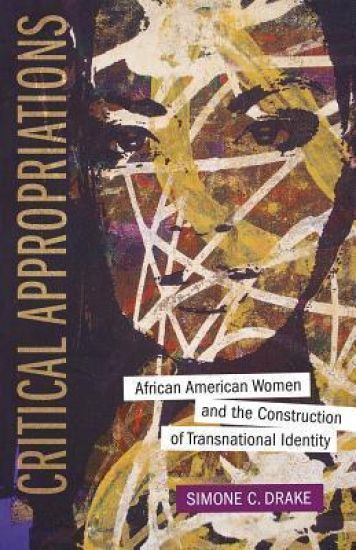
Critical Appropriations

Critical Appropriations

Simone C. Drake

Louisiana State University Press
2014
sidottu
From the novels of Toni Morrison to the music of Beyoncé Knowles, the cultural prevalence of a transnational black identity, as created by African American women, is more than a product of geographic mobility. Rather, as author Simone C. Drake shows, these constructions illuminate our understanding of a chronically marginalized demographic. In Critical Appropriations, Drake contends that these fluid and hetero-geneous characterizations of black females arise from multiple creative outlets - literature, film, and music videos - and reflect African Ameri-can women's evolving concept of home, community, gender, and family.Through a close examination of Toni Morrison's Paradise, Danzy Senna's Caucasia, Gayl Jones's Corregidora, Erna Brodber's Louisiana, and Kasi Lemmons's film Eve's Bayou, as well as Beyoncé Knowles's B-Day album and music-video collaboration with Shakira, ""Beautiful Liar,"" Drake reveals how concepts of hybridity - whether positioned as créolité, Candomblé, négritude, Latinidad, or Brasilidade - are appropriated in each work of art as a way of challenging the homogeneous paradigm of black cultural studies. This redefined notion of identity enables African American women to embrace a more complex, transnational blackness that is not only more liberating but also more pertinent to their experiences. Drawing from this borderless exchange of ideas and a richer concept of self, Critical Appropriations offers a rewarding reconsideration of the creative implications for African American women, mapping new directions in black women's studies.
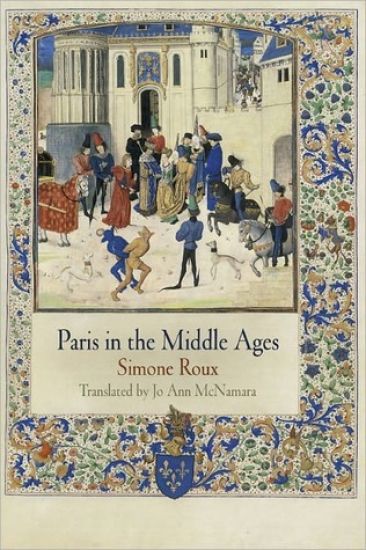
Paris in the Middle Ages

Paris in the Middle Ages

Simone Roux

University of Pennsylvania Press
2011
pokkari
Paris in the Middle Ages was home to royalty, mountebanks, Knights Templar, merchants, prostitutes, and canons. Bursting outward from the encompassing wall, it was Europe's largest, most cosmopolitan city. Simone Roux chronicles the lives of Parisians over the course of a dozen generations as Paris grew from a military stronghold after the Battle of Bouvines in 1214 to a city recovering from the Black Death of the 1390s. Roux peers into the private lives of people within their homes and chronicles the public world of affairs and entertainments, filling the pages of her book with laborers, shopkeepers, magistrates, thieves, and prelates. She examines the varied populations living within their own realms but sharing the streets of the metropolis, in the Latin Quarter, where the university dominated; in the precincts of Notre Dame, with its large number of clerical inhabitants; the mercantile Right Bank; and in the area surrounding the royal palace of the Louvre, with its attendant palaces for the king's satellites. She breathes life into dusty documents by explicating the lingo of street insults, making sense of the cults of saints-Sebastian, who was riddled with arrows, became the patron saint of tapestry workers-and entering the courtrooms and confessionals to tell how people actually ate, slept, dressed, fought, worked, and worshipped in the later Middle Ages.
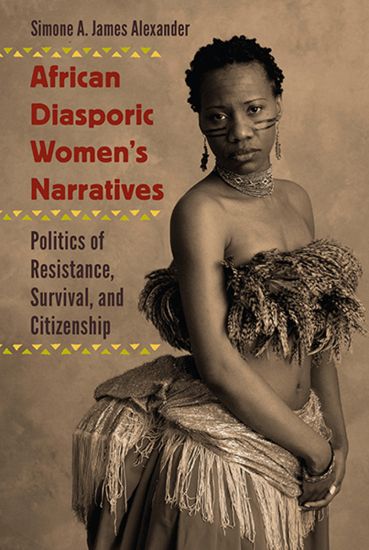
African Diasporic Women's Narratives

African Diasporic Women's Narratives

Simone A. James Alexander

University Press of Florida
2016
nidottu
Using feminist and womanist theory, Simone Alexander takes as her main point of analysis literary works that focus on the black female body as the physical and metaphorical site of migration. She shows that over time black women have used their bodily presence to complicate and challenge a migratory process often forced upon them by men or patriarchal society.Through in-depth study of selective texts by Audre Lorde, Edwidge Danticat, Maryse Condé, and Grace Nichols, Alexander challenges the stereotypes ascribed to black female sexuality, subverting its assumed definition as diseased, passive, or docile. She also addresses issues of embodiment as she analyzes how women's bodies are read and seen; how bodies ""perform"" and are performed upon; how they challenge and disrupt normative standards.A multifaceted contribution to studies of gender, race, sexuality, and disability issues, African Diasporic Women's Narratives engages with a range of issues as it grapples with the complex interconnectedness of geography, citizenship, and nationalism.
Latino Orlando

Latino Orlando

Simone Delerme

University Press of Florida
2020
sidottu
Latino Orlando portrays the experiences of first- and second-generation immigrants who have come to the Orlando metropolitan area from Puerto Rico, Cuba, Mexico, Venezuela, Colombia, and other Latin American countries. While much research on immigration focuses on urban destinations, Simone Delerme delves into a middle- and upper-class suburban context, highlighting the profound demographic and cultural transformation of an overlooked immigrant hub.
Latino Orlando

Latino Orlando

Simone Delerme

University Press of Florida
2023
pokkari
Inside the experiences of immigrants from Latin America and the CaribbeanLatino Orlando portrays the experiences of first- and second-generation immigrants who have come to the Orlando metropolitan area from Puerto Rico, Cuba, Mexico, Venezuela, Colombia, and other Latin American countries. While much research on immigration focuses on urban destinations, Simone Delerme delves into a middle- and upper-class suburban context, highlighting the profound demographic and cultural transformation of an overlooked immigrant hub.Drawing on interviews, observations, fieldwork, census data, and traditional and new media, Delerme reveals the important role of real estate developers in attracting Puerto Ricans—some of the first Spanish-speaking immigrants in the region—to Central Florida in the 1970s. She traces how language became a way of racializing and segregating Latino communities, leading to the growth of suburban ethnic enclaves. She documents not only the tensions between Latinos and non-Latinos, but also the class-based distinctions that cause dissent within the Latino population. Arguing that Latino migrants are complicating racial categorizations and challenging the deep-rooted Black-white binary that has long prevailed in the American South, Latino Orlando breaks down stereotypes of neighborhood decline and urban poverty and illustrates the diversity of Latinos in the region.A volume in the series Southern Dissent, edited by Stanley Harrold and Randall M. Miller
Soft Soil, Black Grapes

Soft Soil, Black Grapes

Simone Cinotto

New York University Press
2012
sidottu
Winner of the 2013 New York Book Show Award in Scholarly/Professional Book Design From Ernest and Julio Gallo to Francis Ford Coppola, Italians have shaped the history of California wine. More than any other group, Italian immigrants and their families have made California viticulture one of America's most distinctive and vibrant achievements, from boutique vineyards in the Sonoma hills to the massive industrial wineries of the Central Valley. But how did a small group of nineteenth-century immigrants plant the roots that flourished into a world-class industry? Was there something particularly "Italian" in their success? In this fresh, fascinating account of the ethnic origins of California wine, Simone Cinotto rewrites a century-old triumphalist story. He demonstrates that these Italian visionaries were not skilled winemakers transplanting an immemorial agricultural tradition, even if California did resemble the rolling Italian countryside of their native Piedmont. Instead, Cinotto argues that it was the wine-makers' access to "social capital," or the ethnic and familial ties that bound them to their rich wine-growing heritage, and not financial leverage or direct enological experience, that enabled them to develop such a successful and influential wine business. Focusing on some of the most important names in wine history—particularly Pietro Carlo Rossi, Secondo Guasti, and the Gallos—he chronicles a story driven by ambition and creativity but realized in a complicated tangle of immigrant entrepreneurship, class struggle, racial inequality, and a new world of consumer culture. Skillfully blending regional, social, and immigration history, Soft Soil, Black Grapes takes us on an original journey into the cultural construction of ethnic economies and markets, the social dynamics of American race, and the fully transnational history of American wine.
Archipelagoes

Archipelagoes

Simone Pinet

University of Minnesota Press
2011
nidottu
Archipelagoes examines insularity as the space for adventure in the Spanish book of chivalry, much like the space of the forest in French chivalric romance. In this innovative work, Simone Pinet explores the emergence of insularity as a privileged place for the location of adventure in Spanish literature in tandem with the cartographic genre of the isolario.Pinet looks closely at AmadÍs de Gaula and the Liber insularum archipelagi as the first examples of these genres. Both isolario and chivalric romance (libros de caballerÍas) make of the island a flexible yet cohesive framework that becomes intrinsic to the construction of their respective genres. The popularity of these forms throughout the seventeenth century in turn bears witness to the numerous possibilities the archipelagic structure offered, ultimately taken up by the grand genres of each discipline-the atlas and the novel. Moving from verbal descriptions to engravings and tapestry weavings, and from the chivalric politics and ethics proposed in the AmadÍs de Gaula to the Insula Barataria episode in Don Quixote, Pinet’s analysis of insularity and the use of the island structure reveals diverging roles for fiction, illuminating both the emergence of the novel and contemporary philosophical discussion on fiction.
Nerval et la Patrie Perdue

Nerval et la Patrie Perdue

Simone Guers

Peter Lang Publishing Inc
1990
sidottu
Cet ouvrage explore le theme de la patrie perdue dans les oeuvres de Gerard de Nerval ainsi que dans son experience vecue a travers une etude en profondeur des ecrits et de la correspondance du poete; ce theme s'entrelace avec le theme du double, lorsque l'Allemagne devient l'objet pour Nerval de la recherche des identites perdues. A la lumiere de nouvelles decouvertes, l'auteur interprete les voyages de Nerval en Allemagne comme des pelerinages aux sources.
Living Up to the Ads

Living Up to the Ads

Simone Weil Davis

Duke University Press
2000
sidottu
In Living Up to the Ads Simone Weil Davis examines commodity culture’s impact on popular notions of gender and identity during the 1920s. Arguing that the newly ascendant advertising industry introduced three new metaphors for personhood-the ad man, the female consumer, and the often female advertising model or spokesperson-Davis traces the emergence of the pervasive gendering of American consumerism. Materials from advertising firms-including memos, manuals, meeting minutes, and newsletters-are considered alongside the fiction of Sinclair Lewis, Nella Larsen, Bruce Barton, F. Scott Fitzgerald, and Zelda Fitzgerald. Davis engages such books as Babbitt, Quicksand, and Save Me the Waltz in original and imaginative ways, asking each to participate in her discussion of commodity culture, gender, and identity. To illuminate the subjective, day-to-day experiences of 1920s consumerism in the United States, Davis juxtaposes print ads and industry manuals with works of fiction. Capturing the maverick voices of some of the decade’s most influential advertisers and writers, Davis reveals the lines that were drawn between truths and lies, seduction and selling, white and black, and men and women. Davis’s methodology challenges disciplinary borders by employing historical, sociological, and literary practices to discuss the enduring links between commodity culture, gender, and identity construction. Living Up to the Ads will appeal to students and scholars of advertising, American studies, women’s studies, cultural studies, and early-twentieth-century American history.
Living Up to the Ads

Living Up to the Ads

Simone Weil Davis

Duke University Press
2000
pokkari
In Living Up to the Ads Simone Weil Davis examines commodity culture’s impact on popular notions of gender and identity during the 1920s. Arguing that the newly ascendant advertising industry introduced three new metaphors for personhood-the ad man, the female consumer, and the often female advertising model or spokesperson-Davis traces the emergence of the pervasive gendering of American consumerism. Materials from advertising firms-including memos, manuals, meeting minutes, and newsletters-are considered alongside the fiction of Sinclair Lewis, Nella Larsen, Bruce Barton, F. Scott Fitzgerald, and Zelda Fitzgerald. Davis engages such books as Babbitt, Quicksand, and Save Me the Waltz in original and imaginative ways, asking each to participate in her discussion of commodity culture, gender, and identity. To illuminate the subjective, day-to-day experiences of 1920s consumerism in the United States, Davis juxtaposes print ads and industry manuals with works of fiction. Capturing the maverick voices of some of the decade’s most influential advertisers and writers, Davis reveals the lines that were drawn between truths and lies, seduction and selling, white and black, and men and women. Davis’s methodology challenges disciplinary borders by employing historical, sociological, and literary practices to discuss the enduring links between commodity culture, gender, and identity construction. Living Up to the Ads will appeal to students and scholars of advertising, American studies, women’s studies, cultural studies, and early-twentieth-century American history.
Dark Matters

Dark Matters

Simone Browne

Duke University Press
2015
sidottu
In Dark Matters Simone Browne locates the conditions of blackness as a key site through which surveillance is practiced, narrated, and resisted. She shows how contemporary surveillance technologies and practices are informed by the long history of racial formation and by the methods of policing black life under slavery, such as branding, runaway slave notices, and lantern laws. Placing surveillance studies into conversation with the archive of transatlantic slavery and its afterlife, Browne draws from black feminist theory, sociology, and cultural studies to analyze texts as diverse as the methods of surveilling blackness she discusses: from the design of the eighteenth-century slave ship Brooks, Jeremy Bentham's Panopticon, and The Book of Negroes, to contemporary art, literature, biometrics, and post-9/11 airport security practices. Surveillance, Browne asserts, is both a discursive and material practice that reifies boundaries, borders, and bodies around racial lines, so much so that the surveillance of blackness has long been, and continues to be, a social and political norm.
Dark Matters

Dark Matters

Simone Browne

Duke University Press
2015
pokkari
In Dark Matters Simone Browne locates the conditions of blackness as a key site through which surveillance is practiced, narrated, and resisted. She shows how contemporary surveillance technologies and practices are informed by the long history of racial formation and by the methods of policing black life under slavery, such as branding, runaway slave notices, and lantern laws. Placing surveillance studies into conversation with the archive of transatlantic slavery and its afterlife, Browne draws from black feminist theory, sociology, and cultural studies to analyze texts as diverse as the methods of surveilling blackness she discusses: from the design of the eighteenth-century slave ship Brooks, Jeremy Bentham's Panopticon, and The Book of Negroes, to contemporary art, literature, biometrics, and post-9/11 airport security practices. Surveillance, Browne asserts, is both a discursive and material practice that reifies boundaries, borders, and bodies around racial lines, so much so that the surveillance of blackness has long been, and continues to be, a social and political norm.
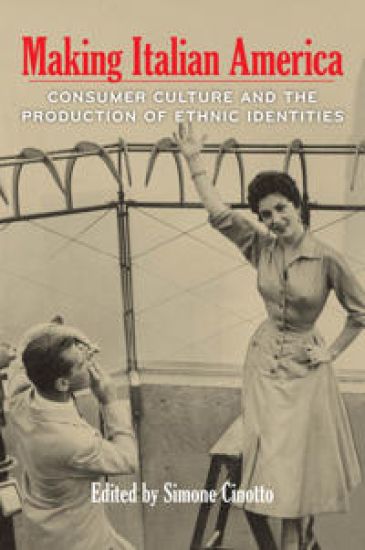
Making Italian America

Making Italian America

Simone Cinotto

Fordham University Press
2014
sidottu
How do immigrants and their children forge their identities in a new land—and how does the ethnic culture they create thrive in the larger society? Making Italian America brings together new scholarship on the cultural history of consumption, immigration, and ethnic marketing to explore these questions by focusing on the case of an ethnic group whose material culture and lifestyles have been central to American life: Italian Americans. As embodied in fashion, film, food, popular music, sports, and many other representations and commodities, Italian American identities have profoundly fascinated, disturbed, and influenced American and global culture. Discussing in fresh ways topics as diverse as immigrant women's fashion, critiques of consumerism in Italian immigrant radicalism, the Italian American influence in early rock 'n' roll, ethnic tourism in Little Italy, and Guido subculture, Making Italian America recasts Italian immigrants and their children as active consumers who, since the turn of the twentieth century, have creatively managed to articulate relations of race, gender, and class and create distinctive lifestyles out of materials the marketplace offered to them. The success of these mostly working-class people in making their everyday culture meaningful to them as well as in shaping an ethnic identity that appealed to a wider public of shoppers and spectators looms large in the political history of consumption. Making Italian America appraises how immigrants and their children redesigned the market to suit their tastes and in the process made Italian American identities a lure for millions of consumers. Fourteen essays explore Italian American history in the light of consumer culture, across more than a century-long intense movement of people, goods, money, ideas, and images between Italy and the United States—a diasporic exchange that has transformed both nations. Simone Cinotto builds an imaginative analytical framework for understanding the ways in which ethnic and racial groups have shaped their collective identities and negotiated their place in the consumers' emporium and marketplace. Grounded in the new scholarship in transnational U.S. history and the transfer of cultural patterns, Making Italian America illuminates the crucial role that consumption has had in shaping the ethnic culture and diasporic identities of Italians in America. It also illustrates vividly why and how those same identities—incorporated in commodities, commercial leisure, and popular representations—have become the object of desire for millions of American and global consumers.
Making Italian America

Making Italian America

Simone Cinotto

Fordham University Press
2014
pokkari
How do immigrants and their children forge their identities in a new land—and how does the ethnic culture they create thrive in the larger society? Making Italian America brings together new scholarship on the cultural history of consumption, immigration, and ethnic marketing to explore these questions by focusing on the case of an ethnic group whose material culture and lifestyles have been central to American life: Italian Americans. As embodied in fashion, film, food, popular music, sports, and many other representations and commodities, Italian American identities have profoundly fascinated, disturbed, and influenced American and global culture. Discussing in fresh ways topics as diverse as immigrant women's fashion, critiques of consumerism in Italian immigrant radicalism, the Italian American influence in early rock 'n' roll, ethnic tourism in Little Italy, and Guido subculture, Making Italian America recasts Italian immigrants and their children as active consumers who, since the turn of the twentieth century, have creatively managed to articulate relations of race, gender, and class and create distinctive lifestyles out of materials the marketplace offered to them. The success of these mostly working-class people in making their everyday culture meaningful to them as well as in shaping an ethnic identity that appealed to a wider public of shoppers and spectators looms large in the political history of consumption. Making Italian America appraises how immigrants and their children redesigned the market to suit their tastes and in the process made Italian American identities a lure for millions of consumers. Fourteen essays explore Italian American history in the light of consumer culture, across more than a century-long intense movement of people, goods, money, ideas, and images between Italy and the United States—a diasporic exchange that has transformed both nations. Simone Cinotto builds an imaginative analytical framework for understanding the ways in which ethnic and racial groups have shaped their collective identities and negotiated their place in the consumers' emporium and marketplace. Grounded in the new scholarship in transnational U.S. history and the transfer of cultural patterns, Making Italian America illuminates the crucial role that consumption has had in shaping the ethnic culture and diasporic identities of Italians in America. It also illustrates vividly why and how those same identities—incorporated in commodities, commercial leisure, and popular representations—have become the object of desire for millions of American and global consumers.
Between the Water and the Woods

Between the Water and the Woods

SIMONE SNAITH

Holiday House Inc
2020
pokkari
Emeline's quiet village has three important rules: Don't look at the shadows. Don't cross the river. And don't enter the forest. An illustrated fantasy filled with beauty and power, Between the Water and the Woods sweeps you into a world where forests are hungry; knights fight with whips; the king is dying; and a peasant girl's magic will decide the future of the realm . . . When Emeline's little brother breaks all three of their village's rules, she is forced to use her family's forbidden magic to rescue him from the dark things he awakens, the Ithin. Now that the Ithin are afoot in the land, she must, by law, travel to the royal court and warn the king. But the only way she and her family can make the journey to the capital is with the protection of a sour magister and a handsome, whip-wielding Lash Knight. Will Emeline survive in a city where conspiracies swirl like smoke and her magic is all but outlawed? Seven full-page black-and-white illustrations accompany Between the Water and the Woods, a lush, fairy-tale-style fantasy perfect for readers of Karen Cushman and Shannon Hale.
Intimacy with God

Intimacy with God

Simone Mulieri Twibell

Foundry Publishing
2023
pokkari
Prayer seems intimidating to many Christians. We wonder if we are doing it right, or saying the right things, or praying often enough, or in the right way. In Intimacy with God, Simone Mulieri Twibell assures us that there is absolutely no wrong way to pray. Instead, opening ourselves up to prayer is opening ourselves up to receiving and enacting the grace of God already at work in our lives to fill us even more deeply. Twibell examines prayer from a triune perspective that engages God the Father, in the name of Jesus, through the power of the Spirit. Intimacy with God invites readers to step into deeper relationship with God by considering different aspects of prayer, including seeking the will of God, interceding for others, praying in community, and listening for God's unique voice guiding us toward kingdom purposes.
Strategic Fund Development: Building Profitable Relationships That Last
This groundbreaking book - now in its second edition - offers important insights, critical strategies, and useful tools to enhance your organization's performance and raise more charitable contributions. Joyaux challenges the fundraising profession to focus on organizational development rather than merely promoting fundraising technicians. Joyaux integrates staff work with that of volunteers and demands a basic change in the way we do business.