Kirjojen hintavertailu. Mukana 11 212 761 kirjaa ja 11 kauppaa.

Kirjahaku

Etsi kirjoja tekijän nimen, kirjan nimen tai ISBN:n perusteella.

1000 tulosta hakusanalla Steven Cook

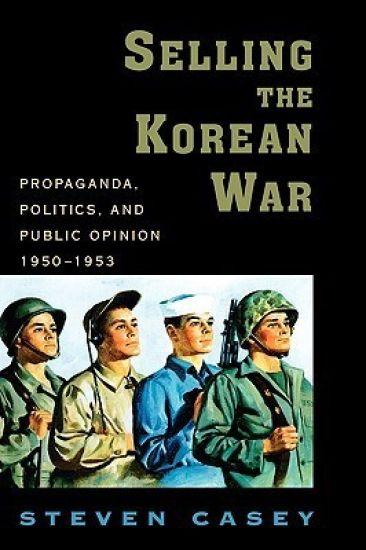
Selling the Korean War

Selling the Korean War

Steven Casey

Oxford University Press Inc
2008
sidottu
How presidents spark and sustain support for wars remains an enduring and significant problem. Korea was the first limited war the U.S. experienced in the contemporary period - the first recent war fought for something less than total victory. In Selling the Korean War, Steven Casey explores how President Truman and then Eisenhower tried to sell it to the American public. Based on a massive array of primary sources, Casey subtly explores the government's selling activities from all angles. He looks at the halting and sometimes chaotic efforts of Harry Truman and Dean Acheson, Dwight Eisenhower and John Foster Dulles. He examines the relationships that they and their subordinates developed with a host of other institutions, from Congress and the press to Hollywood and labor. And he assesses the complex and fraught interactions between the military and war correspondents in the battlefield theater itself. From high politics to bitter media spats, Casey guides the reader through the domestic debates of this messy, costly war. He highlights the actions and calculations of colorful figures, including Senators Robert Taft and Joseph McCarthy, and General Douglas MacArthur. He details how the culture and work routines of Congress and the media influenced political tactics and daily news stories. And he explores how different phases of the war threw up different problems - from the initial disasters in the summer of 1950 to the giddy prospects of victory in October 1950, from the massive defeats in the wake of China's massive intervention to the lengthy period of stalemate fighting in 1952 and 1953.
The Future of the Brain

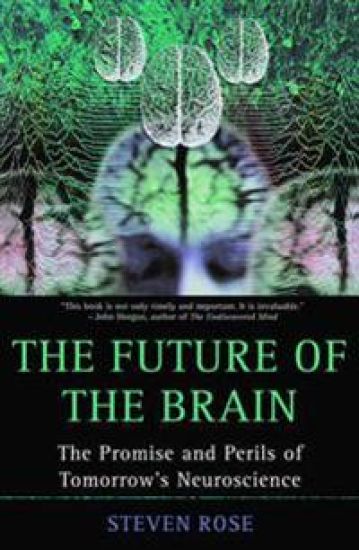
The Future of the Brain

Steven P. R. Rose

Oxford University Press Inc
2006
pokkari
Rose explores just how far neuroscience may help us understand the human brain - including consciousness - and to what extent cutting edge technologies should have the power to mend or manipulate the mind. Rose first offers a panoramic look at what we now know about the brain, from its three-billion-year evolution, to its astonishingly rapid development in the embryo, to the miraculous process of infant development (how a brain becomes a human). More importantly, he shows what all this science can - and cannot - tell us about the human condition.
Carry Me Back

Carry Me Back

Steven Deyle

Oxford University Press Inc
2006
nidottu
Originating with the birth of the nation itself, in many respects, the story of the domestic slave trade is also the story of the early United States. While an external traffic in slaves had always been present, following the American Revolution this was replaced by a far more vibrant internal trade. Most importantly, an interregional commerce in slaves developed that turned human property into one of the most valuable forms of investment in the country, second only to land. In fact, this form of property became so valuable that when threatened with its ultimate extinction in 1860, southern slave owners believed they had little alternative but to leave the Union. Therefore, while the interregional trade produced great wealth for many people, and the nation, it also helped to tear the country apart. The domestic slave trade likewise played a fundamental role in antebellum American society. Led by professional traders, who greatly resembled northern entrepreneurs, this traffic was a central component in the market revolution of the early nineteenth century. In addition, the development of an extensive local trade meant that the domestic trade, in all its configurations, was a prominent feature in southern life. Yet, this indispensable part of the slave system also raised many troubling questions. For those outside the South, it affected their impression of both the region and the new nation. For slaveholders, it proved to be the most difficult part of their institution to defend. And for those who found themselves commodities in this trade, it was something that needed to be resisted at all costs. Carry Me Back restores the domestic slave trade to the prominent place that it deserves in early American history, exposing the many complexities of southern slavery and antebellum American life.
Jewish Liturgical Reasoning

Jewish Liturgical Reasoning

Steven Kepnes

Oxford University Press Inc
2007
sidottu
Liturgy, a complex interweaving of word, text, song, and behavior is a central fixture of religious life in the Jewish tradition. It is unique in that it is performed and not merely thought. Because liturgy is performed by a specific group at a specific time and place it is mutable. Thus, liturgical reasoning is always new and understandings of liturgical practices are always evolving. Liturgy is neither preexisting nor static; it is discovered and revealed in every liturgical performance. Jewish Liturgical Reasoning is an attempt to articulate the internal patterns of philosophical, ethical, and theological reasoning that are at work in synagogue liturgies. This book discusses the relationship between internal Jewish liturgical reasoning and the variety of external philosophical and theological forms of reasoning that have been developed in modern and post liberal Jewish philosophy. Steven Kepnes argues that liturgical reasoning can reorient Jewish philosophy and provide it with new tools, new terms of discourse and analysis, and a new sensibility for the twenty-first century. The formal philosophical study of Jewish liturgy began with Moses Mendelssohn and the modern Jewish philosophers. Thus the book focuses, in its first chapters, on the liturgical reasoning of Moses Mendelssohn, Hermann Cohen, and Franz Rosenzweig. However, it attempts to augment and further develop the liturgical reasoning of these figures with methods of study from Hermeneutics, Semiotic theory, post liberal theology, anthropology and performance theory. These newer theories are enlisted to help form a contemporary liturgical reasoning that can respond to such events as the Holocaust, the establishment of the State of Israel, and interfaith dialogue between Jews, Christians, and Muslims.
Show Tunes

Show Tunes

Steven Suskin

Oxford University Press Inc
2010
sidottu
Show Tunes fully chronicles the shows, songs, and careers of the major composers of the American musical theatre, from Jerome Kern's earliest interpolations to the latest hits on Broadway. Legendary composers like Gershwin, Rodgers, Porter, Berlin, Bernstein, and Sondheim have been joined by more recent songwriters like Stephen Schwartz, Stephen Flaherty, Michael John LaChiusa, and Adam Guettel. This majestic reference book covers their work, their innovations, their successes, and their failures. Show Tunes is simply the most comprehensive volume of its kind ever produced, and this newly revised and updated edition discusses almost 1,000 shows and 9,000 show tunes. The book has been called "a concise skeleton key to the Broadway musical" (Variety) and "a ground-breaking reference work with a difference" (Show Music)-or, as the Washington Post observed, "It makes you sing and dance all over your memory." The eagerly anticipated Fourth Edition, updated through May, 2009, features the entire theatrical output of forty of Broadway's leading composers, in addition to a wide selection of work by other songwriters. The listings include essential production data and statistics, the most extensive information available on published and recorded songs, and lively commentary on the shows, songs, and diverse careers. Based on meticulous research, the book also uncovers dozens of lost musicals-including shows that either closed out of town or were never headed for Broadway-and catalogs hundreds of previously unknown songs, including a number of musical gems that have been misplaced, cut, or forgotten. Informative, insightful, and provocative, Show Tunes is an essential guide for anyone interested in the American musical.
Coping with Chronic Illness

Coping with Chronic Illness

Steven A. Safren; Jeffrey S. Gonzalez; Nafisseh Soroudi

Oxford University Press Inc
2007
nidottu
If you suffer from a chronic medical condition like cancer, HIV, diabetes, asthma, or hypertension, you know how hard it can be to perform all the self-care behaviours required of you, especially if you are also dealing with depression. Studies have shown that depressed individuls with chronic illness have a hard time keeping up with the behaviours necessary to manage their condition and improve their health. The program outlined in this workbook can help you take better care of yourself while simultaneously relieving your depression. Designed to be used in conjunction with visits to a qualified mental health professional, this workbook teaches you strategies for maintaining your medical regimen. You will learn how to set up a reminder system for taking medication, plan for getting to medical appointments on time, and how to communicate effectively with your medical providers. You will also learn how to follow the advice of your treatment providers, such as adhering to certain lifestyle and dietary recommendations. These Life-Steps are essential to the program. As you begin to take better care of yourself, you will notice a decrease in your depression. In addition to these self-care skills, you will also learn how to maximise your quality of life, which is another important part of lessening your depressed feelings. Begin to re-engage in pleasurable activities and utilise relaxation techniques and breathing exercises to help you cope with stress and discomfort. Use problem-solving to successfully deal with interpersonal or situational difficulties and change your negative thought through adaptive thinking. By treatment's end you will have all the skills you need to successfully manage your illness and cope with your depression.
Coping with Chronic Illness

Coping with Chronic Illness

Steven A. Safren; Jeffrey S. Gonzalez; Nafisseh Soroudi

Oxford University Press Inc
2007
nidottu
The treatment outlined in this therapist guide is intended for people suffering from depression and living with chronic illnesses. As a result of their poor health, many individuals who are chronically ill become depressed and fail to maintain steady self-care routines. Using this guide, therapists can help clients with chronic illnesses to develop core skills and tecniques that will enable them to take better care of themselves. The program incorporates a unique Life-Steps module that teaches clients strategies for keeping up with their medical regimens, including tips for remembering to take medications, getting to medical appointments on time, and communicating effectively with medical providers. Based on the principles of CBT, this guide provides therapists with overviews of adherence behaviours for select illnesses including cancer, HIV, diabetes, and hypertension, among others. The chapters detail adherence skills, integrated with cognitive and behavioural strategies for managing depression such as managing pleasurable activities, adaptive thinking, problem-solving, and relaxation training. The guide concludes with suggestions on how clients can manage their illnesses and avoid relapse into behaviours that worsen their medical condition.
Beyond Reduction

Beyond Reduction

Steven Horst

Oxford University Press Inc
2007
sidottu
Contemporary philosophers of mind tend to assume that the world of nature can be reduced to basic physics. Yet there are features of the mind consciousness, intentionality, normativity that do not seem to be reducible to physics or neuroscience. This explanatory gap between mind and brain has thus been a major cause of concern in recent philosophy of mind. Reductionists hold that, despite all appearances, the mind can be reduced to the brain. Eliminativists hold that it cannot, and that this implies that there is something illegitimate about the mentalistic vocabulary. Dualists hold that the mental is irreducible, and that this implies either a substance or a property dualism. Mysterian non-reductive physicalists hold that the mind is uniquely irreducible, perhaps due to some limitation of our self-understanding. In this book, Steven Horst argues that this whole conversation is based on assumptions left over from an outdated philosophy of science. While reductionism was part of the philosophical orthodoxy fifty years ago, it has been decisively rejected by philosophers of science over the past thirty years, and for good reason. True reductions are in fact exceedingly rare in the sciences, and the conviction that they were there to be found was an artifact of armchair assumptions of 17th century Rationalists and 20th century Logical Empiricists. The explanatory gaps between mind and brain are far from unique. In fact, in the sciences it is gaps all the way down.And if reductions are rare in even the physical sciences, there is little reason to expect them in the case of psychology. Horst argues that this calls for a complete re-thinking of the contemporary problematic in philosophy of mind. Reductionism, dualism, eliminativism and non-reductive materialism are each severely compromised by post-reductionist philosophy of science, and philosophy of mind is in need of a new paradigm. Horst suggests that such a paradigm might be found in Cognitive Pluralism: the view that human cognitive architecture constrains us to understand the world through a plurality of partial, idealized, and pragmatically-constrained models, each employing a particular representational system optimized for its own problem domain. Such an architecture can explain the disunities of knowledge, and is plausible on evolutionary grounds.
The Pact

The Pact

Steven M. Gillon

Oxford University Press Inc
2008
sidottu
Most Americans saw President Bill Clinton and Speaker Newt Gingrich as staunch foes--"the polar extremes of Pennsylvania Avenue." But as Steven Gillon reveals in The Pact, these powerful adversaries formed a secret alliance in 1997, a pact that would have rocked the political landscape, had it not foundered in the wake of the Lewinsky scandal. A fascinating look at politics American-style, The Pact offers a riveting account of two of America's most charismatic and influential leaders, detailing both their differences and their striking similarities, and highlighting the profound and lasting impact the tumultuous 1960s had on both their personal and political lives. With the cooperation of both President Clinton and Speaker Gingrich, interviews with key players who have never before spoken about their experiences, along with unprecedented access to Gingrich's private papers, Gillon not only offers a behind-the-scenes look at the budget impasse and the government shutdown in 1995 - the famous face-off between Clinton and Gingrich - but he also reveals how the two moved closer together after 1996 - closer than anyone knew. In particular, the book illuminates their secret efforts to abandon the liberal and conservative wings of their own parties and strike a bi-partisan deal to reform the "third rail of American politics"-Social Security and Medicare. That potentially groundbreaking effort was swept away by the highly charged reaction to the Lewinsky affair, ending an initiative that might have transformed millions of American lives. Packed with compelling new revelations about two of the most powerful and intriguing figures of our time, this book will be must reading for everyone interested in politics or current events.
From Sword to Shield

From Sword to Shield

Steven A. Bank

Oxford University Press Inc
2010
sidottu
The U.S. corporate income tax - and in particular the double taxation of corporate income - has long been one of the most criticized and stubbornly persistent aspects of the federal revenue system. Unlike in most other industrialized countries, corporate income is taxed twice, first at the entity level and again at the shareholder level when distributed as a dividend. The conventional wisdom has been that this double taxation was part of the system's original design over a century ago and has survived despite withering opposition from business interests. In both cases, history tells another tale. Double taxation as we know it today did not appear until several decades after the corporate income tax was first adopted. Moreover, it was embraced by corporate representatives at the outset and in subsequent years businesses have been far more ambivalent about its existence than is popularly assumed. From Sword to Shield: The Transformation of the Corporate Income Tax, 1861 to Present is the first historical account of the evolution of the corporate income tax in America. Professor Steven A. Bank explains the origins of corporate income tax and the political, economic, and social forces that transformed it from a sword against evasion of the individual income tax to a shield against government and shareholder interference with the management of corporate funds.
An Ornament for Jewels

An Ornament for Jewels

Steven P. Hopkins

Oxford University Press Inc
2007
sidottu
In this companion volume to Singing the Body of God (Oxford 2002), Steven P. Hopkins has translated into contemporary American English verse poems written by the South Indian Srivaisnava philosopher and saint-poet Venkatesa (c. 1268-1369). These poems, in three different languages - Sanskrit, Tamil, and Maharastri Prakrit -- composed for one particular Hindu god, Vishnu Devanayaka, the "Lord of Gods" at Tiruvahindrapuram, form a microcosm of the saint-poet's work. They encompass major themes of Venkatesa's devotional poetics, from the play of divine absence and presence in the world of religious emotions; the "telescoping" of time past and future in the eternal "present" of the poem; love, human vulnerability and the impassible perfected body of god; to the devotional experience of a "beauty that saves" and to what Hopkins terms the paradoxical coexistence of asymmetry and intimacy of lover and beloved at the heart of the divine-human encounter. Moreover, these poems form not only a thematic microcosm, but a linguistic one embracing all three of the poet's working languages. Like the remembered world of Proust's Combray in the taste of madeleine dipped in tea, or Blake's World in a Grain of Sand, we taste and see, in this one particular place, and in this one particular form of Vishnu, various protean forms and powers of the divine, and trace a veritable summa of theological, philosophical, and literary designs. Each translated poem forms a chapter in itself, has its own individual short Afterword, along with detailed linguistic and thematic notes and commentary. The volume concludes, for comparative reasons, with a translation of Tirumankaiyalvar's luminous cycle of verses for Devanayaka from the Periyatirumoli. As much an argument as an anthology, this book will be of interest to students and scholars of South Asian studies, comparative religion, and Indian literatures.
An Ornament for Jewels

An Ornament for Jewels

Steven P. Hopkins

Oxford University Press Inc
2007
nidottu
In this companion volume to Singing the Body of God (Oxford 2002), Steven P. Hopkins has translated into contemporary American English verse poems written by the South Indian Srivaisnava philosopher and saint-poet Venkatesa (c. 1268-1369). These poems, in three different languages - Sanskrit, Tamil, and Maharastri Prakrit -- composed for one particular Hindu god, Vishnu Devanayaka, the "Lord of Gods" at Tiruvahindrapuram, form a microcosm of the saint-poet's work. They encompass major themes of Venkatesa's devotional poetics, from the play of divine absence and presence in the world of religious emotions; the "telescoping" of time past and future in the eternal "present" of the poem; love, human vulnerability and the impassible perfected body of god; to the devotional experience of a "beauty that saves" and to what Hopkins terms the paradoxical coexistence of asymmetry and intimacy of lover and beloved at the heart of the divine-human encounter. Moreover, these poems form not only a thematic microcosm, but a linguistic one embracing all three of the poet's working languages. Like the remembered world of Proust's Combray in the taste of madeleine dipped in tea, or Blake's World in a Grain of Sand, we taste and see, in this one particular place, and in this one particular form of Vishnu, various protean forms and powers of the divine, and trace a veritable summa of theological, philosophical, and literary designs. Each translated poem forms a chapter in itself, has its own individual short Afterword, along with detailed linguistic and thematic notes and commentary. The volume concludes, for comparative reasons, with a translation of Tirumankaiyalvar's luminous cycle of verses for Devanayaka from the Periyatirumoli. As much an argument as an anthology, this book will be of interest to students and scholars of South Asian studies, comparative religion, and Indian literatures.
Zen Skin, Zen Marrow

Zen Skin, Zen Marrow

Steven Heine

Oxford University Press Inc
2008
sidottu
Since Zen Buddhism first captivated the attention of Western seekers the dominant discourse about this sect has been romantic, idealistic, and utopian. The essence of Zen has been described as ineffable, wholistic, and promoting social harmony. In recent years, however, some scholars have begun to examine Zen through the lenses of historical and cultural criticism, producing a sharp challenge to the traditional view. These clashing viewpoints are now entrenched in two warring camps, and their exponents talk past each other with virtually no constructive interaction. In this book, Steven Heine argues that a constructive compromise is possible. He focuses on three principal areas of disagreement: (1) the role of language and discourse in a tradition that claims to be 'outside words and letters,' yet has produced a voluminous body of texts, (2) the function of rituals and objects of worship to gain world benefit in a tradition supposedly founded on unmediated experience attained in an iconoclastic and ascetic environment, (3) the impact of a tradition that espouses peace and harmony on social issues such as class and gender discrimination and on nationalism and imperialism in Japan. Avoiding the stagnant polarization that characterizes most encounters between Zen traditionalists and their critics, he suggests ways in which these two perspectives can complement each other in a more balanced and nuanced alternative position.
Explaining Criminal Justice

Explaining Criminal Justice

Steven P. Lab; Marian Williams; Jefferson E. Holcomb; William R. King; Michael E. Buerger

Oxford University Press Inc
2007
nidottu
Written by Lab, Williams, Holcomb, King, and Buerger, Explaining Criminal Justice is the first brief survey text designed for students entering the field of criminal justice who lack a criminal justice background. This primer's helpful shorthand presentation will be useful to students in a variety of ways: * Defines key terminology and issues in an easily understood format. * Offers a basic understanding of the component parts of the criminal justice system and how they interrelate. * Provides coverage of all major issues--plus a realistic overview of the criminal justice system. Each chapter features a list of key terms, brief discussions of the important issues under each topic, discussions of emerging issues and concerns in the field, references for all key topics, a brief bibliography, and appropriate website listings.
Elements of Contract Interpretation

Elements of Contract Interpretation

Steven J. Burton

Oxford University Press Inc
2009
sidottu
This book describes and analyzes the law of contract interpretation in the United States, offering a strong guide for legal practitioners, judges, and scholars involved in contract law. Structured along two dimensions, Elements of Contract Interpretation first takes a look at the "elements" within contract interpretation. This includes the particular sources of evidence, the building blocks of interpretation that the courts recognize when interpreting contracts. Such examples include the governing contract terms; the circumstances when the contract is made; each party's purpose; usages; and the maxims of contract interpretation. The second dimension is three theories of contract interpretation - literalism, objective theory, and subjective theory. Each theory allows a court to recognize a different set of interpretive elements, and, in practice, how the law of different jurisdictions in the U.S. endorse one theory or another. Since some jurisdictions combine theories within a two- or three-step framework for analysis, this type of law makes this book a primary resource for both practitioners and academics.
Zen Masters

Zen Masters

Steven Heine; Dale Wright

Oxford University Press Inc
2010
nidottu
Extending their successful series of collections on Zen Buddhism, Heine and Wright present a fifth volume, on what may be the most important topic of all - Zen Masters. Following two volumes on Zen literature (Zen Classics and The Zen Canon) and two volumes on Zen practice (The Koan and Zen Ritual) they now propose a volume on the most significant product of the Zen tradition - the Zen masters who have made this kind of Buddhism the most renowned in the world by emphasizing the role of eminent spiritual leaders and their function in establishing centers, forging lineages, and creating literature and art. Zen masters in China, and later in Korea and Japan, were among the cultural leaders of their times. Stories about their comportment and powers circulated widely throughout East Asia. In this volume ten leading Zen scholars focus on the image of the Zen master as it has been projected over the last millennium by the classic literature of this tradition. Each chapter looks at a single prominent master. Authors assess the master's personality and charisma, his reported behavior and comportment, his relationships with teachers, rivals and disciplines, lines of transmission, primary teachings, the practices he emphasized, sayings and catch-phrases associated with him, his historical and social context, representations and icons, and enduring influences.
Lawyers' Poker

Lawyers' Poker

Steven Lubet

Oxford University Press Inc
2008
nidottu
Great poker players are master tacticians. Not only do they calculate odds with lightning speed and astonishing precision, but they also cunningly anticipate and manipulate the actions of their adversaries. In short, they boast skills that every lawyer can envy. This highly entertaining work might best be summed up as "better lawyering through poker." Steven Lubet shows exactly how the tactics of the poker table can be adapted to litigation, negotiation, and virtually every aspect of law practice. In a series of engaging and informative lessons, Lubet describes concepts like "betting for value," "slow playing," and "reverse bluffing," and explains how they can be used by lawyers to win their cases. The best card players, like the best lawyers, have a knack for getting their adversaries to react exactly as they want, and that talent separates the winners from the losers. Lawyers' Poker is an irresistible guide to successful lawyering and an enjoyable read for anyone with an interest in law. No poker knowledge required.
Graduate Review of Tonal Theory

Graduate Review of Tonal Theory

Steven G Laitz; Barlette Chris

Oxford University Press Inc
2009
sidottu
This text is the first graduate music theory review designed specifically to address the one-semester course for beginning graduate students in music. Based on The Complete Musician, the text is more than a shortened version of an undergraduate tonal harmony text; it addresses students as colleagues and explores analytical applications that are appealing and practical, extending beyond the undergraduate level. The text provides a means to discuss the perception and cognition, the analysis and performance, and the composition and reception of common-practice tonal music. The clarity and brevity of this text relies on the presentation of only those crucial concepts and procedures that are manifested in the vast majority of tonal pieces. The only text exercises are at chapter ends: two- to three-page "Analytical extensions," which introduce one new topic through one or two works from the repertoire, and then develop the topic in a model analysis. Appendixes will include keyboard exercises, model composition strategies and assignments, and sample solutions. An accompanying workbook is organized by chapter into discrete assignments, each progressing from short, introductory analytical and writing exercises to more-involved tasks. Included is a DVD of recordings by the Eastman students and faculty of musical examples from the text and analytical exercises from the workbook.
Student Workbook to Accompany Graduate Review of Tonal Theory

Student Workbook to Accompany Graduate Review of Tonal Theory

Steven G Laitz; Bartlette Chris

Oxford University Press Inc
2009
nidottu
This student workbook accompanies Graduate Review of Tonal Theory: A Recasting of Common-Practice Harmony, Form, and Counterpoint. The exercises are organized by chapter into 61 discrete assignments, each progressing from short, introductory analytical and writing exercises to more-involved tasks. This volume also features additional keyboard exercises for 12 chapters. The student workbook is enhanced by a DVD of recordings by the Eastman students and faculty of musical examples from the text and analytical exercises within.