
Kirjahaku
Etsi kirjoja tekijän nimen, kirjan nimen tai ISBN:n perusteella.
1000 tulosta hakusanalla Stuart Croft

From John Stuart Mill To William James
Hutson Street Press
2025
sidottu
From John Stuart Mill To William James
Hutson Street Press
2025
pokkari
A Reply to John Stuart Mill on The Subjection of Women
Hutson Street Press
2025
sidottu
A Reply to John Stuart Mill on The Subjection of Women
Hutson Street Press
2025
pokkari

Originally published in 1971, this book gives the real substance of Scotland at the time of Mary Queen of Scots. It describes in extensive and colourful detail the way people of all ranks of society lived, their homes, their food and amusements, the ways they earned their living, cared for the sick and punished offenders. Family life, religion, the structure and activities of the clans and the state of the arts are all discussed. The book gives a true picture of a disturbed and remote country in the sixteenth century – a picture of contrasts and contradictions, as Scotland at that time was a country in transition between the medievalism of the Roman Catholic Church and the new Scotland with a rising merchant class.

Originally published in 1971, this book gives the real substance of Scotland at the time of Mary Queen of Scots. It describes in extensive and colourful detail the way people of all ranks of society lived, their homes, their food and amusements, the ways they earned their living, cared for the sick and punished offenders. Family life, religion, the structure and activities of the clans and the state of the arts are all discussed. The book gives a true picture of a disturbed and remote country in the sixteenth century – a picture of contrasts and contradictions, as Scotland at that time was a country in transition between the medievalism of the Roman Catholic Church and the new Scotland with a rising merchant class.

First published in 1934, Late Tudor and Early Stuart Geography is a critical commentary on a chronologically arranged bibliography of nearly two thousand contemporary printed and manuscript works. Poets, preachers and philosophers, mathematicians, physicians and astrologers, sailors, merchants and company-promoters were contributors to the absorbing medley that comprises the geographical literature of the late Tudor and early Stuart period. For this was the fading twilight of that Golden Age of unspecialized learning when all knowledge lay within one man’s compass. This book will be of interest to historians, economists, sociologists and litterateurs.

First published in 1934, Late Tudor and Early Stuart Geography is a critical commentary on a chronologically arranged bibliography of nearly two thousand contemporary printed and manuscript works. Poets, preachers and philosophers, mathematicians, physicians and astrologers, sailors, merchants and company-promoters were contributors to the absorbing medley that comprises the geographical literature of the late Tudor and early Stuart period. For this was the fading twilight of that Golden Age of unspecialized learning when all knowledge lay within one man’s compass. This book will be of interest to historians, economists, sociologists and litterateurs.

Infanticide in Tudor and Stuart England explores one of society's darkest crimes using archival sources and discussing its representation in the drama, pamphlets and broadside ballads of the early modern period. It takes the reader on a journey through the streets and taverns where street literature was hawked, to the playhouses where the crime was dramatized, and the courts where it was tried and punished. Using a regional microstudy of coroners' inquests and churchwardens' presentments, coupled with theories of liminality, marginality and rites of passage, it reveals complex and contradictory attitudes to infants, women and the crime. As well as considering unwed women, the most common perpetrators of infanticide, the study shows that married women, men and the local community were also culpable, and the many reasons for this. Infanticide in Tudor and Stuart England is set in its European and historical contexts, revealing surprising continuities across time.




Tudor And Stuart Love Songs (1902)
KESSINGER PUBLISHING, LLC
2009
pokkari

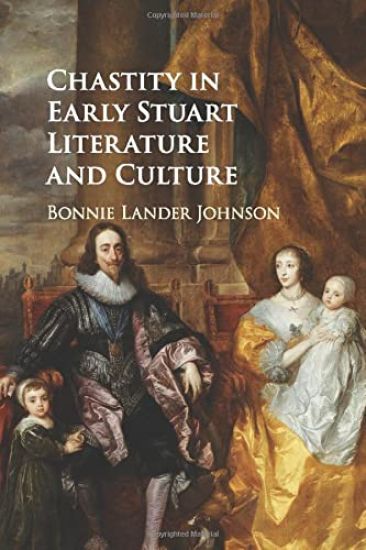
Chastity in Early Stuart Literature and Culture
Bonnie Lander Johnson
Cambridge University Press
2015
sidottu
In this book, Bonnie Lander Johnson explores early modern ideas of chastity, demonstrating how crucial early Stuart thinking on chastity was to political, medical, theological and moral debates, and that it was also a virtue that governed the construction of different literary genres. Drawing on a range of materials, from prose to theatre, theological controversy to legal trials, and court ceremonies - including royal birthing rituals - Lander Johnson unearths previously unrecognised opinions about chastity. She reveals that early Stuart theatrical and court ceremonies were part of the same political debate as prose pamphlets and religious sermons. The volume also offers new readings of Milton's Comus, Shakespeare's The Winter's Tale, Henrietta Maria's queenship and John Ford's plays. It will appeal to scholars of early modern literature, theatre, political, medical and cultural history, and gender studies.
Chastity in Early Stuart Literature and Culture
Bonnie Lander Johnson
Cambridge University Press
2017
pokkari
In this book, Bonnie Lander Johnson explores early modern ideas of chastity, demonstrating how crucial early Stuart thinking on chastity was to political, medical, theological and moral debates, and that it was also a virtue that governed the construction of different literary genres. Drawing on a range of materials, from prose to theatre, theological controversy to legal trials, and court ceremonies - including royal birthing rituals - Lander Johnson unearths previously unrecognised opinions about chastity. She reveals that early Stuart theatrical and court ceremonies were part of the same political debate as prose pamphlets and religious sermons. The volume also offers new readings of Milton's Comus, Shakespeare's The Winter's Tale, Henrietta Maria's queenship and John Ford's plays. It will appeal to scholars of early modern literature, theatre, political, medical and cultural history, and gender studies.
The Journals of John McDouall Stuart during the Years 1858, 1859, 1860, 1861, and 1862
John McDouall Stuart
Cambridge University Press
2011
pokkari
John McDouall Stuart (1815–66) was a surveyor and a pioneering explorer of Australia. Born in Scotland, he emigrated in 1839 to Australia where he worked in surveying and made many expeditions into the outback. The treks he undertook from 1858 to 1862 are the focus of this account, published in 1864, and are compiled from Stuart's notes by William Hardman (1828–90). During these periods of exploration he managed - though suffering from scurvy - to cross the continent, and he also discovered various rivers and geographical features. Hardman's account uses Stuart's journals to give an account of six historic and often gruelling expeditions. The first was to the north-west; the following two were explorations around Lake Torrens; the fourth was an attempt to find the centre of the territory; a fifth involved a forced retreat after an aboriginal attack; and in the final one Stuart traversed the continent.
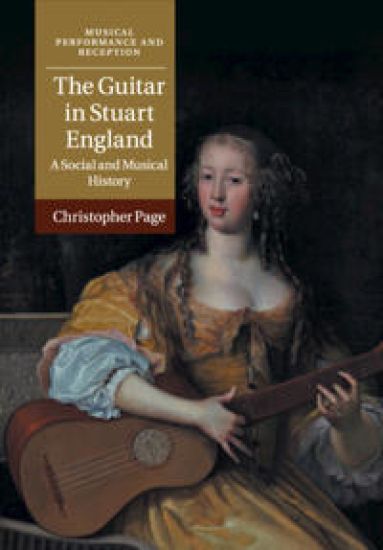
This is the first history of the guitar during the reign of the Stuarts, a time of great political and social upheaval in England. In this engaging and original volume, Christopher Page gathers a rich array of portraits, literary works and other, previously unpublished, archival materials in order to create a comprehensive picture of the guitar from its early appearances in Jacobean records, through its heyday at the Restoration court in Whitehall, to its decline in the first decades of the eighteenth century. The book explores the passion of Charles II himself for the guitar, and that of Samuel Pepys, who commissioned the largest repertoire of guitar-accompanied song to survive from baroque Europe. Written in Page's characteristically approachable style, this volume will appeal to general readers as well as to music historians and guitar specialists.
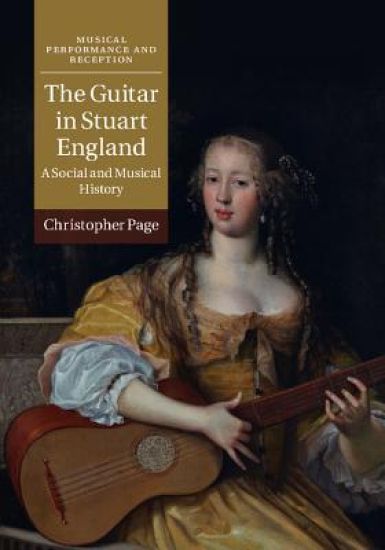
This is the first history of the guitar during the reign of the Stuarts, a time of great political and social upheaval in England. In this engaging and original volume, Christopher Page gathers a rich array of portraits, literary works and other, previously unpublished, archival materials in order to create a comprehensive picture of the guitar from its early appearances in Jacobean records, through its heyday at the Restoration court in Whitehall, to its decline in the first decades of the eighteenth century. The book explores the passion of Charles II himself for the guitar, and that of Samuel Pepys, who commissioned the largest repertoire of guitar-accompanied song to survive from baroque Europe. Written in Page's characteristically approachable style, this volume will appeal to general readers as well as to music historians and guitar specialists.