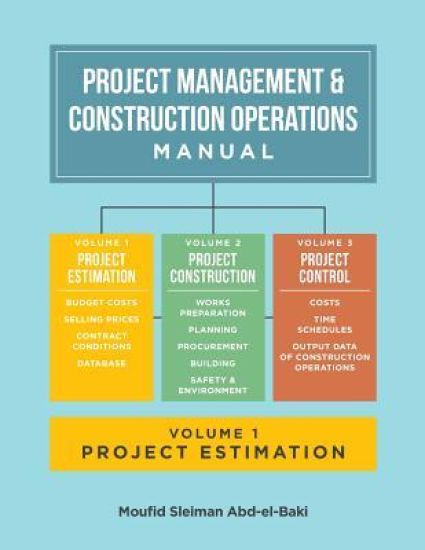
From its conception, a construction project is a magnet for organizational miscommunication, labor shortages, budgetary woes, improper planning, and a plethora of other problems that delay-or even prevent-completion. To succeed, the project manager needs a set of efficient systems and methods in place to minimize any unexpected difficulties.Moufid Abd-el-Baki has spent forty-seven years in the construction industry, bringing projects as diverse as airports, hospitals, cement factories, grain silos, petro-chemical projects, and high-rise buildings to successful completion. The Project Management & Construction Operations Manual encapsulates Abd-el-Baki's extensive experience in a handy, three-volume format.In this first volume, Abd-el-Baki covers the challenges surrounding project estimation, the first phase in any construction project. He moves from estimating costs and selling prices to tender drawings, time schedules, contracts, and labor issues, supporting his efficient methodology with helpful exercises, templates, and charts. Possible difficulties are carefully explained and evaluated, and effective solutions are provided to resolve such issues.Project estimation is a complex field, one that must be carefully navigated to avoid issues later on. Abd-el-Baki offers a no-nonsense approach to this most important step in the project management process.
This concise and accessible essay offers a fresh perspective that acknowledges the empowering role religion can play in a woman's life, while exploring meaningful ways to reconcile gender equality with freedom of religion. Dania skillfully weaves together legal analysis, feminist theology and sociological studies and analyses legal challenges in terms of the necessary balance between protecting women's rights and religious freedom. She draws on the work of postcolonial feminist theologians who explore how religious texts have been reinterpreted to be more inclusive of women. She shows the positive impact of faith-based communities within western societies, especially the social integration of immigrant communities that fight biases and prejudices against religious minorities and religious women. Originally published in French by ditions du Remue-Menage.
Exploring China's transition to a socialist market economy, this book finds that the recent Chinese experience is unique and unprecedented. It seems plausible that the distinctive characteristics of China's market reform have been a result of correcting the big bang approach of Eastern European countries and unique conditions that China possesses. For instance, China is endowed with a relatively high level of skilled labor and a large workforce. Moreover, China has been experimenting with reform and profit-sharing for a number of years, especially in the coastal provinces.This book juxtaposes native Chinese experiences with those of academics in the U.S. It integrates the ideas of those living the experience in China with the perceptions of outside observers who might be able to offer constructive criticism. The book covers various topics, such as macroeconomic policy, reform within economic sectors, and strategies for sustainable development, while making sure that the reader will not find it difficult to follow the process of reform and the main impediments that China may face.
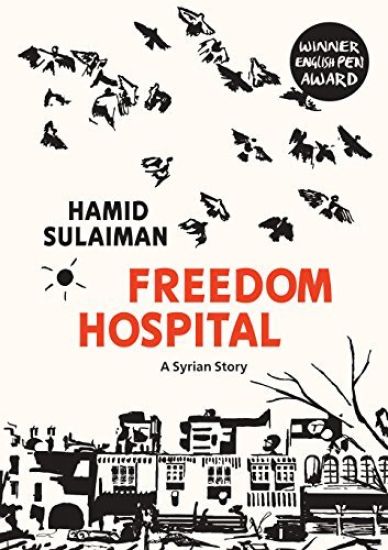
JOE SACCO MEETS PERSEPOLIS IN THIS GRAPHIC NOVEL FROM A NEW INTERNATIONAL TALENT, HAMID SULAIMAN--WINNER ENGLISH PEN AWARD---It is spring 2012 and 40,000 people have died since the start of the Syrian Arab Spring. In the wake of this, Yasmine has set up a clandestine hospital in the north of the country. Her town is controlled by Assad's brutal regime, but is relatively stable. However, as the months pass, the situation becomes increasingly complex and violent. Told in stark, beautiful black-and-white imagery, Freedom Hospital illuminates a complicated situation with gut-wrenching detail and very dark humor. The story of Syria is one of the most devastating narratives of our age and Freedom Hospital is an important and timely book from a new international talent.
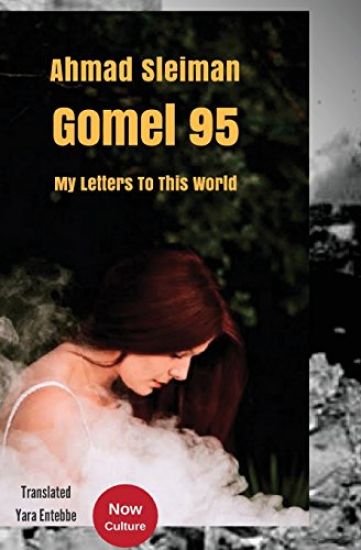
T HEY NAMED ME Ahmed. It indicates a clear trend. I realized that when the Mufti slapped me because I wanted to change it. O' great-grandfather, I think I'm your grandson. I was a child named Orhan, then Amjad. There is a mistake in your records. Ahmed who is on the ID is four years younger than I I am a mistake in the State's records; my age is just on a card, my health is getting worse, and my father only remembered my real name one Eid morning in a cemetery and I forgot how my shape used to look like. I'm still wearing the political suspicion. And I still remember my father's features when the family said its last farewells to him. At that time, the illusions of parties and our furious anger pushed us violently. My father and I left, but he left before me. His destination though is different. He remains in his tomb while I destroy myself regularly as if I'm building my own tomb. I leave my pictures and newspaper clippings with my two little ones. I left them while they needed me more than anything in the world. I asked my father before his departure: "In what way do you pray?" The storyteller is more silent than I. He didn't conceal his support when I asked about the feasibility of a cultural project that is surging in this golden age. I didn't find convincing answers, so as usual, I rave when I see no authority bearing the moods and tendencies of poets in this vast world; its vastness is not enough for angels of language and mercury that wear sanctity and knowledge. Another truth, nay, truths wrapped in hazy memory like the woman who never learned to utter my name. She left but her question keeps murdering me every moment; the question that led me to read the world and those whom I love again. Trotsky was my grandfather. He doesn't know me but I'm his clone. Thus, like many of my fellow countrymen, I carried life on my shoulder. I conceal some protest memoranda among my school books. Little did my father ask me about the purpose of those papers. I read them with utmost sincerity while life took a different direction. Alone, one woman was leading us to the light, coming out of book pages to our consciousness which resembles the revolution dream. There wasn't a reason for women to do our tasks. But they are women; they think of speeches and statements that pierce the dreams of yesterday's children, for they no longer look like us. We were all busy talking about the searing revolution as if it were going to outbreak. All of us were following the woman who would lead us to the light. We were in a blind world thinking of the other, hating lazy leaders. That woman resembles us. We stand behind her as a perpetual symbol. Her name is Rosa Luxemburg. We were the ones who hated the leaders. They put in their eyes more than a veil as Federico Garcia pointed out in a sentence read by the governor of Granada from a newspaper clipping that Funisca, the mastermind of the murder of Lorca, found. We loved Lorca for his transparent language. We also differ with a man who made his mustache the enigma of the speedy age. This man is Salvador Dali. He only signed the works of students who imitated his work. He alone agreed with Federico Lorca and stabbed his senses in one of his letters that put an end to a relationship based on knowledge and art in a culture palace. As usual, under the pretext of jealousy that some of Pablo Neruda and Nazim Hikmet poems require, and some writings about the renewable revolution and the conflicts of Trotsky with the Kremlin leaders. We never grew tired of this news. They are also about the magic that Andr Breton's view of Surrealism enchants. We haven't read Iloar and Arthur Rambo and Aragon because there was something pulling us to revolution poems until the revolution died in us, and the dream remained a symbol of hope and another revolution.
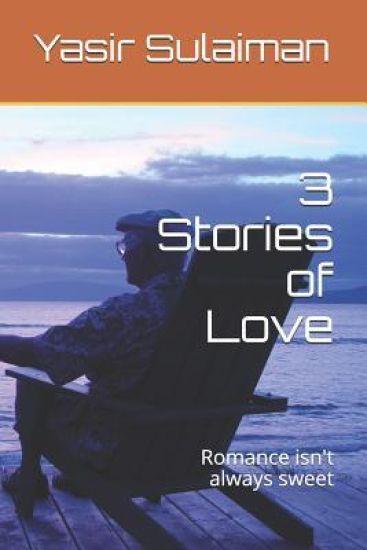
Love or a romantic relationship between a man and a woman is not only what you see in movies. It has different versions or shades. Not everything is perfect and neither is life. Read 3 different stories of different people in different parts of India. All of them fall in love; but how, when and why differs from one another. It is time you ignore the old "prince charming and beautiful princess stories." In reality, love isn't always that sweet: Based on true life stories.
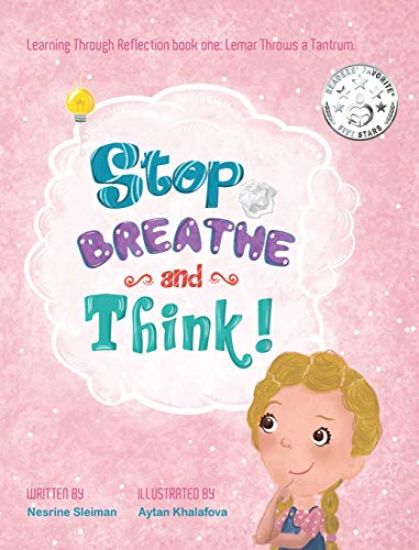
Children's anxiety, fear, and anger are all part of their emotional growth. Our job as teachers, parents, and caregivers is to help them reach their growth milestones safely and lovingly. This book summarizes a strategy often used in preschool settings. When children learn how to regulate their emotions and solve their problems via verbal communication, temper tantrum will become history.Stop Breath and Think, is aimed at preschool kids as they develop their social skills. It is a book about strong emotions and feelings. This book, tells the kids how Lemar was able to overcome her strong emotion of anger and disappointment and becomes happy once again.
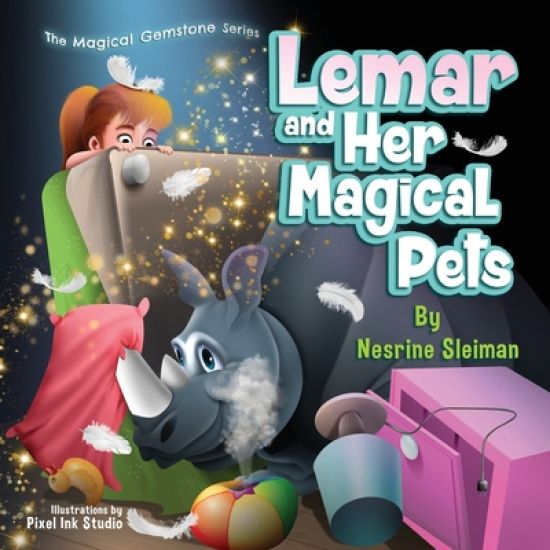
Join Lemar on a magical adventure in 'Lemar and her Magical Pets.' Follow along as Lemar discovers a mysterious gem that grants her the power to make her birthday pet wishes come true. From hamsters to dart frogs, camels to monkeys, and even a surprise appearance by an iguana, Lemar's journey is filled with excitement and laughter. Will she find her perfect pet? Find out in this whimsical children's story that teaches the importance of responsibility and the joy of imagination. Perfect for young readers who love animals and enchanting tales. Get your copy of 'Lemar and her Magical Pets' today and let your imagination soar In essence, this children book is all about: Magical adventureBirthday wishesImagination and creativityResponsibility and hard workWhimsical storytellingAnimal companions
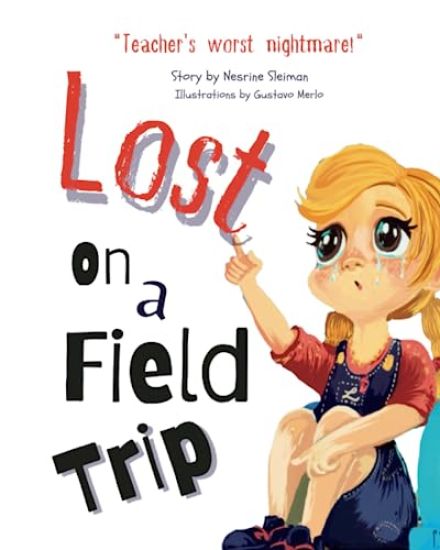
Lost on a Field: A Fun and Educational Storybook for Kids on Safety and Following Rules.Explore the wonders of the aquarium while learning the importance of following rules. Discover the world of sea creatures with Lemar and her classmates in this small story book for kids. Lemar, a curious and adventurous young girl, is excited for her preschool's field trip to the aquarium. However, as she becomes captivated by the animals, she forgets to stick with her group and gets lost.Join Lemar as she learns valuable lessons about the importance of following rules and staying with a group during field tripsExplore the aquarium and discover different sea creatures like sharks, jellyfish, and starfishSee how Lemar uses her resources and quick thinking to stay safe and be reunited with her classmates.Learn about the importance of staying safe around strangers and not talking to them without permissionSee how Lemar's actions have consequences and how her teacher and classmates react when she gets lostThis story is perfect for children who love adventures and learning about sea creatures.The lesson of the book "Lost on a Field Trip" is that it is important to follow safety rules and to always stay with a teacher or trusted adult, especially when in unfamiliar places or around strangers. It also teaches the importance of being aware of one's surroundings and not getting too caught up in exploring or having fun, as it can lead to getting lost or being in danger. The book also highlights the importance of being able to stay calm in a potentially dangerous situation, and using resources to signal for help.Through this fun and engaging story, children will not only learn about different sea creatures but also understand the importance of following rules and staying with a group. It will help them to think about safety and how to react in case of emergency.Add this moral story book to your child's library today and help them learn valuable lessons while exploring the wonders of the sea.
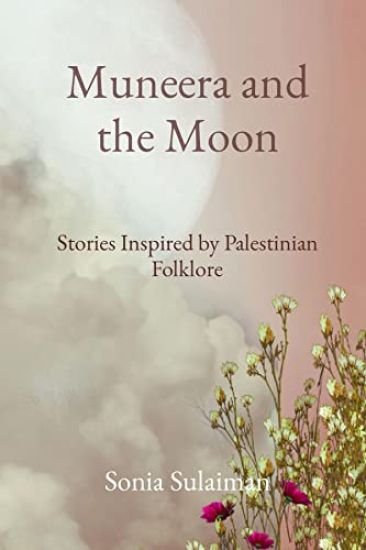
There was...and there was not.In these stories inspired by Palestinian folklore, a daughter of darkness, a djinn, pours out her soul to the moon. Time travelers discover that the battle of Meggido was not quite what they expected. A prince meets his soulmate in the storyteller who can tell stories that are nothing but lies.
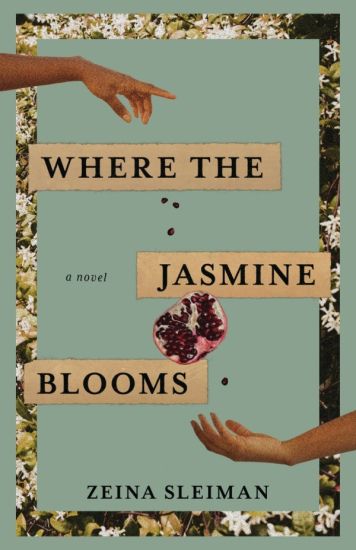
Yasmine enters Lebanon escaping a messy divorce and seeking the family, culture, and connection that her Palestinian mother hid during their life in Toronto. It's 2006, and she's meeting her cousin Reem for the first time after connecting over social media. Reem teaches Arabic and lives in a refugee camp with her mother and sister. Her brother Ahmed lived there too until he went to Syria for work and then disappeared. When Yasmine receives a package of mysterious letters suggesting her father might still be alive, the cousins embark on a discovery of political secrets no one in the family wants them to know. Complicating her questions about identity, belonging, and healing even further, Yasmine runs into Ziyad — an old flame who's incidentally taking Reem's class. Though the cousins' lives could not be more different, Yasmine and Reem must learn from each other as they navigate abusive relationships, grief, displacement, and war. Set amid the arid glamour of Lebanon's beaches and urban landscapes, Where the Jasmine Blooms is at once a political historical thriller and a Muslim feminist love story. Turn-of-the-century Arab politics feature prominently, echoing loudly even twenty years later.
This scholarly work, The African Caliphate, focuses on the establishment in 1809, in what is today Northern Nigeria, of the celebrated Sokoto caliphate, which may well have been the last complete re-establishment, anywhere in the world, of Islam in its entirety, comprising all its many and varied dimensions. As well as giving the biography of the Shehu and a comprehensive account of the history of his movement, the book also provides an in-depth examination of his teaching and literary works. These factors are all inextricably interwoven since, in a way scarcely equalled by any other historical figure, the Shehu's writings sprang directly out of the exigencies and requirements of his immediate situation and were what drove his movement forward and gave it its momentum. As will be seen, his sole inspiration and source of guidance in every instance were the Book of Allah and the Sunnah of His Messenger # to such a point that he even died at exactly the same age. It is also astonishing how relevant the Shehu's teachings are, in spite of the clear difference in both time and environment, to the situation of so many Muslims in the world today and the solution to many of the problems currently besetting Islam are clearly indicated within its pages.17 x 23 cm. 326 pagesMalam Ibraheem SulaimanThe author teaches law at Ahmadu Bello University, Zaria, Nigeria, and is a research fellow at the University's centre for Islamic legal studies, where he was the director for a decade. He has attended seminars and conferences in many different countries and presented papers on islam, shari'a and political affairs.
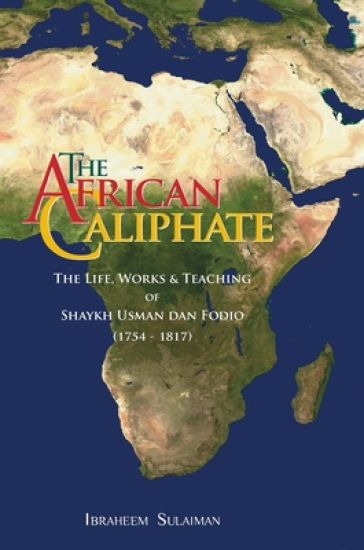
This scholarly work, The African Caliphate, focuses on the establishment in 1809, in what is today Northern Nigeria, of the celebrated Sokoto caliphate, which may well have been the last complete re-establishment, anywhere in the world, of Islam in its entirety, comprising all its many and varied dimensions. As well as giving the biography of the Shehu and a comprehensive account of the history of his movement, the book also provides an in-depth examination of his teaching and literary works. These factors are all inextricably interwoven since, in a way scarcely equalled by any other historical figure, the Shehu's writings sprang directly out of the exigencies and requirements of his immediate situation and were what drove his movement forward and gave it its momentum. As will be seen, his sole inspiration and source of guidance in every instance were the Book of Allah and the Sunnah of His Messenger # to such a point that he even died at exactly the same age. It is also astonishing how relevant the Shehu's teachings are, in spite of the clear difference in both time and environment, to the situation of so many Muslims in the world today and the solution to many of the problems currently besetting Islam are clearly indicated within its pages.17 x 23 cm. 326 pagesMalam Ibraheem SulaimanThe author teaches law at Ahmadu Bello University, Zaria, Nigeria, and is a research fellow at the University's centre for Islamic legal studies, where he was the director for a decade. He has attended seminars and conferences in many different countries and presented papers on islam, shari'a and political affairs.
Huntington's Disease (HD) is a hereditary illness passed on via a defective gene. There is a fifty per cent chance of inheriting it from a parent and there is yet no cure. Learning to Live with Huntington's Disease is one family's poignant story of coping with the symptoms, the diagnosis and the effects of HD.This book presents the struggles and strengths of the whole family when one member loses their future to a terminal illness. Told by the sufferer and other significant family members, the individuals describe the burden of watching yourself and others for symptoms of HD, including involuntary movements, depression, clumsiness, weight loss, slurred speech and sometimes violent tendencies. The family recounts the challenge to remain united and describes how they approached issues such as whether or not to be tested for HD, how much information to disclose to relatives, whether to have children or not and guilt if one sibling inherits the illness and one does not. Both honest and positive, the author stresses the importance of re-inventing yourself and your present, prioritising relationships and retaining a sense of humour.
It is spring 2012 and 40,000 people have died since the start of the Syrian Arab Spring. In the wake of this, Yasmine has set up a clandestine hospital in the north of the country. The town that she lives in is controlled by Assad's brutal regime, but is relatively stable. This story of Syria illuminates a complicated situation in detail.
Continuing the story of the Sokoto caliphate after the death of Shehu Usman, The African Caliphate 2 charts the political and intellectual development of a strong Islamic government covering: * Theory of Government* Leaders, laws snd key political institutions* Justice, social morality, public welfare and defence * Principles of statecraft* Place of war in the creation and consolidation of a state* The people, their religious commitment and family obligations* Role of women in the Islamic communityThe Sokoto Caliphate of West Africa exemplifies such a state during its development. Emerging from a city-state in the early nineteenth century. By the time the British took over in 1903 it encompassed an area nearly twice the size of the present-day United Kingdom. The author examines the work and lives of Muhammed Bello, the architect of the Caliphate, and other leaders. He judges West Africa's encounters with the West - with Mungo Park, Major Dixon Denham, Commander Hugh Clapperton and Dr. Walter Oudney - and decries the plunder of Africa's human and natural resources.With the establishment of Nigeria in 1914 and the British withdrawal in 1960, the author looks toward the regeneration of the Islamic state in West Africa.This book is for historians of Africa snd Islam and for those studying the development of government in all its contexts - political, social, intellectual and moral. For African and Black Studies programmes, The Islamic Caliphate 2 is essential.14.8 x 21 cm. 230 pagesMalam Ibraheem SulaimanThe author is a research fellow with the Centre for Islamic Legal Studies, Ahmadu Bello University, Zaria, Nigeria