Kirjojen hintavertailu. Mukana 11 244 527 kirjaa ja 12 kauppaa.

Kirjahaku

Etsi kirjoja tekijän nimen, kirjan nimen tai ISBN:n perusteella.

1000 tulosta hakusanalla Tony Rushforth

International Social Work Research

International Social Work Research

Tony Tripodi; Miriam Potocky-Tripodi

Oxford University Press Inc
2006
nidottu
With the constant exchange of international information now a permanent condition in the world, social work scholars and students must be sensitive to the need for knowledge sharing between countries as well as to issues involved in obtaining and utilising international knowledge. Yet until now, no book has juxtaposed these two growing streams of emphasis. In this clearly written volume, Tony Tripodi and Miriam Potocky-Tripodi fill that gap, presenting readers with the many prospects and great potential for international social work research. The authors establish three discrete varieties of research supra-national, intra-national, and trans-national and explore a wealth of issues and examples within each. The easy-to-follow format helps readers learn how to define and distinguish each kind of research, then provides actual applications of all three. Examples draw on research from the world over, and range from microcredit programs in India to migrant aid in Nicaragua to adoptees in Romania. These unique features make it an ideal sequel to basic research texts in social work and supplement to texts on international social work, but also an attractive addition to any faculty researchers bookshelf.
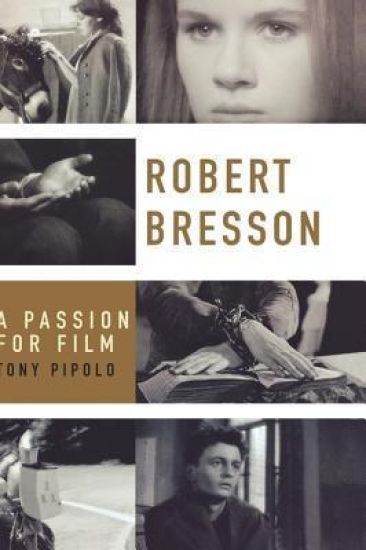
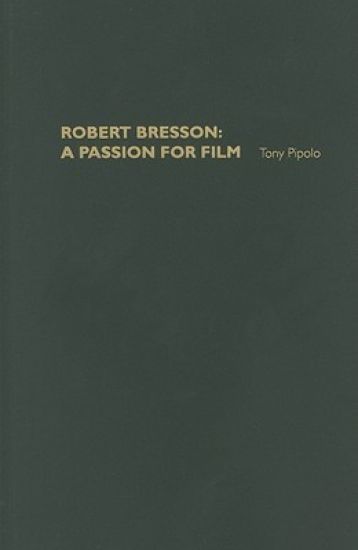
Robert Bresson

Robert Bresson

Tony Pipolo

Oxford University Press Inc
2010
nidottu
The films of the late French filmmaker Robert Bresson, once thought formidable both because of the somberness of their subject matter and the austerity of the filmmaker's style, have in the last decade found a new audience. In part, this is owing to the rarely acknowledged but profound influence his style has had on later filmmakers-from Chantal Akerman to Michael Haeneke. This book looks at Bresson's body of work not only by coming to terms with its thematic preoccupations and the development of its unique authorial style, but also in terms of the ouvre's seminal place in the history of film. The filmic rhetoric that Bresson pursued was nothing less than an effort to create an exemplary form of film narrative, throwing off the conventions of the theater and acting that still dominate mainstream filmmaking. In this respect, Bresson's films are no less ground-breaking than those of D.W. Griffith and Sergei Eisenstein. In addition, while few who have written about Bresson would deny the highly personal and idiosyncratic nature of his work, its autobiographical dimension has never been fully explored. This constitutes a rich vein for investigation and the films-in both their subject matter and style-mirror and trace the aesthetic and psychological dispositions of the filmmaker. What one discovers in these explorations is a deeper relationship between the filmmaker and his literary models-especially the novelists Georges Bernanos and Fyodor Dostoevsky. With both, he also shares convictions about the ¨fallen¨ nature of humanity, an attitude of mourning for the loss of childhood innocence, a strong preoccupation with Christian theology, and the role evil and sexuality play in our lives. In this book Bresson's sources, style, and biography are explored via a chronological investigation of his films, yielding a dense analysis worthy of this master filmmaker.
Robert Bresson

Robert Bresson

Tony Pipolo

Oxford University Press Inc
2010
sidottu
The films of the late French filmmaker Robert Bresson, once thought formidable both because of the somberness of their subject matter and the austerity of the filmmaker's style, have in the last decade found a new audience. In part, this is owing to the rarely acknowledged but profound influence his style has had on later filmmakers-from Chantal Akerman to Michael Haeneke. This book looks at Bresson's body of work not only by coming to terms with its thematic preoccupations and the development of its unique authorial style, but also in terms of the ouvre's seminal place in the history of film. The filmic rhetoric that Bresson pursued was nothing less than an effort to create an exemplary form of film narrative, throwing off the conventions of the theater and acting that still dominate mainstream filmmaking. In this respect, Bresson's films are no less ground-breaking than those of D.W. Griffith and Sergei Eisenstein. In addition, while few who have written about Bresson would deny the highly personal and idiosyncratic nature of his work, its autobiographical dimension has never been fully explored. This constitutes a rich vein for investigation and the films-in both their subject matter and style-mirror and trace the aesthetic and psychological dispositions of the filmmaker. What one discovers in these explorations is a deeper relationship between the filmmaker and his literary models-especially the novelists Georges Bernanos and Fyodor Dostoevsky. With both, he also shares convictions about the ¨fallen¨ nature of humanity, an attitude of mourning for the loss of childhood innocence, a strong preoccupation with Christian theology, and the role evil and sexuality play in our lives. In this book Bresson's sources, style, and biography are explored via a chronological investigation of his films, yielding a dense analysis worthy of this master filmmaker.
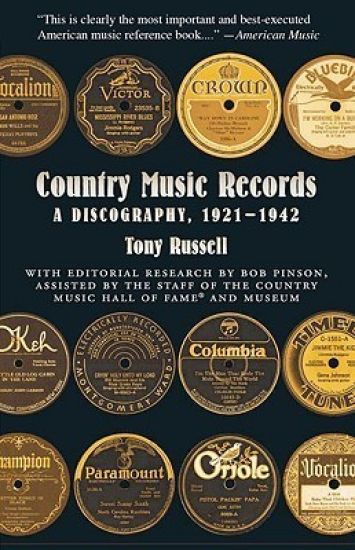
Country Music Records

Country Music Records

Tony Russell

Oxford University Press Inc
2008
nidottu
More than twenty years in the making, Country Music Records: A Discography, 1921-1942 documents all country music recording sessions from 1921 through 1942. Until now, discographies of pre-World War II country music recordings were only to be found scattered in journals and fanzines, or in books devoted to single artists. With primary research based on files and session logs from record companies, interviews with surviving musicians, as well as the 200,000 recordings archived at the Country Music Hall of Fame and Museum's Frist Library and Archives, this notable work is the first compendium to accurately report the key details behind all the recording sessions of country music during the pre-World War II era. In doing so it tells the commercial story of the music's first two decades. From the first recordings of country music, this discography documents--in alphabetical order by artist--every commercial country music recording, including unreleased sides, and indicates, as completely as possible, the musicians playing at every session, as well as instrumentation. This massive undertaking encompasses 2,500 artists, 5,000 session musicians, and 10,000 songs. An introduction explains how to use the book, research methodology, and editorial policy; summary histories of each key record company are also provided, along with a bibliography. The discography includes indexes to all song titles and musicians listed.
Stockholm: A Cultural History

Stockholm: A Cultural History

Tony Griffiths

Oxford University Press
2009
nidottu
Situated on one of the world's most beautiful harbors, Stockholm has set the benchmark for civilized urban living since the time of the Vikings. Tony Griffiths reveals a city of power, intrigue, and murder; of scientists and investors; and a sensual city, home of Greta Garbo and the sm rg sbord. Its medieval period saw the Vasa dynasty turn a small town into the capital of a dominant European power and a major trading port. In the Napoleonic era, Stockholm established itself as a center of both technical and social innovation. While the city has suffered more than its fair share of misfortune, Stockholm's cultural and commercial elite transformed it into a community which now welcomes innovation and spreads the fruits of its achievements far beyond its borders.
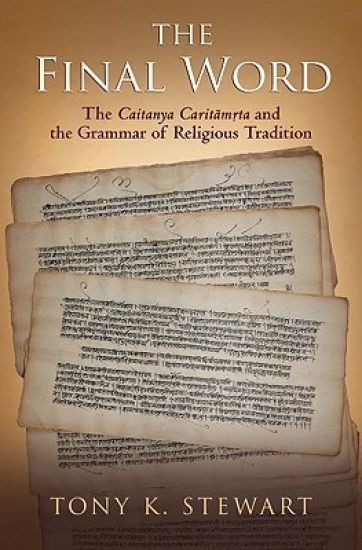
The Final Word

The Final Word

Tony K Stewart

Oxford University Press Inc
2010
sidottu
The Gaudiya Vaisnava movement is one of the most vibrant religious groups in all of South Asia. Unlike most devotional communities that flourished in 15th-, 16th-, and 17th-century Bengal, however, the group had no formal founder. Today its devotees are uniform in their devotion to the historical figure of Krishna Caitanya (1486-1533), whom they believe to be not just Krishna incarnate, but Radha and Krishna fused into a single androgynous form. But Caitanya neither founded the community that coalesced around him nor named a successor. Tony Stewart seeks to discover how, with no central leadership, no institutional authority, and no geographic center, a religious community nevertheless comes to successfully define itself, fix its canon and flourish. He finds the answer in the brilliant hagiographical exercise in Sanskrit and Bengali titled the Caitanya Caritamrita (CC) of Krishnadasa Kaviraja. Written about 75 years after Caitanya's passing, the CC became the proof text of the community. The reason it was so powerful, says Stewart, lies in its deployment of a series of sophisticated rhetorical strategies to persuade its readers without appearing to do so, seeming to defer the arrogated authority to Caitanya himself. Although the CC started as a hagiography like any other, an index to what was proper and good in ritual and belief, it became a sign pointing the way to salvation, and then an icon, a metonym of the tradition itself, so much so that manuscripts dating from the earliest times can now be found physically worshiped on altars in temples in Bengal.
Issues and Crisis Management: Exploring Issues, Crises, Risk and Reputation
Where issues and crisis management intersect and converge with risk and reputation is one of the most dynamic and challenging areas of management and professional communication. Moreover, the new Process Approach to issue and crisis management reveals that these disciplines are not separate activities but form part of a continuum of management responsibilities which comprise a comprehensive response to events or developments which threaten organisational reputation or success Issues and Crisis Management: Exploring Issues, Crises, Risk and Reputation introduces and explores each element, while at the same time emphasising the relationship between them all.
Communication, Digital Media and Everyday Life

Communication, Digital Media and Everyday Life

Tony Chalkley; Mitchell Hobbs; Adam Brown; Toija Cinque; Dr Brad Warren; Mark Finn

OUP Australia and New Zealand
2015
nidottu
Communication, Digital Media and Everyday Life (Second Edition) uses stories to explain the journey from 'new media in communication' to 'digital media is communication' and provide a clear introduction to communication and media theory and practice. For Generations Y and Z, digital media is now embedded into most aspects of daily life and integrated into contemporary communication as much as speaking, reading and writing. This book encourages readers to understand how they use 'new' media to do 'old' things and explores how concepts of communication, digital media and everyday life intersect with one another. The first section part of the book introduces the building blocks of communication; its basic tools, devices and approaches. The second section part takes these ideas and concepts in the first part and applies them to 'new' media: it considers including ideology in film and television; organisational communication; and values in the new digital world; and how identity, privacy, deception and truth have been redefined. The third part section part looks at communication today-including the redefinition of identity, privacy, deception and truth- and explores what it might be like to live in an increasingly digital world.
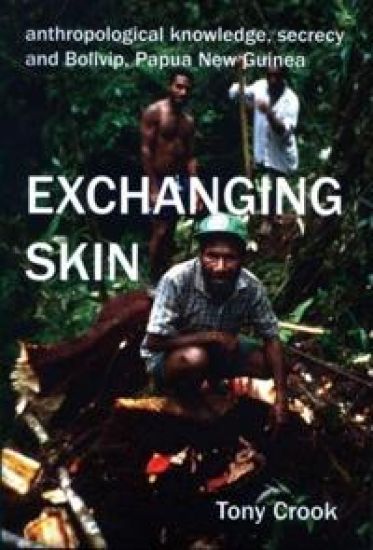
Anthropological Knowledge, Secrecy and Bolivip, Papua New Guinea
What is the nature of knowledge? Anthropology imagines it possible to divide or separate social and analytical relations, whereby knowledge travels between persons as a thing. And yet, Bolivip imagines knowledge as the bodily resources or parts of a person that can be extended or combined with others. This methodological exchange is modelled on a moment from Bolivip - an exchange of skin whereby knowledge is returned in respect of prior nurture and care given, and two people become encompassed by one skin. The Min area of Papua New Guinea has proven to be one of the most enigmatic cultures in anthropological experience. But rather than accept this resistance to analysis as a problem of Melanesian secrecy, this volume suggests that archaic notions of anthropological knowledge have been the problem all along. Taking up the 'Min problem' head on, this study suggests a novel solution to the impasse. The argument works through alternating chapters: an imagistic ethnography of Bolivip describes how arboreal and horticultural metaphors motivate the growth of persons and plants by circulating bodily resources through others. Knowledge here comes from those who contribute to conception, and is withheld until a person is capable of bearing it. These images are used to provide new readings of classic Melanesianist texts - Mead, Bateson and Fortune - substituting theoretical ideas for intimate relations; Weiner and Strathern's own experiments with anthropology modelled on Melanesia; and Barth's reading of secrecy amongst the Min. The book provides an valuable insight into our own assumptions about knowledge and the world by means of insights into the aesthetics of a Papua New Guinean lifeworld.
The Melancholy Lens

The Melancholy Lens

Tony Pipolo

Oxford University Press Inc
2021
nidottu
The prevalence of loss and mourning, and of charged relationships with parents or parental figures has had a surprising influence on several American avant-garde filmmakers' work . To date, however, little attention has been given to these themes. In The Melancholy Lens, author Tony Pipolo offers a detailed look at the significant role of underlying biographical and psychological factors in specific works by leading avant-garde filmmakers. Covering a range of filmmakers including Maya Deren, Stan Brakhage, Gregory Markopoulos, Robert Beavers, Ken Jacobs, and Ernie Gehr, The Melancholy Lens takes a sensitive approach to understand the motivations of each filmmaker as related to a given work. Pipolo argues, for example, that the work of Deren and Brakhage lends itself to a more aggressive appreciation of psychoanalytic principles. The Deren films studied-Meshes of the Afternoon, At Land, and Ritual in Transfigured Time-are read as varying responses to the death of her father, with whom she had a strained relationship. Tortured Dust-the final film Brakhage made about his first family-was, by his own account, a work of contention and desperation. The elusiveness of Gregory Markopoulos' The Mysteries cannot conceal its naked obsession with death any more than it can diminish the film's poignancy. Robert Beavers' Sotiros is an especially rich and vivid exposure of a vulnerable chapter in the filmmakers's life. In the final two chapters on Ken Jacobs and Ernie Gehr, Pipolo looks outward for artistic motivation to show how both filmmakers' fascination with the history of film and video manifests as a melancholic view of greater history in their work. In the afterword, the author considers later figures whose work is kindred to the theme of this book, among them Nathaniel Dorsky, Phil Solomon, David Gatten, and Lewis Klahr.
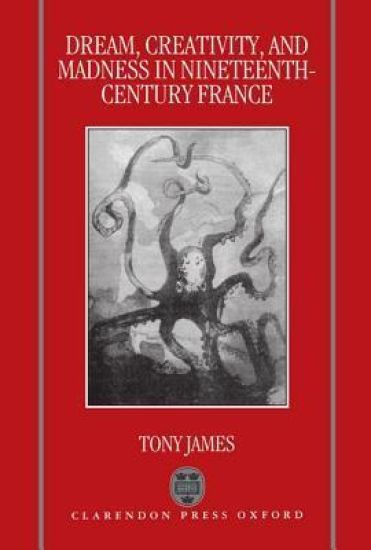
Dream, Creativity, and Madness in Nineteenth-Century France
This is an important new analysis of the problematic relationship between dreams and madness as perceived by nineteenth-century French writers, thinkers, and doctors. Those wishing to know the nature of madness, wrote Voltaire, should observe their dreams. The relationship between the dream-state and madness is a key theme of nineteenth-century European, and specifically French, thought. The meaning of dreams and associated phenomena such as somnambulism, ecstasy, and hallucinations (including those induced by hashish) preoccupied writers, philosophers, and psychiatrists. In this path-breaking cross-disciplinary study, Tony James shows how doctors (such as Esquirol, Lélut, and Janet), thinkers (including Maine de Biran and Taine), and writers (for example, Balzac, Nerval, Baudelaire, Victor Hugo, and Rimbaud) grappled in very different ways with the problems raised by the so-called 'phenomena of sleep'. Were historical figures such as Socrates or Pascal in fact mad? Might dream be a source of creativity, rather than a merely subsidiary, 'automatic' function? What of lucid dreaming? By exploring these questions, Dreams, Madness, and Creativity in Nineteenth-Century France makes good a considerable gap in the history of pre-Freudian psychology and sheds new and fascinating light on the central French writers of the period.
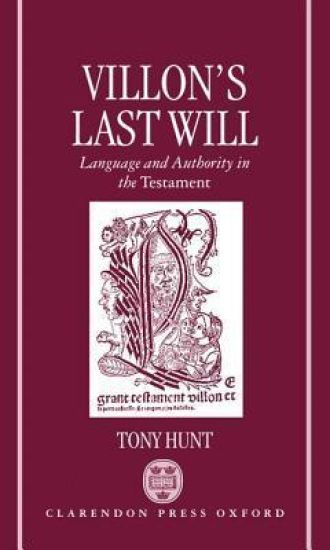
Villon's Last Will

Villon's Last Will

Tony Hunt

Clarendon Press
1996
sidottu
Villon studies have traditionally emphasized the documentary and didactic value of the Testament, concentrating on problems of historical referentiality. It is assumed that the work has a significant autobiographical element and that it has much to tell us about life in fifteenth-century Paris. The Testament has thus been avidly exploited by historians of the period and its interest as a document is well-established. Tony Hunt's present study concentrates exclusively on the textual strategies of the Testament, in particular on rhetorical techniques involving dialogue and irony. Villon's Last Will views the Testament as ironic from start to finish, and the main objects of the irony are identified as language and authority. The dissolution of meaning, authority, and even authorial identity are seen to be the principal results of the poet's rhetoric. Tony Hunt's close reading of the text has produced a lively and well-informed commentary, full of fresh insights.
Making Law Bind

Making Law Bind

Tony Honoré

Clarendon Press
1987
sidottu
This collection of the papers of Tony Honore, is taken from his work in the field of legal philosophy over the last quarter century. The introductory essay is followed by three chapters describing the building blocks of legal systems - groups or societies, laws, and the motives to obey or conform. Succeeding papers discuss norms and obligations, rights and justice, analysing such fundamentals as ownership, property rights and the assertion of rights. The book concludes with an essay arguing for the use of law to encourage or reinforce morality.
Emperors and Lawyers

Emperors and Lawyers

Tony Honoré

Clarendon Press
1994
sidottu
This is the second edition of an original and controversial book. It analyses some 2,609 legal rulings (rescripts) given by Roman Emperors between 193 and 305 AD, and argues that, though issued in the name of emperors, they were really both in style and substance the work of professional lawyers. From their style we can detect when one lawyer-draftsman gave way to another, we can identify some of the lawyers and we can allot most of the rescripts to their real author. On this basis the author argues that in the third century there was a convention that the rights of citizens would be governed by objective legal standards. The Roman Empire was not a pure autocracy. Updated and in large part rewritten, this edition includes on a high-density diskette a reconstruction (Palingenesia) of the 2,609 rescripts. This new and original work of reference will enable scholars to read the texts chronologically and to judge the soundness of the arguments advanced.
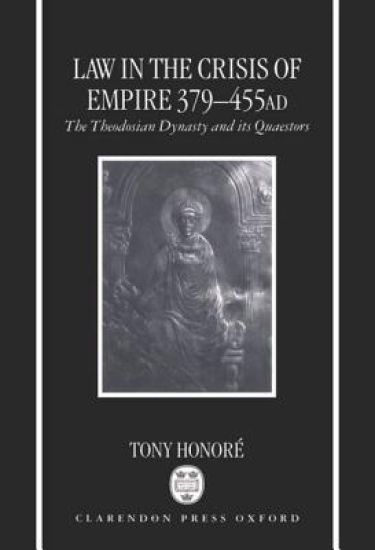
Law in the Crisis of Empire 379-455 AD

Law in the Crisis of Empire 379-455 AD

Tony Honoré

Clarendon Press
1998
sidottu
This is a new book from an eminent and well-respected scholar. A work of reference; an essay in the analysis of style; a contribution to the prosopography of the late Roman quaestorship; a reflection on the fall of the western and the survival of the eastern Roman empire: the book combines all four. Using his innovative and controversial method of analysis, already successfully employed in his highly-acclaimed Emperors and Lawyers (2nd edn 1994, OUP), the author examines the laws of a crucial period of the late Roman empire (379-455 AD), a time when the West collapsed while the East survived. Wherever possible, he assigns each law to the likely imperial quaestor who drafted it. This approach yields a novel type of list of office holder (Fasti), in which each quaestor is associated with the laws he drafted. The author shows why the eastern Theodosian Code (429-438 AD), intended to restore the legal and administrative unity of the Roman empire, came too late to save the West. The accompanying Palingenesia on an accompanying disk will enable scholars to read the texts chronologically and to judge the soundness of the arguments advanced. This book will be welcomed as a significant advance in our understanding of a fascinating period of late antiquity.
Economic Torts

Economic Torts

Tony Weir

Clarendon Press
1997
sidottu
This book is based closely on the lectures delivered by Tony Weir in 1996 as part of the Clarendon Law lectures series sponsored by Oxford University Press. It is an exciting and provocative book which contains a number of controversial propositions, defended with vigour by its author. The three lectures reproduced here deal with liability in tort for intentionally inflicted economic loss. They are characterized by a very unusual combination of bold leading statements and multi-layered supporting analysis. There are also useful Appendices containing full case transcripts of recent, significant cases, including Millar v Bassey and de Voto v Pacific. This book will be irresistible to all scholars of the law of tort, and the author's reputation alone will ensure this book is well-received.
Project X Origins: Red Book Band, Oxford Level 2: Big and Small: Mixed Pack of 5

Project X Origins: Red Book Band, Oxford Level 2: Big and Small: Mixed Pack of 5

Tony Bradman; Andrea Smith; Alex Lane; Emma Lynch; Amanda Snowden

Oxford University Press
2014
nidottu
Project X Origins is a ground-breaking guided reading programme for the whole school. Action-packed stories, fascinating non-fiction and comprehensive guided reading support meet the needs of children at every stage of their reading development. Each book contains inside cover notes that highlight challenge words, prompt questions and a range of follow-up activities to support children in their reading. Project X Origins guided reading notes offer step-by-step teaching support for each book with guidance about phonics, comprehension, vocabulary, fluency, spelling, grammar, punctuation and writing. Each set of notes has in-built assessment and is fully correlated to all UK curricula. This pack contains 1 set of guided reading notes and 5 reading books, 1 of each of: Ant and the Baby, Run Cat, Run!, Big and Small, Ben and Paul, Big Car, Small Car.
Project X Origins: Red Book Band, Oxford Level 2: Big and Small: Class Pack of 30

Project X Origins: Red Book Band, Oxford Level 2: Big and Small: Class Pack of 30

Tony Bradman; Andrea Smith; Alex Lane; Emma Lynch; Amanda Snowden

Oxford University Press
2014
nidottu
Project X Origins is a ground-breaking guided reading programme for the whole school. Action-packed stories, fascinating non-fiction and comprehensive guided reading support meet the needs of children at every stage of their reading development. Each book contains inside cover notes that highlight challenge words, prompt questions and a range of follow-up activities to support children in their reading. Project X Origins guided reading notes offer step-by-step teaching support for each book with guidance about phonics, comprehension, vocabulary, fluency, spelling, grammar, punctuation and writing. Each set of notes has in-built assessment and is fully correlated to all UK curricula. This pack contains 1 set of guided reading notes and 30 reading books, 6 of each of: Ant and the Baby, Run Cat, Run!, Big and Small, Ben and Paul, Big Car, Small Car.
Project X Origins: Red Book Band, Oxford Level 2: Big and Small: Ant and the Baby
Project X Origins is a ground-breaking guided reading programme for the whole school. Action-packed stories, fascinating non-fiction and comprehensive guided reading support meet the needs of children at every stage of their reading development. In Ant and the Baby Ant is too small to see the baby at first, but soon manages to find a way using his watch. Each book contains inside cover notes that highlight challenge words, prompt questions and a range of follow-up activities to support children in their reading.
Project X Origins: Yellow Book Band, Oxford Level 3: Weather: The Rainy Day
Project X Origins is a ground-breaking guided reading programme for the whole school. Action-packed stories, fascinating non-fiction and comprehensive guided reading support meet the needs of children at every stage of their reading development. In The Rainy Day, micro-Max does not like the giant raindrops and strong winds. Luckily, he soon finds somewhere to hide and play until the rain stops. Each book contains inside cover notes that highlight challenge words, prompt questions and a range of follow-up activities to support children in their reading.