Mirando a las estrellas ofrece al lector un conjunto de poemas que relatan experiencias, tanto personales como emocionales, en una etapa de la vida en la que surge la incertidumbre sobre c mo avanzar. Una parada en el camino para reflexionar d nde se est , c mo se ha llegado ah y hacia d nde seguir. La vida no es todo blanco o negro, sino que est llena de matices, y en muchas ocasiones toca aprender a adaptarse y saber seguir adelante.
Exam Board: SQA Level: National 5 Subject: Biology First Teaching: August 2017 First Exam: May 2018 The second edition of this textbook covers all recent revisions to course content, incorporating essential new material whilst retaining the unique style of the original. The new edition contains: - Streamlined chapters differentiate between mandatory core text and non-mandatory activities - Testing Your Knowledge: Key questions for homework and assessment - What You Should Know : Summaries of key facts and concepts - Applying Your Knowledge and Skills: Problem-solving exercises for exam practice
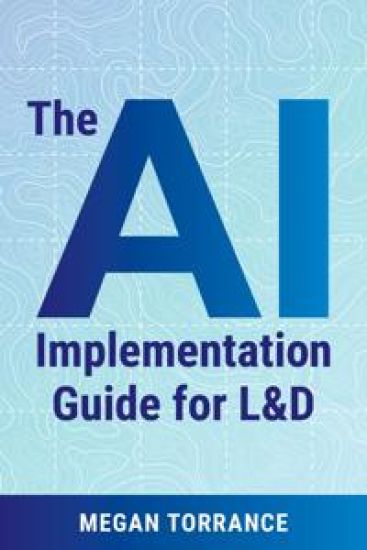
Successfully Implement AI in L&D, the Learner Experience, and Your Organization The AI Implementation Guide for L&D is a practical, forward-thinking resource for L&D leaders and practitioners who are navigating the integration of AI within their organizations and looking to drive meaningful, enterprise-wide change. At the heart of this book is the “AI Implementation Canvas,” a comprehensive planning tool that helps teams design and deploy AI solutions with clarity, care, and confidence. From aligning with business goals to navigating legal and ethical considerations, this book guides readers through every stage of implementation—from experimentation and scaling to governance, measurement, and change management. It offers a powerful lens for understanding how AI affects personal productivity, the learner experience, and organizational transformation. Filled with actionable insights, reflection questions, and “one small step” challenges, this book equips you to: Identify where AI is already affecting learning and where it should. Build AI readiness across teams and stakeholders. Use L&D as a launchpad for broader organizational transformation. Play a significant role in helping your organization determine how to integrate AI into its operations. If you’re an L&D leader, HR strategist, or enterprise change agent, this book will help you lead an AI-powered transformation—not just in learning, but through learning.
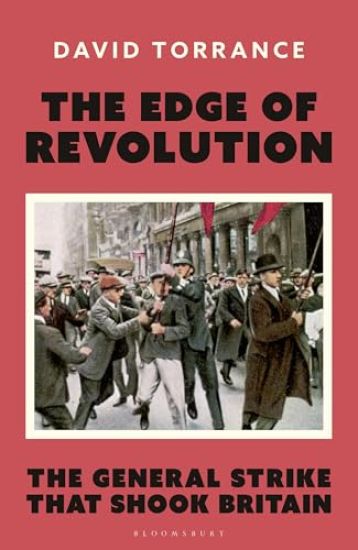
Author of the critically acclaimed The Wild Men, David Torrance explores another tumultuous and era-defining moment in British political history. On Tuesday 4 May 1926, two million workers downed tools in the only nationwide all-hands strike ever held in Britain. The General Strike had begun, and the country braced itself for what many believed was a moment akin to the Russian Revolution, which had shaken the world only a decade earlier. Industry was deprived of gas and electricity; the buses, trains and trams all stopped; newspapers ceased publication; and workers abandoned mines and iron, steel and chemical works around the country. The General Strike has entered our national mythology. Even though it lasted only nine days, it left a legacy of bitterness that has had a profound impact on politics. Now, a century on, Torrance tells this dramatic story from the perspective of everyone involved, drawing on extensive archival research to recreate those nine days through the accounts of those who lived and breathed it. The result is an absorbing and comprehensive analysis of this unique episode in British history.
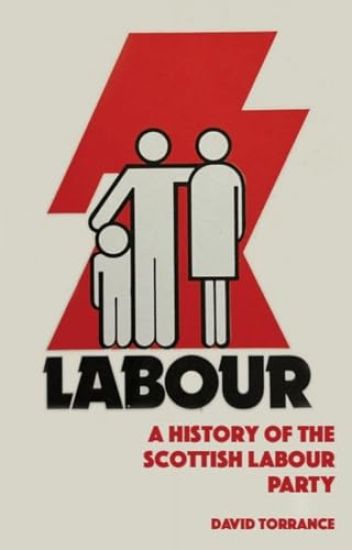
The Scottish Labour Party – or rather the Labour Party in Scotland – was the dominant political party in Scotland from the 1950s until the early twenty-first century. It won the largest share of the vote at every UK general election between 1964 and 2010. While its electoral fortunes declined with the rise of the Scottish National Party during the 2000s, the Party has remained a significant force in Scottish politics. This book provides an overview of the early decades of Scottish Labour politics, studying the party’s origins in late nineteenth-century working class politics and trade unionism. It also traces the party’s organisation, ideology, personnel and electoral performance over the past century. The book also analyses the party’s often surprisingly limited membership, its links with trade unions and the role of women’s organisations.
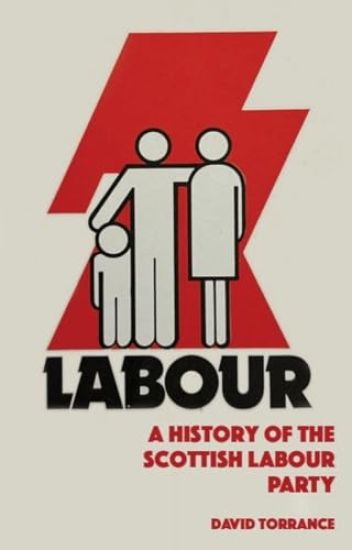
The Scottish Labour Party – or rather the Labour Party in Scotland – was the dominant political party in Scotland from the 1950s until the early twenty-first century. It won the largest share of the vote at every UK general election between 1964 and 2010. While its electoral fortunes declined with the rise of the Scottish National Party during the 2000s, the Party has remained a significant force in Scottish politics. This book provides an overview of the early decades of Scottish Labour politics, studying the party’s origins in late nineteenth-century working class politics and trade unionism. It also traces the party’s organisation, ideology, personnel and electoral performance over the past century. The book also analyses the party’s often surprisingly limited membership, its links with trade unions and the role of women’s organisations.
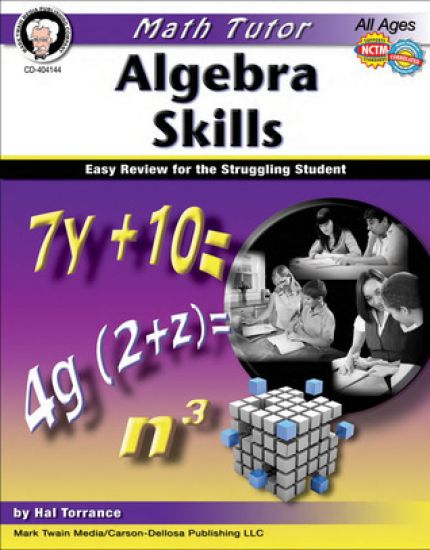
Make math matter to students in all grades using Math Tutor: Algebra Skills This 80-page book provides step-by-step instructions of the most common math concepts and includes practice exercises, reviews, and vocabulary definitions. The book covers factoring, exponents, variables, linear equations, and polynomials. It aligns with state, national, and Canadian provincial standards.
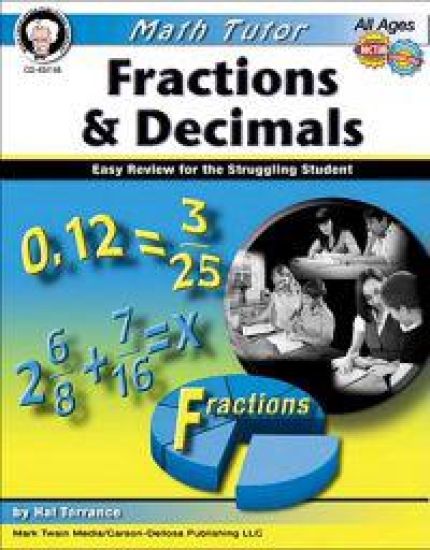
Make math matter to students in all grades using Math Tutor: Fractions and Decimals This 80-page book provides step-by-step instructions of the most common math concepts and includes practice exercises, reviews, and vocabulary definitions. The book covers adding, subtracting, multiplying, and dividing fractions; reducing fractions; improper fractions; mixed numbers; and converting to decimals and percents. It aligns with state, national, and Canadian provincial standards.
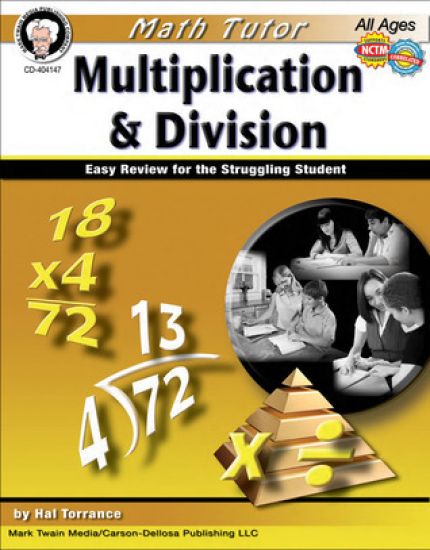
Make math matter to students in all grades using Math Tutor: Multiplication and Division This 80-page book provides step-by-step instructions of the most common math concepts and includes practice exercises, reviews, and vocabulary definitions. The book covers multiplying and dividing by one-, two-, and three-digit numbers; working with 10, 100, 1,000, and so on; factors; remainders; decimals; and estimation. It aligns with state, national, and Canadian provincial standards.
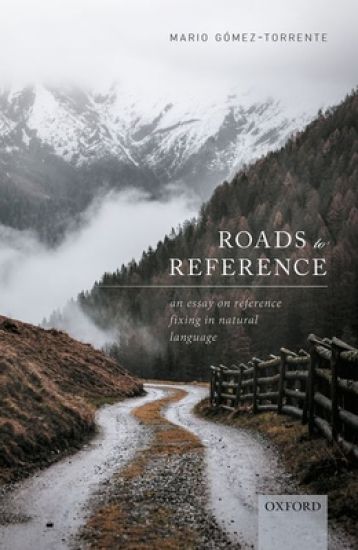
How is it that words come to stand for the things they stand for? Is the thing that a word stands for - its reference - fully identified or described by conventions known to the users of the word? Or is there a more roundabout relation between the reference of a word and the conventions that determine or fix it? Do words like 'water', 'three', and 'red' refer to appropriate things, just as the word 'Aristotle' refers to Aristotle? If so, which things are these, and how do they come to be referred to by those words? In Roads to Reference, Mario Gómez-Torrente provides novel answers to these and other questions that have been of traditional interest in the theory of reference. The book introduces a number of cases of apparent indeterminacy of reference for proper names, demonstratives, and natural kind terms, which suggest that reference-fixing conventions for them adopt the form of lists of merely sufficient conditions for reference and reference failure. He then provides arguments for a new anti-descriptivist picture of those kinds of words, according to which the reference-fixing conventions for them do not describe their reference. This book also defends realist and objectivist accounts of the reference of ordinary natural kind nouns, numerals, and adjectives for sensible qualities. According to these accounts these words refer, respectively, to 'ordinary kinds', cardinality properties, and properties of membership in intervals of sensible dimensions, and these things are fixed in subtle ways by associated reference-fixing conventions.
T.F. Torrance's Conflict and Agreement in the Church gathers together his most influential essays and articles on topics relating to ecumenism. Himself involved heavily in the ecumenical movement, he wrote that 'ours must be the task of learning together again how to confess, like the early Church, faith in Jesus Christ as Saviour and God in all its breadth and length and height and depth, and therefore in the overflowing love of God.' Out of this conviction grew a comprehensive doctrine of the Church 'in which our differences are lost sight of because they are destroyed from behind by a masterful faith in the Saviour of men.' In this first volume, Torrance presents a set of essays engaging theologically with different denominations, along with responses to particular problems facing the ecumenical project. In particular, writing after the third world conference on faith and order, he addresses the hopes and barriers it raised to closer ecumenical relations. Throughout, Torrance's acute awareness of contrasting theological principles establishes a firm basis for further progress, without obscuring the doctrinal and ecclesiological differences that remain.
T.F. Torrance's Conflict and Agreement in the Church gathers together his most influential essays and articles on topics relating to ecumenism. Himself involved heavily in the ecumenical movement, he wrote that 'ours must be the task of learning together again how to confess, like the early Church, faith in Jesus Christ as Saviour and God in all its breadth and length and height and depth, and therefore in the overflowing love of God.' Out of this conviction grew a comprehensive doctrine of the Church 'in which our differences are lost sight of because they are destroyed from behind by a masterful faith in the Saviour of men.' In this first volume, Torrance presents a set of essays engaging theologically with different denominations, along with responses to particular problems facing the ecumenical project. In particular, writing after the third world conference on faith and order, he addresses the hopes and barriers it raised to closer ecumenical relations. Throughout, Torrance's acute awareness of contrasting theological principles establishes a firm basis for further progress, without obscuring the doctrinal and ecclesiological differences that remain.
T.F. Torrance's Conflict and Agreement in the Church gathers together his most influential essays and articles on topics relating to ecumenism. Himself involved heavily in the ecumenical movement, he wrote that 'ours must be the task of learning together again how to confess, like the early Church, faith in Jesus Christ as Saviour and God in all its breadth and length and height and depth, and therefore in the overflowing love of God.' Out of this conviction grew a comprehensive doctrine of the Church 'in which our differences are lost sight of because they are destroyed from behind by a masterful faith in the Saviour of men.' In this second volume, Torrance's thought on inter-denominational cooperation in light of the Church's mission is presented. He begins by suggesting that 'the lines of conflict and agreement in the Church coincide less and less with the frontiers of the historic communions'. This opens the door for greater union between those communion, but also exposes significant challenges to unity within them. Addressing the major debates on the sacraments of baptism and the Eucharist, along with the priesthood and biblical exegesis, Torrance proposes a constructive way forward sealed by 'reconciliation in the Body and Blood of Christ'.