Kirjojen hintavertailu. Mukana 11 244 527 kirjaa ja 12 kauppaa.

Kirjahaku

Etsi kirjoja tekijän nimen, kirjan nimen tai ISBN:n perusteella.

1000 tulosta hakusanalla United Library

United States and Pakistan in the 21st Century

United States and Pakistan in the 21st Century

Syed Tahseen Raza

TAYLOR FRANCIS LTD
2023
nidottu
This book historically maps and examines the evolving, contemporary geostrategic and geopolitical imperatives of the United States within Pakistan and the South Asian region, especially after September 11, 2001. It offers a detailed and theoretical account of the rapidly changing context of US foreign policy towards Pakistan after 2001. The history of the US-Pakistan relationship has been a complex and inscrutable mix of cooperation and conflict has turned even more challenging after 9/11. This book covers the latest developments and relevant themes from world politics as it discusses the impact of the unprecedented rise in religious extremism in Pakistan, stemming from the US War on Terror as well as Pakistan’s economic vulnerability and military dictatorship, India’s offer to support the US in its war in Afghanistan, Pakistan’s nuclear capability, and the US administration’s decision to end financial aid to Pakistan. The study highlights the fact that, from the receding of British influence in the region through the Cold War and post-Cold War phases to the post-9/11 period, US-South Asia policy has been informed by the theoretical paradigm of the grand strategy of primacy.This topical book will be useful to scholars and researchers of international relations, politics, political studies, strategic and defence studies, security and peace studies, foreign policy, area studies, and South Asian studies. It will also interest diplomats, politicians, policymakers, security experts, journalists, and think tanks interested in India, Pakistan, and the United States on issues of international politics, world affairs, and terrorism.
United Nations Financial Sanctions
This book presents insightful perspectives on the invocation, implementation and application of UN-approved financial sanctions and related issues.With contributions from academics, diplomats and UN panel experts, Yoshimura offers an analysis of how the UN financial sanctions have evolved, the different roles of various major international actors in agreeing and deploying them, and their success in achieving desired outcomes. It also sheds light on a vital role of Japan in the formulation and deployment of financial sanctions, as the third largest economy in the world with very limited armed forces and a pacifist constitution.Offering valuable consideration into one of the key implements of international law, this is an essential guide for scholars and practitioners in Diplomacy and International Relations.
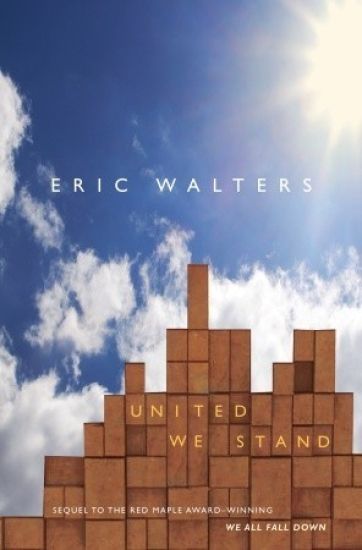
United We Stand

United We Stand

Eric Walters

Doubleday Canada
2009
nidottu
Dramatic, gripping, and moving, this sequel to the award-winning We All Fall Down will captivate readers. It's September 12th, 2001, and New York City is at a standstill: somber, bleak and shocked in the aftermath of the World Trade Center attacks. Will knows he and his father are lucky to have escaped; others, like his best friend James' father are still missing . . . and soon presumed to be dead. Poignant and dramatic, United We Stand is a young adult novel about heartache, self-discovery, and the power of friendship.
United Nations in the Contemporary World

United Nations in the Contemporary World

David J. Whittaker

Routledge
1997
nidottu
Fifty years after the creation of the United Nations, there exists a vigorous debate as to its limitations and possibilities. In United Nations in the Contemporary World, David J. Whittaker examines how the UN works and assesses its position as a world organisation.The author explores the nature of the UN as a regime in contemporary international relations. He considers the changing terms of reference of the UN and includes discussion of:* UN organisational procedures and principles;* recent historical case studies, including studies on peacekeeping* the role of the UN in global urbanisation, arms control and in supplying aid for refugees* past and future internal reform, goals, achievementsWith an annotated bibliography and a helpful glossary United Nations in the Contemporary World provides an interdisciplinary history of the UN and debates the key issues for its future. David J Whittaker gives a cogent analysis of how the UN addresses today's world problems and how it can adapt for the future.
United Nations Global Conferences

United Nations Global Conferences

Michael G. Schechter

Routledge
2005
sidottu
This new book covers the origins purposes, trends and controversies of the United Nations' global conferences.There are 30 such conferences to compare, and many argue that they have not been worth the money spent on them. Others, however, suggest that they offer the only effective way to address global problems, like racism, sexism, overpopulation, environmental degradation, overfishing, urbanization, and the proliferation of small arms.This is the first comprehensive study of this key topic, delivering information essential to the ongoing debate on multilateralism, with examinations of:* the typical structure of a conference* description of the Global Conferences * substantive and institutional outcomes of the conferences* changes resulting from the conferences * UN Conferences as mechanisms for coping with the problems of the 21st CenturyThis book is essential reading for students of the United Nations, international organisation and global governance, as well as practitioners from non-governmental organizations.
United Nations Global Conferences

United Nations Global Conferences

Michael G. Schechter

Routledge
2005
nidottu
This new book covers the origins purposes, trends and controversies of the United Nations' global conferences.There are 30 such conferences to compare, and many argue that they have not been worth the money spent on them. Others, however, suggest that they offer the only effective way to address global problems, like racism, sexism, overpopulation, environmental degradation, overfishing, urbanization, and the proliferation of small arms.This is the first comprehensive study of this key topic, delivering information essential to the ongoing debate on multilateralism, with examinations of:* the typical structure of a conference* description of the Global Conferences * substantive and institutional outcomes of the conferences* changes resulting from the conferences * UN Conferences as mechanisms for coping with the problems of the 21st CenturyThis book is essential reading for students of the United Nations, international organisation and global governance, as well as practitioners from non-governmental organizations.
United Nations Conference on Trade and Development (UNCTAD)
Ian Taylor and Karen Smith present a much-needed and full examination of the United Nations Conference on Trade and Development (UNCTAD), covering its history and current activities. All the key areas are covered by accessibly written chapters, including:an overview of UNCTAD: what it is, why it was formed and why it is importanthow the organization operates today: what it does and how it does it key criticisms made against the organization: is it relevant in today’s world? emerging issues within the organization and its future direction.In the current era of globalization and what appears to be the dominance of neo-liberal economic thought, UNCTAD has sought to make itself germane to ongoing international debates. The implications of this for the organization’s key remit, namely making the world a fairer place, are something that this book unpacks.
United Nations Conference on Trade and Development (UNCTAD)
Ian Taylor and Karen Smith present a much-needed and full examination of the United Nations Conference on Trade and Development (UNCTAD), covering its history and current activities. All the key areas are covered by accessibly written chapters, including:an overview of UNCTAD: what it is, why it was formed and why it is importanthow the organization operates today: what it does and how it does it key criticisms made against the organization: is it relevant in today’s world? emerging issues within the organization and its future direction.In the current era of globalization and what appears to be the dominance of neo-liberal economic thought, UNCTAD has sought to make itself germane to ongoing international debates. The implications of this for the organization’s key remit, namely making the world a fairer place, are something that this book unpacks.
United States Foreign Policy & National Identity in the 21st Century
Examines the complex relationship between United States foreign policy and American national identity as it has changed from the post-cold war period through the defining moment of 9/11 and into the 21st century.Starting with a discussion of notions of American identity in an historical sense, the contributors go on to examine the most central issues in US foreign policy and their impact on national identity including: the end of the Cold War, the rise of neo-conservatism, ideas of US Empire and the influence of the 'War on Terror'. The book sheds significant new light on the continuities and discontinuities in the relationship of US identity to foreign policy.
United Nations Reform

United Nations Reform

Spencer Zifcak

Routledge
2009
sidottu
This book examines recent attempts at reform within the United Nations in the wake of the institutional crisis provoked by the invasion of Iraq. It contends that efforts at reform have foundered owing to fundamental and bitter political disagreements between the nations of the global North and South. Following profound discord in the Security Council in the lead up to the US-led invasion of Iraq in 2003, this book considers the ambitious programme of reform instigated by then serving UN Secretary-General Kofi Annan. The author of this highly topical work, Spencer Zifcak, subjects six of Annan’s principal proposals for reform to scrutiny: the reform of the Security Council, the General Assembly, and the Human Rights Council, and suggested alterations to international law with respect to the use of force in international affairs, the ‘responsibility to protect’, and UN strategies to counter global terrorism. On the basis of these detailed case-studies, the book demonstrates why so few proposals for reform were eventually adopted. It argues that the principal reason for this failure was that nations of the North and South could not agree as to the merits of the reforms proposed, exposing the sharply differing visions held by member states for a future and improved United Nations. Founded upon extensive interviews with diplomats at the United Nations, the book provides a rare ‘insider’ account of UN politics and practice. It will be of vital interest to students, scholars and practitioners of International Relations, International Law, and International Institutions.
United Nations Educational, Scientific, and Cultural Organization (UNESCO)
This book traces the history of UNESCO from its foundational idealism to its current stature as the preeminent international organization for science, education, and culture, building a well rounded understanding of this important organization.The book: provides an overview of the organization and its institutional architecture in the context of its humanistic idealismdetails the subsequent challenges UNESCO faced through cold war and power politics, global dependence and interdependence, and the rise of identity and culture in global politicsanalyses the functioning of UNESCO administration, finance, and its various constituencies including the secretariat, member-states, and civil societyexplores the major controversies and issues underlying the initiatives in education, sciences, culture and communication examines the current agenda and future challenges through three major issues in UNESCO: Education or All, digital divide issues, and norms on cultural diversityassesses the role of UNESCO in making norms in complex world of multiple actors and intersecting issue-areas. Reflecting on UNESCO’s vision, its everyday practices, and future challenges; this work is an essential resource for students and scholars of international relations and international organizations.
United Nations Educational, Scientific, and Cultural Organization (UNESCO)
This book traces the history of UNESCO from its foundational idealism to its current stature as the preeminent international organization for science, education, and culture, building a well rounded understanding of this important organization.The book: provides an overview of the organization and its institutional architecture in the context of its humanistic idealismdetails the subsequent challenges UNESCO faced through cold war and power politics, global dependence and interdependence, and the rise of identity and culture in global politicsanalyses the functioning of UNESCO administration, finance, and its various constituencies including the secretariat, member-states, and civil societyexplores the major controversies and issues underlying the initiatives in education, sciences, culture and communication examines the current agenda and future challenges through three major issues in UNESCO: Education or All, digital divide issues, and norms on cultural diversityassesses the role of UNESCO in making norms in complex world of multiple actors and intersecting issue-areas. Reflecting on UNESCO’s vision, its everyday practices, and future challenges; this work is an essential resource for students and scholars of international relations and international organizations.
United States Foreign Policy & National Identity in the 21st Century
Examines the complex relationship between United States foreign policy and American national identity as it has changed from the post-cold war period through the defining moment of 9/11 and into the 21st century.Starting with a discussion of notions of American identity in an historical sense, the contributors go on to examine the most central issues in US foreign policy and their impact on national identity including: the end of the Cold War, the rise of neo-conservatism, ideas of US Empire and the influence of the 'War on Terror'. The book sheds significant new light on the continuities and discontinuities in the relationship of US identity to foreign policy.
United Kingdom? (Routledge Revivals)
First published in 1989, United Kingdom? examines the three main divisions in British society in the post-war period: class, race and gender. During the 1980s there was an increasing concern about deep, and often bitter, divisions in British society. Events such as the miners’ strike of 1984-5, the riots in Handsworth, Tottenham and Brixton, and the women’s peace camp at Greenham Common all demonstrated the opposing views and cultures of the British public. However, the UK at the time was also able to show remarkable and continuing stability in other areas. This book considers to what extent the United Kingdom really was a kingdom united from the post-war period to the late 1980s. It focuses on issues of cohesion and conflict and debates the security of essential social stability.
United Kingdom? (Routledge Revivals)
First published in 1989, United Kingdom? examines the three main divisions in British society in the post-war period: class, race and gender. During the 1980s there was an increasing concern about deep, and often bitter, divisions in British society. Events such as the miners’ strike of 1984-5, the riots in Handsworth, Tottenham and Brixton, and the women’s peace camp at Greenham Common all demonstrated the opposing views and cultures of the British public. However, the UK at the time was also able to show remarkable and continuing stability in other areas. This book considers to what extent the United Kingdom really was a kingdom united from the post-war period to the late 1980s. It focuses on issues of cohesion and conflict and debates the security of essential social stability.
United Nations Industrial Development Organization
The mandate of the United Nations Industrial Development Organization (UNIDO) is close to many of the core issues now confronting developing and transition economy countries, and this book offers the first concise and accessible guide to this important organization. As the only UN organization to have been transformed from a UN secretariat entity to an independently governed UN agency, UNIDO has also an agency which has had to make drastic changes of focus and business practice in order to adjust to a changing environment. This book charts the complex origins and developments of the organization, and moves on to examine the current mandate of the agency, including trade capacity building, poverty reduction and Green Industry Initiative. It also examines the significant partnerships it has formed with other UN based systems such as UNCTAD and the ITC to achieve these goals. In the era of rapid globalization, UNIDO faces growing challenges. In the second part of this work, Browne seeks to review these challenges, and UNIDO’s recent reforms under its current management, and looks suggest how the organization can help to meet some of the key global development challenges in the increasingly competitive environment of development cooperation and private sector initiative.This work will be a useful resource for all those with an interest in international organizations, international relations, development and trade, and international political economy.
United Nations Centre on Transnational Corporations

United Nations Centre on Transnational Corporations

Khalil Hamdani; Lorraine Ruffing

Routledge
2015
sidottu
The United Nations Centre on Transnational Corporations (UNCTC) was established in 1975 and abolished in 1992. It was an early effort by the UN to address the overlapping issues of national sovereignty, corporate responsibility and global governance. These issues have since multiplied and deepened with globalization. This book recounts the UNCTC experience and its lessons for international organizations.This book is not only an insider perspective by two former staff but also a collective memoir of the UNCTC as an international organization that attempted with varying success to defuse the clash between corporates and states that erupted in the turbulent 1970s. This personal account of the UNCTC is a mixture of history, analysis, reflections, and critical commentaries, told in different voices that penetrate the bland persona of international civil service. In this retelling, the authors seek to address misconceptions amongst the more general literature and to seek to provide accounts of both its positive and negative features.The UNCTC experience recounted in this book holds valuable lessons for international organization and will be of interest to student, scholars and practitioners alike.
United Nations Development Programme and System (UNDP)
This volume provides a short and accessible introduction to the organization that serves as the primary coordinator of the work of the UN system throughout the developing world –the United Nations Development Programme (UNDP). The book:traces the origins and evolution of UNDP, outlining how a central UN funding mechanism and field network developed into a more comprehensive development agencyevaluates the UNDP’s performance and results, both in its role as system coordinator and as a development organization in its own rightconsiders the return of the UNDP to a more central role within the UN development system, in order to review the successive attempts at UN development system reform, the reasons for failure and the future possibilities for a more effective system with the UNDP at the centre. Offering a clear, comprehensive overview and analysis of the organization, this work will be of great interest to students and scholars of development studies, international organizations and international relations.
United Nations Development Programme and System (UNDP)
This volume provides a short and accessible introduction to the organization that serves as the primary coordinator of the work of the UN system throughout the developing world –the United Nations Development Programme (UNDP). The book:traces the origins and evolution of UNDP, outlining how a central UN funding mechanism and field network developed into a more comprehensive development agencyevaluates the UNDP’s performance and results, both in its role as system coordinator and as a development organization in its own rightconsiders the return of the UNDP to a more central role within the UN development system, in order to review the successive attempts at UN development system reform, the reasons for failure and the future possibilities for a more effective system with the UNDP at the centre. Offering a clear, comprehensive overview and analysis of the organization, this work will be of great interest to students and scholars of development studies, international organizations and international relations.