
Kirjahaku
Etsi kirjoja tekijän nimen, kirjan nimen tai ISBN:n perusteella.
1000 tulosta hakusanalla Walter Rew
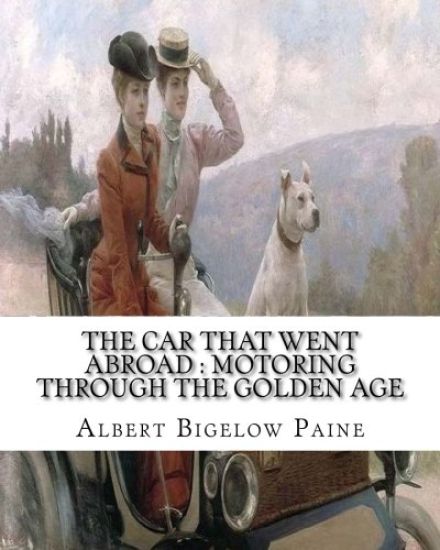
The car that went abroad: motoring through the golden age (illustrated): By Albert Bigelow Paine and illustrated from dravings By Walter Hale(18
Walter Hale; Albert Bigelow Paine
Createspace Independent Publishing Platform
2016
nidottu

Condemned as a nihilist; a story of escape from Siberia, By G.A.Henty,: illustrated By Walter(Trueman) Paget (7 February 1854 - 23 December 1930) was
Walter Paget; G. a. Henty
Createspace Independent Publishing Platform
2016
nidottu
There are few difficulties that cannot be surmounted by patience, resolution, and pluck, and great as are the obstacles that nature and the Russian government oppose to an escape from the prisons of Siberia, such evasions have occasion- ally been successfully carried out, and that under far less advantageous circumstances than those under which the hero of this story undertook the venture. For the account of life in the convict establishments in Siberia I am indebted to the very valuable books by my friend the Rev. Dr. Lans- dell, who has made himself thoroughly acquainted with Siberia, traversing the country from end to end and visiting all the principal prisons.. George Alfred Henty (8 December 1832 - 16 November 1902) was a prolific English novelist and war correspondent.He is best known for his historical adventure stories that were popular in the late 19th century. His works include The Dragon & The Raven (1886), For The Temple (1888), Under Drake's Flag (1883) and In Freedom's Cause (1885).Biography--G.A.Henty was born in Trumpington, near Cambridge. He was a sickly child who had to spend long periods in bed. During his frequent illnesses he became an avid reader and developed a wide range of interests which he carried into adulthood. He attended Westminster School, London, and later Gonville and Caius College, Cambridge, where he was a keen sportsman. He left the university early without completing his degree to volunteer for the Army Hospital Commissariat when the Crimean War began. He was sent to the Crimea and while there he witnessed the appalling conditions under which the British soldier had to fight. His letters home were filled with vivid descriptions of what he saw. His father was impressed by his letters and sent them to The Morning Advertiser newspaper which printed them. This initial writing success was a factor in Henty's later decision to accept the offer to become a special correspondent, the early name for journalists now better known as war correspondents. Shortly before resigning from the army as a captain in 1859 he married Elizabeth Finucane. The couple had four children. Elizabeth died in 1865 after a long illness and shortly after her death Henty began writing articles for the Standard newspaper. In 1866 the newspaper sent him as their special correspondent to report on the Austro-Italian War where he met Giuseppe Garibaldi. He went on to cover the 1868 British punitive expedition to Abyssinia, the Franco-Prussian War, the Ashanti War, the Carlist Rebellion in Spain and the Turco-Serbian War.He also witnessed the opening of the Suez Canal and travelled to Palestine, Russia and India. Henty was a strong supporter of the British Empire all his life; according to literary critic Kathryn Castle: "Henty...exemplified the ethos of the new imperialism, and glorified in its successes".Henty's ideas about politics were influenced by writers such as Sir Charles Dilke and Thomas Carlyle.Henty once related in an interview how his storytelling skills grew out of tales told after dinner to his children. He wrote his first children's book, Out on the Pampas in 1868, naming the book's main characters after his children. The book was published by Griffith and Farran in November 1870 with a title page date of 1871. While most of the 122 books he wrote were for children, he also wrote adult novels, non-fiction such as The March to Magdala and Those Other Animals, short stories for the likes of The Boy's Own Paper and edited the Union Jack, a weekly boy's magazine. Walter Trueman Paget (7 February 1854 - 23 December 1930) was a member of the Queensland Legislative Assembly.
The Song of Solomon and the Lamentations of Jeremiah: By Walter F. Adeney
Walter F. Adeney
Createspace Independent Publishing Platform
2016
nidottu
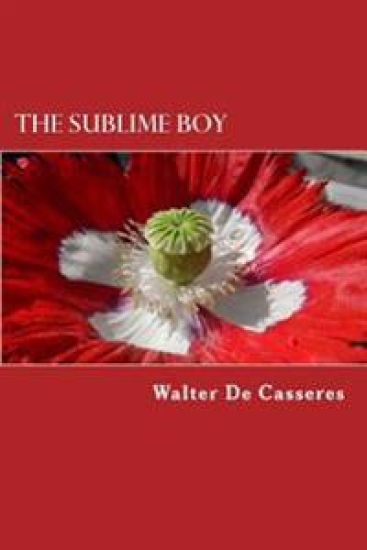
The Sublime Boy: The Poems of Walter De Casseres
Walter de Casseres
Createspace Independent Publishing Platform
1926
nidottu
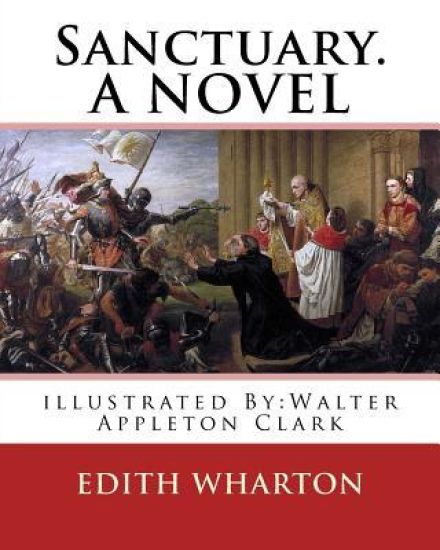
Sanctuary. By: Edith Wharton, illustrated By: Walter Appleton Clark. A NOVEL: Walter Appleton Clark was born June 24, 1876 and died December 26, 1906.
Walter Appleton Clark; Edith Wharton
Createspace Independent Publishing Platform
2016
nidottu
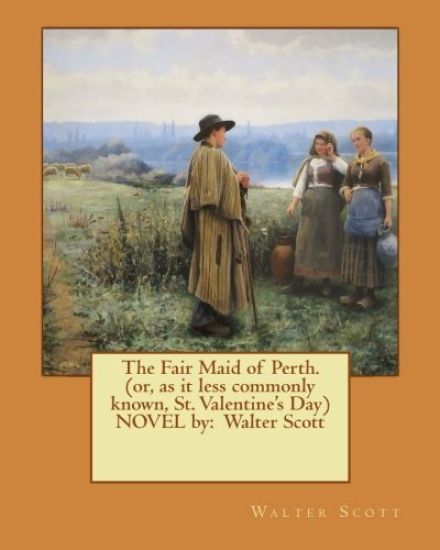
The Fair Maid of Perth.(or, as it less commonly known, St. Valentine's Day) NOVEL by: Walter Scott
Walter Scott
Createspace Independent Publishing Platform
2016
nidottu
The Fair Maid of Perth (or St. Valentine's Day) is a novel by Sir Walter Scott. Inspired by the strange, but historically true, story of the Battle of the North Inch, 1] it is set in Perth (then called 'Saint Johnstone') and other parts of Scotland around 1400. The book had been intended to include two other stories in the same volume, "My Aunt Margaret's Mirror" and "Death of the Laird's Jock", which was to have been titled St. Valentine's Eve The fair maid of the title is Catharine Glover, daughter of a glovemaker in Perth, who kisses Henry Gow/Smith, the armourer, while he is sleeping, on Valentine's Day. But Catharine has caught the eye of the Duke of Rothesay, and when Gow interrupts an attempted abduction, the armourer is drawn simultaneously into royal intrigue and highland feud.

The secret history of the Oxford Movement, with a new preface containing a reply to critics.By: Walter Walsh (1857-1931 )(Original Version)
Walter Walsh 1857-1931
Createspace Independent Publishing Platform
2016
nidottu

The Case Against Vaccination (1896) by Walter Hadwen
Walter Hadwen
Createspace Independent Publishing Platform
2016
nidottu
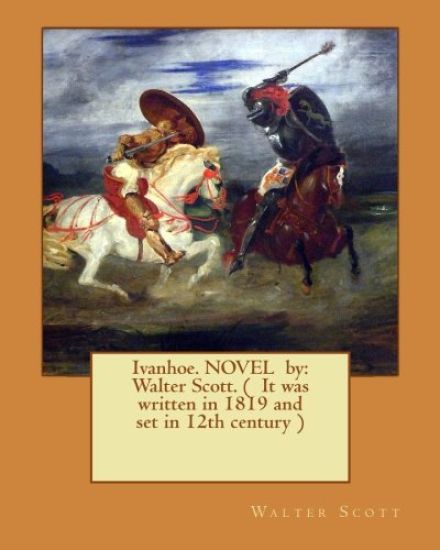
Ivanhoe. NOVEL by: Walter Scott. ( It was written in 1819 and set in 12th century )
Walter Scott
Createspace Independent Publishing Platform
2016
nidottu
Ivanhoe is a novel by Sir Walter Scott. It was written in 1819 and set in 12th century England, an example of historical fiction. Ivanhoe is sometimes given credit for helping to increase popular interest in the middle ages in 19th century Europe and America. Ivanhoe is a historical novel by Sir Walter Scott, first published in 1820 in three volumes and subtitled A Romance. Ivanhoe, set in 12th century England, has been credited for increasing interest in romance and medievalism; John Henry Newman claimed Scott "had first turned men's minds in the direction of the Middle Ages", while Carlyle and Ruskin made similar assertions of Scott's overwhelming influence over the revival, based primarily on the publication of this novel

Captain Macklin: His Memoirs (1902). By: Richard Harding Davis, illustrated By: Walter Appleton Clark was born June 24, 1876 and died D
Walter Appleton Clark; Richard Harding Davis
Createspace Independent Publishing Platform
2016
nidottu
Richard Harding Davis (April 18, 1864 - April 11, 1916) was an American journalist and writer of fiction and drama, known foremost as the first American war correspondent to cover the Spanish-American War, the Second Boer War, and the First World War.His writing greatly assisted the political career of Theodore Roosevelt and he also played a major role in the evolution of the American magazine. His influence extended to the world of fashion and he is credited with making the clean-shaven look popular among men at the turn of the 20th century. Davis was born on April 18, 1864 in Philadelphia, Pennsylvania.His mother Rebecca Harding Davis was a prominent writer in her day. His father, Lemuel Clarke Davis, was himself a journalist and edited the Philadelphia Public Ledger. As a young man, Davis attended the Episcopal Academy. In 1882, after an unhappy year at Swarthmore College, Davis transferred to Lehigh University, where his uncle, H. Wilson Harding, was a professor.While at Lehigh, Davis published his first book, The Adventures of My Freshman (1884), a collection of short stories. Many of the stories had originally appeared in the student magazine the Lehigh Burr. In 1885, Davis transferred to Johns Hopkins University. After college, his father helped him gain his first position as a journalist at the Philadelphia Record but he was soon dismissed. After another brief position at the Philadelphia Press, Davis accepted a better-paying position at the New York Evening Sun where he gained attention for his flamboyant style and his writing on controversial subjects such as abortion, suicide and execution.He first attracted attention in May to June 1889, by reporting on the devastation of Johnstown, Pennsylvania, following the infamous flood and added to his reputation by reporting on other noteworthy events such as the first electrocution of a criminal (the execution of William Kemmler in 1890)......... Walter Appleton Clark was born June 24, 1876 and died December 26, 1906. He began his brief career with studies at the Art Students League in New York in 1894. He studied under H. Siddons Mowbray, who was classically trained in Paris and instilled in Clark the basics of good draftsmanship.Clark's classmates included James Montgomery Flagg who was already selling to Life and Judge and was already known as a bon vivant, man about town. Flagg painted the portrait of Clark, above right, and undertook the daunting task of showing the 18-year-old Clark the wonders and pleasures of New York. At the ripe old age of 23, he returned to the Art Students League as an instructor. Despite a great success there as a teacher, he only stayed for 1899 and went back to full-time illustrating the following year. His work was now extremely popular. In 1902-1903 he was providing illustrations for two series running simultaneously in Scribner's, The "Fortunes of Oliver Horn" and "Captain Macklin" by two of the most popular writers of the day. His drawings were often chosen for the coveted frontispiece position in the magazine. It was the first image the reader saw upon opening the magazine and was reserved for premier artists. To give you an idea of how well Clark was regarded, he was appearing in the same issues of the same magazines as Howard Pyle, Howard Chandler Christy, A.B. Frost, and Jules Guerin. And this was just five years after he began his career. It's difficult to convey how respected Clark was in his day, but, had he lived, it's easy to see him in the same class as Parrish and Wyeth. The image above right is from "The Fortunes of Oliver Horn", by F. Hopkinson Smith and appeared in the May 1902 issue of Scribner's. The chapters were collected into book form in August 1902 with eight b&w plates.........
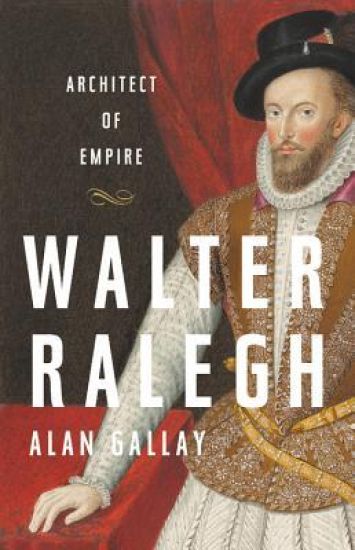
Sir Walter Ralegh was the favourite of Queen Elizabeth, who showered him estates, jewels, monopolies, and political appointments earning him the reputation of "the most hated man in England." A man of many talents, he helped convince Elizabeth she should be empress of a great empire, on the condition that he be the one to shape her realm from the first. In Walter Ralegh, eminent historian Alan Gallay tells the fascinating story of how Ralegh helped create the largest empire the world has ever seen.A courtier, buccaneer, soldier, explorer, and statesman -- as well as a poet, historian, naval strategist, and scientist -- Ralegh is best known in the US for trying, and failing, to found Roanoke, the first English colony in America. But that event does not even begin to suggest the world-historical import of his adventures. Inspired by the mystical religious philosophy of hermeticism, Ralegh (popularly, and mistakenly, spelt "Raleigh") believed that England could build an empire without the conquest of native peoples, an empire in which English settlers and American Indians would live together, or, alternatively, where natives became allies and England would not interfere with their way of life. Playing a lead role in England's simultaneous attempt to colonise North America, South America, and Ireland, Ralegh shaped the English Empire at its birth, motivated by the wild idealism that the answer to English fears of national decline resided in the Americas, where natives blessed by God would reveal the mysteries of the universe.In the end, colonialism left a legacy of brutal exploitation far different from Ralegh's idealisations. Examining Ralegh's life, Gallay reveals that Elizabethans had complex and often contrary views on colonisation, seeing it as a means of achieving transcendence or, just as often, of achieving wealth and glory through war and subjugation. From Ralegh's introduction of the potato to Ireland to his creation of the most famous medicine of seventeenth-century England, from his failed colonial experiment on Roanoke island to his search for El Dorado, Gallay chronicles Ralegh's legendary life and offers a new origin story for the English Empire.

Ivanhoe (1820). By: Walter Scott: Historical novel (Waverley Novels)
Walter Scott
Createspace Independent Publishing Platform
2017
nidottu
Ivanhoe is a historical novel by Sir Walter Scott, first published in 1820 in three volumes and subtitled A Romance. At the time it was written it represented a shift by Scott away from fairly realistic novels set in Scotland in the comparatively recent past, to a somewhat fanciful depiction of mediaeval England. It has proved to be one of the best known and most influential of Scott's novels. Ivanhoe is set in 12th century England, with colourful descriptions of tournaments, outlaws, witch trials and divisions between Jews and Christians. It has been credited for increasing interest in romance and medievalism; John Henry Newman claimed Scott "had first turned men's minds in the direction of the Middle Ages", while Carlyle and Ruskin made similar assertions of Scott's overwhelming influence over the revival, based primarily on the publication of this novel.It has also had an important influence on popular perceptions of Robin Hood, Richard the Lionheart and King John. Ivanhoe is the story of one of the remaining Saxon noble families at a time when the nobility in England was overwhelmingly Norman. It follows the Saxon protagonist, Sir Wilfred of Ivanhoe, who is out of favour with his father for his allegiance to the Norman king Richard the Lionheart. The story is set in 1194, after the failure of the Third Crusade, when many of the Crusaders were still returning to their homes in Europe. King Richard, who had been captured by Leopold of Austria on his return journey to England, was believed to still be in captivity. The legendary Robin Hood, initially under the name of Locksley, is also a character in the story, as are his "merry men". The character that Scott gave to Robin Hood in Ivanhoe helped shape the modern notion of this figure as a cheery noble outlaw. Other major characters include Ivanhoe's intractable father, Cedric, one of the few remaining Saxon lords; various Knights Templar, most notable of whom is Brian de Bois-Guilbert, Ivanhoe's main rival; a number of clergymen; the loyal serfs: Gurth the swineherd and the jester Wamba, whose observations punctuate much of the action; and the Jewish moneylender, Isaac of York, who is equally passionate about his people and his beautiful daughter, Rebecca. The book was written and published during a period of increasing struggle for the emancipation of the Jews in England, and there are frequent references to injustices against them........ Sir Walter Scott, 1st Baronet, FRSE (15 August 1771 - 21 September 1832) was a Scottish historical novelist, playwright and poet with many contemporary readers in Europe, Australia, and North America. Scott's novels and poetry are still read, and many of his works remain classics of both English-language literature and of Scottish literature. Famous titles include Ivanhoe, Rob Roy, Old Mortality, The Lady of the Lake, Waverley, The Heart of Midlothian and The Bride of Lammermoor. Although primarily remembered for his extensive literary works and his political engagement, Scott was an advocate, judge and legal administrator by profession, and throughout his career combined his writing and editing work with his daily occupation as Clerk of Session and Sheriff-Depute of Selkirkshire....

The fortunes of Nigel. By: Sir Walter Scott: Novel
Walter Scott
Createspace Independent Publishing Platform
2017
nidottu
Sir Walter Scott, 1st Baronet, FRSE (15 August 1771 - 21 September 1832) was a Scottish historical novelist, playwright and poet with many contemporary readers in Europe, Australia, and North America. Scott's novels and poetry are still read, and many of his works remain classics of both English-language literature and of Scottish literature. Famous titles include Ivanhoe, Rob Roy, Old Mortality, The Lady of the Lake, Waverley, The Heart of Midlothian and The Bride of Lammermoor. Although primarily remembered for his extensive literary works and his political engagement, Scott was an advocate, judge and legal administrator by profession, and throughout his career combined his writing and editing work with his daily occupation as Clerk of Session and Sheriff-Depute of Selkirkshire. A prominent member of the Tory establishment in Edinburgh, Scott was an active member of the Highland Society and served a long term as President of the Royal Society of Edinburgh (1820-32)......... James VI and I (19 June 1566 - 27 March 1625) was King of Scotland as James VI from 24 July 1567 and King of England and Ireland as James I from the union of the Scottish and English crowns on 24 March 1603 until his death. The kingdoms of Scotland and England were individual sovereign states, with their own parliaments, judiciary, and laws, though both were ruled by James in personal union. James was the son of Mary, Queen of Scots, and a great-great-grandson of Henry VII, King of England and Lord of Ireland, positioning him to eventually accede to all three thrones. James succeeded to the Scottish throne at the age of thirteen months, after his mother Mary was compelled to abdicate in his favour. Four different regents governed during his minority, which ended officially in 1578, though he did not gain full control of his government until 1583. In 1603, he succeeded the last Tudor monarch of England and Ireland, Elizabeth I, who died without issue. a] He continued to reign in all three kingdoms for 22 years, a period known as the Jacobean era after him, until his death in 1625 at the age of 58. After the Union of the Crowns, he based himself in England (the largest of the three realms) from 1603, only returning to Scotland once in 1617, and styled himself "King of Great Britain and Ireland". b] He was a major advocate of a single parliament for England and Scotland. In his reign, the Plantation of Ulster and British colonization of the Americas began. At 57 years and 246 days, James's reign in Scotland was longer than those of any of his predecessors. He achieved most of his aims in Scotland but faced great difficulties in England, including the Gunpowder Plot in 1605 and repeated conflicts with the English Parliament. Under James, the "Golden Age" of Elizabethan literature and drama continued, with writers such as William Shakespeare, John Donne, Ben Jonson, and Sir Francis Bacon contributing to a flourishing literary culture. 1] James himself was a talented scholar, the author of works such as Daemonologie (1597), The True Law of Free Monarchies (1598), and Basilikon Doron (1599). He sponsored the translation of the Bible that would later be named after him: the Authorised King James Version. c] Sir Anthony Weldon claimed that James had been termed "the wisest fool in Christendom", an epithet associated with his character ever since. Since the latter half of the 20th century, historians have tended to revise James's reputation and treat him as a serious and thoughtful monarch.

The Lay of the Last Minstrel (1805). By: Walter Scott: Poetry
Walter Scott
Createspace Independent Publishing Platform
2017
nidottu
Sir Walter Scott, 1st Baronet, FRSE (15 August 1771 - 21 September 1832) was a Scottish historical novelist, playwright and poet with many contemporary readers in Europe, Australia, and North America. Scott's novels and poetry are still read, and many of his works remain classics of both English-language literature and of Scottish literature. Famous titles include Ivanhoe, Rob Roy, Old Mortality, The Lady of the Lake, Waverley, The Heart of Midlothian and The Bride of Lammermoor. Although primarily remembered for his extensive literary works and his political engagement, Scott was an advocate, judge and legal administrator by profession, and throughout his career combined his writing and editing work with his daily occupation as Clerk of Session and Sheriff-Depute of Selkirkshire. A prominent member of the Tory establishment in Edinburgh, Scott was an active member of the Highland Society and served a long term as President of the Royal Society of Edinburgh (1820-32). In 1796, Scott's friend James Ballantyne 16] founded a printing press in Kelso, in the Scottish Borders. Through Ballantyne, Scott was able to publish his first works, including "Glenfinlas" and "The Eve of St. John", and his poetry then began to bring him to public attention. In 1805, The Lay of the Last Minstrel captured wide public imagination, and his career as a writer was established in spectacular fashion. He published many other poems over the next ten years, including the popular The Lady of the Lake, printed in 1810 and set in the Trossachs. Portions of the German translation of this work were set to music by Franz Schubert. One of these songs, "Ellens dritter Gesang", is popularly labelled as "Schubert's Ave Maria". Beethoven's opus 108 "Twenty-Five Scottish Songs" includes 3 folk songs whose words are by Walter Scott. Marmion, published in 1808, produced lines that have become proverbial. Canto VI. Stanza 17 reads: Yet Clare's sharp questions must I shun Must separate Constance from the nun Oh what a tangled web we weave When first we practise to deceive A Palmer too No wonder why I felt rebuked beneath his eye. In 1809 Scott persuaded James Ballantyne and his brother to move to Edinburgh and to establish their printing press there. He became a partner in their business. As a political conservative, Scott helped to found the Tory Quarterly Review, a review journal to which he made several anonymous contributions. Scott was also a contributor to the Edinburgh Review, which espoused Whig views. Scott was ordained as an elder in the Presbyterian Church of Duddington and sat in the General Assembly for a time as representative elder of the burgh of Selkirk. When the lease of Ashestiel expired in 1811 Scott bought Cartley Hole Farm, on the south bank of the River Tweed nearer Melrose. The farm had the nickname of "Clarty Hole", and when Scott built a family cottage there in 1812 he named it "Abbotsford". He continued to expand the estate, and built Abbotsford House in a series of extensions. In 1813 Scott was offered the position of Poet Laureate. He declined, due to concerns that "such an appointment would be a poisoned chalice", as the Laureateship had fallen into disrepute, due to the decline in quality of work suffered by previous title holders, ", as a succession of poetasters had churned out conventional and obsequious odes on royal occasions." He sought advice from the Duke of Buccleuch, who counseled him to retain his literary independence, and the position went to Scott's friend, Robert Southey.
The Lady of the Lake. By: Walter Scott: The Lady of the Lake is a narrative poem by Sir Walter Scott, first published in 1810.
Walter Scott
Createspace Independent Publishing Platform
2017
nidottu

Rokeby; The lord of the isles; The bridal of Triermain; Miscellaneous poems, indexes, etc. By: Sir Walter Scott: Poems
Walter Scott
Createspace Independent Publishing Platform
2017
nidottu
Ivanhoe is the story of one of the remaining Saxon noble families at a time when the English nobility was overwhelmingly Norman. It follows the Saxon protagonist, Wilfrid of Ivanhoe, who is out of favour with his father owing to his courting the Lady Rowena and for his allegiance to the Norman king Richard I of England. The story is set in 1194, after the end of the Third Crusade, when many of the Crusaders were still returning to Europe. King Richard, having been captured by the Duke of Saxony, on his way back, was still supposed to be in the arms of his captors. The legendary Robin Hood, initially under the name of Locksley, is also a character in the story, as are his 'merry men, ' including Friar Tuck and, less so, Alan-a-Dale. (Little John is merely mentioned.) The character that Scott gave to Robin Hood in Ivanhoe helped shape the modern notion of this figure as a cheery noble outlaw
With the British legion: a story of the Carlist wars. By: G. A. Henty and Walter Paget (Illustrated)
Walter Paget; G. a. Henty
Createspace Independent Publishing Platform
2017
nidottu