Kirjojen hintavertailu. Mukana 12 067 427 kirjaa ja 12 kauppaa.

Kirjahaku

Etsi kirjoja tekijän nimen, kirjan nimen tai ISBN:n perusteella.

1000 tulosta hakusanalla Willy H. Simonson

Fuck, det gør ondt, Willy!

Fuck, det gør ondt, Willy!

Gry Kappel Jensen

Turbine
2014
sidottu
Alle seje mænd, som Willy kender, har en tatovering. Også Willys far. Det har Willys morfortalt, for Willy har nemlig aldrig selv mødt ham. Willy vil også have en tatovering. Men han må vente, til han bliver 18 år. Eller hvad?Fuck, det gør ondt, Willy er første del af serien om drengen Willy – uhøjtidelige og morsomme bøger i et nutidigt og læsevenligt sprog. De er skrevet af Gry Kappel Jensen,der har skrevet bøger for både mindre og større børn, fx detektivhistorien Romeo og Krage– og biltyveriet fra 2012. Illustrationerne er af Jan Solheim. Bøgerne er på lix 10-11 og egner sig til selvlæsning fra 4. klasse. Den første Willy-bog er solgt til udgivelse i Sverige. TURBINE forlaget lancerer nu en ny bogserie til børn og unge fra 10 år og op. Om Dynamo: Dynamo er en bogserie til børn og unge – til selvlæsning og til brug i folkeskolensmellemtrin og i udskolingen. Der er smæk på emnerne, og sproget er læsevenligt ogtilpasset målgruppen. Både erfarne og unge forfattere og illustratorer bidrager til serien,der alle er indbundne bøger i en god kvalitet.
Autobiography of a lingam: - dick, cock, prick, willy, joystick and/or penis (a path towards sexual awareness)
After reading the manuscript, Jayson Gaddis, the famous American relationship coach, wrote: "Michael Polling's 'Autobiography of a Lingam' goes deep into the male psyche in a creative, edgy, and confronting way. If you want to understand a man's inner sexual world, his demons, his beauty, and his darkness, then this book will be helpful on your path to sexual expression and healing."It was Gaddis' own 'Letter to my c_ck', an article published on the internet, in which he, among other things, apologizes for his past behavior towards his c_ck, abusing him and not taking him seriously at all, which made me reconsider how my own c_ck had experienced my attention over the years. Gaddis' letter gave me the inspiration, and audacity, to really 'listen' to what he, my c_ck, would want me to know about his experiences.What began as a short commentary, became a whole book.And, yes, my lingam, as I prefer directing more lovingly my c_ock, had (and still has) so many things to say, that he surprised me more than once. In the end, we, my lingam and I, wrote this book with the aim of improving the male/female-relationship - at both sides. Sexual love in all its vulnerability and intimacy can be the most beautiful and greatest in a lifetime. For men and women.This book is certainly not meant to excite. It has nothing to do with pornography, although eroticism, the experience of the erotic, the sexual, overall surely plays a central role. And, although this book is primarily written from a heterosexual point of view, in essence, it can be read by anyone, homosexuals, transgenders, asexuals, etc. Its main message is about the connection, someone can and/or may have with his or her genitals - and through them with the other sex, and even with the whole world.
Träume vom modernen Deutschland. Horst Ehmke, Reimut Jochimsen und die Planung des Politischen in der ersten Regierung Willy Brandts.
Die Vorstellung von der Planbarkeit und Machbarkeit politischer Vorg nge geh rte zu einem zentralen Charakteristikum der ersten Regierung Willy Brandts. Prominentester Vertreter dieser Geisteshaltung war dessen Kanzleramtsminister Horst Ehmke, der sich f r eine radikale Modernisierung von Regierung und Verwaltung einsetzte. Zusammen mit dem Leiter des Planungsstabes, Reimut Jochimsen, propagierte er die Rationalisierung der Politik, gest tzt auf den Glauben an moderne Technik und die M glichkeiten der elektronischen Datenverarbeitung. Obwohl diese Absicht den Ende der sechziger Jahre vorherrschenden Zeitgeist exemplarisch widerspiegelte, standen die technokratisch anmutenden Planer schnell einer wachsenden Ablehnung des Beamtenapparates und einer teils sp ttisch-absch tzigen ffentlichkeit gegen ber. Benjamin Seifert beleuchtet in seinem Buch die Grenzen und M glichkeiten planungsoptimistischen Denkens in der Zeit zwischen 1969 und 1972. Dabei st t er auf Fragen und Probleme, die auch heute immer noch von Bedeutung sind. So sind die damaligen Absichten der sozialdemokratischen Planer in vielen Punkten deckungsgleich mit den heutigen Forderungen an eine effiziente und moderne Verwaltung. Seifert zeigt diese Parallelen auf und stellt das Scheitern - aber auch die Erfolge - der 'Modernisierer' unter Willy Brandt anschaulich dar.
Die Deutschen Friedensnobelpreistraeger Gustav Stresemann, Ludwig Quidde, Carl Von Ossietzky Und Willy Brandt
In der Geschichte des Friedensnobelpreises hat es vier deutsche Preistrager gegeben: Gustav Stresemann 1926, Ludwig Quidde 1927, Carl von Ossietzky 1936 (fur 1935) und Willy Brandt 1971. Diese Preisverleihungen waren stark umstritten und loesten sowohl in Deutschland als auch in Norwegen politische Kontroversen aus. Die Studie stellt die Friedensarbeit der deutschen Preistrager vor, beleuchtet die Entscheidungsprozesse im Nobelkomitee, untersucht die oeffentlichen Reaktionen und thematisiert die Folgen fur die deutsch-norwegischen Beziehungen. Auf der Grundlage eines ausfuhrlichen Quellenstudiums gelangt sie zu dem Ergebnis, dass die deutschen Friedensnobelpreise die Verleihungspraxis in neue Bahnen gelenkt und in einem betrachtlichen Umfang zur Popularitat des weltweit wichtigsten Friedenspreises beigetragen haben.
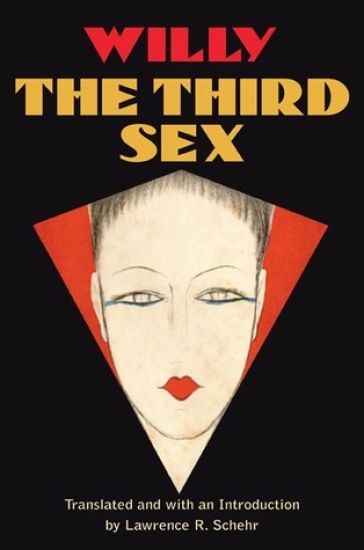
The Third Sex

The Third Sex

Willy

University of Illinois Press
2007
sidottu
A gold mine of information about a hidden queer cultureThirty-two years before Simone de Beauvoir's classic The Second Sex, popular French novelist Willy published The Third Sex, a vivid description of the world of European homosexuals in France, Italy, and Germany during the late 1920s. Stepping directly into the heart of gay men's culture, Willy follows homosexual nightlife into music halls, nightclubs, casinos, bars, and saunas. While he finds plenty of drug and alcohol abuse, he also discovers homosexual publishers, scientific societies, group rivalries, and opinions--both medical and political--about the nature of homosexuality itself. Lawrence R. Schehr's introduction provides context and translator's notes for this first-ever English edition.
No Justice in Germany

No Justice in Germany

Willy

Stanford University Press
2012
sidottu
With great immediacy, the diaries of Willy Cohn, a Jew and a Social Democrat, show how the process of marginalization under the Nazis unfolded within the vibrant Jewish community of Breslau—until that community was destroyed in 1941. Cohn documents how difficult it was to understand precisely what was happening, even as people were harassed, beaten, and taken off to concentration camps. He chronicles the efforts of the community to maintain some semblance of normal life at the same time as many made plans to emigrate or to get their children out. Cohn and his wife Gertrud were able to get their three oldest children out of Germany before it was too late. However, burying himself in his work chronicling the history of the Jews in Germany, his diaries, and his memoirs, Cohn missed his own chance to escape. In late 1941, he, Gertrud, and their two young daughters were deported to Lithuania, where they were shot. Willy Cohn was a complex individual: an Orthodox Jew and a socialist; an ardent Zionist and a staunch German patriot; a realist but also an idealist often unable to cope with reality; a democrat and an admirer of certain Nazi policies and of their resoluteness. These contradictions and the wealth of detail that poured from his pen give us a unique view of those disorienting and frightening times in Germany.