Kirjojen hintavertailu. Mukana 11 244 527 kirjaa ja 12 kauppaa.

Kirjahaku

Etsi kirjoja tekijän nimen, kirjan nimen tai ISBN:n perusteella.

1000 tulosta hakusanalla Wright Stuart Thomas

The Critical Response to Richard Wright

The Critical Response to Richard Wright

Robert J. Butler

Greenwood Press
1995
sidottu
Richard Wright is widely recognized as one of the most important African-American writers and as a significant 20th-century author. With the publication of Native Son in 1940, Wright established his enduring reputation as a man of letters. With the immense critical success of Native Son, Wright went on to author Black Boy, The Outsider, and Eight Men. His writings reflect his experiences growing up in the poverty and racial strife of the South, and his thoughts on major social issues.This volume traces the critical reception of Wright's major works, from the publication of Native Son to the present day. An introductory chapter overviews the critical response to his writings, while two biographical chapters discuss his writings in relation to his life. Sections are then devoted to Native Son, Black Boy, and The Outsider. Each of these sections presents reviews and articles reflecting the best criticism of Wright's works. A final section, Richard Wright Today, offers contemporary assessments of Wright's reputation, as well as fascinating discussions of the recent Library of America editions of his works.
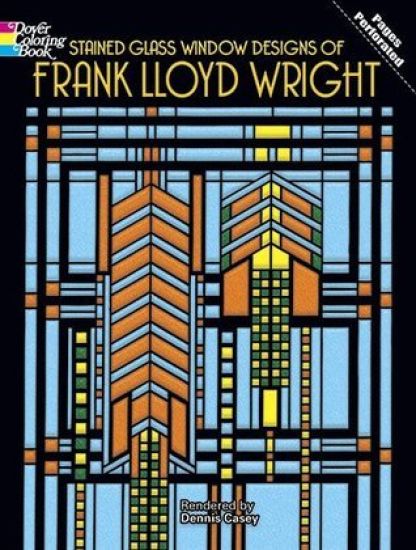
Stained Glass Window Designs of Frank Lloyd Wright
Generally acknowledged as America's greatest architect, Frank Lloyd Wright not only designed buildings, but furniture, textiles, and stained glass windows. This lovely collection of sixteen full-page designs, boldly outlined on translucent paper, have been adapted from window patterns in such famous Wright creations as the Robie House, Coonley Playhouse, Dana House, Lake Geneva Inn, and many others. Hang the colored drawings in a window or near other light source for glowing stained glass effects.
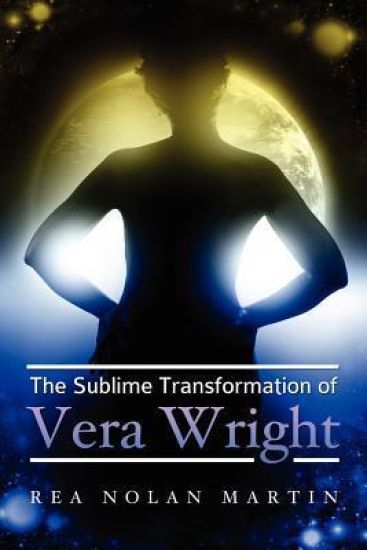
The Sublime Transformation of Vera Wright
This book challenges the notion that great saints and prophets have disappeared from the earth. The spiritual awakening of a quirky sixty-plus beautician named Vera Wright, in a quiet New Jersey town, surprises not only Vera herself, but everyone she knows and meets, including the Pope. This is an inspiring and entertaining account of how one person's astonishing transformation can transform the world.
The Architecture of Frank Lloyd Wright

The Architecture of Frank Lloyd Wright

Neil Levine

Princeton University Press
1998
pokkari
Neil Levine's study of the architecture of Frank Lloyd Wright, beginning with his work in Oak Park in the late 1880s and culminating in the construction of the Guggenheim museum in New York and the Marin County Civic Center in the 1950s, if the first comprehensive and in-depth analysis of the architect's entire career since the opening of the Wright Archives over a decade ago. The most celebrated and prolific of modern architects, Wright built more than four hundred buildings and designed at least twice as many more. The characteristic features of his work--the open plan, dynamic space, fragmented volumes, natural materials, and integral structure--established the basic way that we think about modern architecture. For a general audience, this engaging book provides an introduction to Wright's remarkable accomplishments, as seen against the background of his eventful and often tragic life. For the architect or the architectural historian, it will be an important source of new insights into the development of Wright's whole body of work. It integrates biographical and historical material in a chronologically ordered framework that makes sense of his enormously varied career, and it provides over four hundred illustrations running parallel to the text. Levine conveys the meanings of the continuities and changes that he sees I Wright's architecture and thought by focusing successive chapters on his most significant buildings, such as the Winslow House, Taliesin, Hollyhock House, Fallingwater, Tailsen west, and the Guggenheim Museum. A new understanding of the representational imagery and narrative structure of Wright's work, along with a much-needed reconsideration of its historical and contextual underpinnings, gives this study a unique place in the writings on Wright. In contrast to the emphasis a previous generation of critics and historians placed on Wright's earlier buildings, this book offers a broader perspective that sees Wright's later work as the culmination of his earlier efforts and the basis for a new understanding of the centrality of his career to the evolution of modern architecture as a whole.
The Urbanism of Frank Lloyd Wright

The Urbanism of Frank Lloyd Wright

Neil Levine

Princeton University Press
2015
sidottu
This is the first book devoted to Frank Lloyd Wright's designs for remaking the modern city. Stunningly comprehensive, The Urbanism of Frank Lloyd Wright presents a radically new interpretation of the architect's work and offers new and important perspectives on the history of modernism. Neil Levine places Wright's projects, produced over more than fifty years, within their historical, cultural, and physical contexts, while relating them to the theory and practice of urbanism as it evolved over the twentieth century. Levine overturns the conventional view of Wright as an architect who deplored the city and whose urban vision was limited to a utopian plan for a network of agrarian communities he called Broadacre City. Rather, Levine reveals Wright's larger, more varied, interesting, and complex urbanism, demonstrated across the span of his lengthy career. Beginning with Wright's plans from the late 1890s through the early 1910s for reforming residential urban neighborhoods, mainly in Chicago, and continuing through projects from the 1920s through the 1950s for commercial, mixed-use, civic, and cultural centers for Chicago, Madison, Washington, Pittsburgh, and Baghdad, Levine demonstrates Wright's place among the leading contributors to the creation of the modern city. Wright's often spectacular designs are shown to be those of an innovative precursor and creative participant in the world of ideas that shaped the modern metropolis. Lavishly illustrated with drawings, plans, maps, and photographs, this book features the first extensive new photography of materials from the Frank Lloyd Wright Foundation Archives. The Urbanism of Frank Lloyd Wright will serve as one of the most important books on the architect for years to come.
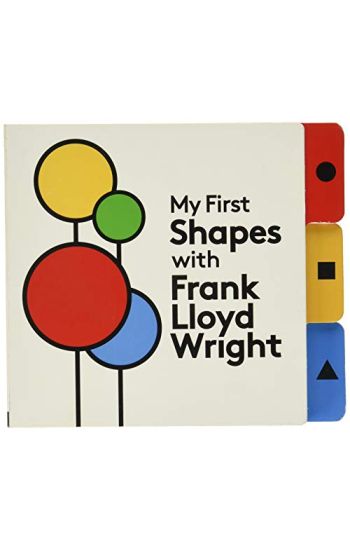
My First Shapes with Frank Lloyd Wright
Frank Lloyd Wright used basic geometric shapes as the foundation for his modern architecture. Learn your basic shapes alonside this famous architect with My First Shapes with Frank Lloyd Wright Board Book from Mudpuppy. Each chapter tab focuses on one of three basics shapes: circle, square, or triangle.
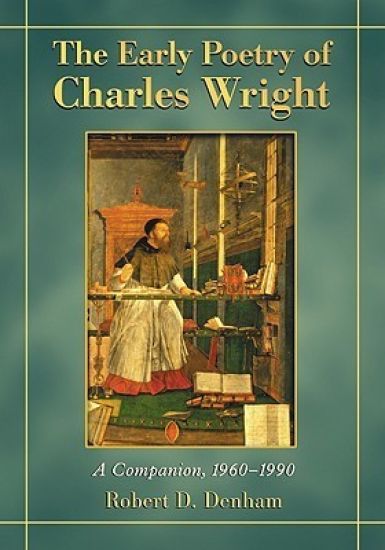
The Early Poetry of Charles Wright

The Early Poetry of Charles Wright

Robert D. Denham

McFarland Co Inc
2009
pokkari
This companion covers Charles Wright's first two trilogies, Country Music (1982) and The World of the Ten Thousand Things (1990), providing biographical details, information on Wright's sources and influences, and historical notes. It pays special attention to the way that Wright's poems work together and the links that are formed between them. While each poem is given its own commentary, the author argues that they work together in a concentrated whole to document a man's spiritual journey.
The Identification of 1809 William Wright of Franklin County, Virginia, as the Son of 1792 John Wright of Fauquier County, Virginia and Elizabeth (Bronaugh) (Darnall) Wright
Because of the numerous persons with the surname Wright and similar given names, and to keep track of these different people, the author has adopted the convention of distinguishing Wrights by listing them with their date of death and place of death, the two most commonly available pieces of information. Thus the William Wright who died in 1809 at Franklin County, Virginia, is identified as 1809 William Wright of Franklin County, Virginia. Evidence identifying William Wright is presented in this ten-part analysis which reviews some of the information known about William and John Wright, William's wife Mary (Grant) Wright, documentary evidence, handwriting, suggestive evidence, family naming evidence, and contrary identifications and why they are probably not correct. Additionally, there is a summary in chronological order of the information known about William Wright of Franklin County and Mary (Grant) Wright in northern Virginia.
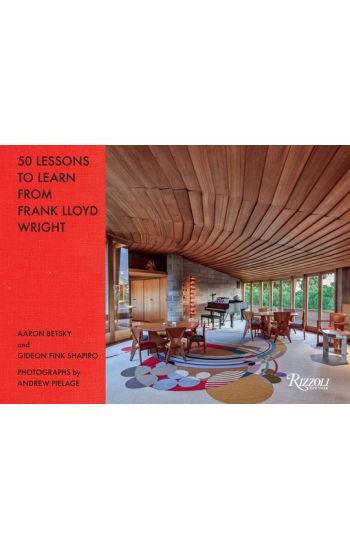
50 Lessons to Learn from Frank Lloyd Wright

50 Lessons to Learn from Frank Lloyd Wright

Aaron Betsky

Rizzoli International Publications
2021
sidottu
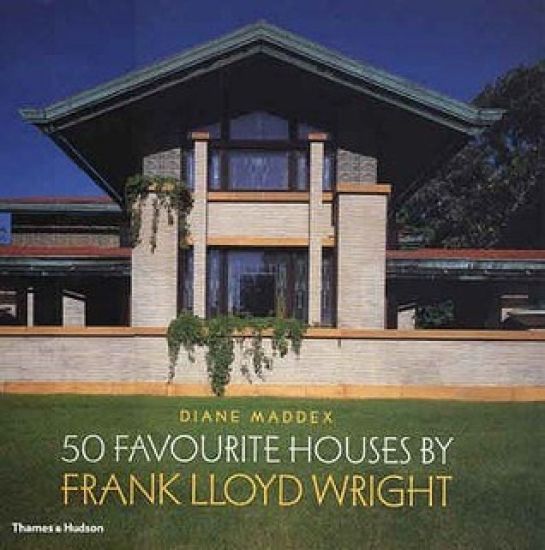
50 Lessons to Learn from Frank Lloyd Wright presents the work and imaginings of this beloved architect in an accessible and compelling form. Here we may glean insight from an American master and find inspiration for the thoughtful design of our own homes. By means of succinct examples, pithy texts, and rich visuals, the authors share fifty lessons, or learning points, with an eye to Wright-designed houses and interiors, ranging from Inspired by Nature, Make a Room Flexible with Screens, and Creating Liveable Interiors with Textiles, to Learning from the East, Green Design and Seeking Harmony and Balance. Each lesson is accompanied by pearls of wisdom gathered from the master s trove of writings on architecture and design. This gorgeously designed volume offers an informal and yet richly detailed introduction to a seminal figure of architecture, world-famous for his romantic Fallingwater and magical Guggenheim Museum, and will be of much interest to the budding architecture enthusiast, to the interior designer, to those seeking ideas for their own homes, as well as to fans Frank Lloyd Wright looking for just the right book. Included are colour photographs, drawings, quotations from the writings, as well as newly commissioned diagrams and thoughtful analysis by the authors.
The Diary of Thomas Giordani Wright, Newcastle Doctor, 1826-1829
The diary of an able young doctor working in an extensive colliery practice in Newcastle in the 1820s; with detail on coal-mining, medical facilities, social life, societies, libraries and transport. Thomas Giordani Wright was a very successful nineteenth-century doctor who died, aged ninety, in 1898. He kept a remarkable diary during the last three years of his medical apprenticeship in the 1820s, which is published here forthe first time. Working as assistant in the 'extensive colliery practice' of Mr James McIntyre, Surgeon, Wright had responsibility for 'six collieries around Newcastle and the inferior practice of the house'. He had to make long rounds on horseback, and cope with dreadful accidents and diseases as well as with the demands of his 'reserved proud and selfish' master. But in spite of his arduous and busy life, Wright kept his diary up-to-date (and included autobiographical detail of his earlier life) and has left a vivid account of the life in a busy provincial town of a bright young man at the outset of his career.