

Kirjahaku
Etsi kirjoja tekijän nimen, kirjan nimen tai ISBN:n perusteella.
1000 tulosta hakusanalla Wyn




Few groups in our history are as fascinating and mysterious as the Ku Klux Klan. Its story is one of violence, political manipulation and intrigue, absurdity, and mesmerizing organizational and propaganda skills. Through shrewd political tactics and powerful leadership, the Klan has often been a potent force, as it encouraged Americans to protect themselves from those they find "unacceptable." Its actions have made it one of the most feared groups in America. In The Fiery Cross, Wyn Craig Wade traces the Klan from its beginnings after the Civil War as a social club in Pulaski, Tennessee, to the present. Wade provides us with the history of the group, which has gone through a number of declines and renaissances over the last hundred years. We follow the Klan's resurgence in 1915 after D.W. Griffith's epic film The Birth of a Nation depicted Klan members as heroic saviors of the old Southern society, to the swearing in of President Warren G. Harding as a Klansman in the Green Room, and from the Klan's championing of white supremacy as a response to the Civil Rights movement in the 60s, to their present day activities, aligning themselves with a variety of neo-fascist and right-wing groups in the American West. Finally, Wade provides us with an assessment of the Klan's future. The Fiery Cross provides an exhaustive analysis and perspective on this dark shadow of American society. It is long overdue.

The Anglo-American Military Relationship explores military cooperation since the end of the Cold War. Much of the literature on the Anglo-American 'Special Relationship' has focused on the personal linkages between American Presidents and British Prime Ministers. This book argues that much of what is special between the two countries has resided in their military cooperation. This has provided the ballast that has underpinned other aspects of the political and economic relationship and given it durability. The book focuses on how the British armed services have worked alongside a superpower, in both peacetime and conflict. This military cooperation has been a challenging task, not least because it has occurred within a dynamic strategic context in which the nature of conflict has been evolving. British armed forces have engaged with their American allies in high intensity warfare, as well as in developing military doctrines to address insurgency, peace enforcement, and nation-building tasks. Working so closely with the US military has generated risks as well as benefits for Britain's armed forces. It has led them to engage in tasks that have weighed heavily upon their resources and has resulted in numerous tensions between the two sides.

A constantly evolving security agenda has become a vital part of US–EU relations. Contemporary security challenges such as the rise of international terrorism and the threat from 'states of concern' have – in recent years – forced the US and the EU to adapt their relationship and work together in new ways.Written by a leading authority, this incisive and wide-ranging book systematically examines the development of the transatlantic security relationship in the post-Cold War era. It assesses the nature of the US and EU as international actors and considers how they cooperate together. Rees argues that – despite divergences of interest after the end of the Cold War – the complex nature of contemporary challenges is driving both sides of the Atlantic towards increased cooperation. In addition, the book looks in detail at how global and European issues such as EU defence and enlargement policies, nuclear non-proliferation, and the war on terror have affected security relations.

A constantly evolving security agenda has become a vital part of US–EU relations. Contemporary security challenges such as the rise of international terrorism and the threat from 'states of concern' have – in recent years – forced the US and the EU to adapt their relationship and work together in new ways.Written by a leading authority, this incisive and wide-ranging book systematically examines the development of the transatlantic security relationship in the post-Cold War era. It assesses the nature of the US and EU as international actors and considers how they cooperate together. Rees argues that – despite divergences of interest after the end of the Cold War – the complex nature of contemporary challenges is driving both sides of the Atlantic towards increased cooperation. In addition, the book looks in detail at how global and European issues such as EU defence and enlargement policies, nuclear non-proliferation, and the war on terror have affected security relations.

This book offers a comprehensive analysis of the Common Agricultural Policy which imposes high costs on taxpayers and consumers yet has proved very difficult to reform. Particular emphasis is placed on new developments affecting the shape of the CAP, including the outcome of the GATT Uruguay Round negotiations, Eastern enlargement, and developments in environmental policy. A distinctive feature of the book is the attention given to situating European agriculture within its global context and in relation to the food processing and agricultural supply industries.
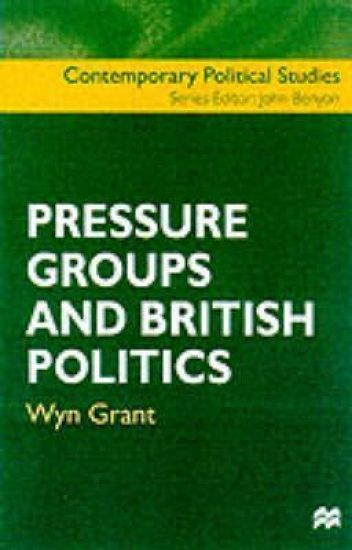
Written by one of Britain's leading analysts of pressure groups, this book provides comprehensive coverage of all aspects of pressure group politics in the UK and of the increasingly important EU dimension. The sleaze scandals surrounding the parliamentary lobby, grass roots direct action, the use of the media and courts and the particular importance of business, labour and consumer interests are also given full coverage.

A comprehensive assessment of how economic policy is made in Britain at the start of the 21st century and of how the content of taxation, spending, monetary and regulatory policy has evolved since 1945. All of this is set in the context of the impact of globalization and the European Union on the autonomy of domestic policy and an assessment of the debates about British economic performance and British decline.

A comprehensive assessment of how economic policy is made in Britain at the start of the 21st century and of how the content of taxation, spending, monetary and regulatory policy has evolved since 1945. All of this is set in the context of the impact of globalization and the European Union on the autonomy of domestic policy and an assessment of the debates about British economic performance and British decline.

This book, written in plain language by an experienced, psychoanalytically-orientated therapist, is aimed at lay readers who wish to understand how couples consciously and unconsciously operate in successful and unsuccessful partnerships. It covers the central concepts involved, illustrated by (disguised) case material. The book will also be invalu
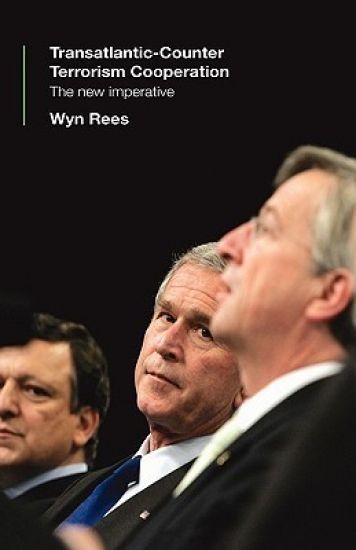
An incisive new analysis of transatlantic security cooperation, probing the roots as well as the future directions of this key relationship in world affairs.Since the 1990s, this cooperation has expanded from traditional military security issues into countering terrorism, international organized crime and drug trafficking. This has injected new impetus into transatlantic relations to work together on matters such as intelligence sharing and law enforcement. The events of September 11th 2001 have forced these new patterns of cooperation to the forefront of transatlantic relations.While progress has been made, developing this area of cooperation has been more difficult than expected and this book examines the reasons why. The author argues that many of the difficulties are due to different approaches on either side of the Atlantic and the absence of a dedicated transatlantic security forum in which these issues could be pursued. Furthermore, European nations have been preoccupied with the building of the European Union and have been both reluctant and unable to enter into special patterns of cooperation with the US.
An incisive new analysis of transatlantic security cooperation, probing the roots as well as the future directions of this key relationship in world affairs.Since the 1990s, this cooperation has expanded from traditional military security issues into countering terrorism, international organized crime and drug trafficking. This has injected new impetus into transatlantic relations to work together on matters such as intelligence sharing and law enforcement. The events of September 11th 2001 have forced these new patterns of cooperation to the forefront of transatlantic relations.While progress has been made, developing this area of cooperation has been more difficult than expected and this book examines the reasons why. The author argues that many of the difficulties are due to different approaches on either side of the Atlantic and the absence of a dedicated transatlantic security forum in which these issues could be pursued. Furthermore, European nations have been preoccupied with the building of the European Union and have been both reluctant and unable to enter into special patterns of cooperation with the US.

This Adelphi Paper examines the motives behind Libya’s pursuit of a nuclear weapons capability, from Gadhafi’s rise to power in 1969 through to the end of 2003. It also assesses the proliferation pathways that the regime followed during this period, including early dependence on Soviet technology and assistance, subsequently relying on technological infusions from the A.Q. Khan network. Wyn Q. Bowen clearly analyzes the decision to give up the quest for nuclear weapons, focusing on the main factors that influenced the Gadhafi regime’s calculations, including the perceived need to re-engage, both politically and economically, with the international community, particularly the United States. It explores the process of dismantling the nuclear programme and the question of whether Libya constitutes a ‘model’ for addressing the challenges posed by other proliferators.

Melville's City argues that Melville's relationship to the city was considerably more complex than has generally been believed. By placing him in the historical and cultural context of nineteenth-century New York, Kelley presents a Melville who borrowed from the colourful cultural variety of the city while at the same time investigating its darker and more dangerous social aspects. She shows that images both from Melville and from popular sources of the time represented New York variously as Capital, Labyrinth, City of Man and City of God and she goes on the demonstrate that he resisted a generalising or totalising representation of the city by revealing its hybrid identity and giving voice to the poor, the displaced and the racially excluded. Through close examination of works spanning Melville's career, Kelley forges an analysis of connections between urban and literary form.

Melville’s City argues that Melville’s relationship to the city is considerably more complex than has generally been believed. By placing him in the historical and cultural context of nineteenth-century New York, Kelley presents a Melville who borrows from the colourful cultural variety of the city while at the same time investigating its darker and more dangerous social aspects. Kelley shows that images both from Melville and from popular sources of the time represent New York variously as Capital, Labyrinth, City of God, and City of Man; she argues that Melville resists a generalising or totalising representation of the city by uncovering its hybrid identity, and giving voice to the poor, the displaced, and the racially excluded. Through examination of works spanning Melville’s career, she forges a new analysis of the connections between urban and literary form.


This advanced introduction to non-disordered phonological acquisition is the first textbook of its kind. Relevant to theoretical, applied and clinical phonology, this student-friendly text will enable the reader to enhance their observational skills and develop an understanding of the connection between child data and phonological theory. The authors provide a clear overview of issues in phonological acquisition, investigating child phonological patterns, phonological theory, the pre-production stages of phonological acquisition and non-grammatical factors affecting acquisition Wyn Johnson and Paula Reimers first present a rich set of cross-linguistic data calling for phonological analyses before introducing a broad spectrum of phonological theory, which ranges from defining what is meant by 'markedness' to demonstrating how Optimality Theory explains child patterns. The question of when acquisition begins in the child also entails an investigation of pre-production stages, which casts doubt on the validity of phonological theory and necessitates the examination of alternative accounts of child patterns. By steering the reader to investigate the extent to which theories of speech production can explain recurring sound patterns in child language and introducing perceptual aspects of acquisition, this book provides readers with a sound understanding of the processes in phonological acquisition, essential to students and practitioners. Patterns in Child Phonology is *Data rich - with numerous and cross-linguistic child production data *Theory rich - pre-production stages of acquisition are examined and the book remains theory neutral *Student-friendly - includes definitions of phonological terms and concepts