Kirjojen hintavertailu. Mukana 12 390 323 kirjaa ja 12 kauppaa.

Kirjahaku

Etsi kirjoja tekijän nimen, kirjan nimen tai ISBN:n perusteella.

1000 tulosta hakusanalla "Civilization"

Teaching Jewish Civilization

Teaching Jewish Civilization

Moshe Davis

New York University Press
1995
pokkari
Recent years have witnessed an unprecedented growth in the study of Jewish civilization throughout the world. Globally, over 1,300 universities and colleges offer courses on some aspect of Jewish civilization. Some universities in areas which had little contact with Jewish heritage, such as the former Soviet Union, the Pacific Rim, and Africa, are increasingly introducing such studies into their course offerings. This volume addresses the challenge of developing courses of study about Jewish civilizations appropriate for different peoples in many parts of the world at the same time. The more than 60 selections cover a broad range of conceptual, historical, thematic, pedagogic, and administrative areas and address the basic issues which confront university Jewish civilization studies. Such concerns as the incorporation of Jewish studies into general disciplines, the re-introduction of Jewish civilization studies into non- Western organizational university structures, and the place of Israeli universities in serving an ever-increasing number of universities abroad are addressed as the contributors elucidate the objectives, progress, achievements, and still unfulfilled goals of these programs. Of special utility is a world register of Jewish studies programs which provides a comprehensive global profile of institutions engaged in teaching Jewish history and civilization.
Creating American Civilization

Creating American Civilization

David Shumway

University of Minnesota Press
1994
nidottu
“Shumway has written a penetrating and provocative account of the making of American civilization as an academic field.”Gerald GraffUniversity of ChicagoDavid R. Shumway contends that American literature is the product of study - the deliberate invention of a discipline seeking to define the character and legitimate the existence of a specifically American civilization. He traces the various reconstitutions of American literature by examining the discipline’s practices and techniques, discourses and structures, paradigms and unstated assumptions.This genealogy begins around 1890, when American literature as defined by institutions outside the academy, such as magazines and publishing houses, acquired much of the ideology it would display in later phases, including sexism, racism, and class bias. Singular in its treatment of American literary study as a discipline rather than as criticism and in its insistence on the cultural and political work carried on by this discipline, Creating American Civilization will engage literary theorists and historians as well as individuals with an interest in American literature.
Auschwitz-The Nazi Civilization

Auschwitz-The Nazi Civilization

Lore Shelley

University Press of America
1992
sidottu
This book describes some non-Birkenau-based women's work details through eyewitness accounts. The women worked in camp offices, SS-enterprises, and workshops catering to the comfort of the SS personnel. Some of the perpetrators appear in the accounts also, of course through the eyes of the inmates. The perpetrators are both male and female, and some of the relationships between them, both hierarchically and within the same level, contain important insights—how they lived, how they managed to survive, what were the main problems they had to confront in their struggle for bare existence. Their testimonies together make up a mosaic which has historical as well as psychological interest of the first degree.
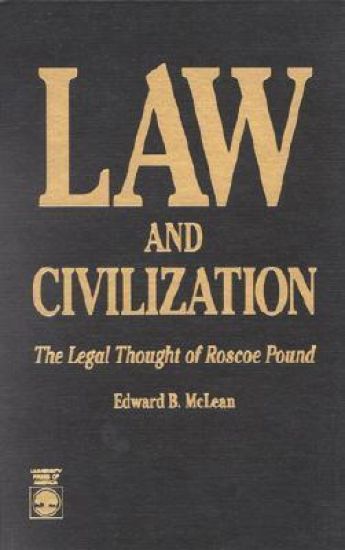
Law and Civilization

Law and Civilization

Edward B. McLean

University Press of America
1992
sidottu
This book provides a survey of multifaceted legal thought of one of America's great legal philosophers. Roscoe Pound is considered to be one of the foremost theorists of "sociological jurisprudence" in American legal history. Contents: Pound on the Law; Pound on Legal History; Legal Philosophy: Ancient Greek to the Eighteenth Century; Legal Philosophy: Nineteenth Century; Legal Philosophy: Twentieth Century; Sociological Jurisprudence; Theory of Interest; Administrative Law; Judicial Law; Conclusion; Bibliography.
The Entangled Civilization

The Entangled Civilization

Michio Kitahara

University Press of America
1995
sidottu
Why are democracy, equality and freedom currently in such turmoil? Kitahara discusses the confusion and pessimism in Western civilization today. The author presents his theory of civilization and suggests how the enormous problems within Western civilization can be addressed by pursuing the original basis of Western civilizationóindividualism. The three key values of democracy, equality and freedom are then re-interpreted from the perspective of individualism, and possibilities for dealing with the problems of Western civilization are suggested. Contents: PART I: PROBLEMS OF WESTERN CIVILIZATION; Western Civilization in Confusion; Democracy; Equality; Freedom; Ideology, Bureaucracy, and Technology; Culture and Biology; Culture and the Individual; PART II: A THEORY OF CIVILIZATION; The Self in the Life Space; The Manipulatory Drive; Identification and Variation; The Conditions for Civilization; The Maintenance of Civilization; The Failure of Civilization; PART III: REFLECTIONS ON WESTERN CIVILIZATION; The Contradictions; Individualism and Democracy; Individualism and Equality; Individualism and Freedom; Epilogue.
Toward a Global Civilization? The Contribution of Religions
Creating a peaceful and sustainable global future is as much an ethical and spiritual matter as an economic, social, and legal one. To respond to the challenges resulting from today's global economic and ecological interdependence, twenty-one distinguished scholars from the world's major religions describe their traditions' contributions to the development of a shared global ethic respectful of national, cultural, and religious diversity, and its applications in humane and effective global governance structures and systems. They show how each tradition frames comprehensive values for human society, contains seeds of world systems thinking, and approaches multireligious initiatives. These contributors are seekers, doers, and path-pointers on the human journey toward a global civilization, in which people of diverse cultures and belief systems will need to learn to live in true community.
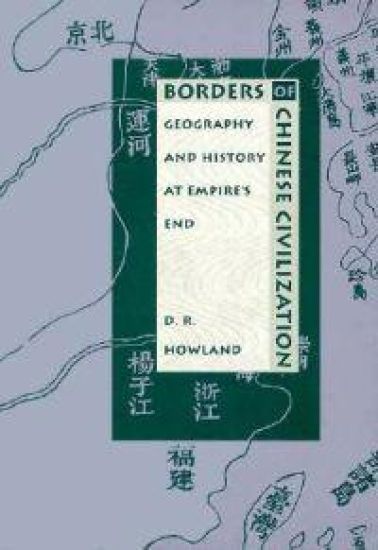
Borders of Chinese Civilization

Borders of Chinese Civilization

Howland D.R.

Duke University Press
1996
pokkari
D. R. Howland explores China's representations of Japan in the changing world of the late nineteenth century and, in so doing, examines the cultural and social borders between the two neighbors. Looking at Chinese accounts of Japan written during the 1870s and 1880s, he undertakes an unprecedented analysis of the main genres the Chinese used to portray Japan-the travel diary, poetry, and the geographical treatise. In his discussion of the practice of "brushtalk," in which Chinese scholars communicated with the Japanese by exchanging ideographs, Howland further shows how the Chinese viewed the communication of their language and its dominant modes-history and poetry-as the textual and cultural basis of a shared civilization between the two societies.With Japan's decision in the 1870s to modernize and westernize, China's relationship with Japan underwent a crucial change-one that resulted in its decisive separation from Chinese civilization and, according to Howland, a destabilization of China's worldview. His examination of the ways in which Chinese perceptions of Japan altered in the 1880s reveals the crucial choice faced by the Chinese of whether to interact with Japan as "kin," based on geographical proximity and the existence of common cultural threads, or as a "barbarian," an alien force molded by European influence.By probing China's poetic and expository modes of portraying Japan, Borders of Chinese Civilization exposes the changing world of the nineteenth century and China's comprehension of it. This broadly appealing work will engage scholars in the fields of Asian studies, Chinese literature, history, and geography, as well as those interested in theoretical reflections on travel or modernism.
Borders of Chinese Civilization

Borders of Chinese Civilization

Douglas Howland

Duke University Press
1996
sidottu
D. R. Howland explores China’s representations of Japan in the changing world of the late nineteenth century and, in so doing, examines the cultural and social borders between the two neighbors. Looking at Chinese accounts of Japan written during the 1870s and 1880s, he undertakes an unprecedented analysis of the main genres the Chinese used to portray Japan-the travel diary, poetry, and the geographical treatise. In his discussion of the practice of “brushtalk,” in which Chinese scholars communicated with the Japanese by exchanging ideographs, Howland further shows how the Chinese viewed the communication of their language and its dominant modes-history and poetry-as the textual and cultural basis of a shared civilization between the two societies. With Japan’s decision in the 1870s to modernize and westernize, China’s relationship with Japan underwent a crucial change-one that resulted in its decisive separation from Chinese civilization and, according to Howland, a destabilization of China’s worldview. His examination of the ways in which Chinese perceptions of Japan altered in the 1880s reveals the crucial choice faced by the Chinese of whether to interact with Japan as “kin,” based on geographical proximity and the existence of common cultural threads, or as a “barbarian,” an alien force molded by European influence.By probing China’s poetic and expository modes of portraying Japan, Borders of Chinese Civilization exposes the changing world of the nineteenth century and China’s comprehension of it. This broadly appealing work will engage scholars in the fields of Asian studies, Chinese literature, history, and geography, as well as those interested in theoretical reflections on travel or modernism.
The Planting of Civilization in Western Pennsylvania

The Planting of Civilization in Western Pennsylvania

Solon Buck; Elizabeth Buck

University of Pittsburgh Press
1976
nidottu
A definitive account of nearly every aspect of Western Pennsylvanian life and development up until the War of 1812. The book opens with a narrative of the formative years of the region. Succeeding chapters deal with the development of agriculture, industry, education, religion, social customs, and law and order --all based upon the results of the work of the Western Pennsylvania Historical Survey.Among the more than one hundred illustrations are contemporary pictures, maps, plans of forts, portraits, architectural photographs and more.
The First Taint of Civilization

The First Taint of Civilization

Francis X. Hezel

University of Hawai'i Press
1994
nidottu
"Hezel writes clearly and with erudition and commands an impressive body of information. His book is a tour de force.... Not only will it be read eagerly by Pacific scholars, but it should find a wide audience among well-educated Micronesians hungry for greater understanding of how their islands have become ensnared in world geopolitics." --Ethnohistory
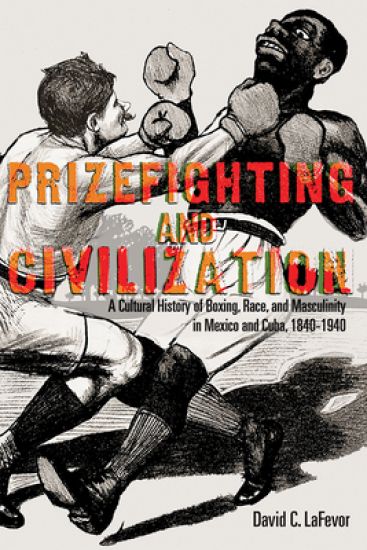
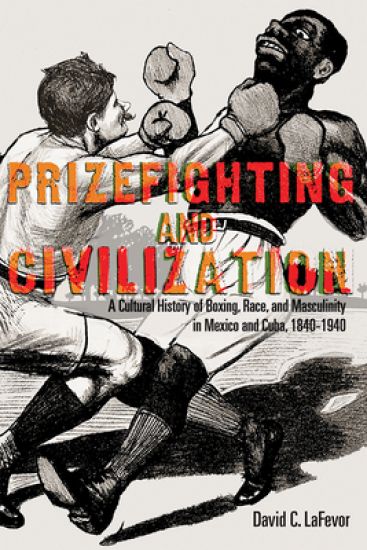
Prizefighting and Civilization

Prizefighting and Civilization

David C. LaFevor

University of New Mexico Press
2020
sidottu
In Prizefighting and Civilization: A Cultural History of Boxing, Race, and Masculinity in Mexico and Cuba, 1840-1940, historian David C. LaFevor traces the history of pugilism in Mexico and Cuba from its controversial beginnings in the mid-nineteenth century through its exponential rise in popularity during the early twentieth century. A divisive subculture that was both a profitable blood sport and a contentious public spectacle, boxing provides a unique vantage point from which LaFevor examines the deeper historical evolution of national identity, everyday normative concepts of masculinity and race, and an expanding and democratizing public sphere in both Mexico and Cuba, the United States' closest Latin American neighbors. Prizefighting and Civilization explores the processes by which boxing--once considered an outlandish purveyor of low culture--evolved into a nationalized pillar of popular culture, a point of pride that transcends gender, race, and class.
Prizefighting and Civilization

Prizefighting and Civilization

David C. LaFevor

UNIVERSITY OF NEW MEXICO PRESS
2022
pokkari
In Prizefighting and Civilization: A Cultural History of Boxing, Race, and Masculinity in Mexico and Cuba, 1840-1940, historian David C. LaFevor traces the history of pugilism in Mexico and Cuba from its controversial beginnings in the mid-nineteenth century through its exponential rise in popularity during the early twentieth century. A divisive subculture that was both a profitable blood sport and a contentious public spectacle, boxing provides a unique vantage point from which LaFevor examines the deeper historical evolution of national identity, everyday normative concepts of masculinity and race, and an expanding and democratizing public sphere in both Mexico and Cuba, the United States' closest Latin American neighbors. Prizefighting and Civilization explores the processes by which boxing--once considered an outlandish purveyor of low culture--evolved into a nationalized pillar of popular culture, a point of pride that transcends gender, race, and class.
Judaism As a Civilization

Judaism As a Civilization

Mordecai M. Kaplan

Jewish Publication Society
2010
pokkari
“...This classic work is widely considered the genesis of the Reconstructionist Movement, and remains one of the most original and stimulating contributions to modern Jewish thought.”- International Journal of Jewish Education ResearchJudaism as a Civilization is widely considered the genesis of the Reconstructionist Movement, representing a watershed moment in modern Judaism. In this classic book, Mordecai Kaplan introduced a new way of looking at Judaism: as an evolving religious civilization. His approach required innovation in liturgy and ritual, elimination of obsolete customs, and adjustment in light of prevailing social, political, and cultural conditions. Kaplan felt that all Jews-traditional and liberal, religious and secular-could play a part in this; “reconstruction.”; Judaism as a Civilization, first published in 1934, remains one of the most original and thought-provoking contributions to modern Jewish thought.
Inventing Western Civilization

Inventing Western Civilization

Thomas C. Patterson

MONTHLY REVIEW PRESS
1997
sidottu
"In this wonderful book, Thomas Patterson effectively dethrones the concept of 'civilization' as an abstract good, transcending human society."--Martin Bernal Drawing on his extensive knowledge of early societies, Thomas C. Patterson shows how class, sexism, and racism have been integral to the appearance of "civilized" societies in Western Europe. He lays out clearly and simply how civilization, with its designs of "civilizing" and "being civilized," has been closely tied to the rise of capitalism in Western Europe and the development of social classes.
Inventing Western Civilization

Inventing Western Civilization

Thomas C. Patterson

MONTHLY REVIEW PRESS
1997
nidottu
What is civilization? The term, commonly identified with "uplift" and "order," has come to take on another meaning: the "civilized" versus the "primitive." This book is about the idea of civilization and how, at different times, the concept has been used by the powerful in order to defend their status. Drawing on his extensive knowledge of early societies, anthropologist Thomas C. Patterson shows how class, sexism, and racism have been integral to the appearance of "civilized" societies in Western Europe.
History of Civilization in Europe

History of Civilization in Europe

François Guizot

Liberty Fund Inc
2013
nidottu
Originally given as a series of lectures at the Sorbonne, François Guizot's "The History of Civilization in Europe" was published to great acclaim in 1828 and is now regarded as a classic in modern historical research. The History was particularly influential on Karl Marx, John Stuart Mill, and Alexis de Tocqueville. Tocqueville, in fact, requested that a copy of The History be sent to him when he arrived in the United States. This volume offers what Guizot himself describes as a "philosophic history" of Europe, one which searches for the underlying general causes and effects of particular events. Guizot considers European civilisation in its broadest senses, encompassing not merely political, economic, and social structures, but also the ideas, faculties, and sentiments of "man himself". Guizot understood a two-way relationship between external conditions (i.e., social, political, and economic conditions) and the inner man: external conditions affect the inner man, who's moral and intellectual developments eventually shape social and other external conditions. Guizot's History describes the development of European civilisation in terms of the inevitable advance of equality of conditions, due to many factors, including a new emphasis on the individual. The author explores the decentralisation of power that characterised feudalism, the centralisation of power after the fifteenth century, and finally the rebuilding of local autonomy necessary for representative and free government. As Editor Larry Siedentop describes, "The [History's] moral is about the social and political consequences of destroying local liberty . . . excessive concentration of power at the centre of any society is, in the long run, its own undoing."