Kirjojen hintavertailu. Mukana 11 342 296 kirjaa ja 12 kauppaa.

Kirjahaku

Etsi kirjoja tekijän nimen, kirjan nimen tai ISBN:n perusteella.

1000 tulosta hakusanalla "Protest"

DREAMers and the Choreography of Protest

DREAMers and the Choreography of Protest

Michael P. Young

OXFORD UNIVERSITY PRESS INC
2024
nidottu
DREAMers and the Choreography of Protest chronicles the history of the DREAMers--the term used to describe undocumented immigrants brought to the United States as children. Based on interviews with lead activists, extensive archival research, and years of ethnographic study, Michael P. Young details the making of the DREAMer, the early organizing of undocumented youth on college campuses cooperating with nonprofit organizations, and the independent organizing of an online network of radical undocumented youth. Tracing a sequence of escalating protests--from sit-ins to detention center infiltrations and border crossing actions--Young argues that this later network of DREAMer activists pushed the immigrant rights movement away from the elite-driven, insider politics of immigration reform toward radical direct action organized by and for undocumented immigrants. In one of the first accounts of the radical factions of DREAMer activism, Young provides a detailed and engrossing counternarrative of DREAMer history that offers some pragmatic lessons for activists and the allied supporters of social movements.

Oxford IB Diploma Programme: Rights and Protest Course Companion

Oxford IB Diploma Programme: Rights and Protest Course Companion

Peter Clinton; Mark Rogers

Oxford University Press
2015
nidottu
Drive critical, engaged historical learning. Helping learners more deeply understand historical concepts, the student-centred approach of this new Course Book enables broader, big picture understanding. Developed directly with the IB and fully supporting the new syllabus for first examination 2017, the clear, structured format helps you logically and easily progress through the new course content. Cover the new syllabus in the right level of depth, with rich, thorough subject content Developed directly with the IB, with the most comprehensive support for the new syllabus Truly engage learners with topical, relevant material that convincingly connects learning with the modern, global world Streamline your planning, with a clear and thorough structure helping you logically progress through the syllabus Decipher source evaluation, refine and progress analytical thinking and fully embed vital Paper 1 skills, strengthening exam performance Integrate approaches to learning with ATLs like thinking, communication, research and social skills built directly into learning Help learners think critically about improving performance with extensive examiner insight and samples based on the latest exam format Build an advanced level, thematic understanding with fully integrated Global Contexts, Key Concepts and TOK Also available as an Online Course Book
Egyptian Students and Politics beyond Protest

Egyptian Students and Politics beyond Protest

Farah Ramzy

Oxford University Press
2025
sidottu
This book examines how the evolution of higher education in Egypt affects students and student politics. It aims to look beyond the historical representations of the student movement as protests for national and regional causes in order to account for the impact of the socio-economic shift in the 1990s, the revolution in 2011, and the restrictive context post-2013. Egyptian Students and Politics beyond Protest uncovers the diverse locations where politics emerge among students such as student unions, partisan student organizations, student clubs and associations including simulation models, in addition to activist groups. The book draws on interviews conducted in Egypt between 2013 and 2015 with members of these groups and ethnographic observation of their activities. As students collectively and individually negotiate the scope of their political activities and the meanings they attribute to these activities, the resulting student politics are, not only diverse, but also unexpected.
The Law of Public Order and Protest

The Law of Public Order and Protest

HHJ Peter Thornton QC; Ruth Brander; Richard Thomas; David Rhodes; Mike Schwarz; Edward Rees

Oxford University Press
2010
sidottu
The landscape of public order law has changed dramatically over the last decade. A wide range of legislation - including the Serious Organised Crime and Police Act 2005 and the Anti-Terrorism, Crime and Security Act 2001 has been enacted, and established legislation on trespass, criminal damage and the use of the highway, has been put to new use in the criminalisation of protestors. The Law of Public Order and Protest provides a systematic, in-depth analysis of the law relating to public order and the right to protest. The text provides a comprehensive guide to the area, analysing the underlying legal principles and constitutional and human rights background, as well as guiding readers through all procedural matters, the use of police powers, evidential issues, defences, and available orders (including ASBOs). The narrative also analyses the case law in both the domestic and European human rights context. The comprehensive work examines all offences brought in by statute since the Public Order Act 1986 as well as the remaining common law offences. It features offences from riot and affray, through to picketing, harassment, aggravated trespass, incitement to racial and religious hatred, and possession offences. It is up to date with the latest legislative interventions, including the new offence of glorifying terrorism, and measures introduced under the Serious Organised Crime and Police Act 2005. This new work steers you through the maze of legislation in this complex area.
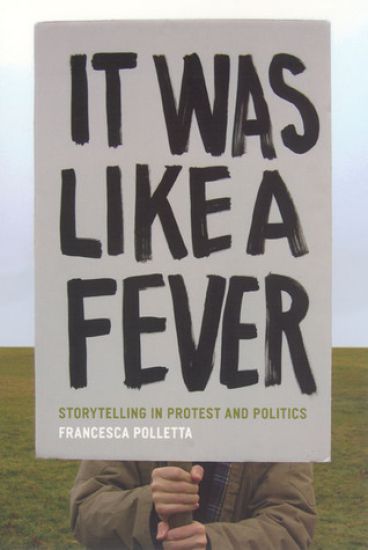
It Was Like a Fever – Storytelling in Protest and Politics

It Was Like a Fever – Storytelling in Protest and Politics

Francesca Polletta

University of Chicago Press
2006
nidottu
Activists and politicians have long recognized the power of a good story to move people to action. In early 1960, four black college students sat down at a whites-only lunch counter in Greensboro, North Carolina, and refused to leave. Within a month, sit-ins spread to thirty cities in seven states. Student participants told stories of impulsive, spontaneous action - this despite all the planning that had gone into the sit-ins. "It was like a fever," they said. Francesca Polletta's "It Was Like a Fever" sets out to account for the power of storytelling in mobilizing political and social movements. Drawing on cases ranging from sixteenth-century tax revolts to contemporary debates about the future of the World Trade Center site, Polletta argues that stories are politically effective not when they have clear moral messages, but when they have complex, often ambiguous ones. The openness of stories to interpretation has allowed disadvantaged groups, in particular, to gain a hearing for new needs and to forge surprising political alliances. But, popular beliefs in America about storytelling as a genre have also hurt those challenging the status quo. A rich analysis of storytelling in courtrooms, newsrooms, public forums, and the United States Congress, "It Was Like a Fever" offers provocative new insights into the dynamics of culture and contention.
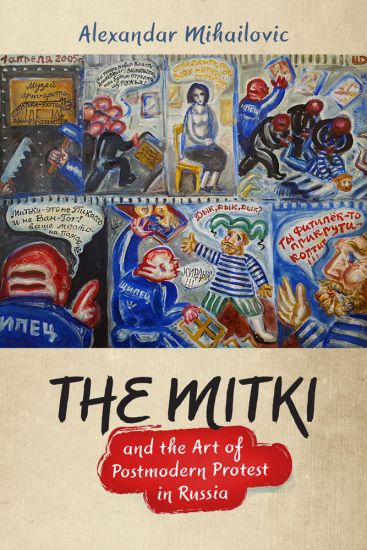
The Mitki and the Art of Postmodern Protest in Russia

The Mitki and the Art of Postmodern Protest in Russia

Alexandar Mihailovic

University of Wisconsin Press
2018
sidottu
During the late Soviet period, the art collective known as the Mitki emerged in Leningrad. Producing satirical poetry and prose, pop music, cinema, and conceptual performance art, this group fashioned a playful, emphatically countercultural identity with affinities to European avant-garde and American hippie movements. More broadly, Alexandar Mihailovic shows, the Mitki pioneered a form of political protest art that has since become a centerpiece of activism in post-Soviet Russia, most visibly today in groups such as Pussy Riot. He draws on extensive interviews with members of the collective and illuminates their critique of the authoritarian state, militarism, and social strictures from the Brezhnev years to the present.
The Mitki and the Art of Postmodern Protest in Russia

The Mitki and the Art of Postmodern Protest in Russia

Alexandar Mihailovic

University of Wisconsin Press
2019
nidottu
During the late Soviet period, the art collective known as the Mitki emerged in Leningrad. Producing satirical poetry and prose, pop music, cinema, and conceptual performance art, this group fashioned a playful, emphatically countercultural identity with affinities to European avant-garde and American hippie movements.More broadly, Alexandar Mihailovic shows, the Mitki pioneered a form of political protest art that has since become a centerpiece of activism in post-Soviet Russia, most visibly today in groups such as Pussy Riot. He draws on extensive interviews with members of the collective and illuminates their critique of the authoritarian state, militarism, and social strictures from the Brezhnev years to the present.
The Moral Economy and Popular Protest
This book developed from a conference held in 1992 to mark the 'coming of age' of E.P.Thompson's seminal concept of 'the moral economy'. The collection provides a critical evaluation of the original concept and of its application to a wide and diverse field of scholarship, drawing together specialists from social and labour history, legal history, social, anthropology and historical geography who examine the developing utilisation of the concept of 'the moral economy' in different historical and societal contexts.
The Contentious Politics of Refugee and Migrant Protest and Solidarity Movements
Over the past two years, large-scale migratory movements to Europe have gained worldwide attention, and have prompted ever-greater desires to govern and control them. At the same time, we have seen the emergence of political struggles for rights to movement and demands for greater social justice, in both the global ‘north’ and ‘south’. Throughout the world, political mobilizations by refugees, irregularized migrants and solidarity activists have emerged, demanding and enacting the right to move and to stay, struggling for citizenship and human rights, and protesting the violence and deadliness of contemporary border regimes.This collection brings together articles that explore political mobilizations in several countries and (border) regions, including Brazil, Mexico, the United States, Austria, Germany, Greece, Turkey and ‘the Mediterranean’. Many of these political mobilizations can be understood as transnational responses to processes of regionalization and the intensification of restrictive border regimes across the globe, and as illustrative of what might be referred to as a ‘new era of protest’.
Prisoners of Want: The Experience and Protest of the Unemployed in France, 1921-45
Prisoners of Want examines the experience of the unemployed and their protests in France in the interwar years. Little has been written on the experience of unemployment in France despite the wealth of material - social and medical investigations, government reports, novels, memoirs and newspapers - that can be used to reconstruct the representation and reality of the experience. Assessing the impact of unemployed protest upon the authorities (in terms of policy and the longer term development of the welfare state) this book places the role of the unemployed in the wider context of European social movements in the 1930s, as well as considering the significance of unemployed protests upon the French collective memory. The part played by the French Communist Party in the creation and leadership of the movements of the unemployed, and the range of activities these movements undertook, is also explored. From self-help to protests, hunger marches, demonstrations, relief work, school strikes, town hall occupations and riots; all were strategies that the unemployed utilised to draw attention to their plight. Crucial to explaining the characteristics of these movements is an understanding of the dynamics of protest and how different tactics were selected during their development, particularly the extent to which tactical shifts were related to the nature of the response of the authorities. By exploring these under-researched facets of political life, a much fuller understanding of French society during the turbulent interwar years is offered.
The Making of Anti-Muslim Protest
Activism in any social movement group is, as Deborah Gould observes, a project of collective ‘world-making’. It is about changing the world out there by influencing policy and public opinion, but is also about the way it transforms the lives of participants – activists generate new identities, cultures, social ties, rich and varied emotional experiences and interpretations of the world around them. Movements are more likely to be able to attract and sustain support when as projects of collective world-making they feel compelling to activists and would-be activists.In this book Busher explores what has made activism in the English Defence League (EDL), an anti-Muslim protest movement that has staged demonstrations across the UK since 2009, so compelling to those who have chosen to march under its banner. Based on sixteen months of overt observation with grassroots activists, he explores how people became involved with the group; how they forged and intensified belief in the EDL cause; how they negotiated accusations that they were just another racist, far right group; and how grassroots EDL activism began to unravel during the course of 2011 but did not do so altogether. Providing a fresh insight as to how contemporary anti-minority protest movements work on the inside, this book will be of interest to students, scholars and activists working in the areas of British politics, extremism, social movements, community relations and current affairs more generally.
The Routledge History of Social Protest in Popular Music
The major objective of this collection of 28 essays is to analyze the trends, musical formats, and rhetorical devices used in popular music to illuminate the human condition. By comparing and contrasting musical offerings in a number of countries and in different contexts from the 19th century until today, TheRoutledge History of Social Protest in Popular Music aims to be a probing introduction to the history of social protest music, ideal for popular music studies and history and sociology of music courses.
The Women's Movement in Protest, Institutions and the Internet
The death of feminism is regularly proclaimed in the West. Yet at the same time feminism has never had such an extensive presence, whether in international norms and institutions, or online in blogs and social networking campaigns. This book argues that the women’s movement is not over; but rather social movement theory has led us to look in the wrong places.This book offers both methodological and theoretical innovations in the study of social movements, and analyses how the trajectories of protest activity and institution-building fit together. The rich empirical study, together with focused research on discursive activism, blogging, popular culture and advocacy networks, provides an extraordinary resource, showing how the women’s movements can survive the highs and lows and adapt in unexpected ways. Expert contributors explore the ways in which the movement is continuing to work its way through institutions, and persists within submerged networks, cultural production and in everyday living, sustaining itself in non-receptive political environments and maintaining a discursive feminist space for generations to come. Set in a transnational perspective, this book trace the legacies of the Australian women’s movement to the present day in protest, non-government organisations, government organisations, popular culture, the Internet and the Slut Walk.The Women’s Movement in Protest, Institutions and the Internet will be of interest to international students and scholars of gender politics, gender studies, social movement studies and comparative politics.
The Political Aesthetics of Global Protest
From Egypt to India, and from Botswana to London, worker, youth and middle class rebellions have taken on the political and bureaucratic status quo. When most people can no longer earn a decent wage, they pit themselves against the privilege of small, wealthy and often corrupt elites. A remarkable feature of the protests from the Arab Spring onwards has been the salience of images, songs, videos, humour, satire and dramatic performances. This collection explores the central role the aesthetic played in energising the massive mobilisations of young people, the disaffected, the middle classes and the apolitical silent majority. Discover how it fuelled solidarities and alliances among democrats, workers, trade unions, civil rights activists and opposition parties.
The Political Aesthetics of Global Protest
This explores the aesthetic dimensions of the Arab Spring and the worldwide protest movements that followed. From Egypt to India, and from Botswana to London, worker, youth and middle class rebellions have taken on the political and bureaucratic status quo. When most people can no longer earn a decent wage, they pit themselves against the privilege of small, wealthy and often corrupt elites. A remarkable feature of the protests from the Arab Spring onwards has been the importance of images, songs, videos, humour, satire and dramatic performances. This book explores the central role the aesthetic played in energising the massive mobilisations of young people, the disaffected, the middle classes and the apolitical silent majority. Discover how it fuelled solidarities and alliances among democrats, workers, trade unions, civil rights activists and opposition parties. It includes over 150 colour illustrations showing how visual media is used in protest movements across the globe. It offers a diversity of perspectives from political, media, visual, economic and linguistic anthropology, and the anthropology of work, art, social organisation and social movement.
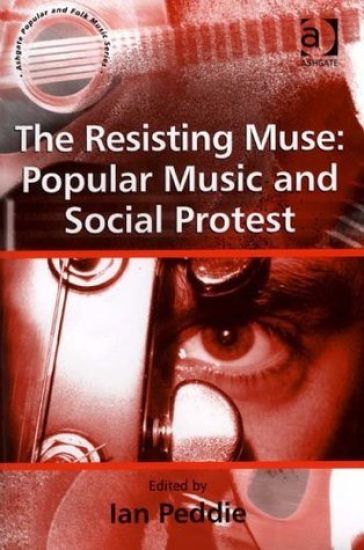
The Resisting Muse: Popular Music and Social Protest
Popular music has traditionally served as a rallying point for voices of opposition, across a huge variety of genres. This volume examines the various ways popular music has been deployed as anti-establishment and how such opposition both influences and responds to the music produced. Implicit in the notion of resistance is a broad adversarial hegemony against which opposition is measured. But it would be wrong to regard the music of popular protest as a kind of dialogue in league against 'the establishment'. Convenient though they are, such 'us and them' arguments bespeak a rather shop-worn stance redolent of youthful rebellion. It is much more fruitful to perceive the relationship as a complex dialectic where musical protest is as fluid as the audiences to which it appeals and the hegemonic structures it opposes. The book's contemporary focus (largely post-1975) allows for comprehensive coverage of extremely diverse forms of popular music in relation to the creation of communities of protest. Because such communities are fragmented and diverse, the shared experience and identity popular music purports is dependent upon an audience collectivity that is now difficult to presume. In this respect, The Resisting Muse examines how the forms and aims of social protest music are contingent upon the audience's ability to invest the music with the 'appropriate' political meaning. Amongst a plethora of artists, genres, and themes, highlights include discussions of Aboriginal rights and music, Bauhaus, Black Sabbath, Billy Bragg, Bono, Cassette culture, The Capitol Steps, Class, The Cure , DJ Spooky, Drum and Bass, Eminem, Farm Aid, Foxy Brown, Folk, Goldie, Gothicism, Woody Guthrie, Heavy Metal, Hip-hop, Independent/home publishing, Iron Maiden, Joy Division, Jungle, Led Zeppelin, Lil'Kim, Live Aid, Marilyn Manson, Bob Marley, MC Eiht, Minor Threat, Motown, Queen Latifah, Race, Rap, Rastafarianism, Reggae, The Roots, Diana Ross, Rush, Salt-n-Pepa, 7 Seconds, Roxanne Shanté, Siouxsie and the Banshees, The Sisters of Mercy, Michelle Shocked, Bessie Smith, Straight edge Sunrize Band, Bunny Wailer, Wilco, Bart Willoughby, Wirrinyga Band, Zines.
Music and Silence: The Passion and Protest of Pablo Casals

Music and Silence: The Passion and Protest of Pablo Casals

Christy Mihaly

Eerdmans Books for Young Readers
2026
sidottu
An inspiring picture book biography of a UN Peace Medal recipient who used his songs--and his silence--to fight fascism, oppression, and violence. One day in Catalonia, Spain, eleven-year-old Pau Casals was captivated by the cello--setting him on a path toward international fame (as a cellist) and extraordinary courage (as an advocate for social justice). Playing the cello would take Pau all over the world, performing in palaces, concert halls, even the White House. People called him Pablo Casals now, and he was famous and beloved. But when the events of Spanish Civil War and World War II left his homeland ruled by a dictator, Pablo made a dramatic decision: he would silence his music until Spain was free. Would the world ever hear his cello sing again? Illustrated in vibrant, joyous color by Catalonian artist Mariona Cabassa, Music and Silence introduces children to a man who was not just a master of the cello, but a remarkable model of sacrifice and artistic protest. After the story, readers can learn more about Pablo Casals through creator notes, historical notes, a timeline, a bibliography, and links to performances and interviews.
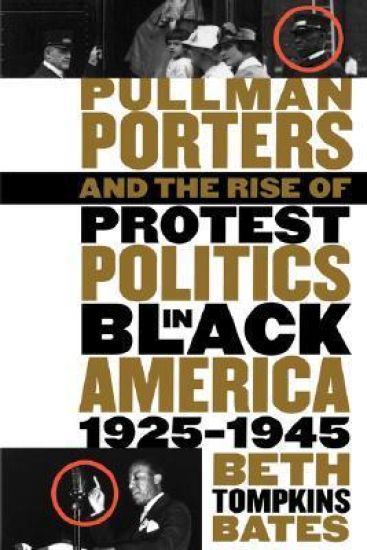
Pullman Porters and the Rise of  Protest Politics in Black America, 1925-1945

Pullman Porters and the Rise of Protest Politics in Black America, 1925-1945

Bates Beth Tompkins

The University of North Carolina Press
2001
nidottu
Linking the labor movement to African Americans' campaign for racial equality Between World War I and World War II, African Americans' quest for civil rights took on a more aggressive character as a new group of black activists challenged the politics of civility traditionally embraced by old-guard leaders in favor of a more forceful protest strategy. Beth Tompkins Bates traces the rise of this new protest politics - which was grounded in making demands and backing them up with collective action - by focusing on the struggle of the Brotherhood of Sleeping Car Porters (BSCP) to form a union in Chicago, headquarters of the Pullman Company. Bates shows how the BSCP overcame initial opposition from most of Chicago's black leaders by linking its union message with the broader social movement for racial equality. As members of BSCP protest networks mobilized the black community around the quest for manhood rights and economic freedom, they broke down resistance to organized labor even as they expanded the boundaries of citizenship to include equal economic opportunity. By the mid-1930s, BSCP protest networks gained platforms at the national level, fusing Brotherhood activities first with those of the National Negro Congress and later with the March on Washington Movement. Lessons learned during this era guided the next generation of activists, who carried the black freedom struggle forward after World War II.
Prisoners of Want: The Experience and Protest of the Unemployed in France, 1921-45
Prisoners of Want examines the experience of the unemployed and their protests in France in the interwar years. Little has been written on the experience of unemployment in France despite the wealth of material - social and medical investigations, government reports, novels, memoirs and newspapers - that can be used to reconstruct the representation and reality of the experience. Assessing the impact of unemployed protest upon the authorities (in terms of policy and the longer term development of the welfare state) this book places the role of the unemployed in the wider context of European social movements in the 1930s, as well as considering the significance of unemployed protests upon the French collective memory. The part played by the French Communist Party in the creation and leadership of the movements of the unemployed, and the range of activities these movements undertook, is also explored. From self-help to protests, hunger marches, demonstrations, relief work, school strikes, town hall occupations and riots; all were strategies that the unemployed utilised to draw attention to their plight. Crucial to explaining the characteristics of these movements is an understanding of the dynamics of protest and how different tactics were selected during their development, particularly the extent to which tactical shifts were related to the nature of the response of the authorities. By exploring these under-researched facets of political life, a much fuller understanding of French society during the turbulent interwar years is offered.