Kirjojen hintavertailu. Mukana 12 016 292 kirjaa ja 12 kauppaa.

Kirjahaku

Etsi kirjoja tekijän nimen, kirjan nimen tai ISBN:n perusteella.

1000 tulosta hakusanalla Aaron Gerrity

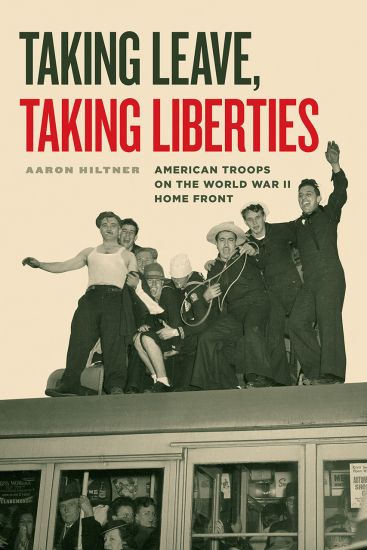
Taking Leave, Taking Liberties

Taking Leave, Taking Liberties

Aaron Hiltner

University of Chicago Press
2020
sidottu
American soldiers overseas during World War II were famously said to be "overpaid, oversexed, and over here." But the assaults, rapes, and other brutal acts didn't only happen elsewhere, far away from a home front depicted as safe and unscathed by the "good war." To the contrary, millions of American and Allied troops regularly poured into ports like New York and Los Angeles while on leave. Euphemistically called "friendly invasions," these crowds of men then forced civilians to contend with the same kinds of crime and sexual assault unfolding in places like Britain, France, and Australia. With unsettling clarity, Aaron Hiltner reveals what American troops really did on the home front. While GIs are imagined to have spent much of the war in Europe or the Pacific, before the run-up to D-day in the spring of 1944 as many as 75% of soldiers were stationed in US port cities, including more than three million who moved through New York City. In these cities, largely uncontrolled soldiers sought and found alcohol and sex, and the civilians living there--women in particular--were not safe from the violence fomented by these de facto occupying armies. Troops brought their pocketbooks and demand for "dangerous fun" to both red-light districts and city centers, creating a new geography of vice that challenged local police, politicians, and civilians. Military authorities, focused above all else on the war effort, invoked written and unwritten legal codes to grant troops near immunity to civil policing and prosecution. The dangerous reality of the life on the home front was well known at the time--even if it has been subsequently buried it beneath nostalgia for the "greatest generation." Drawing on previously unseen military archival records, Hiltner recovers a mostly forgotten chapter of WWII history, demonstrating that the war's ill effects were felt all over--including by those supposedly safe back home.
The Idols of ISIS

The Idols of ISIS

Aaron Tugendhaft

University of Chicago Press
2020
nidottu
In 2015, the Islamic State released a video of men smashing sculptures in Iraq’s Mosul Museum as part of a mission to cleanse the world of idolatry. This book unpacks three key facets of that event: the status and power of images, the political importance of museums, and the efficacy of videos in furthering an ideological agenda through the internet. Beginning with the Islamic State’s claim that the smashed objects were idols of the “age of ignorance,” Aaron Tugendhaft questions whether there can be any political life without idolatry. He then explores the various roles Mesopotamian sculpture has played in European imperial competition, the development of artistic modernism, and the formation of Iraqi national identity, showing how this history reverberates in the choice of the Mosul Museum as performance stage. Finally, he compares the Islamic State’s production of images to the ways in which images circulated in ancient Assyria and asks how digitization has transformed politics in the age of social media. An elegant and accessibly written introduction to the complexities of such events, The Idols of ISIS is ideal for students and readers seeking a richer cultural perspective than the media usually provides.
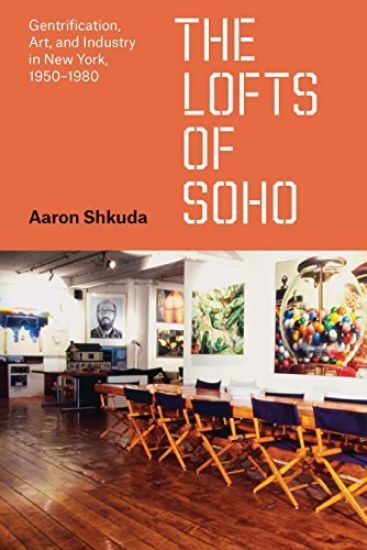
The Lofts of SoHo

The Lofts of SoHo

Aaron Shkuda

THE UNIVERSITY OF CHICAGO PRESS
2024
nidottu
A groundbreaking look at the transformation of SoHo. American cities entered a new phase when, beginning in the 1950s, artists and developers looked upon a decaying industrial zone in Lower Manhattan and saw, not blight, but opportunity: cheap rents, lax regulation, and wide open spaces. Thus, SoHo was born. From 1960 to 1980, residents transformed the industrial neighborhood into an artist district, creating the conditions under which it evolved into an upper-income, gentrified area. Introducing the idea—still potent in city planning today—that art could be harnessed to drive municipal prosperity, SoHo was the forerunner of gentrified districts in cities nationwide, spawning the notion of the creative class. In The Lofts of SoHo, Aaron Shkuda studies the transition of the district from industrial space to artists’ enclave to affluent residential area, focusing on the legacy of urban renewal in and around SoHo and the growth of artist-led redevelopment. Shkuda explores conflicts between residents and property owners and analyzes the city’s embrace of the once-illegal loft conversion as an urban development strategy. As Shkuda explains, artists eventually lost control of SoHo’s development, but over several decades they nonetheless forced scholars, policymakers, and the general public to take them seriously as critical actors in the twentieth-century American city.
The Holy Spirit and the Eagle Feather

The Holy Spirit and the Eagle Feather

Aaron A.M. Ross

MCGILL-QUEEN'S UNIVERSITY PRESS
2023
sidottu
Pentecostalism is one of the fastest-growing religious movements in the world. In Canada, it is the most rapidly growing Christian group among Indigenous people, with approximately one in ten Pentecostals in the country being Indigenous. Pentecostalism has become a religious force in many Indigenous communities, where congregations are most often led by Indigenous ministers – an achievement that took many decades. The Holy Spirit and the Eagle Feather traces the development of Indigenous Pentecostalism in Canada. Exploring the history of twentieth-century missionization, with particular attention to the Pentecostal Assemblies of Canada’s Northland Mission, founded in 1943, Aaron Ross shows how the denomination’s Euro-Canadian leaders, who believed themselves to be supporters of Indigenous-led churches, struggled to relinquish control of mission management and finances. Drawing on interviews with contemporary figures in the movement, he describes how Indigenous Pentecostals would come to challenge the mission’s eurocentrism over decades, eventually entering positions of leadership in the church. This process required them to confront the painful vestiges of colonialism and to grapple with the different philosophies and theologies of Pentecostalism and Indigenous traditional spiritualities. In doing so they indigenized the movement and forged a new identity, as Indigenous and Pentecostal.Indigenous Pentecostals now occupy key roles in the church and serve as political, cultural, and economic leaders in their communities. The Holy Spirit and the Eagle Feather tells the story of how they overcame the church’s colonial impulses to become religious leaders, as well as agents for decolonization and reconciliation.
The Holy Spirit and the Eagle Feather

The Holy Spirit and the Eagle Feather

Aaron A.M. Ross

MCGILL-QUEEN'S UNIVERSITY PRESS
2023
nidottu
Pentecostalism is one of the fastest-growing religious movements in the world. In Canada, it is the most rapidly growing Christian group among Indigenous people, with approximately one in ten Pentecostals in the country being Indigenous. Pentecostalism has become a religious force in many Indigenous communities, where congregations are most often led by Indigenous ministers – an achievement that took many decades. The Holy Spirit and the Eagle Feather traces the development of Indigenous Pentecostalism in Canada. Exploring the history of twentieth-century missionization, with particular attention to the Pentecostal Assemblies of Canada’s Northland Mission, founded in 1943, Aaron Ross shows how the denomination’s Euro-Canadian leaders, who believed themselves to be supporters of Indigenous-led churches, struggled to relinquish control of mission management and finances. Drawing on interviews with contemporary figures in the movement, he describes how Indigenous Pentecostals would come to challenge the mission’s eurocentrism over decades, eventually entering positions of leadership in the church. This process required them to confront the painful vestiges of colonialism and to grapple with the different philosophies and theologies of Pentecostalism and Indigenous traditional spiritualities. In doing so they indigenized the movement and forged a new identity, as Indigenous and Pentecostal.Indigenous Pentecostals now occupy key roles in the church and serve as political, cultural, and economic leaders in their communities. The Holy Spirit and the Eagle Feather tells the story of how they overcame the church’s colonial impulses to become religious leaders, as well as agents for decolonization and reconciliation.
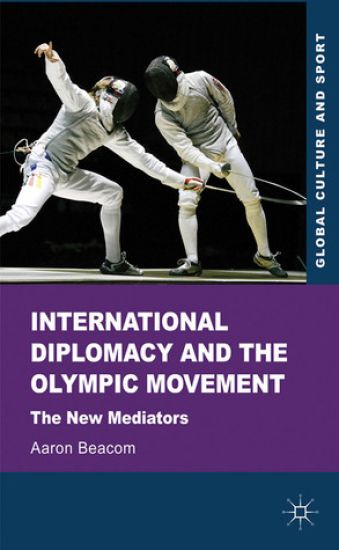
International Diplomacy and the Olympic Movement
This book explores the relationship between diplomatic discourse and the Olympic Movement, charting its continuity and change from an historical perspective. Using the recent body of literature on diplomacy it explores the evolution of diplomatic discourse around a number of themes, in particular the increasing range of stakeholders engaged in the Olympic bid, disability advocacy and the mainstreaming of the Paralympic Games and the evolution of the Olympic boycott. The work addresses the increasing engagement of a number of non-state actors, in particular the IOC and the IPC, as indicative of the diffusion of contemporary diplomacy. At the same time it identifies the state as continuing in the role of primary actor, setting the terms of reference for diplomatic activity beyond the pursuit of its own policy interests. Its historical investigation, based around a UK case study, provides insights into the characteristics of diplomatic discourse relating to the Games, and creates the basis for mapping the future trajectory of diplomacy as it relates to the Olympic Movement.
Twentieth-Century Irish Literature

Twentieth-Century Irish Literature

Aaron Kelly

Red Globe Press
2008
sidottu
This Guide surveys existing criticism and theory, making clear the key critical debates, themes and issues surrounding a wide variety of Irish poets, playwrights and novelists. It relates Irish literature to debates surrounding issues such as national identity, modernity and the Revival period, armed struggle, gender, sexuality and post colonialism.
Twentieth-Century Irish Literature

Twentieth-Century Irish Literature

Aaron Kelly

Red Globe Press
2008
nidottu
This Guide surveys existing criticism and theory, making clear the key critical debates, themes and issues surrounding a wide variety of Irish poets, playwrights and novelists. It relates Irish literature to debates surrounding issues such as national identity, modernity and the Revival period, armed struggle, gender, sexuality and post colonialism.
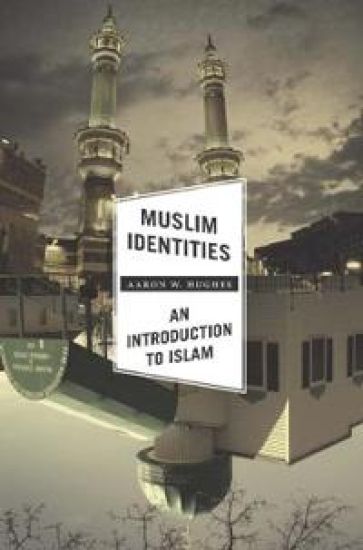
Muslim Identities

Muslim Identities

Aaron W. Hughes

Columbia University Press
2013
sidottu
Rather than focus solely on theological concerns, this well-rounded introduction takes an expansive view of Islamic ideology, culture, and tradition, sourcing a range of historical, sociological, and literary perspectives. Neither overly critical nor apologetic, this book reflects the rich diversity of Muslim identities across the centuries and counters the unflattering, superficial portrayals of Islam that are shaping public discourse today. Aaron W. Hughes uniquely traces the development of Islam in relation to historical, intellectual, and cultural influences, enriching his narrative with the findings, debates, and methodologies of related disciplines, such as archaeology, history, and Near Eastern studies. Hughes's work challenges the dominance of traditional terms and concepts in religious studies, recasting religion as a set of social and cultural facts imagined, manipulated, and contested by various actors and groups over time. Making extensive use of contemporary identity theory, Hughes rethinks the teaching of Islam and religions in general and helps facilitate a more critical approach to Muslim sources. For readers seeking a non-theological, unbiased, and richly human portrait of Islam, as well as a strong grasp of Islamic study's major issues and debates, this textbook is a productive, progressive alternative to more classic surveys.
Muslim Identities

Muslim Identities

Aaron W. Hughes

Columbia University Press
2013
pokkari
Rather than focus solely on theological concerns, this well-rounded introduction takes an expansive view of Islamic ideology, culture, and tradition, sourcing a range of historical, sociological, and literary perspectives. Neither overly critical nor apologetic, this book reflects the rich diversity of Muslim identities across the centuries and counters the unflattering, superficial portrayals of Islam that are shaping public discourse today. Aaron W. Hughes uniquely traces the development of Islam in relation to historical, intellectual, and cultural influences, enriching his narrative with the findings, debates, and methodologies of related disciplines, such as archaeology, history, and Near Eastern studies. Hughes's work challenges the dominance of traditional terms and concepts in religious studies, recasting religion as a set of social and cultural facts imagined, manipulated, and contested by various actors and groups over time. Making extensive use of contemporary identity theory, Hughes rethinks the teaching of Islam and religions in general and helps facilitate a more critical approach to Muslim sources. For readers seeking a non-theological, unbiased, and richly human portrait of Islam, as well as a strong grasp of Islamic study's major issues and debates, this textbook is a productive, progressive alternative to more classic surveys.
The Question of the Animal and Religion

The Question of the Animal and Religion

Aaron Gross

Columbia University Press
2014
sidottu
Through an absorbing investigation into recent, high-profile scandals involving one of the largest kosher slaughterhouses in the world, located unexpectedly in Postville, Iowa, Aaron S. Gross makes a powerful case for elevating the category of the animal in the study of religion. Major theorists have almost without exception approached religion as a phenomenon that radically marks humans off from other animals, but Gross rejects this paradigm, instead matching religion more closely with the life sciences to better theorize human nature. Gross begins with a detailed account of the scandals at Agriprocessors and their significance for the American and international Jewish community. He argues that without a proper theorization of "animals and religion," we cannot fully understand religiously and ethically motivated diets and how and why the events at Agriprocessors took place. Subsequent chapters recognize the significance of animals to the study of religion in the work of Ernst Cassirer, Emile Durkheim, Mircea Eliade, Jonathan Z. Smith, and Jacques Derrida and the value of indigenous peoples' understanding of animals to the study of religion in our daily lives. Gross concludes by extending the Agribusiness scandal to the activities at slaughterhouses of all kinds, calling attention to the religiosity informing the regulation of "secular" slaughterhouses and its implications for our relationship with and self-imagination through animals.
The Question of the Animal and Religion

The Question of the Animal and Religion

Aaron Gross

Columbia University Press
2014
pokkari
Through an absorbing investigation into recent, high-profile scandals involving one of the largest kosher slaughterhouses in the world, located unexpectedly in Postville, Iowa, Aaron S. Gross makes a powerful case for elevating the category of the animal in the study of religion. Major theorists have almost without exception approached religion as a phenomenon that radically marks humans off from other animals, but Gross rejects this paradigm, instead matching religion more closely with the life sciences to better theorize human nature. Gross begins with a detailed account of the scandals at Agriprocessors and their significance for the American and international Jewish community. He argues that without a proper theorization of "animals and religion," we cannot fully understand religiously and ethically motivated diets and how and why the events at Agriprocessors took place. Subsequent chapters recognize the significance of animals to the study of religion in the work of Ernst Cassirer, Emile Durkheim, Mircea Eliade, Jonathan Z. Smith, and Jacques Derrida and the value of indigenous peoples' understanding of animals to the study of religion in our daily lives. Gross concludes by extending the Agribusiness scandal to the activities at slaughterhouses of all kinds, calling attention to the religiosity informing the regulation of "secular" slaughterhouses and its implications for our relationship with and self-imagination through animals.
Your Sons Are at Your Service

Your Sons Are at Your Service

Aaron Y. Zelin

Columbia University Press
2020
sidottu
Tunisia became one of the largest sources of foreign fighters for the Islamic State—even though the country stands out as a democratic bright spot of the Arab uprisings and despite the fact that it had very little history of terrorist violence within its borders prior to 2011. In Your Sons Are at Your Service, Aaron Y. Zelin uncovers the longer history of Tunisian involvement in the jihadi movement and offers an in-depth examination of the reasons why so many Tunisians became drawn to jihadism following the 2011 revolution.Zelin highlights the longer-term causes that affected jihadi recruitment in Tunisia, including the prior history of Tunisians joining jihadi organizations and playing key roles in far-flung parts of the world over the past four decades. He contends that the jihadi group Ansar al-Sharia in Tunisia was able to take advantage of the universal prisoner amnesty, increased openness, and the lack of governmental policy toward it after the revolution. In turn, this provided space for greater recruitment and subsequent mobilization to fight abroad once the Tunisian government cracked down on the group in 2013. Zelin marshals cutting-edge empirical findings, extensive primary source research, and on-the-ground fieldwork, including a variety of documents in Arabic going as far back as the 1980s and interviews with Ansar al-Sharia members and Tunisian fighters returning from Syria. The first book on the history of the Tunisian jihadi movement, Your Sons Are at Your Service is a meticulously researched account that challenges simplified views of jihadism’s appeal and success.
Your Sons Are at Your Service

Your Sons Are at Your Service

Aaron Y. Zelin

Columbia University Press
2020
pokkari
Tunisia became one of the largest sources of foreign fighters for the Islamic State—even though the country stands out as a democratic bright spot of the Arab uprisings and despite the fact that it had very little history of terrorist violence within its borders prior to 2011. In Your Sons Are at Your Service, Aaron Y. Zelin uncovers the longer history of Tunisian involvement in the jihadi movement and offers an in-depth examination of the reasons why so many Tunisians became drawn to jihadism following the 2011 revolution.Zelin highlights the longer-term causes that affected jihadi recruitment in Tunisia, including the prior history of Tunisians joining jihadi organizations and playing key roles in far-flung parts of the world over the past four decades. He contends that the jihadi group Ansar al-Sharia in Tunisia was able to take advantage of the universal prisoner amnesty, increased openness, and the lack of governmental policy toward it after the revolution. In turn, this provided space for greater recruitment and subsequent mobilization to fight abroad once the Tunisian government cracked down on the group in 2013. Zelin marshals cutting-edge empirical findings, extensive primary source research, and on-the-ground fieldwork, including a variety of documents in Arabic going as far back as the 1980s and interviews with Ansar al-Sharia members and Tunisian fighters returning from Syria. The first book on the history of the Tunisian jihadi movement, Your Sons Are at Your Service is a meticulously researched account that challenges simplified views of jihadism’s appeal and success.
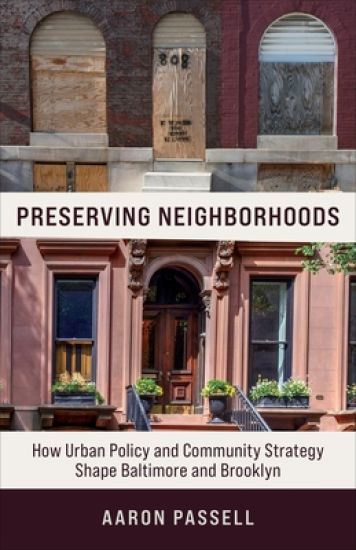
Preserving Neighborhoods

Preserving Neighborhoods

Aaron Passell

Columbia University Press
2021
sidottu
Historic preservation is typically regarded as an elitist practice. In this view, designating a neighborhood as historic is a project by and for affluent residents concerned with aesthetics, not affordability. It leads to gentrification and rising property values for wealthy homeowners, while displacement afflicts longer-term, lower-income residents of the neighborhood, often people of color.Through rich case studies of Baltimore and Brooklyn, Aaron Passell complicates this story, exploring how community activists and local governments use historic preservation to accelerate or slow down neighborhood change. He argues that this form of regulation is one of the few remaining urban policy interventions that enable communities to exercise some control over the changing built environments of their neighborhoods. In Baltimore, it is part of a primarily top-down strategy for channeling investment into historic neighborhoods, many of them plagued by vacancy and abandonment. In central Brooklyn, neighborhood groups have discovered the utility of landmark district designation as they seek to mitigate rapid change with whatever legal tools they can. The contrast between Baltimore and Brooklyn reveals that the relationship between historic preservation and neighborhood change varies not only from city to city, but even from neighborhood to neighborhood. In speaking with local activists, Passell finds that historic district designation and enforcement efforts can be a part of neighborhood community building and bottom-up revitalization.Featuring compelling narrative interviews alongside quantitative data, Preserving Neighborhoods is a nuanced mixed-methods study of an important local-level urban policy and its surprisingly varied consequences.
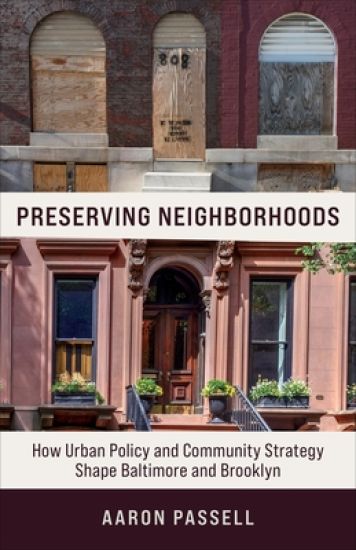
Preserving Neighborhoods

Preserving Neighborhoods

Aaron Passell

Columbia University Press
2021
pokkari
Historic preservation is typically regarded as an elitist practice. In this view, designating a neighborhood as historic is a project by and for affluent residents concerned with aesthetics, not affordability. It leads to gentrification and rising property values for wealthy homeowners, while displacement afflicts longer-term, lower-income residents of the neighborhood, often people of color.Through rich case studies of Baltimore and Brooklyn, Aaron Passell complicates this story, exploring how community activists and local governments use historic preservation to accelerate or slow down neighborhood change. He argues that this form of regulation is one of the few remaining urban policy interventions that enable communities to exercise some control over the changing built environments of their neighborhoods. In Baltimore, it is part of a primarily top-down strategy for channeling investment into historic neighborhoods, many of them plagued by vacancy and abandonment. In central Brooklyn, neighborhood groups have discovered the utility of landmark district designation as they seek to mitigate rapid change with whatever legal tools they can. The contrast between Baltimore and Brooklyn reveals that the relationship between historic preservation and neighborhood change varies not only from city to city, but even from neighborhood to neighborhood. In speaking with local activists, Passell finds that historic district designation and enforcement efforts can be a part of neighborhood community building and bottom-up revitalization.Featuring compelling narrative interviews alongside quantitative data, Preserving Neighborhoods is a nuanced mixed-methods study of an important local-level urban policy and its surprisingly varied consequences.
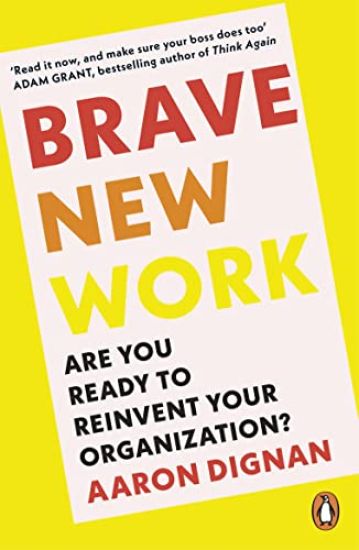
Brave New Work

Brave New Work

Aaron Dignan

PENGUIN BOOKS LTD
2023
pokkari
What's stopping you from doing the best work of your life?People are sick of the old ways of doing business. Despite the enthusiasm that surrounded the emergence of a hybrid working world, it still takes for ever to get anything done. Meetings and emails are almost belligerently incessant. Bureaucracy and hierarchy continue to stifle creativity and talent. So - after literal decades of management theory, as well as multiple shifts in the technological landscape - why can't we do better?Aaron Dignan is an expert in modernizing workplaces. He has built a career teaching top-level companies how to change to suit their workforce better and, in doing so, how to foster genuine innovation, loyalty and growth. In Brave New Work, he uses stories and experiences gathered from that career to lay out a fearless manifesto for a new type of work.This book will show you how to transform your team, department or business from the inside out, making work more adaptable, enjoyable and human. It's packed with tactics and tips for updating your company's operating system: the assumptions so deeply embedded within your organization that you don't even know you're being crippled by them.Learn how to reignite passion and energy throughout your organization, how to retain and attract a dedicated and happy workforce, and, ultimately, how to build a company that runs itself.