

Kirjahaku
Etsi kirjoja tekijän nimen, kirjan nimen tai ISBN:n perusteella.
1000 tulosta hakusanalla Adam J Pollack

Adam Gottlob Schirachs, natÃ1/4rliche Geschichte der Erd-Feld- oder Ackerschnecken, Erste Sammlung
Adam Gottlob Schirach
Hutson Street Press
2025
sidottu




Adam of Bremen’s Gesta Hammaburgensis Ecclesiae Pontificum
TAYLOR FRANCIS LTD
2022
sidottu
Adam of Bremen’s Gesta Hammaburgensis Ecclesiae Pontificum is one of the most important accounts documenting the history, geography and ethnology of Northern and Central-Eastern Europe in the period between the ninth and eleventh centuries. Its author, a canon of the archdiocese of Hamburg-Bremen, remains an almost anonymous figure but his text is an essential source for the study of the early medieval Baltic. However, despite its undisputed status, past scholarship has tended to treat Adam of Bremen’s account as, on the one hand, an historically accurate document, but on the other, a literary artefact containing few, if any, reliable historical facts. The studies collected in this volume investigate the origins and context of the Gesta and will enable researchers to better understand and evaluate the historical veracity of the text.
Adam of Bremen’s Gesta Hammaburgensis Ecclesiae Pontificum
TAYLOR FRANCIS LTD
2024
nidottu
Adam of Bremen’s Gesta Hammaburgensis Ecclesiae Pontificum is one of the most important accounts documenting the history, geography and ethnology of Northern and Central-Eastern Europe in the period between the ninth and eleventh centuries. Its author, a canon of the archdiocese of Hamburg-Bremen, remains an almost anonymous figure but his text is an essential source for the study of the early medieval Baltic. However, despite its undisputed status, past scholarship has tended to treat Adam of Bremen’s account as, on the one hand, an historically accurate document, but on the other, a literary artefact containing few, if any, reliable historical facts. The studies collected in this volume investigate the origins and context of the Gesta and will enable researchers to better understand and evaluate the historical veracity of the text.
This book contributes to the ‘new view’ reading of Adam Smith, providing a historically and contextually rich interpretation of Smith’s thought. Smith built a moral philosophy on the foundations of a natural theology of human sociality. Examination of his life, relationship with David Hume and use of divine names shows that he retained a progressive form of Christian theism. The book interrogates the metaphor of the ‘invisible hand’ and highlights the importance of the religious dimension of Adam Smith’s thought for his moral philosophy, his jurisprudence and his economics. It reflects on the contemporary relevance of a theological reading of Smith and lays the ground for further inquiry between economic and religious perspectives.
This book contributes to the ‘new view’ reading of Adam Smith, providing a historically and contextually rich interpretation of Smith’s thought. Smith built a moral philosophy on the foundations of a natural theology of human sociality. Examination of his life, relationship with David Hume and use of divine names shows that he retained a progressive form of Christian theism. The book interrogates the metaphor of the ‘invisible hand’ and highlights the importance of the religious dimension of Adam Smith’s thought for his moral philosophy, his jurisprudence and his economics. It reflects on the contemporary relevance of a theological reading of Smith and lays the ground for further inquiry between economic and religious perspectives.
Adam Smith and Modernity
TAYLOR FRANCIS LTD
2023
sidottu
This volume features 19 original chapters on Adam Smith’s conception of modernity. The contributions demonstrate the relevance of Smith as the great interpreter of modernity 250 years after the publication of The Wealth of Nations.The chapters in Part 1 focus on structural aspects of Smith’s work. They cover topics such as Smith as the theorist of a spontaneous order, the systematic dimension of Smith’s theoretical construction, and Smith’s role as a historian of economic thought. Part 2 addresses Smith’s conception of modern subjectivity between Lectures on Rhetoric and Belles-Lettres, Theory of Moral Sentiments, and Wealth of Nations. Here the contributors consider the figure of the Smithian "merchant" and the importance of ridicule and satire for understanding modern civility, and comment on the role of sympathy, imagination, and moral judgement in developing a sense of self, the condition of the modern man in society, and the virtue of self-command. Part 3 focuses on the crucial question of the relationship between ethics and economics discussing the link between efficiency, equity and justice, the nature of Smith's theory of value, and the ethical connotation of Smith's critique. Part 4 deals with topics inherent to the functional dynamics and development process of the Smithian "commercial society." These topics include law and authority, the relationship between work and freedom, the parable of the "poor man's son," and the economic and political consequences of the new secular orthodoxy. Finally, the chapters in Part 5 explore themes related to history and the Smithian idea of progress. They focus on the link between trade and progress of civilization, Smith’s modern sociological vision of mass commercial societies, Smith's judgement on “savage” and premodern societies, and the controversial question of the immanentistic or providentialist perspective from which Smith considers both the social dynamics and the historical process.Adam Smith and Modernity will appeal to scholars and advanced students on 18th-century philosophy, the history of economic thought, and the history of social and political philosophy.
Adam Smith and Modernity
TAYLOR FRANCIS LTD
2024
nidottu
This volume features 19 original chapters on Adam Smith’s conception of modernity. The contributions demonstrate the relevance of Smith as the great interpreter of modernity 250 years after the publication of The Wealth of Nations.The chapters in Part 1 focus on structural aspects of Smith’s work. They cover topics such as Smith as the theorist of a spontaneous order, the systematic dimension of Smith’s theoretical construction, and Smith’s role as a historian of economic thought. Part 2 addresses Smith’s conception of modern subjectivity between Lectures on Rhetoric and Belles-Lettres, Theory of Moral Sentiments, and Wealth of Nations. Here the contributors consider the figure of the Smithian "merchant" and the importance of ridicule and satire for understanding modern civility, and comment on the role of sympathy, imagination, and moral judgement in developing a sense of self, the condition of the modern man in society, and the virtue of self-command. Part 3 focuses on the crucial question of the relationship between ethics and economics discussing the link between efficiency, equity and justice, the nature of Smith's theory of value, and the ethical connotation of Smith's critique. Part 4 deals with topics inherent to the functional dynamics and development process of the Smithian "commercial society." These topics include law and authority, the relationship between work and freedom, the parable of the "poor man's son," and the economic and political consequences of the new secular orthodoxy. Finally, the chapters in Part 5 explore themes related to history and the Smithian idea of progress. They focus on the link between trade and progress of civilization, Smith’s modern sociological vision of mass commercial societies, Smith's judgement on “savage” and premodern societies, and the controversial question of the immanentistic or providentialist perspective from which Smith considers both the social dynamics and the historical process.Adam Smith and Modernity will appeal to scholars and advanced students on 18th-century philosophy, the history of economic thought, and the history of social and political philosophy.
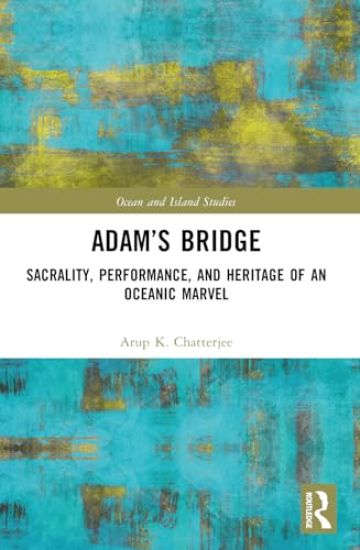
Adam’s Bridge offers the first comprehensive transdisciplinary study of the famous eponymous tombolo (also known as Ram Setu) combining its sacral, historical, geological, political, performative, and heritage aspects into one framework, viewed under the critical lenses of island studies and cultural theory.The book elucidates the entanglement of Adam’s Bridge’s discursive history with India’s colonial history, contemporary geology, domestic politics, and the nation’s emerging position in a complex geopolitical order in and around the Indian Ocean region, vis-à-vis increasing Sino-American involvement in Indo-Sri Lankan relations. Without foregrounding any absolute scientific claims on the location of the sandbars that inspired sage Valmiki’s Ram Setu and the Ramayan legacy or hindering narratives of religious faiths and folklore revolving around the structure, this intellectual historiography traces the parallel evolution of traditions of compassionate questioning and devotion for Indic sacred beliefs among commentators across the millennia from both Indian and non-Indian spectra, seen in juxtaposition with the biotic and abiotic diversity of the Gulf of Mannar and Palk Bay. Looking beyond secular-versus-religious debates, this book will be of interest to scholars of ocean and island studies, coastal economies, archipelagic geographies, environmental history, heritage studies, colonial studies, and cultural theory.Adam’s Bridge unifies a consortium of themes, ranging across ecological and livelihood sustainability, environmentalism, soteriology, economic and geostrategic history, and the United Nations Convention on the Law of the Sea, in conceptualizing a compellingly nuanced chronicle for India’s enchanted ‘bridge.’
Adam’s Bridge offers the first comprehensive transdisciplinary study of the famous eponymous tombolo (also known as Ram Setu) combining its sacral, historical, geological, political, performative, and heritage aspects into one framework, viewed under the critical lenses of island studies and cultural theory.The book elucidates the entanglement of Adam’s Bridge’s discursive history with India’s colonial history, contemporary geology, domestic politics, and the nation’s emerging position in a complex geopolitical order in and around the Indian Ocean region, vis-à-vis increasing Sino-American involvement in Indo-Sri Lankan relations. Without foregrounding any absolute scientific claims on the location of the sandbars that inspired sage Valmiki’s Ram Setu and the Ramayan legacy or hindering narratives of religious faiths and folklore revolving around the structure, this intellectual historiography traces the parallel evolution of traditions of compassionate questioning and devotion for Indic sacred beliefs among commentators across the millennia from both Indian and non-Indian spectra, seen in juxtaposition with the biotic and abiotic diversity of the Gulf of Mannar and Palk Bay. Looking beyond secular-versus-religious debates, this book will be of interest to scholars of ocean and island studies, coastal economies, archipelagic geographies, environmental history, heritage studies, colonial studies, and cultural theory.Adam’s Bridge unifies a consortium of themes, ranging across ecological and livelihood sustainability, environmentalism, soteriology, economic and geostrategic history, and the United Nations Convention on the Law of the Sea, in conceptualizing a compellingly nuanced chronicle for India’s enchanted ‘bridge.’
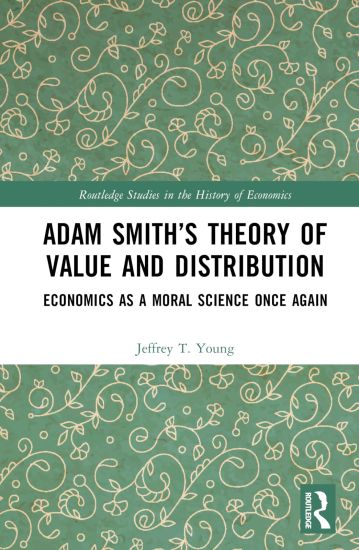
Ever since the time of his early interpreters, beginning with David Hume, Adam Smith’s theory of value has been the subject of confusion and misunderstanding—including a controversy which still rages over whether Smith held a labour theory of value, and, if so, whether he held to it throughout Wealth of Nations, or if it was confined to the “Early and Rude State”? This book provides a close reading of Smith’s key text, and also incorporates material from the other parts of Smith’s oeuvre, especially from The Theory of Moral Sentiments, to yield original and important insights into Smith’s theory of value. The book operates on the assumption that Smith is proposing relatively simple ideas about price and takes a conventional view that simple Supply and Demand models can illuminate, clearly and consistently with his text, his theory of price. Combining these elements, the book argues that, contra Marx, Smith does not have a labour theory of value at all, understood as a theory of the determination of the relative price structure. Instead, Smith is placed squarely in the supply and demand, general equilibrium framework and the claim that he is part of a “surplus tradition”, which receives its highest treatment in the work of Piero Sraffa, is refuted. This book will be of particular interest to Adam Smith specialists, historians of economic thought, and research economists who have an interest in Smith.