Kirjojen hintavertailu. Mukana 11 228 534 kirjaa ja 12 kauppaa.

Kirjahaku

Etsi kirjoja tekijän nimen, kirjan nimen tai ISBN:n perusteella.

1000 tulosta hakusanalla Al Mathison

Al-Ghazali on the Condemnation of Pride and Self-Admiration

Al-Ghazali on the Condemnation of Pride and Self-Admiration

Abu Hamid al-Ghazali

The Islamic Texts Society
2018
sidottu
The Condemnation of Pride and Self-Admiration is the twenty-ninth chapter of The Revival of the Religious Sciences, a monumental work of classical Islam written by the theologian-mystic Abu Hamid Muhammad al-Ghazali. Perhaps the most important chapter in the whole of Revival, The Condemnation of Pride and Self-Admiration delves into the fundamental spiritual ailments and major impediments of the soul, namely pride and self-admiration. In Part One, Ghazali focuses on pride, firstly by showing how the Qur'an condemns it, then by demonstrating what pride is and what its symptoms are, how pride manifests outwardly, as well as the seven causes of pride, the root cause being self-admiration. In seeking ways to cure the soul of pride, Ghazali presents the virtue of humility as the spiritual virtue par excellence; he offers examples of true humility, of false humility, and the manner by which the seven causes of pride can be uprooted. In Part Two, Ghazali hones in on the root cause of pride: self-admiration. As with pride, Ghazali defines self-admiration, shows the various ways it manifests inwardly, how it causes negligence, delusion and complacency, how each of these can be remedied.Just as humility is recognised as the virtue par excellence, pride is recognised as the vice par excellence; and this by all religions. The Condemnation of Pride and Self-Admiration is therefore a genuine contribution to the field of virtue ethics and will be of interest to all those engaged in the religious and spiritual life.
Al-Ghazali on the Condemnation of Pride and Self-Admiration

Al-Ghazali on the Condemnation of Pride and Self-Admiration

Abu Hamid Al-Ghazali

The Islamic Texts Society
2018
nidottu
The Condemnation of Pride and Self-Admiration is the twenty-ninth chapter of The Revival of the Religious Sciences, a monumental work of classical Islam written by the theologian-mystic Abu Hamid Muhammad al-Ghazali. Perhaps the most important chapter in the whole of Revival, The Condemnation of Pride and Self-Admiration delves into the fundamental spiritual ailments and major impediments of the soul, namely pride and self-admiration. In Part One, Ghazali focuses on pride, firstly by showing how the Qur'an condemns it, then by demonstrating what pride is and what its symptoms are, how pride manifests outwardly, as well as the seven causes of pride, the root cause being self-admiration. In seeking ways to cure the soul of pride, Ghazali presents the virtue of humility as the spiritual virtue par excellence; he offers examples of true humility, of false humility, and the manner by which the seven causes of pride can be uprooted. In Part Two, Ghazali hones in on the root cause of pride: self-admiration. As with pride, Ghazali defines self-admiration, shows the various ways it manifests inwardly, how it causes negligence, delusion and complacency, how each of these can be remedied.Just as humility is recognised as the virtue par excellence, pride is recognised as the vice par excellence; and this by all religions. The Condemnation of Pride and Self-Admiration is therefore a genuine contribution to the field of virtue ethics and will be of interest to all those engaged in the religious and spiritual life.
Al-Ghazali on Patience and Thankfulness

Al-Ghazali on Patience and Thankfulness

Abu Hamid Al-Ghazali

The Islamic Texts Society
2016
nidottu
An important part of The Revival of the Religious Sciences, the Book of PatienceThankfulness is a detailed discussion of the two qualities central to all faiths. Ghazali defines patience and thankfulness, their different forms, degrees and applications. And, he discusses the meaning of tribulation and blessings in connection with the virtues.
Al-Ghazali on Love, Longing, Intimacy & Contentment

Al-Ghazali on Love, Longing, Intimacy & Contentment

Abu Hamid al-Ghazali

The Islamic Texts Society
2016
nidottu
"Al-Ghazali on Love, Longing, Intimacy and Contentment" is the thirty-sixth chapter of Abu Hamid al-Ghazali's "Revival of the Religious Sciences" (Ihya Ulum al-Din), which is widely regarded as the greatest work of Muslim spirituality. "Al-Ghazali on Love, Longing, Intimacy and Contentment" is of fundamental importance in the history of Islamic thought and in the development of Sufism, being the first treatise to establish not merely the possibility but the necessity for the love of God.---In "Al-Ghazali on Love, Longing, Intimacy and Contentment", Ghazali argues that all the virtues and spiritual stages that precede love, like repentance, patience and thankfulness, lead to love; and all the spiritual stages that follow on from love are a result of it. Using proof texts from the Qur'an, the Traditions of the Prophet Muhammad and Sufi precepts, Ghazali succeeds in marshalling forceful arguments to make his case. Out of Ghazali's pioneering treatment would emerge not only new trends in Sufi theory and practice, but an entire body of mystical poetry including that of the great Persian poets Rumi and Hafiz.---Professor Eric Ormsby's fully annotated translation brings out all the beauty and lyricism of the text. The translation is preceded by an extensive introduction which sets the work in its historical and spiritual context.---In this new edition, the Islamic Texts Society has included the translation of Abu Hamid al-Ghazali's own Introduction to the "Revival of the Religious Sciences" which gives the reasons that caused him to write the work, the structure of the whole of the "Revival" and places each of the chapters in the context of the others.
Al-Ghazali on Invocations and Supplications

Al-Ghazali on Invocations and Supplications

Abu Hamid al-Ghazali

The Islamic Texts Society
2016
nidottu
The 4th edition of Nakamura's acclaimed translation of Book IX of the "Revival of the Religious Sciences" now including Ghazali's Introduction. Probably the most widely read compendium of prayers in the Muslim world. Popular for its comprehensiveness and for its exploration of the psychological and spiritual effects of prayer. With Arabic text.
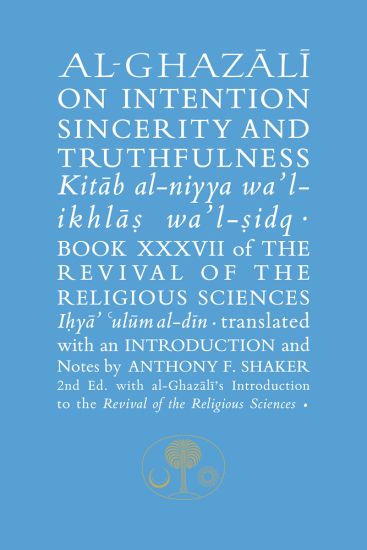
Al-Ghazali on Intention, Sincerity and Truthfulness

Al-Ghazali on Intention, Sincerity and Truthfulness

Abu Hamid al-Ghazali

The Islamic Texts Society
2016
nidottu
Al-Ghazali on Intention, Sincerity & Truthfulness is the thirty-seventh chapter of the Revival of the Religious Sciences. It falls in the section dealing with the virtues. Here Ghazali deals with the very important subject of intention which is of crucial importance in Islam. He asks: 'How can someone ignorant of the meaning of intention verify his own intention; or how can someone ignorant of the meaning of sincerity verify his own sincerity; or how can someone sincerely claim truthfulness if he has not verified its meaning?' In the Book of Intention, Sincerity & Truthfulness, Ghazali gives a response to each of these questions by expounding the reality and levels of intention, sincerity and truthfulness, those acts which affirm them and those acts which mar them. As in all his writings, Ghazali bases his arguments on the Qur'an, the example of the Prophet and the sayings of numerous scholars and Sufis.
Al-Ghazali on Disciplining the Soul & on Breaking the Two Desires

Al-Ghazali on Disciplining the Soul & on Breaking the Two Desires

Abu Hamid al-Ghazali

The Islamic Texts Society
2016
nidottu
"Al-Ghazali on Disciplining the Soul" is a translation of the twenty-third book of the "Revival of the Religious Sciences" (Ihya Ulum al-Din), which is widely regarded as the greatest work of Muslim spirituality. In "Al-Ghazali on Disciplining the Soul", Abu Hamid al-Ghazali illustrates how the spiritual life in Islam begins with `riyadat al-nafs', the inner warfare against the ego. The two chapters translated here detail the sophisticated spiritual techniques adopted by classical Islam in disciplining the soul. In Chapter One, "Disciplining the Soul", Ghazali focuses on how the sickness of the heart may be cured and how good character traits can be acquired. In Chapter Two, "Breaking the Two Desires", he discusses the question of gluttony and sexual desire-being the greatest of mortal vices-concluding, in the words of the Prophet, that "the best of all matters is the middle way". The translator, T. J. Winter, has added an introduction and notes which explore Ghazali's ability to make use of Greek as well as Islamic ethics.---In this new edition, the Islamic Texts Society has included the translation of Abu Hamid al-Ghazali's own Introduction to the "Revival of the Religious Sciences" which gives the reasons that caused him to write the work, the structure of the whole of the "Revival" and places each of the chapters in the context of the others.
Al-Ghazali on the Lawful and the Unlawful

Al-Ghazali on the Lawful and the Unlawful

Abu Hamid al-Ghazali

The Islamic Texts Society
2017
nidottu
Al-Ghazali's Book of the Lawful and the Unlawful is the fourteenth chapter of The Revival of the Religious Sciences, which is widely considered as the greatest work of Islamic spirituality. Written by one of the most famous of theologian-mystics of all time, The Book of the Lawful and the Unlawful is unlike other Islamic works concerned with legal issues.Here, Abu Hamid al-Ghazali aims to teach his readers firstly the theory of what is lawful and what is unlawful and how to deal with dubious or ambiguous issues, and secondly how to apply the knowledge they have gained to their everyday lives. The main support for this application, especially in matters that are unclear, is caution or prudence (wara) and Ghazali explains the degrees of prudence necessary beginning with the prudence of the upright and ending with the prudence of the saintly. Thus the sincere practice of what is lawful and desisting from what is unlawful become integrated into one's spiritual life. As in his other works, Ghazali bases himself on the Qur'an and narrations from the Prophet Muhammad, followed by examples from the Companions, the Successor generations and the pious Predecessors.
al-Nahr al-Jari fi Jam? al-Zahid wa-l-Sufun al-Jami?a li-l-taqrib bi-ghayat al-Ikhti?ar
جمع المتون ((سَفِينَةُ الصَّلَاةِ)) لعَبْدُ اللهِ بْنُ عُمَرَ الحَضْرَمِيُّ الشَّافِعِيُّ (١٢٦٥هـ/١٨٤٩م)؛((اَلسِّتِّيْنَ مَسْأَلَةً فِيْ مَذْهَبِ الْإِمَامِ الشَّافِعِيِ)) لزَّاهِدُ الفَقِيهُ أَحْمَدُ بْنُ مُحَمَّدٍ شِهَابُ الدِّينِ المِصْرِيُّ الشَّافِعيُّ (٨١٩هـ/١٤١٦م)؛((اَلرِّسَالَةُ الْجَامِعَةُ وَالتَّذْكِرَةُ النَّافِعَة)) لحَبِيبُ الفَقِيهُ أَحْمَدُ بْنُ زَيْنٍ الحَبَشِيُّ الشَّافِعِيُّ، (١١٤٤هـ/١٧٣١م)؛((اَلْمُخْتَصَرُ الصَّغِيْرُ فِيْمَا لَا بُدَّ لِكُلِّ مُسْلِمٍ مِنْ مَعْرِفَتِهِ فِي الْعِبَادَاتِ عَلَى مَذْهَبِ الْإِمَامِ الشَّافِعِيِّ رَضِيَ اللهُ عَنْهُ))؛ لإِمَامُ الفَقِيهُ المُحَقِّقُ عَبْدُ اللهِ بْنُ عَبْدِ الرَّحْمَنِ بِافَضْل الحَضْرَمِيُّ الشَّافِعِيُّ، (٩١٨هـ/١٥١٢م)؛؛((سَفِينَةُ النَّجَاةِ فِيْ مَا يَجِبُ عَلَى الْعَبْدِ لِمَوْلَاهُ)) لإِمَامُ الفَقِيهُ سَالِمُ بْنُ سَمِيرٍ الحَضْرَمِيُّ الشَّافِعِيُّ (١٢٧١هـ/١٨٥٥م)؛((مَتْنُ الْغَايَةِ وَالتَّقْرِيْبِ أَوْ مَتْنُ غَايَةِ الْاِخْتِصَارِ أَوْ مَتْنُ أَبِيْ شُجَاعٍ)) لإِمَامُ الفَقِيهُ أَحْمَدُ بْنُ الحُسَيْنِ أَبُو شُجَاعٍ الأَصْفَهَانِيُّ الشَّافِعِيُّ (٥٠٠هـ/١١٠٧م)؛ العلم كثير، وطريقه وعر، وكثير ما نجد الشباب يتعطلون في أول طريقه، فيكرر بعض المقدمات مرارًا حتى تسكن له المعلومة ويتقدم بها في دينه ودنياه. وكذا وجدنا المنتهي ينتقل إلى الكتب المتون المتقدمة، التي لا تشمل كل مسائل الباب ولكن أهمها، فيفوته بسبب طولها بعض الفوائد التي مر عليها في المقدمات. فقمت بجمع هذه المتون الأولية لإعانة المبتديء وإتمام فائدة المنتهي، فنسأل الله سبحانه وتعالى أن يتقبل منا هذا الجمع، ورضوانه عني وعن أحبائي وسائل المسلمين.
Al Sr. Brillo le gusta el Amarillo

Al Sr. Brillo le gusta el Amarillo

Tanya Saunders

AVID Language
2022
pokkari
Al Sr. Brillo le gusta el amarillo... pero qu pasa con el rojo, naranja, verde y azul, y tambi n con los dem s colores? Puede su extravagante grupo de animales persuadir al brillante y bimodal* Sr. Brillo de que hay algo m s adem s del amarillo?*El Sr. Brillo es sordo; y para ayudarle a o r, lleva un aud fono en un o do y un implante coclear en el otro El Sr. Brillo es realmente un tipo genial, vestido de amarillo y listo para una espl ndida aventura con su colorida tripulaci n de animales. Con cada vuelta de p gina, la historia aumenta, a adiendo cada vez un nuevo color, una nueva criatura, un nuevo giro a la historia... y culminando en una fiesta a todo color Se trata de un libro infantil inclusivo protagonizado por un personaje que resulta ser sordo, pero que no trata espec ficamente de la p rdida de audici n. Al Sr. Brillo le gusta el amarillo es un cuento exuberante sobre un tipo divertido y extravagante (que tiene una blanca cometa que vuela en una noche concreta, mientras se balancea en su cama roja escarlata) y sus fant sticos amigos animales. El libro har que los ni os se r an mientras recitan sus rimas, a medida que avanzan de p gina en p gina.El libro permite a los ni os que utilizan tecnolog a de asistencia auditiva verse representados (a trav s del fabuloso Sr. Brillo) y muestra a todo el mundo, tengan o no p rdida auditiva, que llevar aud fonos y/o implantes cocleares es realmente genial.Para aquellos padres y terapeutas que deseen utilizarlo como recurso para el desarrollo del habla y el lenguaje, el libro integra estrategias de escucha y lenguaje hablado (LSL), que la autora emple cuando ense a su propia hija (con sordera profunda y ayudada por implantes cocleares) a escuchar y hablar. Estas estrategias incluyen: La audici n antes que la visi n: Los nuevos personajes y nuevos colores se describen con palabras en la p gina anterior de cuando los veamos realmente, lo que permite al cerebro del ni o procesar la informaci n auditiva antes de la informaci n visual.Hablar por adelantado - qu viene despu s? A medida que el libro presenta nuevos colores y nuevos personajes uno por uno, el lector y el ni o pueden divertirse mucho adivinando y discutiendo qu color y qu personaje podr a revelarse a continuaci n.Practicar el cierre auditivo: Estructurado como un poema que se repite y construye al pasar las p ginas, el libro ofrece m ltiples oportunidades para practicar el cierre auditivo (cuando el lector hace una pausa y permite al ni o completar la siguiente palabra o frase).Refuerzo de la memoria auditiva: Los ni os querr n unirse de forma natural a la recitaci n del poema a medida que se repite y aumenta a lo largo del libro.Ampliaci n del vocabularioDesarrollar la inteligencia emocional y la teor a de la mente Available in English as 'Mr Mellow Likes Yellow']
Al Sr. Brillo le gusta el Amarillo

Al Sr. Brillo le gusta el Amarillo

Tanya Saunders

AVID Language
2022
sidottu
Al Sr. Brillo le gusta el amarillo... pero qu pasa con el rojo, naranja, verde y azul, y tambi n con los dem s colores? Puede su extravagante grupo de animales persuadir al brillante y bimodal* Sr. Brillo de que hay algo m s adem s del amarillo?*El Sr. Brillo es sordo; y para ayudarle a o r, lleva un aud fono en un o do y un implante coclear en el otro Also available in English as 'Mr Mellow Likes Yellow'El Sr. Brillo es realmente un tipo genial, vestido de amarillo y listo para una espl ndida aventura con su colorida tripulaci n de animales. Con cada vuelta de p gina, la historia aumenta, a adiendo cada vez un nuevo color, una nueva criatura, un nuevo giro a la historia... y culminando en una fiesta a todo color Se trata de un libro infantil inclusivo protagonizado por un personaje que resulta ser sordo, pero que no trata espec ficamente de la p rdida de audici n. Al Sr. Brillo le gusta el amarillo es un cuento exuberante sobre un tipo divertido y extravagante (que tiene una blanca cometa que vuela en una noche concreta, mientras se balancea en su cama roja escarlata) y sus fant sticos amigos animales. El libro har que los ni os se r an mientras recitan sus rimas, a medida que avanzan de p gina en p gina.El libro permite a los ni os que utilizan tecnolog a de asistencia auditiva verse representados (a trav s del fabuloso Sr. Brillo) y muestra a todo el mundo, tengan o no p rdida auditiva, que llevar aud fonos y/o implantes cocleares es realmente genial.Para aquellos padres y terapeutas que deseen utilizarlo como recurso para el desarrollo del habla y el lenguaje, el libro integra estrategias de escucha y lenguaje hablado (LSL), que la autora emple cuando ense a su propia hija (con sordera profunda y ayudada por implantes cocleares) a escuchar y hablar. Estas estrategias incluyen: La audici n antes que la visi nHablar por adelantado - qu viene despu s?Practicar el cierre auditivoRefuerzo de la memoria auditivaAmpliaci n del vocabulario Desarrollar la inteligencia emocional y la teor a de la mente Spanish book for deaf and hard of hearing kids with cochlear implants and hearing aids; also for inclusive mainstream and bilingual teaching]
Al-Hussein

Al-Hussein

Ali Altobchi

Helion Company
2022
nidottu
Always at the forefront of Arab states when it came to the development of its armed forces and armament industry, during the 1970s Iraq embarked on an ambitious program of becoming self-sufficient in production of almost all equipment and ammunition necessary for its armed forces. Indeed, during the following decade, many of the related projects became a necessity because of the lengthy and costly war with Iran. The most ambitious - and probably the best-known - such projects were related to the production of ballistic missiles: the efforts resulted in the construction of a factory for production of rocket propellant at Hillah and another for the assembly of ballistic missiles at Fallujah. A direct result emerged in early 1988, when Iraq deployed the al-Hussein ballistic missile (an extended-range variant of the Soviet-made R-17E 'Scud') to strike Tehran in Iran in the course of the so-called 'War of the cities'. However, al-Hussein was far from being the only such project. At the time Iraqi scientists and armament designers including Nassir al-Hindawi, Rihab at-Taha, and Huda Salih Mahdi Ammash were considered some of the best in the world, they became closely involved in cooperating with Brazil, resulting in the development of the Astros 2 (a copy of the Soviet-made Luna-M artillery rocket), and then embarked on the development of such advanced designs as the Liath and Ababil, and a solid-fuel ballistic missile; the al-Samoud 2. Moreover, the Iraqis launched a project to develop indigenous early warning radar aircraft; anti-ballistic missiles; and cooperated with South Africa in the field of development of long-range artillery pieces like the GC-45 (in its GHN-45 variant). Indeed, within Project Babylon, the Iraqis cooperated with prominent Canadian artillery-expert Gerald Bull to develop the so-called 'super gun': a 1000mm artillery piece expected to be able of reaching a range of 750km. Written by one of the Iraqi engineers involved, and richly illustrated, al-Hussein is the first-hand account of these and many other indigenous Iraqi armament projects.
Al-Ma'thurat

Al-Ma'thurat

Hasan Al-Banna

Light Publishing
2014
pokkari
This book is a collection of beautiful adkhars (litanies) from the Quran and sunnah to be recited daily. With an insightful translation which once read will make you appreciate its meaning and benefits. Dhikr (pl. Adkhar) is not only limited to words; repentance is dhikr, reflection is dhikr, seeking knowledge is dhikr, seeking lawful provisions (provided that the intention is correct) is dhikr and generally, every lawful act during which the presence of Allah is felt is dhikr. Allah said in the Quran 'O you who believe Remember Allah with much remembrance.' This book contains: Important verses of the Quran and SunnahPrayers for protection from evilSpecial prayers from the QuranA supplication for every occasionProphet Muhammad said 'Dua is the weapon of the believers.' A must have book for every household for wellbeing and protection.
Al Khazini

Al Khazini

Ali Gator

Ali Gator
2020
nidottu
The Muslim Scientist Series introduces children to great scientists, scholars and adventurers from the Golden Age of Islam. Al-Khazini's early understanding of weights and scales, along with the effect of gravity is the basis of mechanical engineering today.He is recognised as 'The Founder of the Theory of Gravity.'Learn more about this great model in this vibrant book!