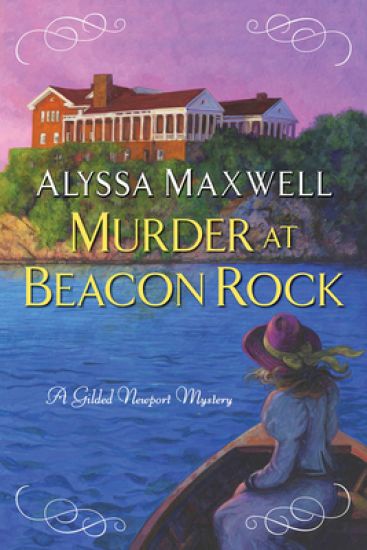
The New York Yacht Club's exclusive gathering at Newport, Rhode Island's Beacon Rock mansion hits stormy seas in the summer of 1900 when reporter Emma Cross, a lesser Vanderbilt, discovers a drowned corpse in Alyssa Maxwell's tenth Gilded Newport Mystery... As a reporter, Emma is used to covering Newport's social events. But this time she is appearing on the arm of her fianc , Derrick Andrews, at a small but exclusive gathering of the New York Yacht Club at Beacon Rock, the Grecian-inspired summer "cottage" of Edwin and Elizabeth Morgan. The members--which include cousin and Yacht Club Commodore John Pierpoint Morgan and widow Lucy Carnegie, the first woman to be admitted to the Club--are there to discuss their strategy for the next America's Cup Challenge, to be held in New York Harbor the following summer. But it's Emma who must come up with a strategy when she discovers a woman's body bobbing against one of the hulls of the boats moored at the base of Beacon Rock. After the woman is identified as the missing daughter of a yacht designer, the police--with the exception of Emma's friend Detective Jesse Whyte--hastily conclude she is a suicide, perhaps to quiet any scandal for the Morgans. But Emma suspects the woman was murdered and begins to sort through a who's who of sportsmen, boat crews, and the Newport elite in search of a stone-cold killer . . .
For fans of HBO's The Gilded Age, the glorious mansions of Newport house many mysteries--murder, theft, scandal--and no one is more adept at solving them than reporter Emma Andrews . . . 1901: Back from their honeymoon in Italy, Emma and Derrick are adapting to married life as they return to their duties at their jointly owned newspaper, the Newport Messenger. The Elms, coal baron Edward Berwind's newly completed Bellevue Avenue estate, is newsworthy for two reasons: A modern mansion for the new century, it is one of the first homes in America to be wired for electricity with no backup power system, generated by coal from Berwind's own mines. And their servants--with a single exception--have all gone on strike to protest their working conditions. Summarily dismissing and replacing his staff with cool and callous efficiency, Berwind throws a grand party to showcase the marvels of his new "cottage." Emma and Derrick are invited to the fete, which culminates not only in a fabulous musicale but an unforeseen tragedy--a chambermaid is found dead in the coal tunnel. In short order, it is also discovered that a guest's diamond necklace is missing and a laborer has disappeared. Detective Jesse Whyte entreats Emma and Derrick to help with the investigation and determine whether the murder and the theft are connected. As the dark deeds cast a shadow over the blazing mansion, it's up to Emma to shine a light on the culprit . . .
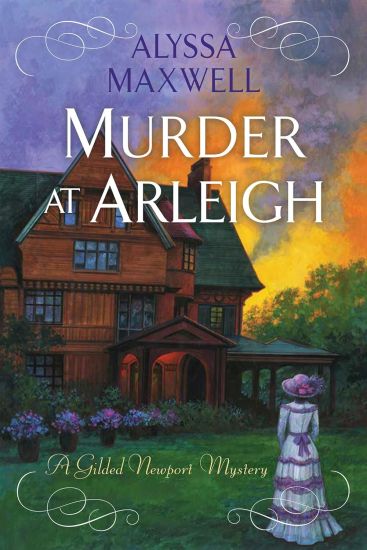
Reporter, sleuth, and new mother Emma Cross Andrews comes to the aid of a distraught wife who's convinced her husband is trying to kill her . . . April 1903: Emma and Derrick Andrews have been invited to the wedding of her cousin Reggie Vanderbilt and heiress Cathleen Neilson at the Bellevue Mansion, Arleigh. Their hosts are a popular young couple who are leasing the home for the summer--Harry and Elizabeth "Bessie" Lehr. Known for his practical jokes, Harry is the toast of parties, earning a reputation as the court jester of the Gilded Age. However, as Emma soon learns, behind closed doors he is dead serious. Following the wedding, Bessie comes to Emma for help, insisting that her husband is cruel to her in private, telling her outright he married her only for her money and finds her repulsive. Divorce is unthinkable. Now she believes he is plotting to murder her and make it look like an accident: a broken balcony railing she might have leaned on, a loose stair runner that could have sent her tumbling down a staircase, faulty brakes in the car she uses . . . Some would say being trapped in a loveless marriage is a fate worse than death. Not Bessie--she wants to live Unsure if these situations are mere coincidences or add up to premeditated sabotage, Emma agrees to investigate and determine if Newport's merry prankster is engaged in a cold-blooded game of life or death . . .
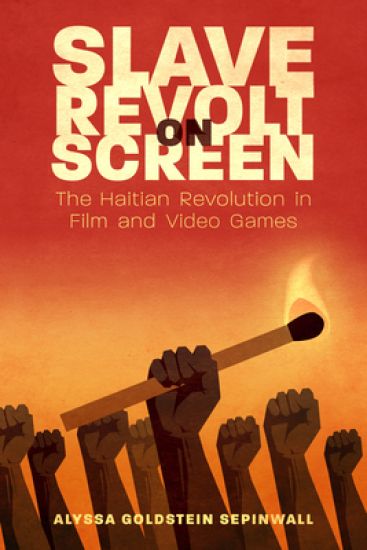
In Slave Revolt on Screen: The Haitian Revolution in Film and Video Games author Alyssa Goldstein Sepinwall analyzes how films and video games from around the world have depicted slave revolt, focusing on the Haitian Revolution (1791-1804). This event, the first successful revolution by enslaved people in modern history, sent shock waves throughout the Atlantic World. Regardless of its historical significance however, this revolution has become less well-known-and appears less often on screen-than most other revolutions; its story, involving enslaved Africans liberating themselves through violence, does not match the suffering-slaves-waiting-for-a-white-hero genre that pervades Hollywood treatments of Black history. Despite Hollywood's near-silence on this event, some films on the Revolution do exist-from directors in Haiti, the US, France, and elsewhere. Slave Revolt on Screen offers the first-ever comprehensive analysis of Haitian Revolution cinema, including completed films and planned projects that were never made. In addition to studying cinema, this book also breaks ground in examining video games, a pop-culture form long neglected by historians. Sepinwall scrutinizes video game depictions of Haitian slave revolt that appear in games like the Assassin's Creed series that have reached millions more players than comparable films. In analyzing films and games on the revolution, Slave Revolt on Screen calls attention to the ways that economic legacies of slavery and colonialism warp pop-culture portrayals of the past and leave audiences with distorted understandings.
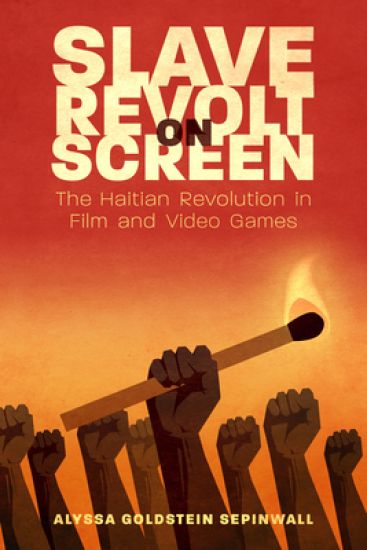
In Slave Revolt on Screen: The Haitian Revolution in Film and Video Games author Alyssa Goldstein Sepinwall analyzes how films and video games from around the world have depicted slave revolt, focusing on the Haitian Revolution (1791-1804). This event, the first successful revolution by enslaved people in modern history, sent shock waves throughout the Atlantic World. Regardless of its historical significance however, this revolution has become less well-known-and appears less often on screen-than most other revolutions; its story, involving enslaved Africans liberating themselves through violence, does not match the suffering-slaves-waiting-for-a-white-hero genre that pervades Hollywood treatments of Black history. Despite Hollywood's near-silence on this event, some films on the Revolution do exist-from directors in Haiti, the US, France, and elsewhere. Slave Revolt on Screen offers the first-ever comprehensive analysis of Haitian Revolution cinema, including completed films and planned projects that were never made. In addition to studying cinema, this book also breaks ground in examining video games, a pop-culture form long neglected by historians. Sepinwall scrutinizes video game depictions of Haitian slave revolt that appear in games like the Assassin's Creed series that have reached millions more players than comparable films. In analyzing films and games on the revolution, Slave Revolt on Screen calls attention to the ways that economic legacies of slavery and colonialism warp pop-culture portrayals of the past and leave audiences with distorted understandings.
A loving mother returned from the grave. A vampire fallen prey to her own kind. A young girl who can set the night aflame. These are the whispered stories of the night's darkest creatures. A collection of eleven short stories ranging from speculative to paranormal to horror, Whispers combines terrifying monsters with narrative introspection, digging to the roots of your darkest dreams. Told from the perspective of every variety of monster, these stories look for the humanity - or lack there of - in all our favourite creatures. Zombies, werewolves, ghosts, and other things that never found a name; Whispers finds the creatures hiding in the dark, and drags them into the light. Contents A Mother's Love Max only came home for the funeral; she never expected to stay. But when her mother returns from the grave to find the daughters she left behind, Max has no other choice. She must keep her family safe. The Fever A newborn werewolf's first transformation can be ecstasy, or it can be agony. For this newborn, tormented by the loss of her creator while still swimming in her memory, it just might be both. The Motel Room Since his death, this ghost has been trapped in a motel room. Only when a maid enters the room, and the two lock eyes, does he begin to discover the true power behind his ghostly form. King of the Forest A little girl sleeps in the forest, growing dark fruit from her night time thoughts as the tree's roots twist deeper into her heart. Only the King of the Forest can tear the two apart. Fall From Glory An alpha predator in her own mind, this vampire stalks through her city, taking any prey she chooses. When her guard slips, caution replaced by confidence, she will find herself on the opposite end of the chase. The Drawer Lost somewhere between real life and a nightmare, a little girl grows up in an old, crumbling bedroom. Although she has always longed for silence, when she is finally left alone in the quiet house, she discovers how horrifying solitude can be. Pyromaniac Tristan lives for the nightlife. When a dangerous man attempts to shatter her reverie, she's forced to teach him a lesson. Not your typical teenager, this girl will set the night on fire. Whispering Peak Martha and her brother were born in the Outlands. They have never seen the grand capital, Invictus City. But when their general is taken hostage, Martha and Asher have no choice but to make their way through the monumental steel gates that enclose the city, and bring him home. Night Terrors As a child, she dreamt of wolves. Growing into a woman, she left her wolf pack behind, forgetting the dreams that had shaped her so long. Tonight, the wolves will come to take their sister home. Beggars Shelley has always been little afraid of commitment; in almost a century of being a vampire, she has never longed for a companion. When she meets a young homeless boy with a sweet tooth, though, she begins to change her mind. The Walkers The walkers roam a desert of endless silver sand, under a sky that shines with the light of twin moons. When the smallest walker wanders away from her tribe and finds the first human ever seen in their desert, all of their lives will change forever.
Do you love cakes? (You are in the right place) Dump Cakes are a blessing. Not only they are easy to bake; they are filled with mouthwatering goodness. In less than 1 hour you will be able to enjoy this incredible cakes (We made sure this recipes are the ones you must try and enjoy) These are some of the recipes you will find inside: - Dump Stir Chocolate Madness - Cream Cheese & Cherry Dump Cake - Black Forest Dump Cake - Cookies and Cream Dump Cake - Fruits and Nuts Dump Cake - Lemon Blueberry Dump Cake - Caramel with Apples Dump Cake - Peach Cobbler Dump Cake - Chocolate & Cherries Dump Cake Sound good? You can find more inside the book. If you are one of those persons concerned about health? Don't worry because inside you will find healthy recipes too. So you can enjoy them without guilt. ?Such as: - Berry-licious Dump Cake - Strawberry and Rhubarb Dump Cake - Feel Fresh Dump Cake - Fresh Apples Dump Cake - Apples and Blueberries Dump Cake Start enjoying these delicious recipes in no time. Dump cakes are fun to make for everybody( kids and adults). No need to be an expert in here. Just dump a few ingredients and enjoy this mouthwatering experience.
Eat Happy: Transform Your Health With Foods You Love is a how-to guide to eating real food, and will teach you the only rule about food and dieting you need to know. Part inspiration and part cookbook, Eat Happy is a must-have for anyone looking to take control of their health by making whole foods a part of their daily life. In addition to eating better and feeling great, you will also learn how to: -Find daily foods that prevent or eliminate heart burn, allergies, indigestion, migraines, heart disease and cancer -Eat more, be truly satisfied, and stop worrying about food -Ditch fad diets forever and become your own nutrition guru -Prepare simple and delicious recipes that will pump your body with healing nutrients -Figure out what works best for your unique body Testimonials: Eat Happy provides readers with knowledge and motivation to call their own shots with food. Health coach, Alissa Glenn teaches which foods nourish best and which should be left on the shelf through simple techniques, food guides and healthy recipes, so that you will "Eat Happy" for the rest of your life Joshua Rosenthal, Founder of the Institute for Integrative Nutrition Eat Happy is a must-read for anyone who wants to eat food and feel happy doing so In a world full of diets and restrictions, Alissa's approach is simple, fun and delicious She includes great tips, inspiration and recipes to keep you happy all day long Lindsey Smith, Food Mood Girl, Author and Speaker
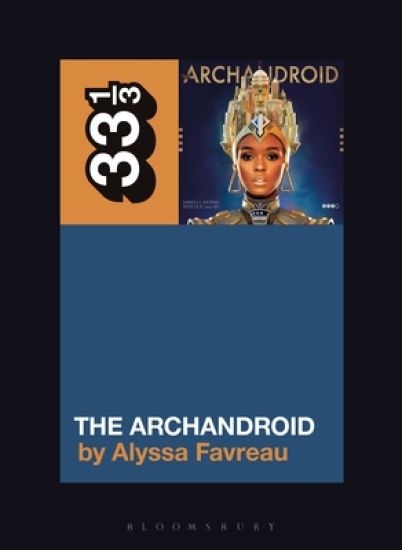
In Janelle Monáe’s full-length debut, the science fiction concept album The ArchAndroid, the android Cindi Mayweather is on the run from the authorities for the crime of loving a human. Living in 28th century Metropolis, Cindi fights for survival, soon realizing that she is in fact the prophesied ArchAndroid, a robot messiah meant to liberate the masses and lead them toward a wonderland where all can be free.Taking into account the literary merit of Monáe’s astounding multimedia body of work, the political relevance of the science fictional themes and aesthetics she explores, and her role as an Atlanta-based pop cultural juggernaut, this book explores the lavish world building of Cindi’s story, and the many literary, cinematic, and musical influences brought together to create it. Throughout, a history of Monáe’s move to Atlanta, her signing with Bad Boy Records, and the trials of developing a full-length concept album in an industry devoted to the production of marketable singles can be found, charting the artist’s own rise to power. The stories of Monáe and of Cindi are inextricably entwined, each making the other more compelling, fantastical, and deeply felt.
Sovereignty Experiments tells the story of how authorities in Korea, Russia, China, and Japan—through diplomatic negotiations, border regulations, legal categorization of subjects and aliens, and cultural policies—competed to control Korean migrants as they suddenly moved abroad by the thousands in the late nineteenth century. Alyssa M. Park argues that Korean migrants were essential to the process of establishing sovereignty across four states because they tested the limits of state power over territory and people in a borderland where authority had been long asserted but not necessarily enforced. Traveling from place to place, Koreans compelled statesmen to take notice of their movement and to experiment with various policies to govern it. Ultimately, states' efforts culminated in drastic measures, including the complete removal of Koreans on the Soviet side. As Park demonstrates, what resulted was the stark border regime that still stands between North Korea, Russia, and China today. Skillfully employing a rich base of archival sources from across the region, Sovereignty Experiments sets forth a new approach to the transnational history of Northeast Asia. By focusing on mobility and governance, Park illuminates why this critical intersection of Asia was contested, divided, and later reimagined as parts of distinct nations and empires. The result is a fresh interpretation of migration, identity, and state making at the crossroads of East Asia and Russia.