Kirjojen hintavertailu. Mukana 11 342 296 kirjaa ja 12 kauppaa.

Kirjahaku

Etsi kirjoja tekijän nimen, kirjan nimen tai ISBN:n perusteella.

1000 tulosta hakusanalla Alfred Gudeman

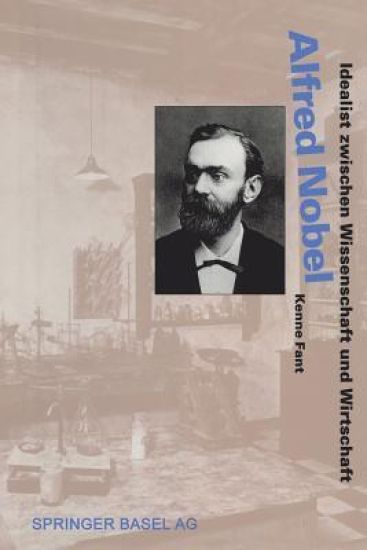
Alfred Nobel

Alfred Nobel

Kenne Fant

Springer Basel
2014
nidottu
The only full-length biography of the founder of the Nobel Prize. Few documents have had a more enduring influence on our century than Alfred Nobel's last will and testament, for these handwritten sheets established the most coveted and prestigious awards on earth. The Nobel Prizes represent glory and world stature, and are the stuff of immortality. Yet the man whose name they bear has been lost to near obscurity. As Kenne Fant shows in this fascinating biography, Alfred Nobel's life contained fierce and troubling paradoxes. He invented dynamite and revolutionized the technology of destruction, yet his dreams of a disarmed world inspired him to create the Nobel Peace Prize. One of the most powerful men of his time, Nobel was viewed by some as the model of success and entrepreneurial drive; to his workers, he was an enlightened and scrupulously honest employer in an age of heartless exploitation. Others, however, blamed him for the accidents caused by his inventions and labeled him the merchant of death. Victor Hugo called him Europe's richest vagabond because he moved about too restlessly. Harassed by imitators, sycophants, and frauds, and struggling continuously with bureaucracies and patent offices (only Thomas Edison surpassed him in the number of patents obtained), Nobel was often desperately lonely. Making extensive use of Nobel's letters and writing, Fan's portrait reveals Nobel in all his aspects--industrialist, pacifist, arms manufacturer, and poet--and does full justice to a compelling and visionary figure whose name will resonate for generations.
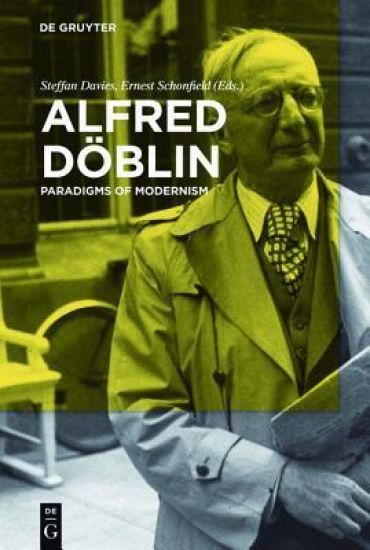
Alfred Döblin

Alfred Döblin

De Gruyter
2009
sidottu
Döblin’s texts, which range widely across contemporary discourses, are paradigms of the encounter between literary and scientific modernity. With their use of 'Tatsachenphantasie’, they explode conventional language, seeking a new connection with the world of objects and things. This volume reassesses and reevaluates the uniquely interdisciplinary quality of Döblin’s interdiscursive, factually-inspired poetics by offering challenging new perspectives on key works. The volume analyses not only some of Döblin’s best-known novels and stories, but also neglected works including his early medical essays, political journalism and autobiographical texts. Other topics addressed are Döblin’s engagement with German history; his relation to medical discourse; his topography of Berlin; his aestheticisation of his own biography and his relation to other major writers such as Heine, Benn, Brecht and Sebald. With contributions in English and in German by scholars from Germany and the United Kingdom, the volume presents insights into Döblin that are of value to advanced researchers and to students alike.
Alfred Andersch 'Revisited'
So spektakular W.G. Sebald die Beziehung zwischen Leben und Werk Alfred Anderschs skandalisierte, so entschieden lehnte man vor allem in Deutschland diesen Ansatz als unzulassiges Verquicken von strikt zu Trennendem ab. Deshalb bleibt bis heute offen, wie sich bei Andersch literarische Konstruktion und lebensgeschichtlicher Stoff tatsachlich zueinander verhalten. Zur Klarung dieser Frage arbeiten nun Literatur- und Geschichtswissenschaftler eng zusammen. Konnte es sein, dass gerade Autoren wie Andersch, die sich selber als non-konformistisch bezeichneten, zu "Konformisten eines biografischen Moralismus" (U. Wittstock) wurden, der es ihnen erschwerte, sich zu Zugestandnissen an das NS-Regime, und seien es vergleichsweise geringe, nachtraglich zu bekennen? Auch die Motivationslagen Sebalds werden in den hier prasentierte Beitragen angesprochen und diskutiert. Die Ergebnisse durften fur alle interessant sein, die sich mit Problemen und Verdiensten der deutschen Nachkriegsliteratur beschaftigen.
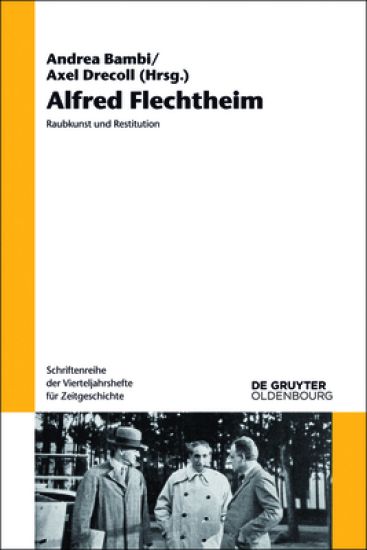
Alfred Flechtheim

Alfred Flechtheim

De Gruyter Oldenbourg
2015
isokokoinen pokkari
Alfred Flechtheim was one of the most important art dealers of his era. His galleries included works by Paul Klee and Pablo Picasso. Persecuted by the Nazi regime, Flechtheim fled abroad. The fate of much of his collection remains obscure and a matter of contention to this day. In this study, experts from various disciplines use the example of Flechtheim to address controversial questions about the restitution of plundered art.
Alfred Rahlfs (1865-1935) und die kritische Edition der Septuaginta
Mit dem Namen von Alfred Rahlfs verbindet sich vor allem seine 1935 erschienene ‚Handausgabe', die noch immer als weltweit gebrauchte Standardedition der Septuaginta gilt. Demgegenüber geriet sein umfassendes wissenschaftliches Gesamtœuvre zunehmend in Vergessenheit, während seine Biographie bis heute weitgehend im Verborgenen geblieben ist. In der vorliegenden Monographie wird zum ersten Mal der Versuch unternommen, die gesamte Vielfalt der Rezensionen, Abhandlungen und Textausgaben von Rahlfs einer detaillierten werkgeschichtlichen Analyse zu unterziehen, an die sich eine synthetische Rekonstruktion seiner textkritischen und editionsphilologischen Methodik anschließt. Auf diese Weise werden die bahnbrechenden Erkenntnisse dieses großen Göttinger Gelehrten in ihrer bis ins 21. Jahrhundert reichenden wissenschaftsgeschichtlichen Bedeutung für die Erforschung und kritische Edition des Septuaginta-Textes transparent, deren Verankerung in der Editionsphilologie des 19. Jh. ebenso wie ihre im institutionellen Rahmen des 1908 gegründeten Septuaginta-Unternehmens der Göttinger Akademie der Wissenschaften sich vollziehende Weiterentwicklung aus der erstmaligen vollständigen Darstellung seiner Biographie ersichtlich werden.
Alfred Loisy and the Making of History of Religions
This monograph studies the professionalization of History of religions as an academic discipline in late 19th and early 20th century France and Europe. Its common thread is the work of the French Modernist priest and later Professor of History of religions at the Collège de France, Alfred Loisy (1857-1940), who participated in many of the most topical debates among French and international historians of religions. Unlike his well-studied Modernist theology, Loisy’s writings on comparative religion, and his rich interactions with famous scholars like F. Cumont, M. Mauss, or J.G. Frazer, remain largely unknown. This monograph is the first to paint a comprehensive picture of his career as a historian of religions before and after his excommunication in 1908. Through a contextual analysis of publications by Loisy and contemporaries, and a large corpus of private correspondence, it illuminates the scientification of the discipline between 1890-1920, and its deep entanglement with religion, politics, and society. Particular attention is also given to the role of national and transnational scholarly networks, and the way they controlled the theoretical and institutional frameworks for studying the history of religions.
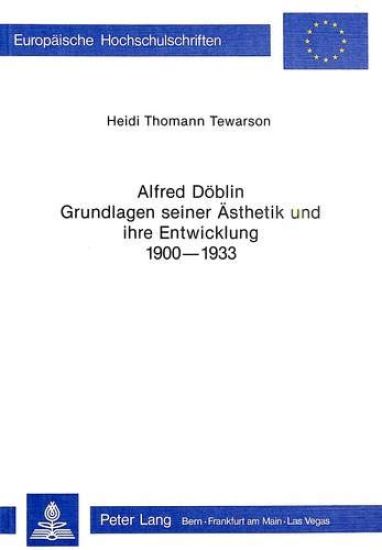
Alfred Doeblin - Grundlagen Seiner Aesthetik Und Ihre Entwicklung 1900-1933

Alfred Doeblin - Grundlagen Seiner Aesthetik Und Ihre Entwicklung 1900-1933

Heidi Thomann Tewarson

Herbert Cie Lang AG, Buchhandlung Antiquariat
1979
nidottu
Alfred Doblin hat in literaturtheoretischer Hinsicht Bedeutendes versucht. Schon seine Zeitgenossen erkannten das Neue und Provozierende seiner Darstellungsart. Er wurde deshalb zumeist dem Expressionismus zugeordnet. Doblin gelangte jedoch schon in den bisher wenig beachteten -Gesprachen mit Kalypso. Uber die Musik- (1905/6), zu grundlegenden asthetischen Positionen. Eine der wichtigsten asthetischen Kategorien wurde fur ihn der Begriff der Sachlichkeit, dessen Bedeutung, Funktion und Wandlung hier eingehend untersucht werden. Es wird ferner gezeigt, dass die Handhabung und Entwicklung der asthetischen Prinzipien in engem Verhaltnis zu Doblins Wirklichkeits- erfassung wahrend dieser politisch so spannungsreichen Jahre standen."
Alfred Tarski and the "Concept of Truth in Formalized Languages"

Alfred Tarski and the "Concept of Truth in Formalized Languages"

Monika Gruber

Springer International Publishing AG
2016
sidottu
This book provides a detailed commentary on the classic monograph by Alfred Tarski, and offers a reinterpretation and retranslation of the work using the original Polish text and the English and German translations. In the original work, Tarski presents a method for constructing definitions of truth for classical, quantificational formal languages. Furthermore, using the defined notion of truth, he demonstrates that it is possible to provide intuitively adequate definitions of the semantic notions of definability and denotation and that the notion in a structure can be defined in a way that is analogous to that used to define truth. Tarski’s piece is considered to be one of the major contributions to logic, semantics, and epistemology in the 20th century. However, the author points out that some mistakes were introduced into the text when it was translated into German in 1935. As the 1956 English version of the work was translated from the German text, those discrepancies werecarried over in addition to new mistakes. The author has painstakingly compared the three texts, sentence-by-sentence, highlighting the inaccurate translations, offering explanations as to how they came about, and commenting on how they have influenced the content and suggesting a correct interpretation of certain passages. Furthermore, the author thoroughly examines Tarski’s article, offering interpretations and comments on the work.
Alfred Hitchcock's Vertigo and the Hermeneutic Spiral

Alfred Hitchcock's Vertigo and the Hermeneutic Spiral

Robert J. Belton

Springer International Publishing AG
2017
sidottu
This book offers a new approach to film studies by showing how our brains use our interpretations of various other films in order to understand Alfred Hitchcock’s Vertigo. Borrowing from behavioral psychology, cognitive science and philosophy, author Robert J. Belton seeks to explain differences of critical opinion as inevitable. The book begins by introducing the hermeneutic spiral, a cognitive processing model that categorizes responses to Vertigo’s meaning, ranging from wide consensus to wild speculations of critical “outliers.” Belton then provides an overview of the film, arguing that different interpreters literally see and attend to different things. The fourth chapter builds on this conclusion, arguing that because people see different things, one can force the production of new meanings by deliberately drawing attention to unusual comparisons. The latter chapters outline a number of such comparisons—including avant-garde films and the works of Stanley Kubrick and David Lynch—to shed new light on the meanings of Vertigo.
Alfred Tarski and the "Concept of Truth in Formalized Languages"

Alfred Tarski and the "Concept of Truth in Formalized Languages"

Monika Gruber

Springer International Publishing AG
2018
nidottu
This book provides a detailed commentary on the classic monograph by Alfred Tarski, and offers a reinterpretation and retranslation of the work using the original Polish text and the English and German translations. In the original work, Tarski presents a method for constructing definitions of truth for classical, quantificational formal languages. Furthermore, using the defined notion of truth, he demonstrates that it is possible to provide intuitively adequate definitions of the semantic notions of definability and denotation and that the notion in a structure can be defined in a way that is analogous to that used to define truth. Tarski’s piece is considered to be one of the major contributions to logic, semantics, and epistemology in the 20th century. However, the author points out that some mistakes were introduced into the text when it was translated into German in 1935. As the 1956 English version of the work was translated from the German text, those discrepancies werecarried over in addition to new mistakes. The author has painstakingly compared the three texts, sentence-by-sentence, highlighting the inaccurate translations, offering explanations as to how they came about, and commenting on how they have influenced the content and suggesting a correct interpretation of certain passages. Furthermore, the author thoroughly examines Tarski’s article, offering interpretations and comments on the work.
Alfred Hitchcock's Vertigo and the Hermeneutic Spiral

Alfred Hitchcock's Vertigo and the Hermeneutic Spiral

Robert J. Belton

Springer International Publishing AG
2018
nidottu
This book offers a new approach to film studies by showing how our brains use our interpretations of various other films in order to understand Alfred Hitchcock’s Vertigo. Borrowing from behavioral psychology, cognitive science and philosophy, author Robert J. Belton seeks to explain differences of critical opinion as inevitable. The book begins by introducing the hermeneutic spiral, a cognitive processing model that categorizes responses to Vertigo’s meaning, ranging from wide consensus to wild speculations of critical “outliers.” Belton then provides an overview of the film, arguing that different interpreters literally see and attend to different things. The fourth chapter builds on this conclusion, arguing that because people see different things, one can force the production of new meanings by deliberately drawing attention to unusual comparisons. The latter chapters outline a number of such comparisons—including avant-garde films and the works of Stanley Kubrick and David Lynch—to shed new light on the meanings of Vertigo.