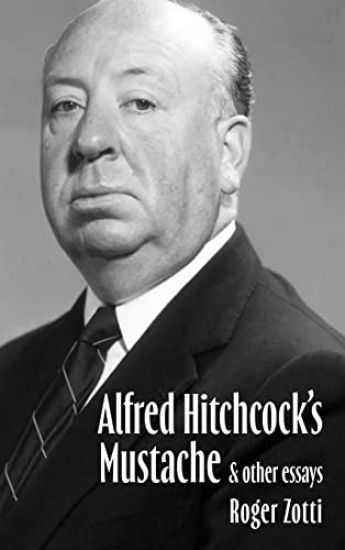
In 1979 Hitchcock was the recipient of the American Film Institute Life Achievement Award. Before presenting the award to him, Oscar winner Ingrid Bergman, who starred in three Hitchcock films-Spellbound (1945), Notorious (1946), and Under Capricorn (1949)-called him "an admirable genius."From "Hitchcock and the Ladies" Atlas told her that " I'm going to] teach you boxing . . . so that you can learn how to go into dark places and not get broken down. If you can learn that bit of the discipline that fighters learn, you can take that onto the stage with you."From "Teddy's Adventures in Trainer Land" The trade that sent Rogers to the Rangers foreshadowed many of the idiotic trades and front office and coaching changes the Whalers made during their NHL existence.From "Trading Mike Rogers"
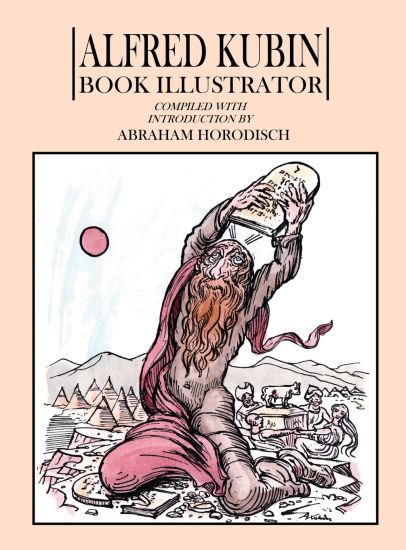
Alfred Leopold Isidor Kubin (1877-1959) was an Austrian printmaker, illustrator, and occasional writer. Kubin is considered an important representative of Symbolism and Expressionism and is noted for dark, spectral, symbolic fantasies, often assembled into thematic series of drawings. Originally published in 1950 this work covers his viewpoint on art, the method of his work, and his creative process, with over 100 black and white illustrations from his career as an illustrator.The artist's memoirs recount his troubled youth, which was shadowed by his hatred for his estranged father, his attempted suicide at the grave of his beloved mother, and his mental breakdown during military service. Upon his 1899 enrollment at the Munich Academy, Kubin discovered a world of inspiration in the works of Odilon Redon, Edvard Munch, James Ensor, and Max Klinger, and he vowed to dedicate his life to the creation of similarly imaginative art. The pen-and-ink drawings featured in this compilation include grotesques from his "Dance of Death" sequence, which employs a Renaissance theme to reflect the artist's interpretation of modern society and its rapid changes, as well as illustrations from various works of Edgar Allen Poe. Alfred Kubin is renowned as one of the all-time finest illustrators of fantastic themes, Kubin illustrated more than 70 books, including the works of Dostoyevsky and Poe as well as his own fiction.
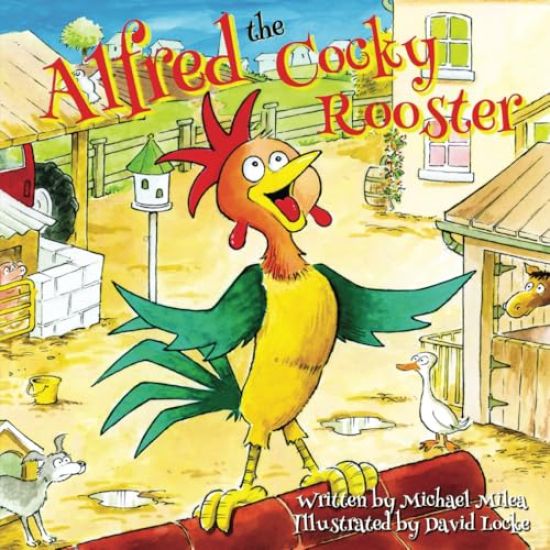
Alfred the cocky rooster thinks he knows how to make friends with his loudest cock-a-doodle-doos.He might be trying a little bit too hard.Even though he doesn't go about it in the right way. His farm animal friends help him learn what real friendship is all about. Find out what Alfred is trying to hide with his loudest cock-a-doodle-doos.
Birthdate: January 31, 1872 (69) Birthplace: Lambeth, London, Greater London, England, United Kingdom Death: December 2, 1941 (69) East London, Amatole, Eastern Cape, South Africa Occupation: messenger, interpreter... Thomas Hughes QC (20 October 1822 - 22 March 1896) was an English lawyer, judge, politician and author. He is most famous for his novel Tom Brown's School Days (1857), a semi-autobiographical work set at Rugby School, which Hughes had attended. It had a lesser-known sequel, Tom Brown at Oxford (1861). Hughes had numerous other interests, in particular as a Member of Parliament, in the British co-operative movement, and in a settlement in Tennessee reflecting his values. Early life Hughes was the second son of John Hughes, editor of the Boscobel Tracts (1830) and was born in Uffington, Berkshire (now Oxfordshire). He had six brothers, and one sister, Jane Senior who later became Britain's first female civil servant. At the age of eight he was sent to Twyford School, a preparatory public school near Winchester, where he remained until the age of eleven. In February 1834 he went to Rugby School, which was then under the celebrated Thomas Arnold, a contemporary of his father at Oriel College, Oxford. Hughes excelled at sports rather than in scholarship, and his school career culminated in a cricket match at Lord's Cricket Ground. In 1842 he went on to Oriel College, and graduated B.A. in 1845. At Oxford, he played cricket for the university team in the annual University Match against Cambridge University, also at Lord's, and a match that is still now regarded as first-class cricket. Legal career Hughes was called to the bar in 1848, became Queen's Counsel in 1869 and a bencher in 1870. He was appointed to a county court judgeship in the Chester district in July 1882. Works While living at Wimbledon, Hughes wrote his famous story Tom Brown's School Days, which was published in April 1857. He is associated with the novelists of the "muscular school", a loose classification but centred on the fiction of the Crimean War period.Although Hughes had never been a member of the sixth form at Rugby, his impressions of the headmaster Thomas Arnold were reverent. Hughes also wrote The Scouring of the White Horse (1859), Tom Brown at Oxford (1861), Religio Laici (1868), Life of Alfred the Great (1869) and the Memoir of a Brother. His brother, George Hughes, was the model for the Tom Brown character............
Alfred's Journey tells the story of a young man growing up in Freiburg, Germany in the years before and during World War II. He talks of the devastation of war and the rebuilding of a town before he joins the skilled labour force and is accepted as a migrant in Australia in the 1950s. He was nine years old at the start of the second world war and tells his story growing up in times of uncertainty and his hope for a better future in a land thousands of miles away from his family.
The Influence of Sea Power Upon History, 1660-1783 is an influential treatise on naval warfare written in 1890 by Alfred Thayer Mahan. It details the role of sea power throughout history and discusses the various factors needed to support a strong navy.Alfred Thayer Mahan (September 27, 1840 - December 1, 1914) was a United States naval officer and historian, whom John Keegan called "the most important American strategist of the nineteenth century." His book The Influence of Sea Power Upon History, 1660-1783 (1890) won immediate recognition, especially in Europe, and with its successor, The Influence of Sea Power Upon the French Revolution and Empire, 1793-1812 (1892), made him world-famous and perhaps the most influential American author of the nineteenth century.Mahan was born on September 27, 1840, at West Point, New York, to Dennis Hart Mahan (a professor at the United States Military Academy) and Mary Helena Okill Mahan (1815-1893), daughter of John Okill and Mary Jay (daughter of Sir James Jay). Mahan's middle name honors "the father of West Point", Sylvanus Thayer. Mahan attended Saint James School, an Episcopal college preparatory academy in western Maryland. He then studied at Columbia for two years, where he was a member of the Philolexian Society debating club. Against the better judgment of his father, Mahan then entered the Naval Academy, where he graduated second in his class in 1859.Commissioned as a lieutenant in 1861, Mahan served the Union in the American Civil War as an officer on USS Worcester, Congress, Pocahontas, and James Adger, and as an instructor at the Naval Academy. In 1865, he was promoted to lieutenant commander, and then to commander (1872), and captain (1885). As commander of the USS Wachusett he was stationed at Callao, Peru, protecting US interests during the final stages of the War of the Pacific.
Alfred Thayer Mahan (September 27, 1840 - December 1, 1914) was a United States naval officer and historian, whom John Keegan called "the most important American strategist of the nineteenth century." His book The Influence of Sea Power Upon History, 1660-1783 (1890) won immediate recognition, especially in Europe, and with its successor, The Influence of Sea Power Upon the French Revolution and Empire, 1793-1812 (1892), made him world-famous and perhaps the most influential American author of the nineteenth century.Mahan was born on September 27, 1840, at West Point, New York, to Dennis Hart Mahan (a professor at the United States Military Academy) and Mary Helena Okill Mahan (1815-1893), daughter of John Okill and Mary Jay (daughter of Sir James Jay). Mahan's middle name honors "the father of West Point", Sylvanus Thayer. Mahan attended Saint James School, an Episcopal college preparatory academy in western Maryland. He then studied at Columbia for two years, where he was a member of the Philolexian Society debating club. Against the better judgment of his father, Mahan then entered the Naval Academy, where he graduated second in his class in 1859.Commissioned as a lieutenant in 1861, Mahan served the Union in the American Civil War as an officer on USS Worcester, Congress, Pocahontas, and James Adger, and as an instructor at the Naval Academy. In 1865, he was promoted to lieutenant commander, and then to commander (1872), and captain (1885). As commander of the USS Wachusett he was stationed at Callao, Peru, protecting US interests during the final stages of the War of the Pacific.
Alfred Thayer Mahan (September 27, 1840 - December 1, 1914) was a United States naval officer and historian, whom John Keegan called "the most important American strategist of the nineteenth century." His book The Influence of Sea Power Upon History, 1660-1783 (1890) won immediate recognition, especially in Europe, and with its successor, The Influence of Sea Power Upon the French Revolution and Empire, 1793-1812 (1892), made him world-famous and perhaps the most influential American author of the nineteenth century.Mahan was born on September 27, 1840, at West Point, New York, to Dennis Hart Mahan (a professor at the United States Military Academy) and Mary Helena Okill Mahan (1815-1893), daughter of John Okill and Mary Jay (daughter of Sir James Jay). Mahan's middle name honors "the father of West Point", Sylvanus Thayer. Mahan attended Saint James School, an Episcopal college preparatory academy in western Maryland. He then studied at Columbia for two years, where he was a member of the Philolexian Society debating club. Against the better judgment of his father, Mahan then entered the Naval Academy, where he graduated second in his class in 1859.Commissioned as a lieutenant in 1861, Mahan served the Union in the American Civil War as an officer on USS Worcester, Congress, Pocahontas, and James Adger, and as an instructor at the Naval Academy. In 1865, he was promoted to lieutenant commander, and then to commander (1872), and captain (1885). As commander of the USS Wachusett he was stationed at Callao, Peru, protecting US interests during the final stages of the War of the Pacific. While in actual command of a ship, his skills were not exemplary; and a number of vessels under his command were involved in collisions, with both moving and stationary objects. He had an affection for old square-rigged vessels rather than the smoky, noisy steamships of his time; and he tried to avoid active sea duty
Alfred Ollivant (1874-1927) was an English novelist known best for his novel Owd Bob. Ollivant also published about a dozen other novels ranging from small-scale cautionary tales to grand historical stories. Alfred Ollivant was born in Nuthurst, Sussex, in 1874 and became an author after a horse-riding injury ended his brief military career. Owd Bob, his first novel, was published in 1898. Set in rural Cumbria, in northern England, the novel concerns a suspected sheepkilling collie, Bob. Even though most of the book's dialogue is written in the Cumbrian dialect, it became popular in the United States. Ollivant published a sequel, Danny, in 1902. He was also a short story contributor to the magazines The Atlantic Monthly and the Boston Evening Transcript. Alfred Ollivant died in London on 19 January 1927.
Alfred Ollivant (1874-1927) was an English novelist known best for his novel Owd Bob. Ollivant also published about a dozen other novels ranging from small-scale cautionary tales to grand historical stories. Alfred Ollivant was born in Nuthurst, Sussex, in 1874 and became an author after a horse-riding injury ended his brief military career. Owd Bob, his first novel, was published in 1898. Set in rural Cumbria, in northern England, the novel concerns a suspected sheepkilling collie, Bob. Even though most of the book's dialogue is written in the Cumbrian dialect, it became popular in the United States. Ollivant published a sequel, Danny, in 1902. He was also a short story contributor to the magazines The Atlantic Monthly and the Boston Evening Transcript. Alfred Ollivant died in London on 19 January 1927.
Alfred Ollivant (1874-1927) was an English novelist known best for his novel Owd Bob. Ollivant also published about a dozen other novels ranging from small-scale cautionary tales to grand historical stories. Alfred Ollivant was born in Nuthurst, Sussex, in 1874 and became an author after a horse-riding injury ended his brief military career. Owd Bob, his first novel, was published in 1898. Set in rural Cumbria, in northern England, the novel concerns a suspected sheepkilling collie, Bob. Even though most of the book's dialogue is written in the Cumbrian dialect, it became popular in the United States. Ollivant published a sequel, Danny, in 1902. He was also a short story contributor to the magazines The Atlantic Monthly and the Boston Evening Transcript. Alfred Ollivant died in London on 19 January 1927.
*Includes pictures *Includes quotes and summaries of the famous Hitchcock movies *Includes bibliographies for further reading *Includes a table of contents Considering that her film career lasted just six years, it would seem as though the reputation of Grace Kelly far outweighs her actual output. Indeed, from the time of her arrival in Hollywood in 1951 through her final film, High Society, in 1956, Kelly acted in just 11 films, leaving viewers to wonder whether Kelly was still in the beginning of her career or whether High Society was a proper culmination to an extraordinarily brief stay in the film industry? Ultimately, it is might be most accurate to state that Kelly was still in the prime of her career, but it's unclear what direction her career would have taken, as well as who inherited the void she left. Despite the short resume, Kelly is one of America's most famous actresses, and she left an indelible impact on Hollywood. Kelly brought a well-heeled, almost regal quality that deviated from the film noir roles and musical showgirls who had populated the screen during the 1930s and 1940s, and it is this new identity Kelly brought to the motion picture industry that remains her overriding trademark. Ingrid Bergman's fame cannot be doubted, but the international quality of her career has prevented most people from gaining a complete understanding of her filmography. Moreover, the immense success of her most famous films obscured her other achievements; one of Bergman's persistent lamentations late in her career was that even though she appeared in other films she deemed more significant, the only film of hers that people wanted to discuss was Casablanca. As a result, her early films in Sweden, the Italian Neorealist films she made with famous director and future husband Roberto Rossellini, and her French film with Jean Renoir have all been relegated to the margins. Bergman is thus recognized as a Hollywood star rather than an actress who should be identified with an array of different film industries, reducing the enormous scope of her career to a relatively small proportion of her filmography. In 1939, Olivia de Havilland had her most memorable role as Melanie Hamilton in Gone With the Wind (1939), perhaps the most famous movie in American history, but Hollywood legend has it that she only got the role because her own younger sister, Joan Fontaine, was asked to audition for the part and recommended Olivia instead so that she could audition for Scarlett O'Hara. Although Fontaine and de Havilland would make history by becoming the only sisters to both win an Academy Award for Best Actress, that anecdote was just one of the various stories about the siblings that has shed light on their notoriously contentious and complicated relationship. As Fontaine once put it, "I married first, won the Oscar before Olivia did, and if I die first, she'll undoubtedly be livid because I beat her to it " De Havilland herself once said, "Joan is very bright and sharp and can be cutting." An art student in her early 20s, Novak found herself in Los Angeles by chance and appeared as an extra in a 1954 film to earn money, only to be almost immediately discovered by Columbia and turned into a star when she appeared in Picnic (1955). Picnic began a 10 year run that witnessed Novak become one of the biggest names in Hollywood, starring in major hits like Pal Joey (1957), Middle of the Night (1959), The Notorious Landlady (1962), and Of Human Bondage (1964). However, Novak's most famous role was as one of Alfred Hitchcock's legendary "icy blondes" in Vertigo (1958), beguiling Jimmy Stewart's character to the point of madness in what is widely considered one of the greatest films ever made. In addition to being one of the country's most recognizable and alluring sex icons, the girl who originally wanted to be an artist had reached the upper echelon of Hollywood itself, all before she turned 30.
Margaret Gatty 3 June 1809 - 4 October 1873) was an English children's author and writer on marine biology.Gatty was born in Burnham on Crouch, Essex, the daughter of the Rev. Alexander John Scott, D.D., a Royal Navy chaplain, who served under and was the trusted friend of Lord Nelson on board the HMS Victory before and during the Battle of Trafalgar. She married the Rev. Alfred Gatty, D.D., Ecclesfield, Yorkshire, in 1839 and moved into the vicarage of Church of St. Mary shortly after. She became a highly useful and popular writer of tales for young people. While her tales were targeted at young people, she hoped that they would influence the minds of adults as well.Among her other books are Parables from Nature, Worlds not Realized, Proverbs Illustrated, and Aunt Judy's Tales. She also conducted Aunt Judy's Magazine, a family publication written by various members of Margaret's large family.Gatty became fascinated with marine biology, through her contact with her second cousin Charles Henry Gatty FRS FRSE FLS FGS etc.There was also possibly some influence from William Henry Harvey, whom she had met while convalescing in Hastings in 1848. Following this, she wrote a book on British seaweeds which was more accessible than previous publications on the subject. She corresponded with many of the greatest marine biologists of her day including George Busk and Robert Brown. Gatty amassed a large collection of marine material, much of it gathered by her correspondents in far-flung corners of the British Empire. This was donated to Weston Park Museum by her daughter, Horatia Katherine Francis Gatty.
Margaret Gatty 3 June 1809 - 4 October 1873) was an English children's author and writer on marine biology.Gatty was born in Burnham on Crouch, Essex, the daughter of the Rev. Alexander John Scott, D.D., a Royal Navy chaplain, who served under and was the trusted friend of Lord Nelson on board the HMS Victory before and during the Battle of Trafalgar. She married the Rev. Alfred Gatty, D.D., Ecclesfield, Yorkshire, in 1839 and moved into the vicarage of Church of St. Mary shortly after. She became a highly useful and popular writer of tales for young people. While her tales were targeted at young people, she hoped that they would influence the minds of adults as well. Among her other books are Parables from Nature, Worlds not Realized, Proverbs Illustrated, and Aunt Judy's Tales. She also conducted Aunt Judy's Magazine, a family publication written by various members of Margaret's large family.Gatty became fascinated with marine biology, through her contact with her second cousin Charles Henry Gatty FRS FRSE FLS FGS etc. 4] There was also possibly some influence from William Henry Harvey, whom she had met while convalescing in Hastings in 1848. Following this, she wrote a book on British seaweeds which was more accessible than previous publications on the subject. She corresponded with many of the greatest marine biologists of her day including George Busk and Robert Brown. Gatty amassed a large collection of marine material, much of it gathered by her correspondents in far-flung corners of the British Empire. This was donated to Weston Park Museum by her daughter, Horatia Katherine Francis Gatty.
In writing this brief sketch of the Life of Tennyson, and this attempt to appreciate his work, I have rested almost entirely on the Biography by Lord Tennyson (with his kind permission) and on the text of the Poems. As to the Life, doubtless current anecdotes, not given in the Biography, are known to me, and to most people. But as they must also be familiar to the author of the Biography, I have not thought it desirable to include what he rejected.
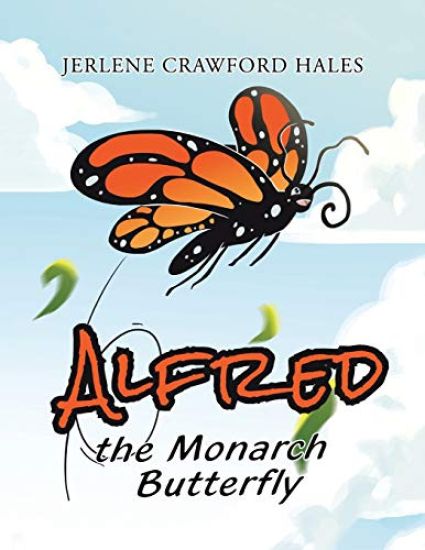
Alfred the Monarch Butterfly is a story about the experiences of families from different cultures and languages as told through the adventures of the southern monarch butterflies as they migrate to northern Mexico. The story is embedded with family, love, friendship, death, and diversity. As the butterflies interact, they discover that there is more sameness than differences in their experiences.
Alfred the Monarch Butterfly is a story about the experiences of families from different cultures and languages as told through the adventures of the southern monarch butterflies as they migrate to northern Mexico. The story is embedded with family, love, friendship, death, and diversity. As the butterflies interact, they discover that there is more sameness than differences in their experiences.
How we get and use our energy is undergoing big change. What does it mean to you? This story and discussion guide from renowned energy pundit Peter Tertzakian will help you understand.When Peter discovered a 1915 utility bill at an antique market, he knew he'd found a treasure -- that simple scrap of paper marked the point at which we lost touch with where and how we get our energy. Alfred Dickie's Utility Bill calls on energy consumers and producers alike to bridge that gap and share responsibility for charting a better energy future forward.The questions in this guide invite you to dig deep into the issues, while Peter's answers offer his own insights, providing more fuel for thought.Together, they'll inspire you to learn from the past, understand the present and prepare for the future.