Kirjojen hintavertailu. Mukana 11 342 296 kirjaa ja 12 kauppaa.

Kirjahaku

Etsi kirjoja tekijän nimen, kirjan nimen tai ISBN:n perusteella.

1000 tulosta hakusanalla Alison Blake

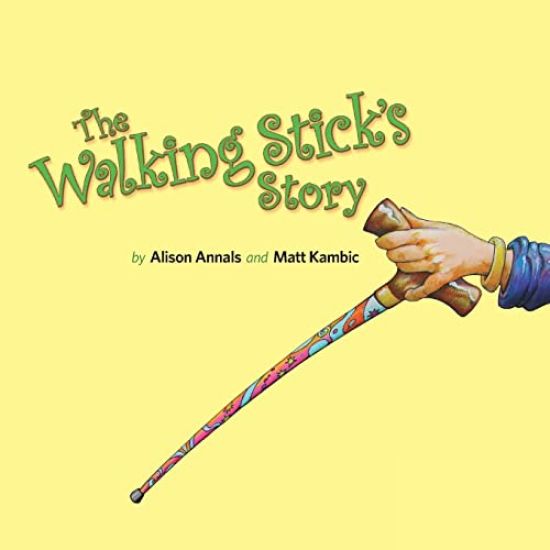
The Walking Stick's Story

The Walking Stick's Story

Alison Annals

Chalk Hill Publishing
2020
pokkari
Rosina lives a busy life. Her colourful Walking Stick helps her speed around to fun picnics, theater shows and airplane trips. It was a contented Walking Stick. "Rosina could not manage without me ", it proclaimed. One morning Rosina leaves the house, and her Walking Stick, behind. The rain falls outside the window, and the Walking Stick begins to see there will be a change in their life together.This illustrated children's book is a quiet tale of the loyalty and affection that binds the woman, Rosina, and her many-hued Walking Stick. Author Alison Annals takes care to keep the pace and wording gentle while walking readers (both young and old) through the Stick's journey from feeling unique and irreplaceable to being sidelined by circumstances that at first seem inauspicious. The middle of the story pauses to consider a few less-promising resolutions, before coming full circle to a bright ending in the garden of their home.The Illustrations by Matt Kambic are in keeping with the 'spirited calm' of both Rosina's life and the Walking Stick's trepidations. Airy watercolors complement the text and help make for a warm, embracing tale that parents, grandparents, aunts and uncles will be keen to share with younger family members.Alison Annals taught Academic Writing at the University of Waikato for many years. Her spouse, Matt Kambic, worked as a creative director in the USA, and has illustrated two other books; Letter to a Weta by Lee Kimber, and The Last Voyage of the S.S. Panglossian.

Unofficial parkrun Guide New Zealand

Unofficial parkrun Guide New Zealand

Alison King

Runs with a Barcode
2021
pokkari
When you have a parkrun barcode you can run or walk at any of the free, weekly, timed 5km events around the world.In this book Alison King guides you around the events of New Zealand.You can find out: How the event came to beWhat facilities are at the parkrunNearest showers (if you want to tour afterwards)Where you can get a replacement barcode if you've forgotten yoursAnd what else is to be found while you are visiting.Full colour photographsThis book features a foreword from parkrun founder Paul Sinton-Hewitt, CBE, FRSA, as well as the history of how parkrun came to be in the land of the long white cloud.If you like starting your weekend with a free 5km run, and you like to explore, then this book is for you.Alison King is the founder of Runs With A Barcode, an online channel for parkrun enthusiasts. She has run at more than 150 parkruns, more than 50 locations and in four countries. She lives in Rotorua, New Zealand.
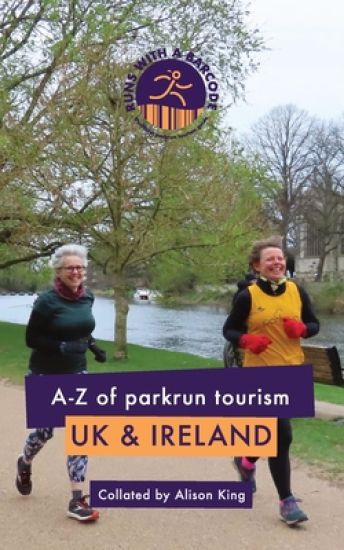
A-Z of parkrun Tourism UK & Ireland

A-Z of parkrun Tourism UK & Ireland

Alison King

Runs with a Barcode
2021
pokkari
Get the most out of your Saturday mornings with this book. parkrun enthusiast Alison King has collated all events in the UK and Ireland to help you complete whatever challenge you are working on.Are you struggling to complete your name badge? Looking for an R parkrun that will also be a great weekend away? All events in one book, divided into regionsAll events listed per challengesExplanation of challenges and how to completeTourism tips to help you make the most of your adventuresDedicated space to track your progressparkrun tourist Alison King is the founder of Runs With A Barcode, an online channel for parkrun tourism and sharing parkrun stories. A-Z of parkrun Tourism: UK & Ireland is your handbook for planning and recording your parkrun tourism and challenges.
A-Z of parkrun Tourism Asia Pacific

A-Z of parkrun Tourism Asia Pacific

Alison King

Runs with a Barcode
2021
pokkari
Get the most out of your Saturday mornings with this book.parkrun enthusiast Alison King has collated all events in the Asia Pacific parkrun region to help you complete whatever challenge you are working on.Are you struggling to complete your name badge?Looking for an R parkrun that will also be a great weekend away?All events in one book, divided into regionsAll events listed per challengesExplanation of challenges and how to completeTourism tips to help you make the most of your adventuresDedicated space to track your progressparkrun tourist Alison King is the founder of Runs With A Barcode, an online channel for parkrun tourism and sharing parkrun stories.A-Z of parkrun Tourism: Asia Pacific is your handbook for planning and recording your parkrun tourism and challenges. No parkrunner in Australia or New Zealand should be without it.
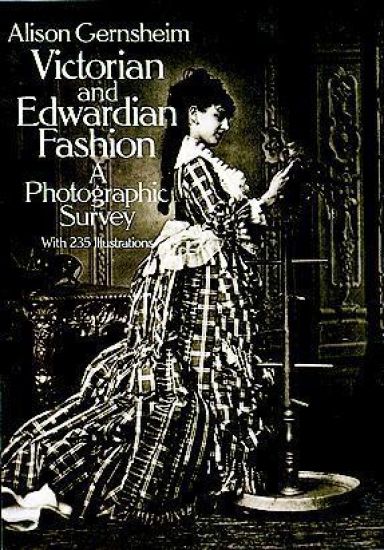
Victorian and Edwardian Fashion

Victorian and Edwardian Fashion

Alison Gernsheim

Dover Publications Inc.
2000
nidottu
A noted photohistorian documents bonnets, capes, frock coats, caps, shawls, bodices, and crinolines as people actually wore them from 1840 through 1914. More than 200 photos depict aristocrats and the middle class as well as Oscar Wilde, Lillie Langtry, Winston Churchill, Queen Victoria, and others. Commentary and annotations describe and identify the costumes.
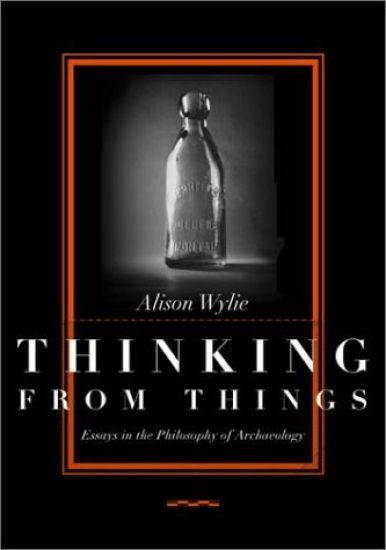
Thinking from Things

Thinking from Things

Alison Wylie

University of California Press
2002
pokkari
In this long-awaited compendium of new and newly revised essays, Alison Wylie explores how archaeologists know what they know. Examining the history and methodology of Anglo-American archaeology, Wylie puts the tumultuous debates of the last thirty years in historical and philosophical perspective.
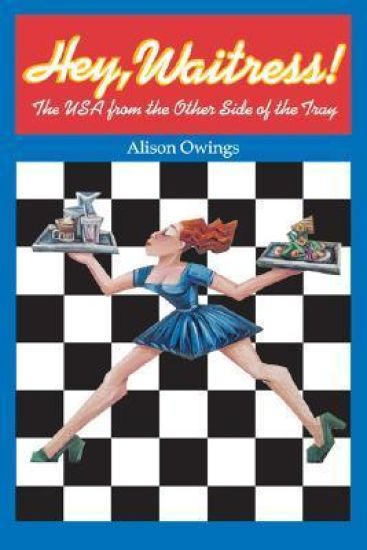
Hey, Waitress!

Hey, Waitress!

Alison Owings

University of California Press
2004
pokkari
The stereotypes of waitresses are broken down in an entertaining study that is part oral history and part journalism, revealing American waitresses through intimate, illuminating, and humorous behind-the-scenes stories about serving. Reprint.
The Accidental History of the U.S. Immigration Courts

The Accidental History of the U.S. Immigration Courts

Alison Peck

University of California Press
2021
sidottu
How the immigration courts became part of the nation’s law enforcement agency—and how to reshape them. During the Trump administration, the immigration courts were decried as more politicized enforcement weapon than impartial tribunal. Yet few people are aware of a fundamental flaw in the system that has long pre-dated that administration: The immigration courts are not really “courts” at all but an office of the Department of Justice—the nation’s law enforcement agency. This original and surprising diagnosis shows how paranoia sparked by World War II and the War on Terror drove the structure of the immigration courts. Focusing on previously unstudied decisions in the Roosevelt and Bush administrations, the narrative laid out in this book divulges both the human tragedy of our current immigration court system and the human crises that led to its creation. Moving the reader from understanding to action, Alison Peck offers a lens through which to evaluate contemporary bills and proposals to reform our immigration court system. Peck provides an accessible legal analysis of recent events to make the case for independent immigration courts, proposing that the courts be moved into an independent, Article I court system. As long as the immigration courts remain under the authority of the attorney general, the administration of immigration justice will remain a game of political football—with people’s very lives on the line.
The Accidental History of the U.S. Immigration Courts

The Accidental History of the U.S. Immigration Courts

Alison Peck

University of California Press
2022
pokkari
How the immigration courts became part of the nation’s law enforcement agency—and how to reshape them. During the Trump administration, the immigration courts were decried as more politicized enforcement weapon than impartial tribunal. Yet few people are aware of a fundamental flaw in the system that has long pre-dated that administration: The immigration courts are not really “courts” but an office of the Department of Justice—the nation’s law enforcement agency. Alison Peck's original and surprising account shows how paranoia sparked by World War II and the War on Terror drove the structure of the immigration courts. Focusing on previously unstudied decisions in the Roosevelt and Bush administrations, the narrative laid out in this book divulges both the human tragedy of our current immigration court system and the human crises that led to its creation. Moving the reader from understanding to action, Alison Peck offers a lens through which to evaluate contemporary bills and proposals to reform our immigration court system. Peck provides an accessible legal analysis of recent events to make the case for independent immigration courts, proposing that the courts be moved into an independent, Article I court system. As long as the immigration courts remain under the authority of the attorney general, the administration of immigration justice will remain a game of political football—with people’s very lives on the line.
Deep Dark Data

Deep Dark Data

Alison Cool

University of California Press
2026
sidottu
Why does the problem of data privacy remain so intractable? Deep Dark Data explores how this contemporary problem begins with how we define and use personal data. Instead of debating how best to protect personal data, Alison Cool argues that we would be better off asking how data became personal in the first place. Drawing on years of ethnographic research in Sweden, the most datafied country in the world, Cool reveals that what we call personal data encapsulates a number of very different relations between data and persons, none of which are inherent in the data itself. This surprising and highly original book untangles these relations and traces their troubled histories, ultimately inviting us to understand privacy as a gendered and racialized politics of moral exclusion.
Deep Dark Data

Deep Dark Data

Alison Cool

University of California Press
2026
pokkari
Why does the problem of data privacy remain so intractable? Deep Dark Data explores how this contemporary problem begins with how we define and use personal data. Instead of debating how best to protect personal data, Alison Cool argues that we would be better off asking how data became personal in the first place. Drawing on years of ethnographic research in Sweden, the most datafied country in the world, Cool reveals that what we call personal data encapsulates a number of very different relations between data and persons, none of which are inherent in the data itself. This surprising and highly original book untangles these relations and traces their troubled histories, ultimately inviting us to understand privacy as a gendered and racialized politics of moral exclusion.
Formulaic Language and the Lexicon

Formulaic Language and the Lexicon

Alison Wray

Cambridge University Press
2005
pokkari
A considerable proportion of our everyday language is 'formulaic'. It is predictable in form, idiomatic, and seems to be stored in fixed, or semi-fixed, chunks. This book explores the nature and purposes of formulaic language, and looks for patterns across the research findings from the fields of discourse analysis, first language acquisition, language pathology and applied linguistics. It gradually builds up a unified description and explanation of formulaic language as a linguistic solution to a larger, non-linguistic, problem, the promotion of self. The book culminates in a new model of lexical storage, which accommodates the curiosities of non-native and aphasic speech. Parallel analytic and holistic processing strategies are the proposed mechanism which reconciles, on the one hand, our capacity for understanding and producing novel constructions using grammatical knowledge and small lexical units, and on the other, our use of prefabricated material which, though less flexible, also requires less processing.
Women's Writing in Nineteenth-Century France

Women's Writing in Nineteenth-Century France

Alison Finch

Cambridge University Press
2006
pokkari
This is the most complete critical survey to date of women's literature in nineteenth-century France. Alison Finch's wide-ranging analysis of some 60 writers reflects the rich diversity of a century that begins with Mme de Staël's cosmopolitanism and ends with Rachilde's perverse eroticism. Finch's study brings out the contribution not only of major figures like George Sand but also of many other talented and important writers who have been unjustly rejected, including Flora Tristan, Claire de Duras and Delphine de Girardin. Her account opens new perspectives on the interchange between male and female authors and on women's literary traditions during the period. She discusses popular and serious writing: fiction, verse, drama, memoirs, journalism, feminist polemic, historiography, travelogues, children's tales, religious and political thought - often brave, innovative texts linked to women's social and legal status in an oppressive society. Extensive reference features include bibliographical guides to texts and writers.
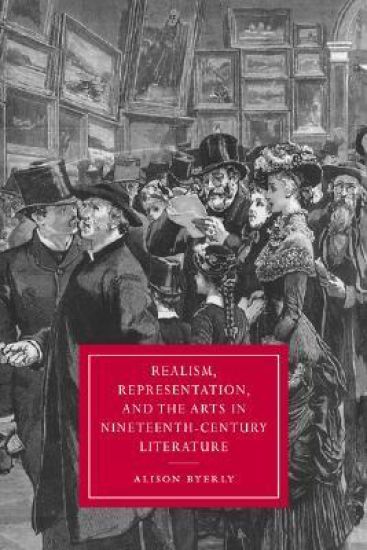
Realism, Representation, and the Arts in Nineteenth-Century Literature
This book confronts a significant paradox in the development of literary realism: the very novels that present themselves as purveyors and celebrants of direct, ordinary human experience also manifest an obsession with art that threatens to sabotage their Realist claims. Unlike previous studies of the role of visual art, or music, or theatre in Victorian literature, Realism, Representation, and the Arts in Nineteenth-Century Literature examines the juxtaposition of all of these arts in the works of Charlotte Brontë, William Thackeray, George Eliot, Thomas Hardy, and others. Alison Byerly combines close textual analysis with discussion of relevant ancillary topics to illuminate the place of different arts within nineteenth-century British culture. Her book, which also contains sixteen illustrations, represents an effort to bridge the growing gap between aesthetics and cultural studies.
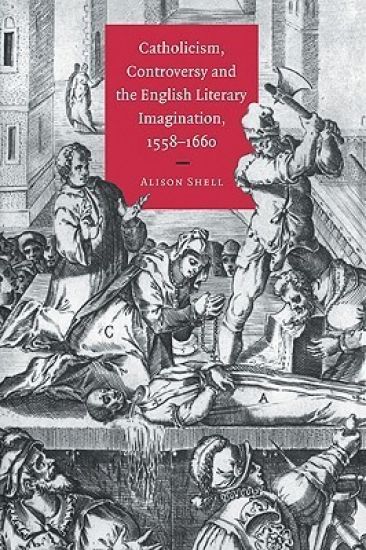
Catholicism, Controversy and the English Literary Imagination, 1558–1660
The Catholic contribution to English literary culture has been widely neglected or misunderstood. This book sets out to rehabilitate a wide range of Catholic imaginative writing, while exposing the role of anti-Catholicism as an imaginative stimulus to mainstream writers in Tudor and Stuart England. It discusses canonical figures such as Sidney, Spenser, Webster and Middleton, those whose presence in the canon has been more fitful, and many who have escaped the attention of literary critics. Among the themes to emerge are the anti-Catholic imagery of revenge tragedy and the definitive contribution made by Southwell and Crashaw to the post-Reformation revival of religious verse in England. Alison Shell offers a fascinating exploration of the rhetorical stratagems by which Catholics sought to demonstrate simultaneous loyalties to the monarch and to their religion, and of the stimulus given to the Catholic literary imagination by the persecution and exile so many of these writers suffered.
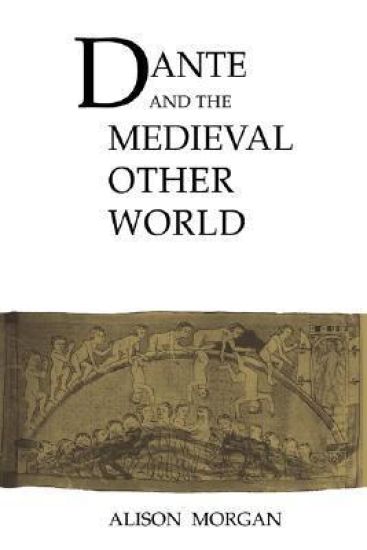
Dante and the Medieval Other World

Dante and the Medieval Other World

Alison Morgan

Cambridge University Press
2007
pokkari
A major study of the Divine Comedy, this book offers an interesting perspective on Dante's representation of the afterlife. Alison Morgan departs from the conventional critical emphasis on Dante's place in relation to learned traditions by undertaking a thorough examination of the poem in the context of popular beliefs. Her principal sources are thus not the highly literary texts (such as Virgil's Aeneid or Thomas Aquinas's Summa Theologiae) which have become a familiar context for the poem, but rather visions of the Other World found in popular writings, painting and sculpture from the centuries leading up to its composition. The book will be of interest to non-specialists in addition to scholars of Dante, since it offers a clear preliminary account of the Other World tradition, a chronology of its principal representations and summaries of the major texts. Fully illustrated throughout, it integrates with the literary and theological aspects of Dante's heritage the important but often neglected dimension of art history.
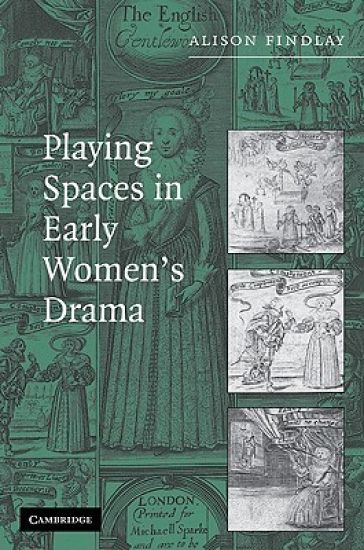
Playing Spaces in Early Women's Drama

Playing Spaces in Early Women's Drama

Alison Findlay

Cambridge University Press
2009
pokkari
From the Abbess of Barking to Aphra Behn, women manipulated dramatic venues and settings to re-negotiate their place in society. This study examines the playing spaces for early modern women's drama and how women played with space in scripts and performances. Using selected texts from 1376 to 1705, Findlay shows how their drama operated in five key sites: homes, gardens, courts, convents and cities. Aristocratic houses, country estates and city streets are theatrically reconfigured as homes, empty shells and arenas of possibility. Courtly venues reveal queens as adept producers in the royal theatres of power, while convents and academies are playing spaces to explore the possibilities of female company. This book sketches theatre histories on to what is often a blank space, investigating the rich inter-textuality of spatial practices to provide a richer understanding of how early women's drama works.
Luce Irigaray and the Philosophy of Sexual Difference

Luce Irigaray and the Philosophy of Sexual Difference

Alison Stone

Cambridge University Press
2009
pokkari
Alison Stone offers a feminist defence of the idea that sexual difference is natural, providing a novel interpretation of the later philosophy of Luce Irigaray. She defends Irigaray's unique form of essentialism and her rethinking of the relationship between nature and culture, showing how Irigaray's ideas can be reconciled with Judith Butler's performative conception of gender, through rethinking sexual difference in relation to German Romantic philosophies of nature. This is a sustained attempt to connect feminist conceptions of embodiment to German idealist and Romantic accounts of nature. Not merely an interpretation of Irigaray, this book also presents an original feminist perspective on nature and the body. It will encourage debate on the relations between sexual difference, essentialism, and embodiment.
Oral Culture and Catholicism in Early Modern England

Oral Culture and Catholicism in Early Modern England

Alison Shell

Cambridge University Press
2009
pokkari
After the Reformation, England's Catholics were marginalised and excluded from using printed media for propagandist ends. Instead, they turned to oral media, such as ballads and stories, to plead their case and maintain contact with their community. Building on the growing interest in Catholic literature which has developed in early modern studies, Alison Shell examines the relationship between Catholicism and oral culture from the mid-sixteenth to the eighteenth centuries. In order to recover the textual traces of this minority culture, she expands canonical boundaries, looking at anecdotes, spells and popular verse alongside more conventionally literary material. In her archival research she uncovers many important manuscript sources. This book is an important contribution to the rediscovery of the writings and culture of the Catholic community and will be of great interest to scholars of early modern literature, history and theology.
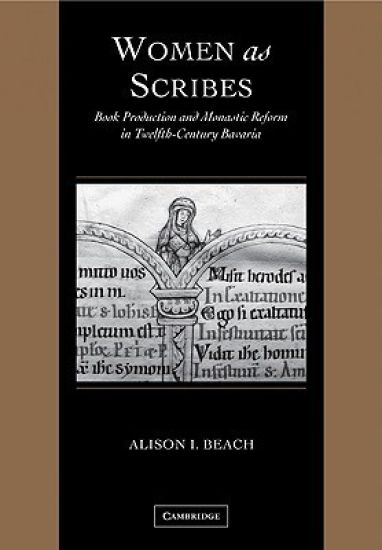
Women as Scribes

Women as Scribes

Alison I. Beach

Cambridge University Press
2009
pokkari
Professor Beach's book on female scribes in twelfth-century Bavaria - a full-length study of the role of women copyists in the Middle Ages - is underpinned by the notion that the scriptorium was central to the intellectual revival of the Middle Ages and that women played a role in this renaissance. The author examines the exceptional quantity of evidence of female scribal activity in three different religious communities, pointing out the various ways in which the women worked - alone, with other women, and even alongside men - to produce books for monastic libraries, and discussing why their work should have been made visible, whereas that of other female scribes remains invisible. Beach's focus on manuscript production, and the religious, intellectual, social and economic factors which shaped that production, enables her to draw wide-ranging conclusions of interest not only to palaeographers but also to those interested in reading, literacy, religion and gender history.