Covering a technique popularised by master woodturner, Ray Allen, this manual moves beyond basic woodturning with the segmented woodturning technique. This creative approach is demonstrated in one complete step-by-step project that effectively guides woodturners through the complicated process of creating geometric, repeating patterns with a South-western feel. Detailed, illustrated instructions make this seemingly elaborate technique approachable. Additional information on common problems helps avoid mistakes along the way. A full-colour photograph gallery provides inspiration for future projects.
One of the central relationships in the Beat scene was the long-lasting friendship of Allen Ginsberg and Gary Snyder. Ginsberg introduced Snyder to the East Coast Beat writers, including Jack Kerouac, while Snyder himself became the model for the serious poet that Ginsberg so wanted to become. Snyder encouraged Ginsberg to explore the beauty of the West Coast and, even more lastingly, introduced Ginsberg to Buddhism, the subject of so many long letter exchanges between them.Beginning in 1956 and continuing through 1995, the two men exchanged more than 850 letters. Bill Morgan, Ginsberg's biographer and an important editor of his papers, has selected the most significant correspondence from this long friendship. The letters themselves paint the biographical and poetic portraits of two of America's most important  and most fascinating  poets.
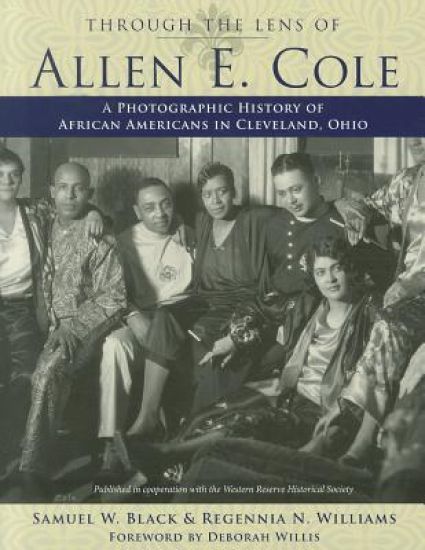
A remarkable visual record of Cleveland's African American community spanning five decades During the Great Depression, photographer Allen Eugene Cole posted a sign in front of his studio in Cleveland's Central neighborhood: somebody, somewhere, wants your photograph. An entrepreneurial businessman with a keen ability to market his images of Cleveland's black experience, Cole was deeply immersed in civic life. A founder and treasurer of the Progressive Business League, Cole was an officer of the Dunbar Life Insurance Co., a member of St. James African Methodist Episcopal Church, and active in the Elks and Masons. For years he was the only black member of the Cleveland Society of Professional Photographers. Well into the 1960s his photographs appeared regularly in the Call & Post, Cleveland's African American weekly newspaper.A migrant to Cleveland in 1917, Allen Cole developed an interest in photography while employed as a waiter at the Cleveland Athletic Club. By 1922 he had opened his first studio at home, enlarging it over the years. It was in this studio that he photographed Perry B. Jackson, Ohio's first African American judge.The images of Jackson and the hundreds of other African Americans included in this volume were chosen from the thousands of photographs in the Allen Cole Collection at the Western Reserve Historical Society. They illustrate the diverse experiences among Cleveland's vibrant African American community. Social organizations, women's and men's clubs, civic and church groups, schoolchildren and teachers, businessmen, and politicians are all included in this charming and unique collection. In the accompanying text authors Samuel Black and Regennia Williams place Cole and his comprehensive visual catalog in the context of African American history and the Great Migration.Through the Lens of Allen E. Cole mines Cole's exceptional midtwentieth-century photographic chronicle of African American life and will be an invaluable resource for anyone interested in American history, as well as specialists in African studies, history, sociology, urban affairs, and the photographic arts.
Since 1969, Ethan Allen has been the subject of three biographical studies, all of which indulge in sustaining and revitalizing the image of Allen as a physically imposing Vermont yeoman, a defender of the rights of Americans, an eloquent military hero, and a master of many guises, from rough frontiersman to gentleman philosopher. Seeking the authentic Ethan Allen, the authors of this volume ask: How did that Ethan Allen secure his place in popular culture? As they observe, this spectacular persona leaves little room for a more accurate assessment of Allen as a self-interested land speculator, rebellious mob leader, inexperienced militia officer, and truth-challenged man who would steer Vermont into the British Empire.Drawing extensively from the correspondence in Ethan Allen and his Kin and a wide range of historical, political, and cultural sources, Duffy and Muller analyze the factors that led to Ethan Allen's two-hundred-year-old status as the most famous figure in Vermont's past. Placing facts against myths, the authors reveal how Allen acquired and retained his iconic image, how the much-repeated legends composed after his death coincide with his life, why recollections of him are synonymous with the story of Vermont, and why some Vermonters still assign to Allen their own cherished and idealized values.
Gracie Allen breaks the Philo Phormula in a number of ways. First is its title: this is the only book in the series to modify “Murder Case” with more than one word, much less with the name of a character. And then there’s that character: Gracie Allen was a very real, much-loved comedienne in the 1930s, famous for her double act with George Burns, and in fact the plot revolves around her. Gracie’s centrality is no accident: Van Dine wrote the story as a vehicle for Allen, and actually created the novel only after the film had come out. So do all these departures pay off? We’d be lying if we said that Gracie hits every single mark, but Van Dine does a surprisingly entertaining job of translating Ms. Allen’s delicious Ditzy Blonde persona to the page, and she makes a charming foil for Philo’s evergreen erudition.
The Journal of Allen Brock weaves a narrative through the twists of an older and much different Earth. Negative energy has imposed physical challenges through Rift Space. This phenomenon wreaks havoc on electrical equipment and on weaponry. Wars rage; heroes rise and fall, hence the weave of the tapestry.The focus of Brock's narrative is Junipero Heights, a contested ground in the Highland. Highland, tucked in the eastern part of the Northern continent, is a rugged area, not easily assailed. For decades it has prevailed against the Hexas, Junipero's unrelenting enemy in the west who view themselves intellectually and culturally superior to the Native-born.In the backdrop stands Brock, the reticent hero. He is no saint, yet never the villain. Rouges and connivers peopled his world. Even friendlies have their agendas. Yet, the overarching questions remain unanswered, Why has victory over the Hexas been deferred? Why is that so many of the Native-born kinfolk remain pressed? How was it that the Hexas gained supremacy over half of the land?One day, while nursing a pint of ale in a remote casino in the Central Mosaic, Brock decides he's had enough. His words and actions reverberate from one end of the Northern Continent to the other. The future is altered, but not in the way Brock had intended.
An overdue retrospective of a pathbreaking feminist Native American poet, with a foreword from activist and educator Lee Francis IV I Climb the Mesas: Collected Poems of Paula Gunn Allen span the landscapes of the Southwest, excavate popular misunderstandings of Native women through history, and perhaps most importantly shines a light on a foremother of Native poetry, who was herself an icon to feminist legends like Gloria Steinem. Including forewords from her nephew, activist and educator Lee Francis IV, as well as her daughter, this volume of the Laguna Pueblo poet spans her decades-long career, including hard-to-find, limited edition chapbooks.
In this incisive study, noted philosophy professor Jeffrey Lavoie presents the Reverend George William Allen, an important figure in esoteric religious and cultural movements that swept North America and Europe at the turn of the twentieth century. This original biography is the first serious scholarly attempt to define the man, his theology, and his philosophy and to trace his influence over the movements that helped to determine the cultural and religious avant-garde of the Western world from 1880 to 1914. Lavoie’s extensive background in theology and history and mastery of original documents lend his research terrific relevance in linking intellectual currents of Victorian, Edwardian, and modern esoteric beliefs and patterns. Allen’s dream theory, contemporary to but different from Freud’s, emphasized the notion that ordinary reality was a false state and that waking up process was linked to mystical connections and thus the one sure way to human self-knowledge. Allen’s influence lasted well into the twentieth century, affecting modernist poets such as Yeats and Pound as well as, at some remove, the spiritualism of the Nazis and other European fascist movements.
Cody is our first grandchild and our only grandson. He has entertained us throughout his life and it is hard to imagine that he has now graduated from high school. This book is an example of a few of the pearls of his wisdom during those formative years.
James Lane Allen (December 21, 1849 - February 18, 1925) was an American novelist and short story writer whose work, including the novel A Kentucky Cardinal, often depicted the culture and dialects of his native Kentucky. His work is characteristic of the late-19th century local color era, when writers sought to capture the vernacular in their fiction. Allen has been described as "Kentucky's first important novelist." Early life and education: James Lane Allen was born near Lexington, Kentucky to Richard and Helen Jane (Foster) Allen on December 21, 1849. Allen, the youngest child in the family, had four sisters Lydia, May, Sally, and Annie, and two brothers, John and Henry.Allen lived at the Scarlet Gate estate in Lexington in the late 1800s until age 22 years.Allen spent his youth in Lexington during the Antebellum era, the American Civil War, and the Reconstruction periods. His childhood experience heavily influenced his writing. He described living at Scarlet Gate in the introduction to A Kentucky Cardinal. Death and legacy: Allen is buried in Lexington Cemetery. At the northern edge of Gratz Park in Lexington is the "Fountain of Youth", built in memory of Allen using proceeds willed to the city by him. James Lane Allen School, an elementary school off Alexandria Drive in Lexington, Kentucky is named in his honor.
James Lane Allen (December 21, 1849 - February 18, 1925) was an American novelist and short story writer whose work, including the novel A Kentucky Cardinal, often depicted the culture and dialects of his native Kentucky. His work is characteristic of the late-19th century local color era, when writers sought to capture the vernacular in their fiction. Allen has been described as "Kentucky's first important novelist." Early life and education: James Lane Allen was born near Lexington, Kentucky to Richard and Helen Jane (Foster) Allen on December 21, 1849. Allen, the youngest child in the family, had four sisters Lydia, May, Sally, and Annie, and two brothers, John and Henry.Allen lived at the Scarlet Gate estate in Lexington in the late 1800s until age 22 years.Allen spent his youth in Lexington during the Antebellum era, the American Civil War, and the Reconstruction periods. His childhood experience heavily influenced his writing. He described living at Scarlet Gate in the introduction to A Kentucky Cardinal. Death and legacy: Allen is buried in Lexington Cemetery. At the northern edge of Gratz Park in Lexington is the "Fountain of Youth", built in memory of Allen using proceeds willed to the city by him. James Lane Allen School, an elementary school off Alexandria Drive in Lexington, Kentucky is named in his honor.
Happy Birthday Allen is a personalized kids activity book, it includes personalized crosswords, word searches, number puzzles, jokes, drawing and coloring >It is suitable for children between 6-11 years old It is the perfect birthday present for Allen, and is a great keepsake for parents to remember their child's early years and birthdays This personalized book is available for other names also This is a great gift for children and an amazing keepsake for parents Happy Birthday Allen
Specially introduced and curated by historian and popular spiritual voice Mitch Horowitz, the Wisdom Series editions feature selected books, chapters, articles, and talks by the greatest names in inspiration including Napoleon Hill, James Allen, Robert Collier, Joseph Murphy, and Wallace D. Wattles. The Wisdom of James Allen: **Features a spotlight on Allen's life by Mitch **Full text of As a Man Thinketh **Rare chapters and articles **Collected proverbs by Allen
Direct Final Approval of Allen County, Indiana 8-hour Ozone Redesignation (US Environmental Protection Agency Regulation) (EPA) (2018 Edition) The Law Library presents the complete text of the Direct Final Approval of Allen County, Indiana 8-hour Ozone Redesignation (US Environmental Protection Agency Regulation) (EPA) (2018 Edition). Updated as of May 29, 2018 On May 30, 2006, the State of Indiana, through the Indiana Department of Environmental Management (IDEM), submitted, in final: A request to redesignate the 8-hour ozone National Ambient Air Quality Standard (NAAQS) nonattainment area of Allen County, Indiana, to attainment for the 8-hour ozone NAAQS; and a request for EPA approval of an Indiana State Implementation Plan (SIP) revision containing a 14-year maintenance plan for Allen County. Today, EPA is making a determination that the Allen County, Indiana ozone nonattainment area has attained the 8-hour ozone NAAQS. This determination is based on three years of complete, quality-assured ambient air quality monitoring data for the 2003-2005 ozone seasons that demonstrate that the 8-hour ozone NAAQS has been attained in the area. EPA is also approving the request to redesignate the area to attainment for the 8-hour ozone standard and the State's maintenance plan. EPA's approval of the 8-hour ozone redesignation request is based on its determination that Allen County, Indiana has met the criteria for redesignation to attainment specified in the Clean Air Act (CAA). EPA is also approving, for purposes of transportation conformity, the motor vehicle emission budgets (MVEBs) for the year 2020 that are contained in the 14-year 8-hour ozone maintenance plan for Allen County. This book contains: - The complete text of the Direct Final Approval of Allen County, Indiana 8-hour Ozone Redesignation (US Environmental Protection Agency Regulation) (EPA) (2018 Edition) - A table of contents with the page number of each section