Kirjojen hintavertailu. Mukana 12 083 983 kirjaa ja 12 kauppaa.

Kirjahaku

Etsi kirjoja tekijän nimen, kirjan nimen tai ISBN:n perusteella.

1000 tulosta hakusanalla Ana Eulate

Police, Power, and the Production of Racial Boundaries
Based on five years of ethnography, archival research, census data analysis, and interviews, Police, Power, and the Production of Racial Boundaries reveals how the LAPD, city prosecutors, and business owners struggled to control who should be considered “dangerous” and how they should be policed in Los Angeles. Sociologist Ana Muñiz shows how these influential groups used policies and everyday procedures to criminalize behaviors commonly associated with blacks and Latinos and to promote an exceedingly aggressive form of policing. Muñiz illuminates the degree to which the definitions of “gangs” and “deviants” are politically constructed labels born of public policy and court decisions, offering an innovative look at the process of criminalization and underscoring the ways in which a politically powerful coalition can define deviant behavior. As she does so, Muñiz also highlights the various grassroots challenges to such policies and the efforts to call attention to their racist effects. Muñiz describes the fight over two very different methods of policing: community policing (in which the police and the community work together) and the “broken windows” or “zero tolerance” approach (which aggressively polices minor infractions—such as loitering—to deter more serious crime). Police, Power, and the Production of Racial Boundaries also explores the history of the area to explain how Cadillac-Corning became viewed by outsiders as a “violent neighborhood” and how the city’s first gang injunction—a restraining order aimed at alleged gang members—solidified this negative image. As a result, Muñiz shows, Cadillac-Corning and other sections became a test site for repressive practices that eventually spread to the rest of the city.
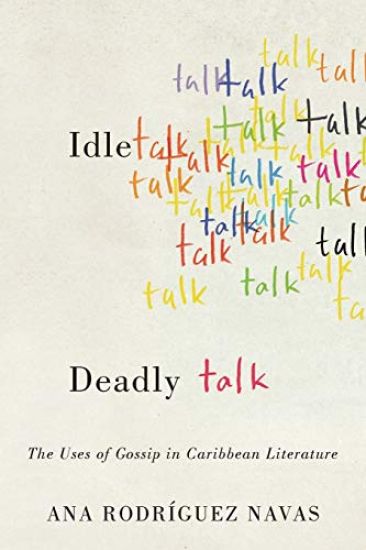
Idle Talk, Deadly Talk

Idle Talk, Deadly Talk

Ana Rodríguez Navas

University of Virginia Press
2018
sidottu
Chaucer called it ""spiritual manslaughter""; Barthes and Benjamin deemed it dangerous linguistic nihilism. But gossip-long derided and dismissed by writers and intellectuals-is far from frivolous. In Idle Talk, Deadly Talk, Ana Rodríguez Navas reveals gossip to be an urgent, utilitarian, and deeply political practice-a means of staging the narrative tensions, and waging the narrative battles, that mark Caribbean politics and culture. From the calypso singer's superficially innocent rhymes to the vicious slanders published in Trujillo-era gossip columns, words have been weapons, elevating one person or group at the expense of another. Revising the overly gendered existing critical frame, Rodríguez Navas argues that gossip is a fundamentally adversarial practice. Just as whispers and hearsay corrosively define and surveil identities, they also empower writers to skirt sanitized, monolithic historical accounts by weaving alternative versions of their nations' histories from this self-governing discursive material. Reading recent fiction from the Hispanic, Anglophone, and Francophone Caribbean and their diasporas, alongside poetry, song lyrics, journalism, memoirs, and political essays, Idle Talk, Deadly Talk maps gossip's place in the Caribbean and reveals its rich possibilities as both literary theme and narrative device. As a means for mediating contested narratives, both public and private, gossip emerges as a vital resource for scholars and writers grappling with the region's troubled history.
Idle Talk, Deadly Talk

Idle Talk, Deadly Talk

Ana Rodríguez Navas

University of Virginia Press
2018
nidottu
Chaucer called it ""spiritual manslaughter""; Barthes and Benjamin deemed it dangerous linguistic nihilism. But gossip-long derided and dismissed by writers and intellectuals-is far from frivolous. In Idle Talk, Deadly Talk, Ana Rodríguez Navas reveals gossip to be an urgent, utilitarian, and deeply political practice-a means of staging the narrative tensions, and waging the narrative battles, that mark Caribbean politics and culture. From the calypso singer's superficially innocent rhymes to the vicious slanders published in Trujillo-era gossip columns, words have been weapons, elevating one person or group at the expense of another. Revising the overly gendered existing critical frame, Rodríguez Navas argues that gossip is a fundamentally adversarial practice. Just as whispers and hearsay corrosively define and surveil identities, they also empower writers to skirt sanitized, monolithic historical accounts by weaving alternative versions of their nations' histories from this self-governing discursive material. Reading recent fiction from the Hispanic, Anglophone, and Francophone Caribbean and their diasporas, alongside poetry, song lyrics, journalism, memoirs, and political essays, Idle Talk, Deadly Talk maps gossip's place in the Caribbean and reveals its rich possibilities as both literary theme and narrative device. As a means for mediating contested narratives, both public and private, gossip emerges as a vital resource for scholars and writers grappling with the region's troubled history.
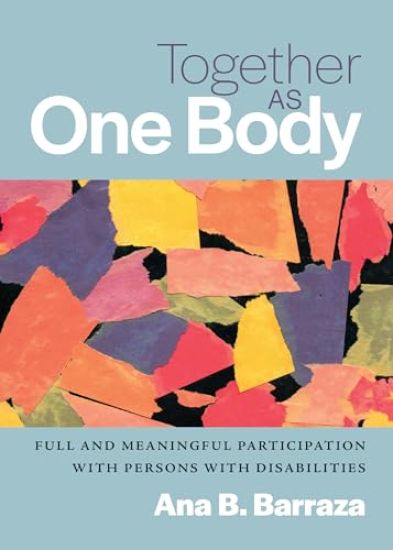
Together as One Body

Together as One Body

Ana Beatriz Garcia Barraza

Liturgical Press
2025
pokkari
Practical guidance for helping parishes foster the full participation of persons with disabilities. In Together as One Body, Ana B. Barraza focuses on different aspects of parish life and the inclusion of persons with disabilities, providing practical guidance for parishes to be not only fully accessible but foster the full participation of every person. Together as One Body outlines ways to promote transformation and spiritual growth for all, provides tips to improve the accessibility of the liturgy and the sacraments, and offers suggestions for new ways to encourage a community of love and belonging that is attentive to the gifts and needs of every parishioner. Drawing upon church documents, additional sources, and the rich pastoral experience of the author, Together as One Body is an ideal resource for both parish planning and personal reflection on what it means to be one body in Christ.
Extending Structures

Extending Structures

Ana Agore; Gigel Militaru

CRC Press Inc
2019
sidottu
Extending Structures: Fundamentals and Applications treats the extending structures (ES) problem in the context of groups, Lie/Leibniz algebras, associative algebras and Poisson/Jacobi algebras. This concisely written monograph offers the reader an incursion into the extending structures problem which provides a common ground for studying both the extension problem and the factorization problem.Features Provides a unified approach to the extension problem and the factorization problem Introduces the classifying complements problem as a sort of converse of the factorization problem; and in the case of groups it leads to a theoretical formula for computing the number of types of isomorphisms of all groups of finite order that arise from a minimal set of data Describes a way of classifying a certain class of finite Lie/Leibniz/Poisson/Jacobi/associative algebras etc. using flag structures Introduces new (non)abelian cohomological objects for all of the aforementioned categories As an application to the approach used for dealing with the classification part of the ES problem, the Galois groups associated with extensions of Lie algebras and associative algebras are described
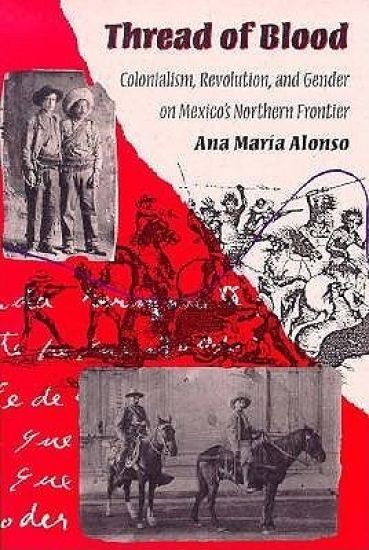
Thread of Blood

Thread of Blood

Ana Maraia Alonso

University of Arizona Press
1995
nidottu
This book is about the construction and tranformation of peasant military colonists on Mexico's northern frontier from the late 18th through the early 20th century. Though the majority of the data comes from the pueblo of Namiquipa in the state of Chihuahua, the argument has broader implications for the study of northern Mexico, frontier societies, and our understanding of the northern armies in the 1910 Revolution. The study is rare for its integration of several levels, placing an analysis of gender and ethnicity within a specific historical period. The author demonstrates that a distinct kind of frontier serrano society was generated in Namiquipa between the mid-18th and mid-19th centuries. In exchange for keeping the Apaches at bay, colonists were provided with arms and land grants. At the same time, they developed a gendered sense of ethnic identity that equated honor with land, autonomy, and a kind of masculinity that distinguished the ""civilized"" colonist from the ""barbarous"" Indian. While this identity was itself ordered hierarchically between men and women, and between ""Hispanic"" and ""Indian,"" it also provided serranos with a sense of pride and dignity that was not directly associated with wealth. After the defeat of the Apaches, and with increased state control during the last decades of the Porfiriato, the serranos on the frontier were transformed from bulwarks of order to victims of progress. The expansion of capitalism and the manipulation of local political office by men no longer accountable to communal norms eroded the legitimacy of both powerholders and the central state. In response, serranos constructed an ideology of history based on past notions of masculine honor and autonomy. This ideology motivated their confrontations with the Mexican state during the 1890s and also served as the force behind their mobilization in the 1910 revolution.
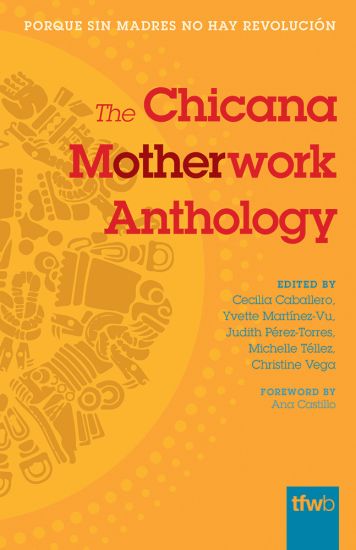
The Chicana Motherwork Anthology

The Chicana Motherwork Anthology

Ana Castillo

University of Arizona Press
2019
nidottu
The Chicana M(other)work Anthology weaves together emerging scholarship and testimonios by and about self-identified Chicana and Women of Color mother-scholars, activists, and allies who center mothering as transformative labor through an intersectional lens. Contributors provide narratives that make feminized labor visible and that prioritize collective action and holistic healing for mother-scholars of color, their children, and their communities within and outside academia.The volume is organized in four parts: (1) separation, migration, state violence, and detention; (2) Chicana/Latina/WOC mother-activists; (3) intergenerational mothering; and (4) loss, reproductive justice, and holistic pregnancy. Contributors offer a just framework for Chicana and Women of Color mother-scholars, activists, and allies to thrive within and outside of the academy. They describe a new interpretation of motherwork that addresses the layers of care work needed for collective resistance to structural oppression and inequality.This anthology is a call to action for justice. Contributions are both theoretical and epistemological, and they offer an understanding of motherwork through Chicana and Women of Color experiences.
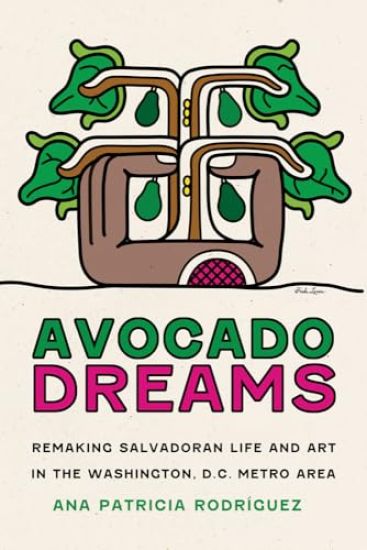
Avocado Dreams

Avocado Dreams

Ana Patricia Rodríguez

University of Arizona Press
2025
nidottu
For more than four generations, Salvadorans have made themselves at home in the greater Washington, D.C. metropolitan area and have transformed the region, contributing their labor, ingenuity, and culture to the making of a thriving but highly neglected and overlooked community. In Avocado Dreams, Ana Patricia Rodríguez draws from her own positionality as a Salvadoran transplant to examine the construction of the unique Salvadoran cultural imaginary made in the greater D.C. area. Through a careful reading of the creative works of local writers, performers, artists, and artivists, Rodríguez demonstrates how the people have remade themselves in relation to the cultural, ethnoracial, and sociolinguistic diversity of the area. She discusses how Salvadoran people have developed unique, intergenerational Salvadoreñ idades, manifested in particular speech and symbolic acts, ethnoracial embodiments, and local identity formations in relation to the diverse communities, most notably Black Washingtonians, who co-inhabit the region. This timely and relevant work not only enriches our understanding of Salvadoran diasporic experiences but also contributes significantly to broader discussions on migration, identity, and cultural production in the United States.
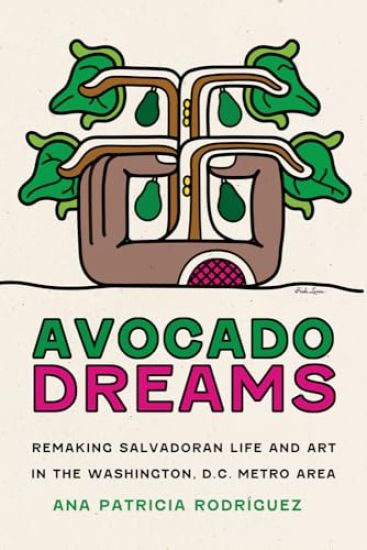
Avocado Dreams

Avocado Dreams

Ana Patricia Rodríguez

University of Arizona Press
2025
sidottu
For more than four generations, Salvadorans have made themselves at home in the greater Washington, D.C. metropolitan area and have transformed the region, contributing their labor, ingenuity, and culture to the making of a thriving but highly neglected and overlooked community. In Avocado Dreams, Ana Patricia Rodríguez draws from her own positionality as a Salvadoran transplant to examine the construction of the unique Salvadoran cultural imaginary made in the greater D.C. area. Through a careful reading of the creative works of local writers, performers, artists, and artivists, Rodríguez demonstrates how the people have remade themselves in relation to the cultural, ethnoracial, and sociolinguistic diversity of the area. She discusses how Salvadoran people have developed unique, intergenerational Salvadoreñ idades, manifested in particular speech and symbolic acts, ethnoracial embodiments, and local identity formations in relation to the diverse communities, most notably Black Washingtonians, who co-inhabit the region. This timely and relevant work not only enriches our understanding of Salvadoran diasporic experiences but also contributes significantly to broader discussions on migration, identity, and cultural production in the United States.
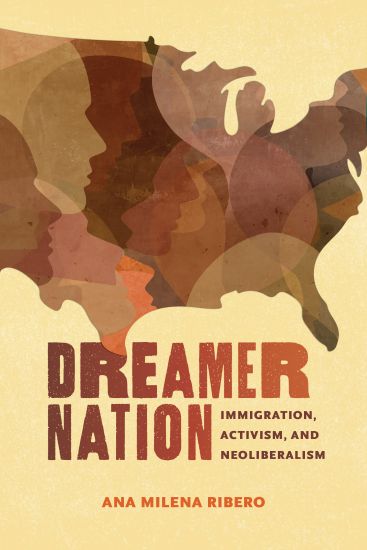
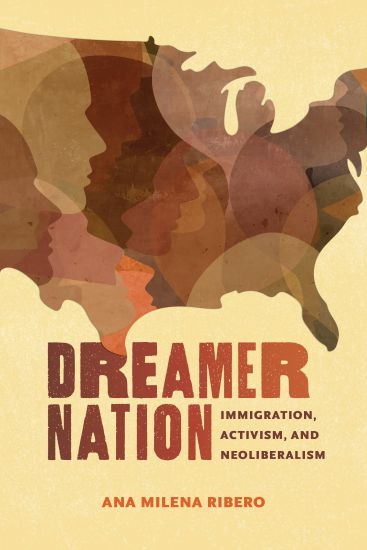
Dreamer Nation

Dreamer Nation

Ana Milena Ribero

THE UNIVERSITY OF ALABAMA PRESS
2023
sidottu
Illustrates how the Dreamer community was created rhetorically—in the discourse, messages, actions, and visual representations of undocumented youthDreamer Nation tells the story of how Dreamers in the Obama era creatively confronted a complex sociopolitical landscape to advocate for immigrant rights and empower undocumented youth to proudly represent their lives and identities, all while under the ever-present threat of detention and deportation. Contributing to rhetorical studies of social movements, immigration, and minoritized rhetorics, Ribero argues that even though Dreamer rhetorics were reflective of the discursive limits of the neoliberal milieu, they also worked to disrupt neoliberal constraints through activism that troubled the primacy of the nation-state and citizenship, refused to adhere to respectability politics, forwarded embodied identity and transnational belonging, and looked for liberation in community—not solely in legislative action. Each chapter presents a different rhetorical situation within the US “crisis” of immigration and the rhetoric that Dreamers used to respond to it. Organized chronologically, the chapters document Dreamer activism during the Obama presidency, from the 2010 hunger strikes advocating for the DREAM Act to undocuqueer “artivism” responding to Trump’s presidential campaign. The author draws not only on the methods and theories of rhetorical studies but also on women of color feminisms, ethnic studies, critical theory, and queer theory. In this way, the book looks across disciplines to illustrate the rhetorical savvy of one of the most important US social movements of our time.
Dreamer Nation

Dreamer Nation

Ana Milena Ribero

THE UNIVERSITY OF ALABAMA PRESS
2023
nidottu
Illustrates how the Dreamer community was created rhetorically—in the discourse, messages, actions, and visual representations of undocumented youthDreamer Nation tells the story of how Dreamers in the Obama era creatively confronted a complex sociopolitical landscape to advocate for immigrant rights and empower undocumented youth to proudly represent their lives and identities, all while under the ever-present threat of detention and deportation. Contributing to rhetorical studies of social movements, immigration, and minoritized rhetorics, Ribero argues that even though Dreamer rhetorics were reflective of the discursive limits of the neoliberal milieu, they also worked to disrupt neoliberal constraints through activism that troubled the primacy of the nation-state and citizenship, refused to adhere to respectability politics, forwarded embodied identity and transnational belonging, and looked for liberation in community—not solely in legislative action. Each chapter presents a different rhetorical situation within the US “crisis” of immigration and the rhetoric that Dreamers used to respond to it. Organized chronologically, the chapters document Dreamer activism during the Obama presidency, from the 2010 hunger strikes advocating for the DREAM Act to undocuqueer “artivism” responding to Trump’s presidential campaign. The author draws not only on the methods and theories of rhetorical studies but also on women of color feminisms, ethnic studies, critical theory, and queer theory. In this way, the book looks across disciplines to illustrate the rhetorical savvy of one of the most important US social movements of our time.
Agrarian Reform Policy in the Dominican Republic

Agrarian Reform Policy in the Dominican Republic

Ana Teresa Gutierrez-San Martin

University Press of America
1988
sidottu
This book documents the importance of local organization as a key factor influencing agrarian reform policy outputs. Through analysis of data gathered through three in-depth ommunity level studies of Dominican agrarian reform settlements, this book reveals the link between organization, investment decisions, agricultural productivity and economic development.
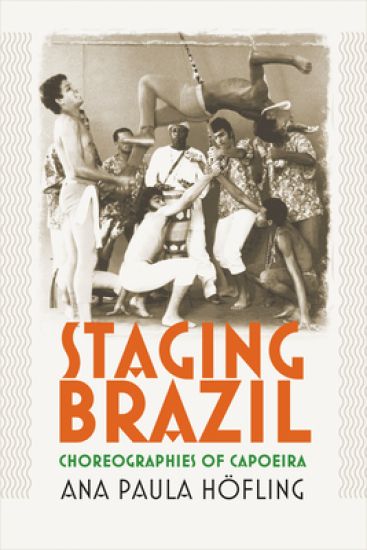
Staging Brazil

Staging Brazil

Ana Paula Hofling

Wesleyan University Press
2019
nidottu
Staging Brazil: Choreographies of Capoeira is the first in-depth study of the processes of legitimization and globalization of capoeira, the Afro-Brazilian combat game practiced today throughout the world. Ana Paula Höfling contextualizes the emergence of the two main styles of capoeira, angola and regional, within discourses of race and nation in mid-twentieth century Brazil. This history of capoeira's corporeality, on the page and on the stage, includes analysis of illustrated capoeira manuals and reveals the mutual influences between capoeira practitioners, tourism bureaucrats, intellectuals, artists, and directors of folkloric ensembles. Staging Brazil sheds light on the importance of capoeira in folkloric shows in the 1960s and 70s—both those that catered to tourists visiting Brazil and those that toured abroad and introduced capoeira to the world.
Hacia la Modernizacion de la Narrativa Peruana

Hacia la Modernizacion de la Narrativa Peruana

Ana Maria Alfaro-Alexander

Peter Lang Publishing Inc
1993
sidottu
Hacia la modernizacion de la narrativa peruana: El Grupo Palermo es un estudio critico sobre la narrativa urbana limena de mediados de siglo XX. Ella ha servido de marco y antecedente a la narrativa de, entre otros, Mario Vargas Llosa. Analiza con rigor decenas de obras importantes. Adopta una perspectiva teorica novedosa que se sirve de la etnografia de la comunicacion, la antropologia cultural, y los preceptos teoricos bakhtinianos. Presenta una vision coherente del proceso de modernizacion de la narrativa y explora la metamorfosis socio-cultural limena manteniendo la homogeneidad tematica y estilistica propia del Grupo Palermo. Definitivamente una obra de consulta indispensable para quienes se interesan por la narrativa peruana contemporanea.
Les Visages De L'autre

Les Visages De L'autre

Ana Maria Sousa Aguiar De Medeiros

Peter Lang Publishing Inc
1996
sidottu
Cette etude examine la premiere etape de la carriere d'ecrivain de Marguerite Yourcenar. On y trouvera une relecture de trois oeuvres d'une importance primordiale: Alexis, Denier du Reve et Memoires d'Hadrien. Dans ces trois romans, a travers lesquels Yourcenar cherche sa voix d'auteur, la question d'identite est en jeu, qu'il s'agisse de l'identite du personnage ou du narrateur. Partant d'une representation de l'identite comme floue, multiple ou instable, Yourcenar en vient a affirmer la vision d'un moi unifie, universel et transcendant. Cette evolution eclaire l'oeuvre subsequente de Yourcenar; tenir compte, c'est mieux comprendre l'independance de cet ecrivain imbu de la culture de la Renaissance comme de l'Antiquite vis-a-vis des courants intellectuels de son epoque.
Acts of Alignment

Acts of Alignment

Ana Pasztor; Judith J. Slater

Peter Lang Publishing Inc
2000
nidottu
"Acts of Alignment" talks of the aspirations and desires of women in higher education in the fields of mathematics and science; of their journey to wholeness and excellence that comes from having the choice and flexibility to create and change their roadmaps at will and thus succeed in a world in which the accepted way of knowing has been different from theirs. This book analyzes women's alignment of their environment, visions, and missions in life. Using the voices of women, this book explores the motivations, competence, and self-perceptions of women and the equality of opportunity afforded them to fully participate in their life and work environments.
Chronicles of Love: My Life with Paulo Freire

Chronicles of Love: My Life with Paulo Freire

Ana Maria Araaujo Freire

Peter Lang Publishing Inc
2001
nidottu
This is a love story, told from the perspective of the woman who knew Paulo Friere perhaps better than any other living person. It is a warm, touching, informative account of the marriage and relationship of Paulo and Nita Freire. Paulo Freire was born in Recife, Brazil on September 19, 1921 and died in the city of S o Paulo on May 2, 1997. He is known throughout the world as the author of a revolutionary literacy method for adults. More than that, he developed a wide-ranging understanding of education based on a reading of the word and of the world.
Nuevas Historias de la Tribu

Nuevas Historias de la Tribu

Ana Valverde Osan

Peter Lang Publishing Inc
2006
sidottu
Despues de la muerte de Franco en 1975, las poetas espanolas sintieron la necesidad de revisar el poema largo y socavar las bases de un genero densamente codificado por la tradicion masculina. Este estudio analiza el papel del poema largo como genero hibrido bajo la luz de la investigacion mas reciente, y provee un analisis tematico y formal de este genero tal y como lo concibieron Carmen Conde, Francisca Aguirre, Clara Janes, Juana Castro, y Andrea Luca. Estos poemas largos no son solamente un reto a tales formas androcentricas como la epica, sino tambien una forma de crear nuevos paradigmas para la expresion lirica de presencias marginadas.