Kirjojen hintavertailu. Mukana 12 083 983 kirjaa ja 12 kauppaa.

Kirjahaku

Etsi kirjoja tekijän nimen, kirjan nimen tai ISBN:n perusteella.

1000 tulosta hakusanalla Angela Bergmann

Microbiomes

Microbiomes

Angela E. Douglas

Oxford University Press
2022
nidottu
Very Short Introductions: Brilliant, Sharp, Inspiring The term 'microbiomes' encapsulates an important scientific breakthrough of recent years. This is the realization that humans, other animals, and plants harbour communities of microorganisms which are mostly beneficial but can occasionally cause or exacerbate disease. Our quickly developing understanding of microbiomes is being translated into novel microbial therapies for human disease and is contributing to sustainable practices in agriculture and food production. On the flipside, there is a growing concern that some claims for microbiomes, especially in relation to human health, far exceed the scientific data. This Very Short Introduction is an essential guide to the fast-moving discipline of microbiome science. It accessibly distills the key facts about our resident microbiomes, explains how and why our health and wellbeing depend on them, and provides readers with the fundamental knowledge they need to judge the reliability of claims about microbiome-based applications. ABOUT THE SERIES: The Very Short Introduction series from Oxford University Press contains hundreds of titles in almost every subject area. These pocket-sized books are the perfect way to get ahead in a new subject quickly. Our expert authors combine facts, analysis, perspective, new ideas, and enthusiasm to make interesting and challenging topics highly readable.

Responding to Populist Parties in Europe

Responding to Populist Parties in Europe

Angela K. Bourne

Oxford University Press
2023
sidottu
Responding to Populist Parties in Europe: The 'Other People' vs the 'Populist People' provides a new theoretical tool kit exploring how those who disagree with populist parties oppose them and what kinds of opposition initiatives work, why, and to what ends. It argues that analogies with the interwar rise of fascism and postwar communist takeover to the East do not easily fit the reality of today's Europe. Those opposing populist parties often swim in muddier waters than the past, necessarily navigating more complex questions about whether populist opponents deepen or threaten democracy. Populists also operate in a globalized, interdependent Europe, with overlapping spheres of territorial governance. This novel context, the book claims, not only helps us understand the rise of populist parties, but also the constraints of opposition. It begins with a new typology of tolerant and intolerant initiatives opposing populist parties, not just from public authorities and political parties operating at state and international levels, but also lesser-known initiatives from civil society. This forms the foundations of a 'bottom up' approach for evaluating the effectiveness of opposition to populist parties, acknowledging substantial variation in opposition forms country-to-country and party-to-party. The book then outlines a goal-attainment theory of effective opposition, focusing on whether opponents manage to curb illiberal and anti-democratic policies, reduce support for populist parties, diminish their resources, or induce moderation, without producing perverse effects.
Applied A2 Health & Social Care Student Book for OCR

Applied A2 Health & Social Care Student Book for OCR

Angela Fisher; Tyler Marion; Snaith Marjorie; Riley Mary; Seamons Stephen; Ancil Mike

Oxford University Press
2012
nidottu
Written by a team of specialist authors led by Angela Fisher, this revised edition is endorsed by OCR for use with the OCR A2 Health and Social Care specification. This accessible Student Book offers real-life case studies to help your students apply theories to real-life scenarios and a colourful and attractive student-friendly design. The step-by-step approach in each unit builds the knowledge and skills required by the specification, whilst discussion points get your class thinking. This book provides: · content for the mandatory and all optional A2 units · coverage of Health and Social Care issues · examples and case studies drawn from real-world applications of Health and Social Care · activities and assessment activities in every section · a helpful and comprehensive glossary
Drumming Asian America

Drumming Asian America

Angela K. Ahlgren

Oxford University Press Inc
2018
sidottu
With its dynamic choreographies and booming drumbeats, taiko has gained worldwide popularity since its emergence in 1950s Japan. Harnessed by Japanese Americans in the late 1960s, taiko's sonic largesse and buoyant energy challenged stereotypical images of Asians in America as either model minorities or sinister foreigners. While the majority of North American taiko players are Asian American, over 400 groups now exist across the US and Canada, and players come from a range of backgrounds. Using ethnographic and historical approaches, combined with in-depth performance description and analysis, this book explores the connections between taiko and Asian American cultural politics. Based on original and archival interviews, as well as the author's extensive experience as a taiko player, this book highlights the Midwest as a site for Asian American cultural production and makes embodied experience central to inquiries about identity, including race, gender, and sexuality. The book builds on insights from the fields of dance studies, ethnomusicology, performance studies, queer and feminist theory, and Asian American studies to argue that taiko players from a variety of identity positions perform Asian America on stage, as well as in rehearsals, festivals, schools, and through interactions with audiences. While many taiko players play simply for the love of its dynamism and physicality, this book demonstrates that politics are built into even the most mundane aspects of rehearsing and performing.
Drumming Asian America

Drumming Asian America

Angela K. Ahlgren

Oxford University Press Inc
2018
nidottu
With its dynamic choreographies and booming drumbeats, taiko has gained worldwide popularity since its emergence in 1950s Japan. Harnessed by Japanese Americans in the late 1960s, taiko's sonic largesse and buoyant energy challenged stereotypical images of Asians in America as either model minorities or sinister foreigners. While the majority of North American taiko players are Asian American, over 400 groups now exist across the US and Canada, and players come from a range of backgrounds. Using ethnographic and historical approaches, combined with in-depth performance description and analysis, this book explores the connections between taiko and Asian American cultural politics. Based on original and archival interviews, as well as the author's extensive experience as a taiko player, this book highlights the Midwest as a site for Asian American cultural production and makes embodied experience central to inquiries about identity, including race, gender, and sexuality. The book builds on insights from the fields of dance studies, ethnomusicology, performance studies, queer and feminist theory, and Asian American studies to argue that taiko players from a variety of identity positions perform Asian America on stage, as well as in rehearsals, festivals, schools, and through interactions with audiences. While many taiko players play simply for the love of its dynamism and physicality, this book demonstrates that politics are built into even the most mundane aspects of rehearsing and performing.
On Form

On Form

Angela Leighton

Oxford University Press
2008
nidottu
What is form? Why does form matter? In this imaginative and ambitious study, Angela Leighton assesses not only the legacy of Victorian aestheticism, and its richly resourceful keyword, 'form', but also the very nature of the literary. She shows how writers, for two centuries and more, have returned to the idea of form as something which contains the secret of art itself. She tracks the development of the word from the Romantics to contemporary poets, and offers close readings of, among others, Tennyson, Pater, Woolf, Yeats, Stevens, and Plath, to show how form has provided the single most important way of accounting for the movements of literary language itself. She investigates, for instance, the old debate of form and content, of form as music or sound-shape, as the ghostly dynamic and dynamics of a text, as well as its long association with the aestheticist principle of being 'for nothing'. In a wide-ranging and inventive argument, she suggests that form is the key to the pleasure of the literary text, and that that pleasure is part of what literary criticism itself needs to answer and convey.
The Sublime Object of Psychiatry

The Sublime Object of Psychiatry

Angela Woods

Oxford University Press
2011
nidottu
Schizophrenia has been one of psychiatry's most contested diagnostic categories. It has also served as a metaphor for cultural theorists to interpret modern and postmodern understandings of the self. These radical, compelling, and puzzling appropriations of clinical accounts of schizophrenia have been dismissed by many as illegitimate, insensitive and inappropriate. Until now, no attempt has been made to analyse them systematically, nor has their significance for our broader understanding of this most 'ununderstandable' of experiences been addressed. The Sublime Object of Psychiatry is the first book to study representations of schizophrenia across a wide range of disciplines and discourses: biological and phenomenological psychiatry, psychoanalysis, critical psychology, antipsychiatry, and postmodern philosophy. In part one, Woods offers a fresh analysis of the foundational clinical accounts of schizophrenia, concentrating on the work of Emil Kraepelin, Eugen Bleuler, Karl Jaspers, Sigmund Freud and Jacques Lacan. In the second part of the book, she examines how these accounts were critiqued, adapted, and mobilised in the 'cultural theory' of R D Laing, Thomas Szasz, Gilles Deleuze, Félix Guattari, Louis Sass, Fredric Jameson and Jean Baudrillard. Using the aesthetic concept of the sublime as an organising framework, Woods explains how a clinical diagnostic category came to be transformed into a potent metaphor in cultural theory, and how, in that transformation, schizophrenia came to be associated with the everyday experience of modern and postmodern life. Susan Sontag once wrote: 'Any important disease whose causality is murky, and for which treatment is ineffectual, tends to be awash in significance'. The Sublime Object of Psychiatry does not provide an answer to the question 'What is schizophrenia?', but instead brings clinical and cultural theory into dialogue in order to explain how schizophrenia became 'awash in significance'.
Settler Society in the Australian Colonies

Settler Society in the Australian Colonies

Angela Woollacott

Oxford University Press
2015
sidottu
The 1820s to the 1860s were a foundational period in Australian history, arguably at least as important as Federation. Industrialization was transforming Britain, but the southern colonies were pre-industrial, with economies driven by pastoralism, agriculture, mining, whaling and sealing, commerce, and the construction trades. Convict transportation provided the labour on which the first settlements depended before it was brought to a staggered end, first in New South Wales in 1840 and last in Western Australia in 1868. The numbers of free settlers rose dramatically, surging from the 1820s and again during the 1850s gold rushes. The convict system increasingly included assignment to private masters and mistresses, thus offering settlers the inducement of unpaid labourers as well as the availability of land on a scale that both defied and excited the British imagination. By the 1830s schemes for new kinds of colonies, based on Edward Gibbon Wakefield's systematic colonization, gained attention and support. The pivotal development of the 1840s-1850s, and the political events which form the backbone of this story were the Australian colonies' gradual attainment of representative and then responsible government. Through political struggle and negotiation, in which Australians looked to Canada for their model of political progress, settlers slowly became self-governing. But these political developments were linked to the frontier violence that shaped settlers' lives and became accepted as part of respectable manhood. With narratives of individual lives, Settler Society shows that women's exclusion from political citizenship was vigorously debated, and that settlers were well aware of their place in an empire based on racial hierarchies and threatened by revolts. Angela Woollacott particularly focuses on settlers' dependence in these decades on intertwined categories of unfree labour, including poorly-compensated Aborigines and indentured Indian and Chinese labourers, alongside convicts.
The Beauty Trade

The Beauty Trade

Angela B. McCracken

Oxford University Press Inc
2014
sidottu
The Beauty Trade takes seriously the frequently maligned and trivialized beauty economy, just as it has become one of the most important worldwide industries. Through the lens of beauty products, practices, and ideas of youth in Guadalajara, Mexico, the book analyzes whether and how beauty norms are changing in relation to the globalizing beauty economy. It looks at who benefits and who loses from beauty globalization and what this means for gender norms among youth. Weaving together fascinating ethnographic research on beauty practices, global political economy, and feminist analysis, the book presents a feminist analysis of the global economy of beauty. Rather than a sign of frivolity, the beauty economy is intimately connected to youth's social and economic development. Cosmetic makeovers have become a modern rite of passage for girls, enabling social connections and differentiations, as well as entrepreneurial activities. The global beauty economy is a phenomenon generated by young people, mostly women, laboring in, teaching, and consuming beauty. Globalization in the beauty economy is a phenomenon propelled by youth, eager for belonging and originality, using every mechanism at their disposal to look good. Contrary to popular wisdom, globalization in the beauty economy is not homogenizing beauty standards to a Western ideal; it is diversifying beauty standards. The Beauty Trade explains how globalization, combined with youth's desires for uniqueness, is enabling the spread of a diversity of beauty cultures, including alternative visions of gender appropriate looks and behavior.
Jerry Rescue: The Fugitive Slave Law, Northern Rights, and the American Sectional Crisis
This compelling micro-history explores how the passage of the Fugitive Slave Law of 1850 affected fugitive slaves, free blacks, abolitionists, and northern white citizens. The Jerry Rescue: The Fugitive Slave Law, Northern Rights, and the American Sectional Crisis is a narrative of the events surrounding the arrest of William "Jerry" Henry on October 1, 1851. Jerry, who thought he was to be charged with a minor infraction committed in Syracuse, went peacefully with the officials who arrested him; but he soon realized that he was in far more trouble than they had indicated. They were detaining him under the provisions of the recently passed Fugitive Slave Law of 1850, and federal officials intended to hold a hearing to determine whether Jerry would remain a free man in New York or if he would be sent to the slave state of Missouri as the property of John McReynolds, who claimed Jerry as his slave. Because of the actions of a variety of individuals in Syracuse, that hearing was abruptly cut short and Jerry was forcibly removed from the custody of his captors. The Jerry Rescue provides an absorbing narrative of the events that the arrest of Jerry set in motion, illuminates the motives and concerns of those who were involved in those events, and places the story in the wider context of the American sectional crisis. Examining such topics as northern defiance of the Fugitive Slave Law, the growth of sectional tension in the United States, antislavery debates about how best to attack the institution of slavery, black and white cooperation in the movement to end slavery, and the question of northern states' rights, The Jerry Rescue is eminently rich with historical details, clarity, and objective analysis.
The Life of a Virus

The Life of a Virus

Angela N. H. Creager

University of Chicago Press
2001
sidottu
We normally think of viruses in terms of the devastating diseases they cause, from smallpox to AIDS. But in The Life of a Virus, Angela N. H. Creager introduces us to a plant virus that has taught us much of what we know about all viruses, including the lethal ones, and that also played a crucial role in the development of molecular biology.Focusing on the tobacco mosaic virus (TMV) research conducted in Nobel laureate Wendell Stanley's lab, Creager argues that TMV served as a model system for virology and molecular biology, much as the fruit fly and laboratory mouse have for genetics and cancer research. She examines how the experimental techniques and instruments Stanley and his colleagues developed for studying TMV were generalized not just to other labs working on TMV, but also to research on other diseases such as poliomyelitis and influenza and to studies of genes and cell organelles. The great success of research on TMV also helped justify increased spending on biomedical research in the postwar years (partly through the National Foundation for Infantile Paralysis's March of Dimes)—a funding priority that has continued to this day.
The Life of a Virus – Tobacco Mosaic Virus as an Experimental Model, 1930–1965
We normally think of viruses in terms of the devastating diseases they cause, from smallpox to AIDS. But in The Life of a Virus, Angela N. H. Creager introduces us to a plant virus that has taught us much of what we know about all viruses, including the lethal ones, and that also played a crucial role in the development of molecular biology.Focusing on the tobacco mosaic virus (TMV) research conducted in Nobel laureate Wendell Stanley's lab, Creager argues that TMV served as a model system for virology and molecular biology, much as the fruit fly and laboratory mouse have for genetics and cancer research. She examines how the experimental techniques and instruments Stanley and his colleagues developed for studying TMV were generalized not just to other labs working on TMV, but also to research on other diseases such as poliomyelitis and influenza and to studies of genes and cell organelles. The great success of research on TMV also helped justify increased spending on biomedical research in the postwar years (partly through the National Foundation for Infantile Paralysis's March of Dimes)—a funding priority that has continued to this day.
Life Atomic

Life Atomic

Angela N. H. Creager

University of Chicago Press
2015
nidottu
After World War II, the US Atomic Energy Commission (AEC) began mass-producing radioisotopes, sending out nearly 64,000 shipments of radioactive materials to scientists and physicians by 1955. Even as the atomic bomb became the focus of Cold War anxiety, radioisotopes represented the government's efforts to harness the power of the atom for peace—advancing medicine, domestic energy, and foreign relations. In Life Atomic, Angela N. H. Creager tells the story of how these radioisotopes, which were simultaneously scientific tools and political icons, transformed biomedicine and ecology. Government-produced radioisotopes provided physicians with new tools for diagnosis and therapy, specifically cancer therapy, and enabled biologists to trace molecular transformations. Yet the government's attempt to present radioisotopes as marvelous dividends of the atomic age was undercut in the 1950s by the fallout debates, as scientists and citizens recognized the hazards of low-level radiation. Creager reveals that growing consciousness of the danger of radioactivity did not reduce the demand for radioisotopes at hospitals and laboratories, but it did change their popular representation from a therapeutic agent to an environmental poison. She then demonstrates how, by the late twentieth century, public fear of radioactivity overshadowed any appreciation of the positive consequences of the AEC's provision of radioisotopes for research and medicine.
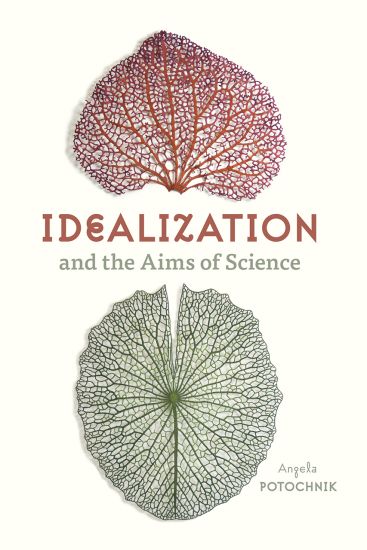
Idealization and the Aims of Science

Idealization and the Aims of Science

Angela Potochnik

University of Chicago Press
2017
sidottu
Science is the study of our world, as it is in its messy reality. Nonetheless, science requires idealization to function if we are to attempt to understand the world, we have to find ways to reduce its complexity. Idealization and the Aims of Science shows just how crucial idealization is to science and why it matters. Beginning with the acknowledgment of our status as limited human agents trying to make sense of an exceedingly complex world, Angela Potochnik moves on to explain how science aims to depict and make use of causal patterns a project that makes essential use of idealization. She offers case studies from a number of branches of science to demonstrate the ubiquity of idealization, shows how causal patterns are used to develop scientific explanations, and describes how the necessarily imperfect connection between science and truth leads to researchers' values influencing their findings. The resulting book is a tour de force, a synthesis of the study of idealization that also offers countless new insights and avenues for future exploration.
Song Walking

Song Walking

Angela Impey

University of Chicago Press
2018
sidottu
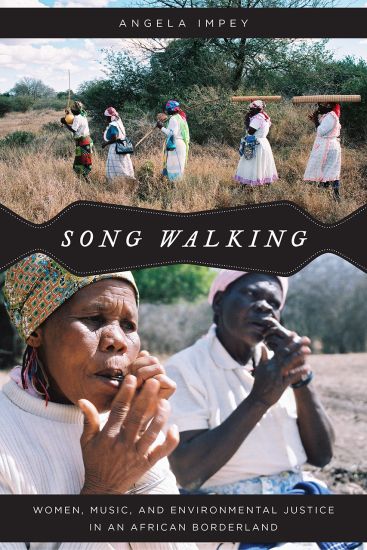
Song Walking explores the politics of land, its position in memories, and its foundation in changing land-use practices in western Maputaland, a borderland region situated at the juncture of South Africa, Mozambique, and Swaziland. Angela Impey investigates contrasting accounts of this little-known geopolitical triangle, offsetting textual histories with the memories of a group of elderly women whose songs and everyday practices narrativize a century of borderland dynamics. Drawing evidence from women’s walking songs (amaculo manihamba)—once performed while traversing vast distances to the accompaniment of the European mouth-harp (isitweletwele)—she uncovers the manifold impacts of internationally-driven transboundary environmental conservation on land, livelihoods, and local senses of place. This book links ethnomusicological research to larger themes of international development, environmental conservation, gender, and local economic access to resources. By demonstrating that development processes are essentially cultural processes and revealing how music fits within this frame, Song Walking testifies to the affective, spatial, and economic dimensions of place, while contributing to a more inclusive and culturally apposite alignment between land and environmental policies and local needs and practices.
Song Walking

Song Walking

Angela Impey

University of Chicago Press
2018
nidottu
Song Walking explores the politics of land, its position in memories, and its foundation in changing land-use practices in western Maputaland, a borderland region situated at the juncture of South Africa, Mozambique, and Swaziland. Angela Impey investigates contrasting accounts of this little-known geopolitical triangle, offsetting textual histories with the memories of a group of elderly women whose songs and everyday practices narrativize a century of borderland dynamics. Drawing evidence from women’s walking songs (amaculo manihamba)—once performed while traversing vast distances to the accompaniment of the European mouth-harp (isitweletwele)—she uncovers the manifold impacts of internationally-driven transboundary environmental conservation on land, livelihoods, and local senses of place. This book links ethnomusicological research to larger themes of international development, environmental conservation, gender, and local economic access to resources. By demonstrating that development processes are essentially cultural processes and revealing how music fits within this frame, Song Walking testifies to the affective, spatial, and economic dimensions of place, while contributing to a more inclusive and culturally apposite alignment between land and environmental policies and local needs and practices.
Idealization and the Aims of Science

Idealization and the Aims of Science

Angela Potochnik

University of Chicago Press
2020
nidottu
Science is the study of our world, as it is in its messy reality. Nonetheless, science requires idealization to function—if we are to attempt to understand the world, we have to find ways to reduce its complexity. Idealization and the Aims of Science shows just how crucial idealization is to science and why it matters. Beginning with the acknowledgment of our status as limited human agents trying to make sense of an exceedingly complex world, Angela Potochnik moves on to explain how science aims to depict and make use of causal patterns—a project that makes essential use of idealization. She offers case studies from a number of branches of science to demonstrate the ubiquity of idealization, shows how causal patterns are used to develop scientific explanations, and describes how the necessarily imperfect connection between science and truth leads to researchers’ values influencing their findings. The resulting book is a tour de force, a synthesis of the study of idealization that also offers countless new insights and avenues for future exploration.
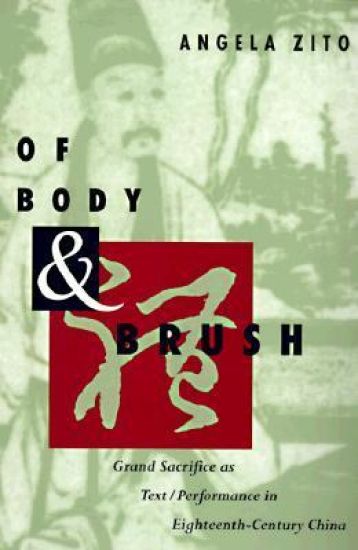
Of Body and Brush

Of Body and Brush

Angela Zito

University of Chicago Press
1998
sidottu
The Qianlong emperor, who dominated the religious and political life of 18th-century China, was in turn ruled by elaborate ritual prescriptions. These texts determined what he wore and ate, how he moved, and above all how he performed the yearly Grand Sacrifices. In this study, Angela Zito offers an analysis of the way ritualizing power was produced jointly by the throne and the official literati who dictated these prescriptions. Forging a critical cultural historical method that challenges traditional categories of Chinese studies, Zito shows that in their "performance", the ritual texts literally embodied the metaphysics upon which imperial power rested. By combining rule through the brush (the production of ritual texts), with rule through the body (mandated performance), the throne both exhibited its power and attempted to control resistance to it. Encompassing Chinese history, anthropology, religion, and performance and cultural studies, this book seeks to bring a new perspective to the human sciences.
Of Body and Brush

Of Body and Brush

Angela Zito

University of Chicago Press
1997
nidottu
The Qianlong emperor, who dominated the religious and political life of 18th-century China, was in turn ruled by elaborate ritual prescriptions. These texts determined what he wore and ate, how he moved, and above all how he performed the yearly Grand Sacrifices. In this study, Angela Zito offers an analysis of the way ritualizing power was produced jointly by the throne and the official literati who dictated these prescriptions. Forging a critical cultural historical method that challenges traditional categories of Chinese studies, Zito shows that in their "performance", the ritual texts literally embodied the metaphysics upon which imperial power rested. By combining rule through the brush (the production of ritual texts), with rule through the body (mandated performance), the throne both exhibited its power and attempted to control resistance to it. Encompassing Chinese history, anthropology, religion, and performance and cultural studies, this book seeks to bring a new perspective to the human sciences.
Ça Dépend

Ça Dépend

Angela Champ

Angela Champ
2020
pokkari
Quiconque pense que les Ressources Humaines sont ennuyeuses ou transactionnelles fait une erreur de jugement. La r ponse presque tous les probl mes en ressources humaines est « a d pend ce recueil d' tudes de cas montre comment les diff rentes circonstances et contextes, les cultures et les lois locales peuvent influencer le r sultat de n'importe quel sc nario. Destin aux tudiants et professionnels des Ressources Humaines qui cherchent am liorer leurs comp tences relationnelles avec les employ s, ce livre pr sente des tudes de cas qui remettent en question les id es pr con ues et encouragent la discussion pour obtenir la meilleure issue possible.