Kirjojen hintavertailu. Mukana 11 699 587 kirjaa ja 12 kauppaa.

Kirjahaku

Etsi kirjoja tekijän nimen, kirjan nimen tai ISBN:n perusteella.

1000 tulosta hakusanalla Annette Wolf

Computer Analysis of Sequence Data, Part I

Computer Analysis of Sequence Data, Part I

Annette M. Griffin; Hugh G. Griffin

Humana Press Inc.
1994
nidottu
DNA sequencing has become increasingly efficient over the years, resulting in an enormous increase in the amount of data gen- ated. In recent years, the focus of sequencing has shifted, from being the endpoint of a project, to being a starting point. This is especially true for such major initiatives as the human genome project, where vast tracts of DNA of unknown function are sequenced. This sheer volume of available data makes advanced computer methods ess- tial to analysis, and a familiarity with computers and sequence ana- sis software a vital requirement for the researcher involved with DNA sequencing. Even for nonsequencers, a familiarity with sequence analysis software can be important. For instance, gene sequences already present in the databases can be extremely useful in the design of cloning and genetic manipulation experiments. This two-part work on Analysis of Data is designed to be a practical aid to the researcher who uses computers for the acquisition, storage, or analysis of nucleic acid (and/or p- tein) sequences. Each chapter is written such that a competent sci- tist with basic computer literacy can carry out the procedure successfully at the first attempt by simply following the detailed pr- tical instructions that have been described by the author. A Notes section, which is included at the end of each chapter, provides advice on overcoming the common problems and pitfalls sometimes enco- tered by users of the sequence analysis software. Software packages for both the mainframe and personal computers are described.

Computer Analysis of Sequence Data Part II

Computer Analysis of Sequence Data Part II

Annette M. Griffin; Hugh G. Griffin

Humana Press Inc.
1994
nidottu
DNA sequencing has become increasingly efficient over the years, resulting in an enormous increase in the amount of data gener­ ated. In recent years, the focus of sequencing has shifted, from being the endpoint of a project, to being a starting point. This is especially true for such major initiatives as the human genome project, where vast tracts of DNA of unknown function are sequenced. This sheer volume of available data makes advanced computer methods essen­ tial to analysis, and a familiarity with computers and sequence analy­ sis software a vital requirement for the researcher involved with DNA sequencing. Even for nonsequencers, a familiarity with sequence analysis software can be important. For instance, gene sequences already present in the databases can be extremely useful in the design of cloning and genetic manipulation experiments. This two-part work on Computer Analysis of Sequence Data is designed to be a practical aid to the researcher who uses computers for the acquisition, storage, or analysis of nucleic acid (and/or pro­ tein) sequences. Each chapter is written such that a competent scien­ tist with basic computer literacy can carry out the procedure successfully at the first attempt by simply following the detailed prac­ tical instructions that have been described by the author. A Notes section, which is included at the end of each chapter, provides advice on overcoming the common problems and pitfalls sometimes encoun­ tered by users of the sequence analysis software.
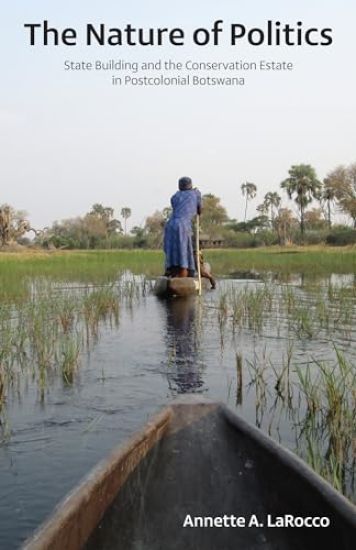
The Nature of Politics

The Nature of Politics

Annette A. LaRocco

OHIO UNIVERSITY PRESS
2024
sidottu
This case study of Botswana focuses on the state-building qualities of biodiversity conservation in southern Africa. Drawing on extensive fieldwork, Annette A. LaRocco argues that discourses and practices related to biodiversity conservation are essential to state building in the postcolonial era. These discourses and practices invoke the ways the state exerts authority over people, places, and resources; enacts and remakes territorial control; crafts notions of ideal citizenship and identity; and structures economic relationships at the local, national, and global levels. The book’s key innovation is its conceptualization of the “conservation estate,” a term most often used as an apolitical descriptor denoting land set aside for the purpose of conservation. LaRocco argues that this description is inadequate and proposes a novel and much-needed alternative definition that is tied to its political elements. The components of conservation-control over land, policing of human behavior, and structuring of the authority that allows or disallows certain subjectivities-render conservation a political phenomenon that can be analyzed separately from considerations of “nature” or “wildlife.” In doing so, it addresses a gap in the scholarship of rural African politics, which focuses overwhelmingly on productive agrarian dynamics and often fails to recognize that land nonuse can be as politically significant and wide reaching as land use. Botswana is an ideal empirical case study upon which to base these theoretical claims. With 39 percent of its land set aside for conservation, Botswana is home to large populations of wildlife, particularly charismatic megafauna, such as the largest herd of elephants on the continent. Utilizing more than two hundred interviews, participant observation, and document analysis, this book examines a series of conservation policies and their reception by people living on the conservation estate. These phenomena include securitized antipoaching enforcement, a national hunting ban (2014–19), restrictions on using wildlife products, forced evictions from conservation areas, limitations on mobility and freedom of movement, the political economy of Botswana’s wildlife tourism industry, and the conservation of globally important charismatic megafauna species.
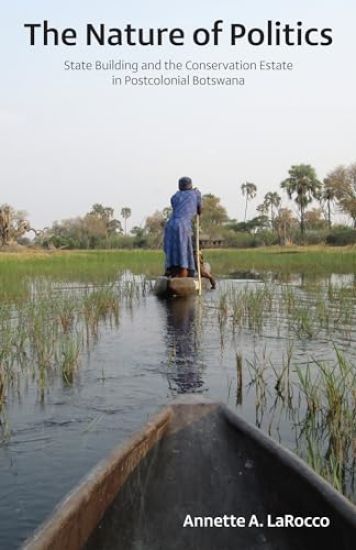
The Nature of Politics

The Nature of Politics

Annette A. LaRocco

OHIO UNIVERSITY PRESS
2024
pokkari
This case study of Botswana focuses on the state-building qualities of biodiversity conservation in southern Africa. Drawing on extensive fieldwork, Annette A. LaRocco argues that discourses and practices related to biodiversity conservation are essential to state building in the postcolonial era. These discourses and practices invoke the ways the state exerts authority over people, places, and resources; enacts and remakes territorial control; crafts notions of ideal citizenship and identity; and structures economic relationships at the local, national, and global levels. The book’s key innovation is its conceptualization of the “conservation estate,” a term most often used as an apolitical descriptor denoting land set aside for the purpose of conservation. LaRocco argues that this description is inadequate and proposes a novel and much-needed alternative definition that is tied to its political elements. The components of conservation-control over land, policing of human behavior, and structuring of the authority that allows or disallows certain subjectivities-render conservation a political phenomenon that can be analyzed separately from considerations of “nature” or “wildlife.” In doing so, it addresses a gap in the scholarship of rural African politics, which focuses overwhelmingly on productive agrarian dynamics and often fails to recognize that land nonuse can be as politically significant and wide reaching as land use. Botswana is an ideal empirical case study upon which to base these theoretical claims. With 39 percent of its land set aside for conservation, Botswana is home to large populations of wildlife, particularly charismatic megafauna, such as the largest herd of elephants on the continent. Utilizing more than two hundred interviews, participant observation, and document analysis, this book examines a series of conservation policies and their reception by people living on the conservation estate. These phenomena include securitized antipoaching enforcement, a national hunting ban (2014–19), restrictions on using wildlife products, forced evictions from conservation areas, limitations on mobility and freedom of movement, the political economy of Botswana’s wildlife tourism industry, and the conservation of globally important charismatic megafauna species.
Asset Management

Asset Management

Annette Mori

Affinity E-Book Press Nz Ltd
2015
pokkari
Toni, Sophie, and Kim, are the modern-day version of Robin Hood blended with the Three Musketeers. For the past eighteen months, they have been moving the assets of the rapacious bank executives to the more deserving coffers-at least in their minds-of the poor and middle class.When a mysterious woman keeps crossing paths with Toni, sparks fly. Is it a coincidence or all part of some greater master plan? Is she friend or foe?Add the Russian mob, the FBI, and an all-female covert organization and you have the perfect recipe for danger, intrigue, and even love.Does the trio join forces with the organization?Follow the twists and turns to the explosive conclusion. Not everything is black and white. There are many shades of gray and sometimes it's difficult to decipher who is good and who is evil. No one is all virtue or all malevolence, but sometimes love helps us rise above.
The Yellow Admiral Butterfly

The Yellow Admiral Butterfly

Annette Wells

Rainbow Reading Programme
2003
nidottu
Special Needs Scheme that builds fluency and comprehension through audio assisted learning. Ideal for struggling readers and English language learners. For Key Stages 1-2 (P1-6). Contents include: 5 levels of books and audio cassettes. 20 books and audios per level. Plus, teaching support material with lesson plans, videos and assessment. Rainbow Reading provides clear audio-tape models of fluent reading, levelled high-interest books, by a variety of authors, opportunities for students to reread in a supportive environment, one-to-one conferencing with teacher or tutor, encourages students to self-monitor and to read fluently, for meaning. Teaching support material is ideal for assessing and improving comprehension, for practice in reading and following instructions, for improving spelling and word identification, for improvement in writing and reading, training video for staff.
Holy Smoke!

Holy Smoke!

Annette Schiffer; Michael Schiffer

MindStir Media
2018
pokkari
If you enjoy captivating stories with compelling characters, settle into a comfortable chair and immerse yourself in the latest happenings in the fictional county of Oak Grove, California. One night a huge arson fire levels controversial Reverend DeMente's mega-church. Sheriff Sydney Harding assigns her Senior Detective Alan Bluestein to tackle the arson case, but he is stymied because the number of potential suspects is enormous. In the meantime, rebuilding activities at the church site yield an unpleasant surprise--evidence of another crime Dr. Laura Mancini, a forensic archaeologist at the university, collaborates with Bluestein on the new investigation. In a story filled with the authors' distinctive blend of serious and silly, the couple and criminalist Malique Johnson solve the crimes. Holy Smoke also answers the question, "do Bluestein and Mancini abandon the pledge to keep their relationship strictly business?"
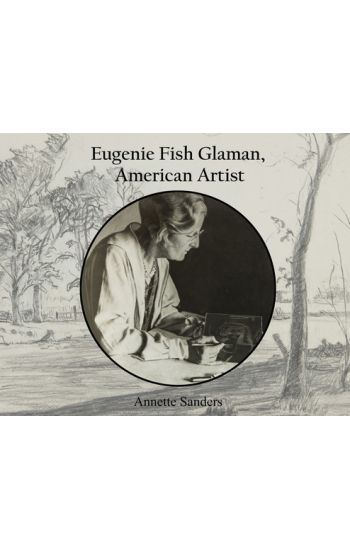
Eugenie Fish Glaman, American Artist

Eugenie Fish Glaman, American Artist

Annette Sanders

Shades Creek Press, LLC
2023
sidottu
Eugenie attended the Art Institute of Chicago from 1895-1899. She was a dedicated honor student during these years. Her practiced knowledge of animal painting and her use of live animal models enhanced the program at the Art Institute. Eugenie assisted teachers in life class instruction. In the year 1900, Eugenie became a full-time teacher for the Art Institute until she learned about a sheep ranch in Montgomery, Illinois, where she could do some paintings. She left her class to paint what was to become one of her most celebrated paintings, The Old Sheepfold.This painting, executed ten years after the young artist got her first glimpses of fine art at the Chicago World Fair, won the bronze medal in the St Louis World Fair Exposition in 1904.Glaman used this painting to gain support for the establishment of the Chicago Art Commission through Chicago's mayor, Carter Harrison. In turn, the mayor gathered commission board members, usually wealthy men and women who collected and assisted him in promoting art in public places.For the duration of the commission, 1914-1943, Taos became an artist destination for painters and writers throughout the country. Light and inspiration, which artists need for their work, was plentiful in this region. The commission offered men with artistic promise a creative journey to Taos. The artists' expenses were paid in exchange for the artists' first eight paintings. Prominent American artists such as Walter Ufer, E. Martin Hennings, and Victor Higgins-who were Glaman's contemporaries -went to Taos, and many of them settled there.This explains why there are so many paintings of western scenes in public places of Chicago. The influence of the Grand Canyon, adobes, Taos Pueblo, and Native American subjects are alive in the work of these American artists. The art from this era is appraised at $250,000-$1,000,000 and upward.